
5 Minutes
The technology landscape never sleeps, and this week has been particularly explosive. From major shifts in digital security to the intensifying "AI Arms Race," the headlines suggest we are entering a new phase of digital maturity. In this week's roundup, we dive deep into Telegram's biometric revolution, OpenAI’s aggressive counter-move against Google, and the lackluster rumors surrounding Samsung’s next flagship.
Here is everything you need to know about the world of technology this Friday.
1. Telegram’s Security Overhaul: The End of the SMS Era
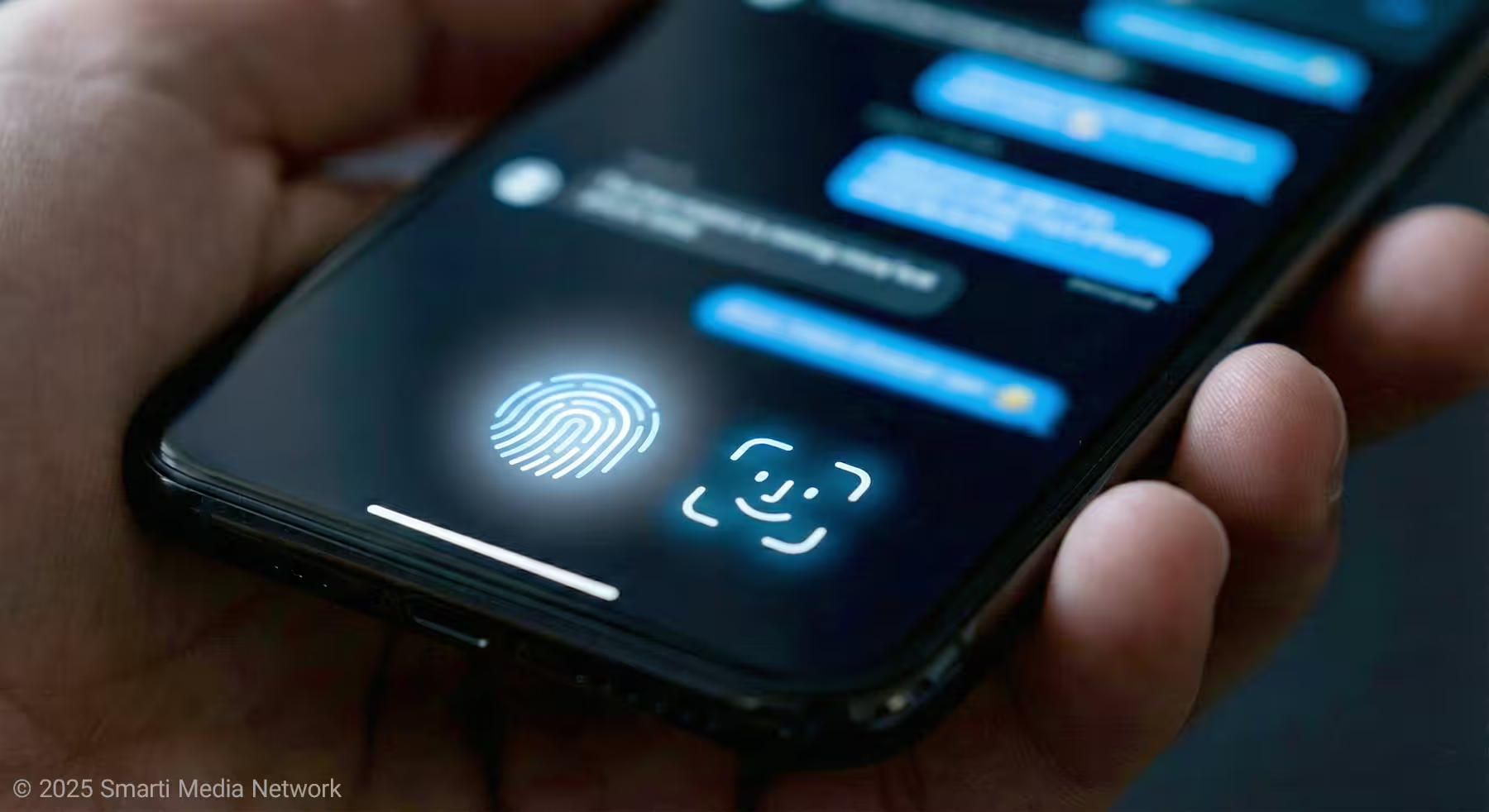
The era of waiting for SMS verification codes—and the security risks associated with SIM-swapping attacks—is coming to an end for Telegram users. The platform has officially rolled out Passkey support, a feature that promises to redefine how we log into our accounts.
Passkeys rely on cryptographic keys stored securely on your device, allowing you to sign in using only your biometrics (Face ID or Fingerprint).
Why this matters: This isn't just about convenience; it is a massive leap in security. By eliminating the reliance on SMS OTPs (One-Time Passwords), Telegram is effectively neutralizing phishing attacks and interception risks.
Actionable Advice: We strongly recommend all users update to the latest version immediately and enable Passkeys in their Privacy & Security settings to future-proof their accounts.
2. OpenAI Reveals ChatGPT 5.2: The "Gemini Killer"?

Just when Google’s Gemini seemed to be gaining ground, OpenAI has reportedly fired back with ChatGPT 5.2, a version designed specifically to reclaim the throne. Early reports and beta testing suggest this update addresses the biggest pain points of Generative AI.
Key improvements include:
Reduced Hallucinations: The new model reportedly boasts a 30% reduction in "hallucinations" (false information), making it significantly more reliable for academic and professional use.
Long-Context Stability: Unlike previous versions that "forgot" details in long conversations, Version 5.2 maintains coherence over extended chats.
Native Image Editing: In a direct blow to Adobe, users can now edit generated images directly within the chat interface, mimicking Photoshop-like capabilities without leaving the app.
Policy Shift: Controversially, reports indicate that OpenAI may relax restrictions on "Not Safe For Work" (NSFW) content within the next three months, implementing strict age verification and consent protocols to manage this transition.
3. Samsung Galaxy S26 Leaks: A Case of Hardware Stagnation?

If the latest leaks are accurate, Samsung fans might be in for a disappointment in 2026. Insider reports suggest that the upcoming Galaxy S26 will utilize the exact same primary camera sensor found in the Galaxy S21.
If true, this would mark the fifth consecutive year without a major hardware upgrade to the base model's main sensor. While Samsung’s software processing is world-class, reusing half-decade-old hardware while competitors (especially Chinese manufacturers) are pushing 1-inch sensors is a risky strategy.
Furthermore, leaks regarding the One UI update suggest a design philosophy shift. Samsung appears to be adopting a "glassmorphism" aesthetic, heavily inspired by Apple’s iOS design language, moving away from its distinct visual identity.
4. Medical AI Breakthroughs: From Genes to Diagnosis

This week highlighted the profound impact Artificial Intelligence and modern science are having on healthcare.
Grok Saves a Life Elon Musk’s AI, Grok, made headlines for outperforming human doctors in a critical diagnosis. A patient, initially dismissed by doctors as having simple acid reflux, described their symptoms to Grok. The AI correctly identified the risk of a ruptured appendix and urged an immediate CT scan. The patient returned to the hospital, confirmed the diagnosis, and underwent emergency surgery, proving that AI can serve as a vital "second opinion."
The Schizophrenia Gene Discovery In a monumental scientific breakthrough, researchers have identified a specific gene directly responsible for psychiatric conditions like schizophrenia.
The Cure: Early trials suggest that treatment with a specific, simple amino acid can regulate this gene.
The Result: Patients in the study saw a complete cessation of hallucinations and a significant reduction in paranoid behavior. This could be the most significant mental health discovery of the decade.
5. Google’s Dual Strategy: Military Deals and Creator Tools

Google is making waves in two very different sectors this week:
The Pentagon Partnership: The US Department of Defense has officially selected Google Gemini as a foundational infrastructure for military AI. This partnership will see advanced AI tools deployed to US Army forces, raising both capabilities and ethical debates regarding the use of commercial AI in warfare.
Google Photos Update: On the consumer side, Google Photos is rolling out a massive update. Borrowing features from the popular app CapCut, Google Photos now offers advanced, free video editing tools directly in the cloud. This move is clearly aimed at the creator economy, allowing for quick, high-quality edits without third-party software.
6. WhatsApp’s "Retro" Update

Finally, a feature that has left many users scratching their heads. WhatsApp has introduced a "Voicemail" feature that activates when a call goes unanswered.
Critics are calling this a step backward. In an era where "Voice Notes" are already the dominant form of audio communication, adding a legacy-style voicemail system feels redundant to many. It remains to be seen if this feature will be embraced or ignored by the app's billions of users.
What do you think? Are you excited about the security of Telegram Passkeys, or are you more concerned about Samsung’s lack of hardware innovation? Let us know in the comments below.


Comments
Tomas
If Samsung really sticks the S21 sensor in the S26, that's lazy. Software tweaks wont mask outdated hardware forever, meh. anyone else think it's a bad move?
atomwave
Wow Passkeys on Telegram? FINALLY!!! No more SMS codes, but i hope biometric keys are stored locally, not sent to some cloud. Update asap ppl

Leave a Comment