
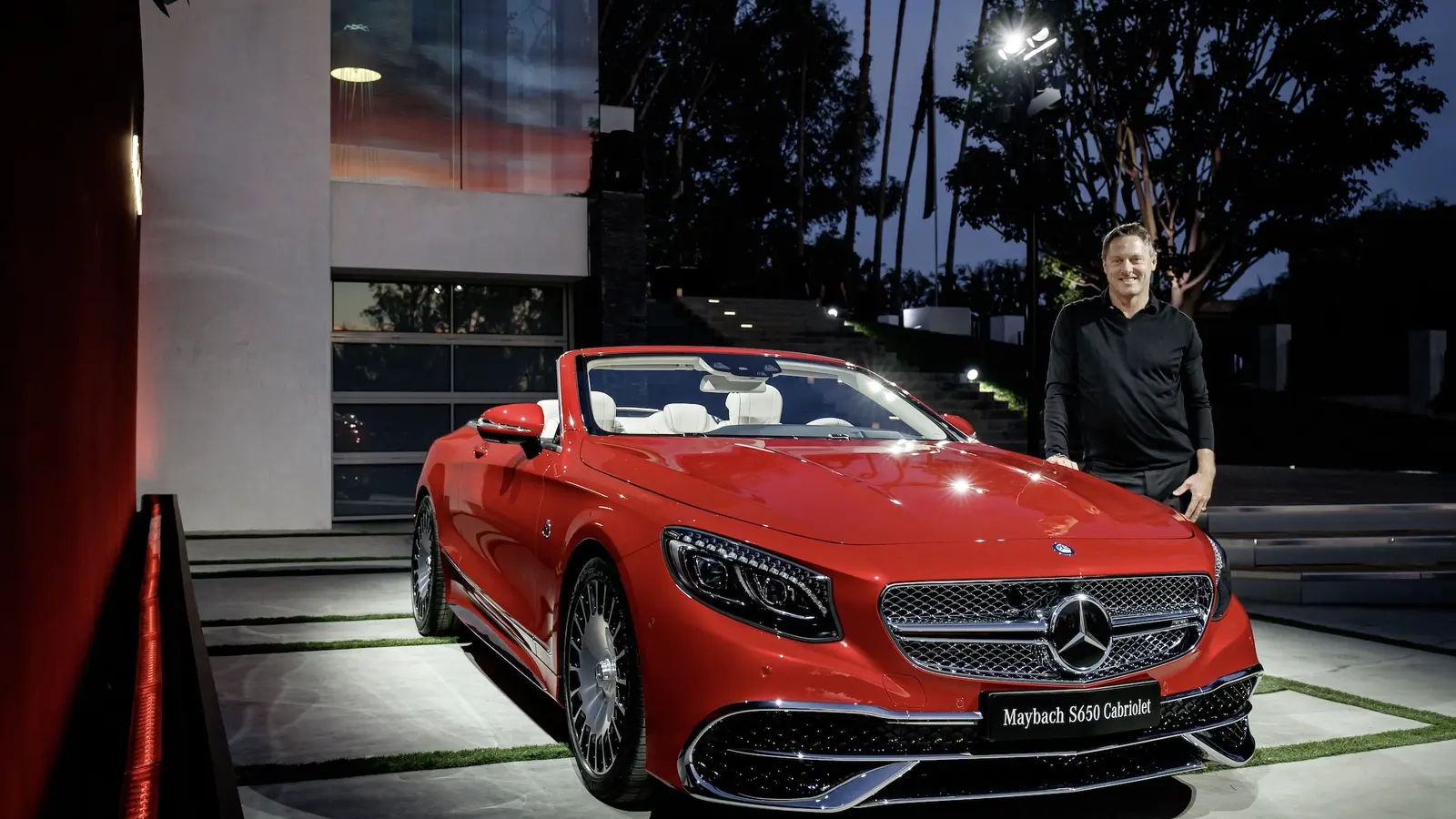
End of an era: Wagener leaves Mercedes design
Mercedes-Benz has announced that longtime design chief Gorden Wagener will depart the company on January 31, 2026, ending a 28-year run that reshaped the brand’s aesthetic language. According to sources, Wagener asked to step down and the move was agreed by both parties. He arrived at Mercedes in 1997 and became head of design in 2008, at just 39, one of the youngest lead designers in the industry at the time.

The design philosophy that defined a generation
Wagener introduced the now-iconic “sensual purity” philosophy in 2009 — a deliberate break from overly complex forms toward cleaner, sculpted surfaces that aimed to connect with both reason and emotion. “You have to fall in love with the car before you even sit in it,” he said in 2019, a line that summed up his belief that design should create an immediate emotional bond.

What sensual purity meant in practice
Rather than cluttered creases and busy detailing, Wagener favored well-defined surfaces, softened edges and harmonious proportions. The approach kept Mercedes’ core identity intact while making cars more expressive and accessible to new buyers. Under his leadership, Mercedes moved away from the boxy 1990s aesthetic toward smooth, flowing silhouettes.
Signature models and landmark projects
Wagener’s portfolio is long and varied, spanning production cars, concepts and even lifestyle projects. Highlights include:
- CLS — the pioneering four-door coupe that rewrote executive-car styling in the early 2000s;
- S-Class (W221) and C‑Class — flagship sedans that showcased interior quality and restrained luxury;
- A-Class (W176) — a compact hatchback that helped Mercedes appeal to younger urban buyers;
- SLR McLaren — a collaboration that delivered exotic design and performance in the early 2000s;
- Vision Mercedes‑Maybach 6 — a 2+2 luxury coupe concept that previewed future luxury cues;
- Mercedes‑AMG ONE — the F1-derived hypercar whose 1.6‑liter turbocharged powertrain forced a lengthy and challenging development cycle.

Wagener’s work extended beyond cars: he also helped design yacht and helicopter interiors and contributed to Mercedes‑branded residential concepts, reinforcing the company’s lifestyle aspirations.
Awards and background
A graduate of the University of Duisburg‑Essen (industrial design) and the Royal College of Art in London (transportation design), Wagener worked at Volkswagen, Mazda and General Motors before joining Mercedes. During his tenure he received multiple accolades, including the American Prize for Design from the Chicago Athenaeum in 2017 and recognition as Best Interior Designer of the Year by leading automotive journalists.
Why the split matters
Wagener leaves at a critical moment. Mercedes is transforming its lineup to embrace electrification, autonomous features and digital-first interiors. While his emotionally driven design language modernized Mercedes and helped it remain aspirational, the shift to electric mobility and aggressive aerodynamic packaging forced trade-offs that some fans and journalists criticized.

Criticism and market realities
Enthusiasts have expressed frustration with what they call a loss of character — cars that emphasize screens and aero-driven shapes over the tactile cues of traditional luxury. Mercedes’ EQ electric range, launched under Wagener’s watch, has also faced tough scrutiny: some models underperformed sales expectations, and the brand has ceded momentum in certain segments to rivals such as BMW.
Who’s next: Bastian Baudy steps up
From February 2026, Wagener will be succeeded by Bastian Baudy, 41, currently head of design at Mercedes‑AMG. A Pforzheim University graduate who joined Mercedes in 2010, Baudy is known for concept work such as the AMG Vision Gran Turismo (2013) and his focus on performance-led form. The transition suggests Mercedes aims to blend sportiness with its established luxury language going forward.
What to expect from Mercedes design in 2026 and beyond
With Baudy taking the helm, expect tighter integration between AMG’s performance ethos and Mercedes’ mainstream design strategy. Practically, that could mean:
- More dynamic, aerodynamic silhouettes focused on efficiency and visual drama;
- Continued emphasis on premium interiors, but with evolving human‑machine interfaces and digital surfaces;
- A balancing act between brand DNA (signature grille, proportions) and the packaging demands of electric platforms.

Legacy and what’s next for Wagener
After nearly three decades at one of the world’s most influential carmakers, Wagener’s impact is visible on streets around the globe. His designs helped Mercedes attract new buyers without abandoning the core values of luxury and presence. What he does next isn’t confirmed; many designers of his stature move into consultancy, independent studios or teaching. Whatever route he chooses, his fingerprints on contemporary Mercedes design are unlikely to fade quickly.
Quick takeaways
- Gorden Wagener leaves Mercedes on January 31, 2026, after 28 years.
- He introduced the “sensual purity” philosophy and led the design direction since 2008.
- Bastian Baudy, AMG’s design chief, will take over in February 2026.
- Mercedes faces the twin challenge of evolving its electric EQ range while maintaining brand identity.
As Mercedes enters its next chapter, the company will need to reconcile aerodynamic efficiency and electrified packaging with the emotional, tangible cues that made its cars instantly recognizable. For design followers, the change at the top is both an end and a beginning — a moment to reflect on Wagener’s legacy and watch how Baudy reinterprets it for a new era of mobility.

“I cover automotive innovation, electric vehicles, and the future of mobility — where technology meets sustainability.”

Discussion
Leave a Comment