
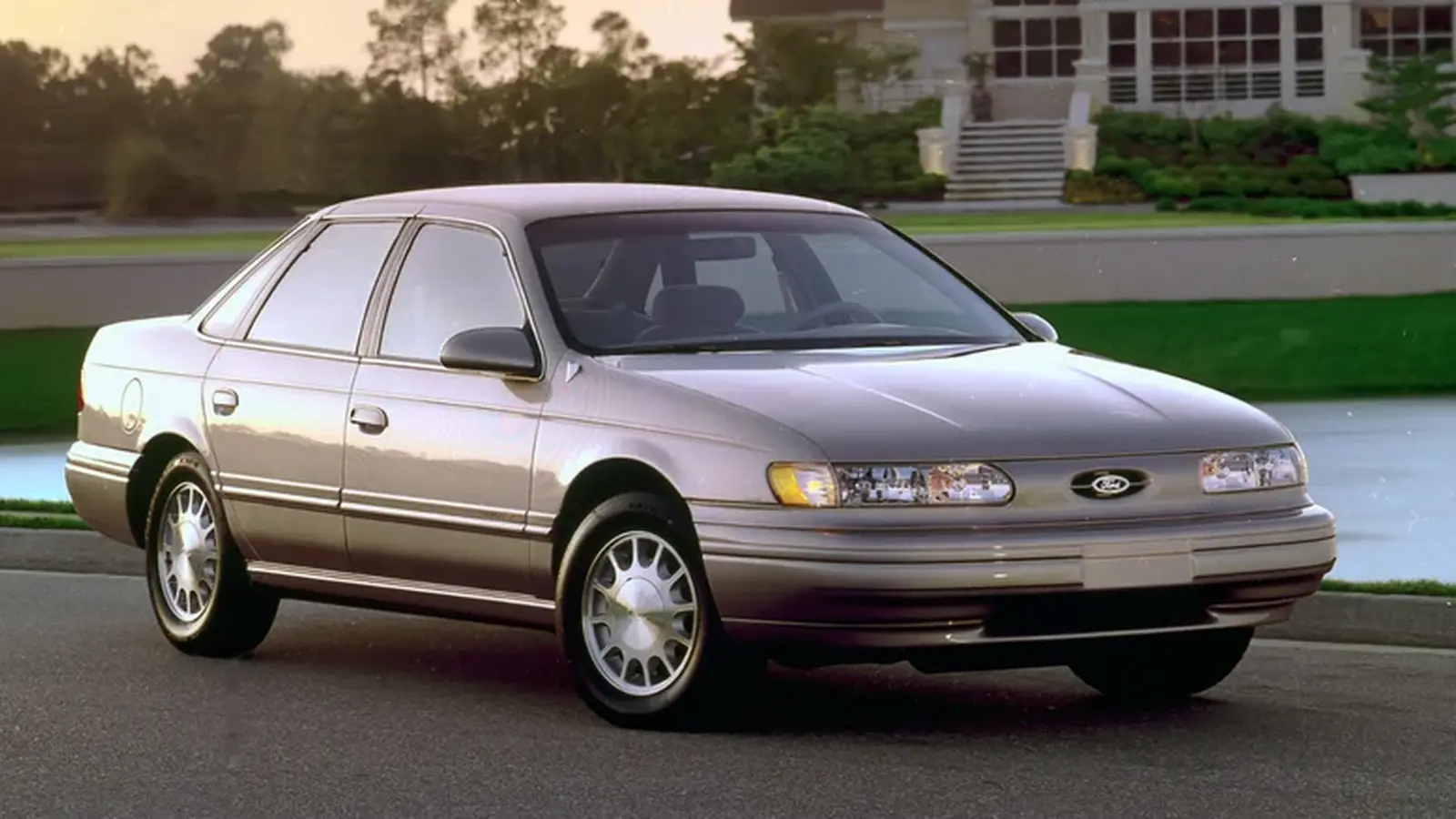
The car that beat Camry and Accord in 1995
When you rewind U.S. auto sales to 1995, the familiar leaders — the Toyota Camry and Honda Accord — aren't the headline. Instead, the top-selling passenger car that year was the Ford Taurus, a once-ubiquitous midsize sedan that defined large parts of the American market in the late 1980s and 1990s. Ford moved more than 366,000 Tauruses in 1995 alone, a high-water mark for a model that would later be overshadowed by shifting consumer tastes.
How the Taurus reshaped the midsize sedan
The Taurus didn't arrive as a cautious update; it was a bold reimagining. Launched in 1986, it answered growing competition from Japanese automakers with a design language and packaging that felt modern and aerodynamic by the standards of the day. Ford gave up the boxy, conservative look that dominated U.S. sedans and instead delivered smoother lines and an interior that felt ahead of its time.
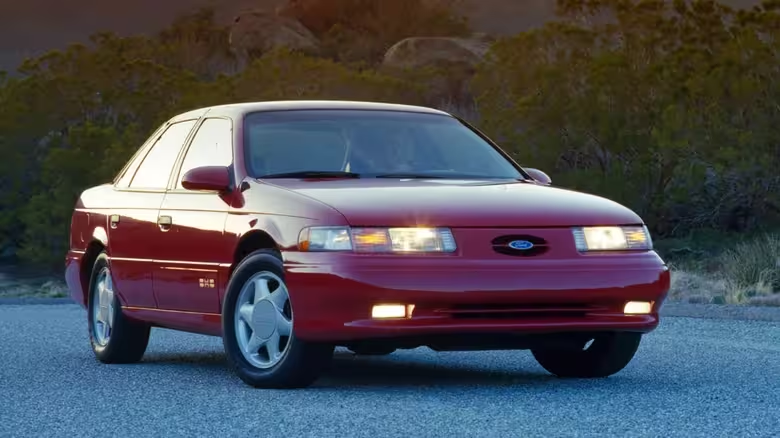
More than style, the Taurus established a successful formula: front-wheel drive, roomy interior for five passengers, and a range of economical engines aimed at everyday drivers. Alongside rivals such as the Camry and Accord, the Taurus helped cement the midsize front-wheel-drive sedan as the American mainstream choice for families, commuters, and fleet buyers.
Key reasons for its 1990s success
- Fresh, aerodynamic styling that stood out from other domestic sedans.
- Competitive pricing and a focus on practicality.
- Comfortable interior and predictable handling for a mainstream buyer.
"The Taurus was a turnaround car for Ford — it proved the company could compete on design and volume," says many industry observers who recall the model's impact.
1992–1996: The peak years
Ford introduced the second-generation Taurus in 1992, and after competing closely with the Accord for several years, it finally rose to the top of the passenger car rankings. The Taurus held the best-selling passenger car crown for five straight years, culminating in the 1995 total of roughly 366,000 units. That year marked the final full run of the second-generation body shape before Ford shifted to the controversial oval-themed styling for 1996.
The 1996 redesign allowed the Taurus to stay competitive for a short while longer, but by 1997 the Toyota Camry reclaimed the top spot. Through the late 1990s and into the 2000s, Taurus sales remained significant, though the model never again matched its mid-90s dominance.
From flagship family sedan to phased-out nameplate
Market dynamics changed fast in the 21st century. The rise of crossover SUVs and compact CUVs gradually eroded demand for traditional midsize sedans. Ford responded by reshaping its passenger lineup: the Fusion emerged as the company’s new mainstream midsize sedan in the mid-2000s, while Ford experimented with variations of the Taurus nameplate, including a larger full-size sedan and a short-lived Taurus X crossover.

Ford briefly discontinued the Taurus in 2006, only to revive the nameplate on a different, larger platform. Despite these attempts, none of the subsequent versions rekindled the broad popularity of the Taurus’ 1980s and 1990s heyday. Ultimately, Ford retired the Taurus for good in 2019 as part of a wider strategic shift toward SUVs and pickup trucks.
Market context and legacy
The Taurus story is a compact case study in how quickly automotive markets evolve. A model can be transformative and commercially dominant one decade, then phased out the next as buyers migrate to new body styles and technologies. Where the Taurus once symbolized mainstream American motoring, the 2020s are defined by crossovers, electrification, and new entrants such as Tesla.
Yet the Taurus left an indelible mark:
- It challenged and reshaped American design expectations for mainstream sedans.
- It helped establish the front-wheel-drive midsize formula that dominated for decades.
- It demonstrated how brand and model perception can shift with styling and segment trends.
Comparisons: Taurus vs. Camry and Accord
While the Camry and Accord ultimately had greater long-term consistency and global reach, the Taurus demonstrated that domestic brands could reclaim market share with the right combination of design, packaging, and value. Today, Camry and Accord remain important nameplates for Toyota and Honda, even if they no longer dominate sales as they once did.
Why the story matters now
For enthusiasts and industry watchers, the rise and fall of the Taurus is more than nostalgia. It underscores how product planning, consumer trends, and corporate strategy intersect. For automakers, the lesson is clear: design, timing, and the ability to pivot to new segments — like crossovers and EVs — make the difference between enduring success and retirement.
Whether you remember the Taurus as a common sight on highways in the 1990s or are discovering it through automotive history, the model remains a key chapter in the story of American cars.
Once the face of mainstream family transport, the Taurus now stands as a reminder of how fast automotive tastes can change.

“Cars are evolving faster than ever. I cover electric vehicles, smart mobility, and the future of transportation worldwide.”

Discussion
Leave a Comment