
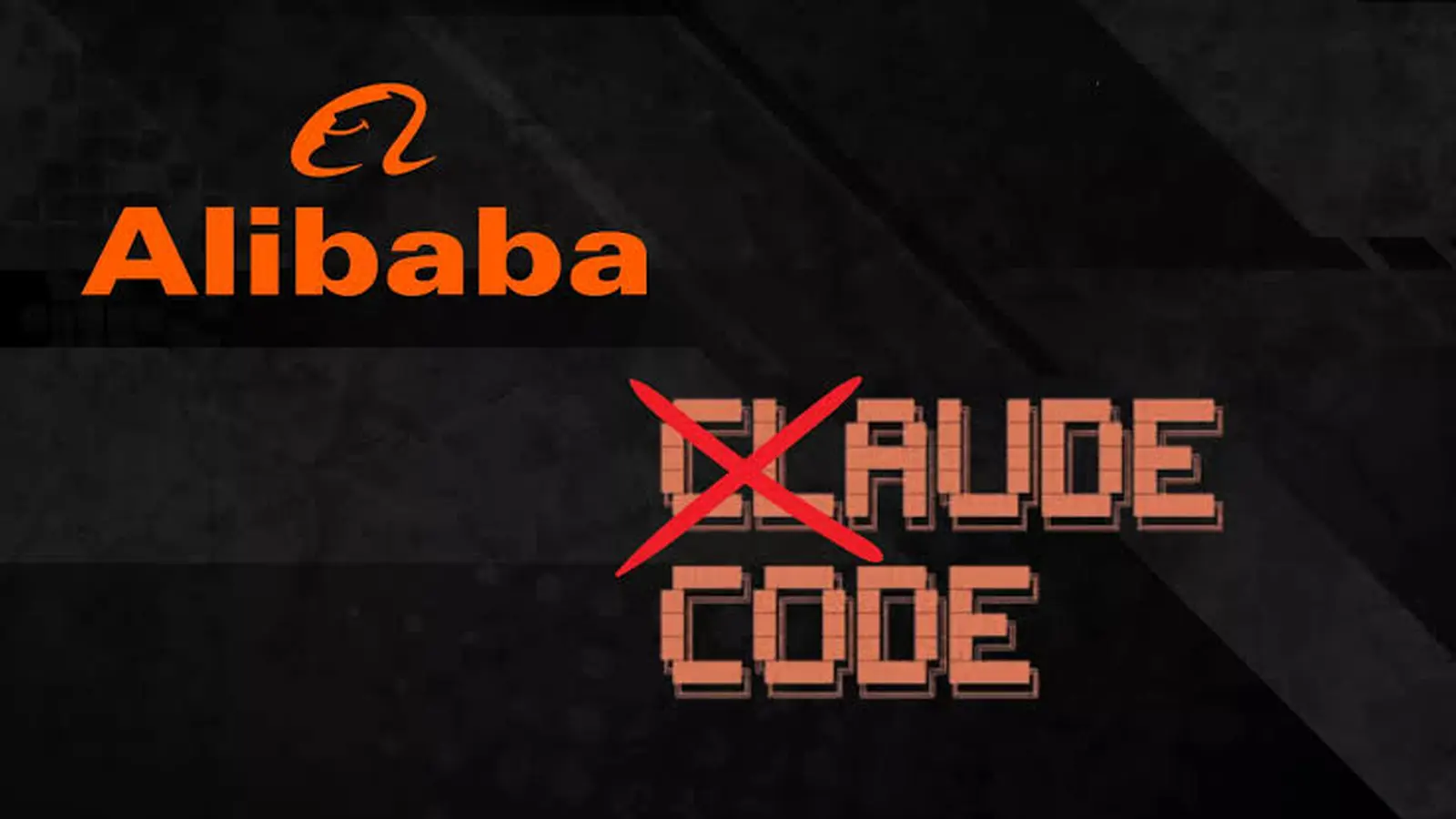
Alibaba restricts Claude Code amid security concerns
Alibaba has ordered a company-wide ban on using Anthropic’s Claude Code in internal work environments starting July 10, according to a source familiar with the decision. The move, reportedly driven by concerns that the coding assistant could contain embedded backdoors, adds pressure on Anthropic as enterprises reassess AI model risk and supply-chain security.
What Alibaba’s restriction means
The restriction is said to apply across Alibaba’s internal systems and developer environments. No official statement has been released by Alibaba at the time of publication, and details about the specific security findings or the precise technical scope of the alleged backdoors were not disclosed by the source.
Enterprise fallout and regional limits
This latest setback follows similar enterprise-level limitations in Hong Kong, where major financial firms have curtailed access to Claude models. In June, reports indicated that JPMorgan blocked employees in Hong Kong from choosing Claude among approved large language models because of licensing terms and geofencing policies. Goldman Sachs has reportedly enforced comparable restrictions after determining Anthropic’s terms excluded use across Greater China, including Hong Kong.

Why banks and fintech are cautious
Financial institutions and fintech companies are increasingly cautious about integrating advanced AI into critical workflows such as code generation, automated research, and trading tools. Concerns range from regulatory compliance and data residency to model jailbreak techniques that could enable misuse. For crypto and blockchain firms that rely on secure development pipelines, the potential for hidden vulnerabilities in an AI coding assistant is a serious operational risk.
Anthropic’s recent regulatory and safety developments
Anthropic has navigated a turbulent few weeks. On July 1, the company restored public access to its newest models, Claude Fable 5 and Mythos 5, after U.S. export restrictions were lifted. Anthropic said it resumed deployments following discussions with U.S. officials and by adding classifiers to detect and block cybersecurity-related tasks—measures designed to mitigate jailbreak and misuse vectors.
Company stance and government cooperation
Anthropic has defended its technology, arguing that reported jailbreaks represented narrow bypass methods rather than an overarching breakdown of model safety. The company also announced expanded cooperation with U.S. authorities on model testing, safety evaluations, and information sharing focused on potential misuse. Still, enterprise customers remain wary, weighing legal, technical, and security trade-offs before reintegrating these AI tools.
Implications for the crypto and blockchain sector
For blockchain developers, decentralized finance teams, and crypto-focused enterprises, the episode underscores the need for stringent AI governance and secure development practices. As tokenization, smart contract automation, and AI-assisted development become more prevalent, organizations must balance innovation with robust controls to protect code integrity, private keys, and sensitive trading algorithms.
Alibaba’s ban on Claude Code highlights a growing trend: companies are prioritizing cybersecurity and supply-chain assurance when selecting AI partners. Anthropic’s next steps—transparency about technical findings, extended third-party audits, and clearer usage policies—will be critical if it hopes to restore confidence among institutional users.


“With a background in economics and digital markets, I write about startups, finance, and the trends transforming the global economy.”

Discussion
Leave a Comment
Comments (2)
saw this at my startup last year, we cut external AI code helpers after a vuln. Security first, but devs were not happy lol
Wait so Alibaba banned Claude Code across their dev envs? If there are hidden backdoors that's huge. source not named tho, curious about proof...