
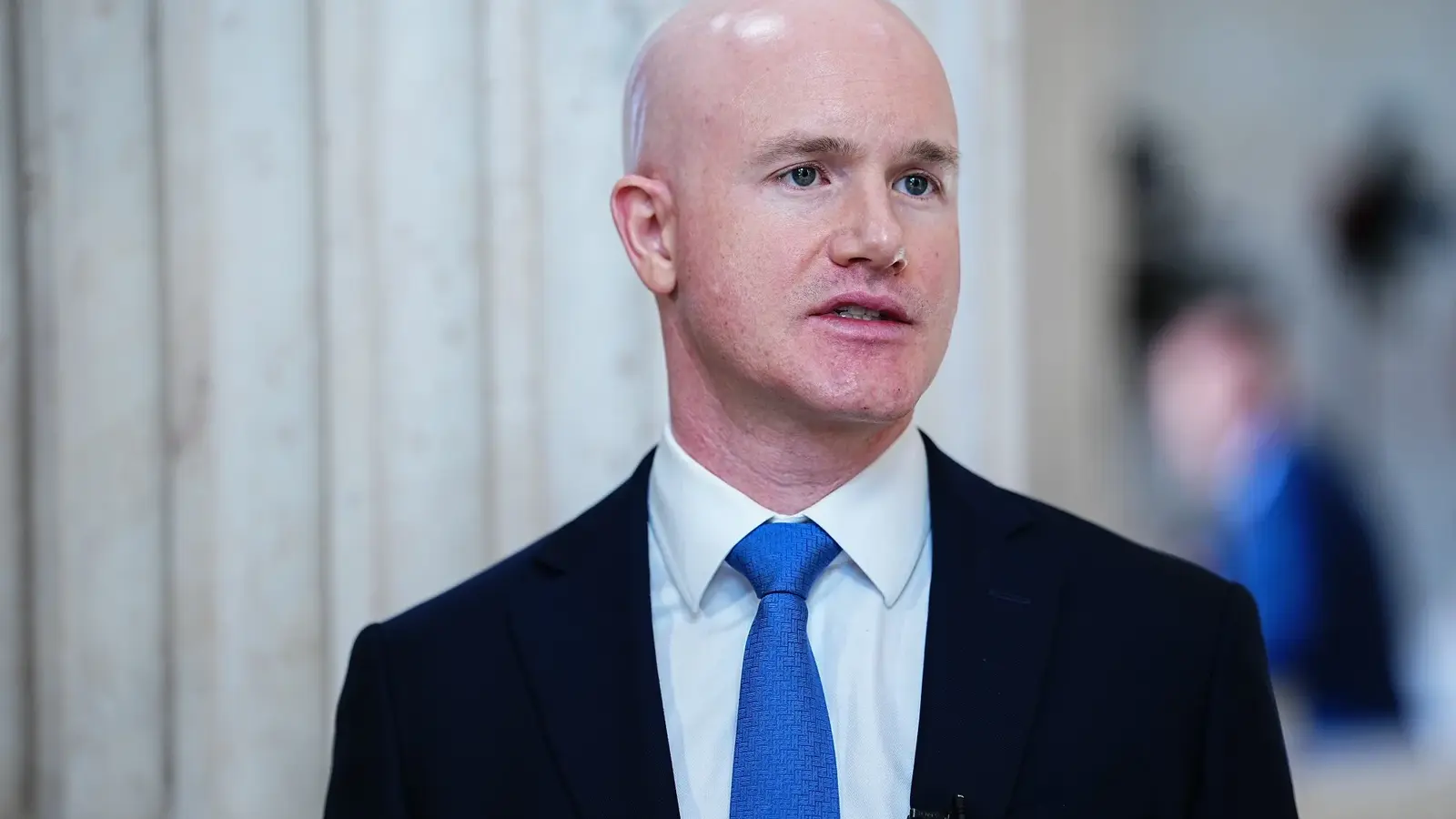
Coinbase CEO pushes for statutory crypto rules to protect users
Coinbase CEO Brian Armstrong used an Aug. 20 interview to press senators to advance the CLARITY Act, arguing that permanent congressional legislation would provide clearer protections for crypto consumers and reduce the risk of regulatory overreach by future administrations. Armstrong framed the bill as a long-term statutory solution for crypto policy uncertainty, contrasting it with agency-by-agency rulemaking that can change with administrative leadership.
Cloture vote scheduled for Sept. 15
Senate records show a cloture motion on H.R. 3633, the CLARITY Act, is slated for Sept. 15 at 2:15 p.m. Eastern. That procedural vote would decide whether the Senate should begin formal consideration of the bill; it is not a final passage vote. Cloture requires 60 votes, meaning Republicans, who hold 53 Senate seats, would need support from at least seven Democrats if all GOP senators back the motion.
What Armstrong says the CLARITY Act would deliver
Armstrong told CBS that the current regulatory landscape offers insufficient clarity on which rules apply to various crypto products, exposing ordinary Americans to risky or opaque offerings. He said a statutory framework would do three things: provide clearer definitions for digital assets and tokens, set out who regulates which assets between the SEC and CFTC, and create consistent consumer-protection rules for custody, disclosures, and stablecoin rewards.

Armstrong also argued the bill would give law enforcement stronger tools to fight illicit finance and provide more predictable rules for digital-asset fundraising and trading. He described congressional statute as a safeguard against policy reversals that can occur when agencies change stance after transitions in political leadership.
Limits of legislation and lessons from FTX
While Armstrong suggested CLARITY would help prevent failures like FTX, experts note that statutory rules cannot eliminate all risks. FTX collapsed because of alleged fraud and misappropriation of customer assets at an exchange with weak internal controls. The CLARITY Act includes registration, disclosure, custody, anti-money-laundering, and insolvency provisions, but no law can guarantee a regulated firm will never fail or commit fraud. The bill is forward-looking but untested against a comparable systemic failure.
How CLARITY would allocate federal oversight
H.R. 3633 proposes clear definitions for digital commodities, network tokens, and other categories of digital assets. It would split supervisory authority between the Securities and Exchange Commission and the Commodity Futures Trading Commission according to an asset's economic characteristics and the nature of transactions. The framework also contains registration requirements for digital-commodity exchanges, brokers, and dealers, and includes provisions on custody, customer asset protections, disclosure obligations, AML compliance, and treatment during insolvency proceedings.
Legislative progress so far
The House passed its version of the bill in July 2025 by a 294-134 margin. The Senate Banking Committee moved an amended draft forward by a 15-9 vote on May 14, 2026. Because the committee changed the House text, both chambers must reconcile differences before any final bill can be sent to the president for signature. That reconciliation process could add more debate, amendments, and negotiation.
Political math and outstanding negotiation points
Senate Majority Leader John Thune filed the cloture motion prior to the August recess. For the motion to succeed on Sept. 15, at least 60 senators must support bringing the bill to the floor for debate. Industry leaders like Armstrong express confidence that more than 60 senators will back the motion, but that remains an executive forecast rather than a confirmed vote count.
Key unresolved items that lawmakers are still negotiating include ethics restrictions for elected officials, the treatment of stablecoin rewards, specific DeFi carve-outs, and additional illicit-finance safeguards. Those sticking points delayed action ahead of the August recess and will likely shape the final content of any reconciled bill.
White House meeting and industry engagement
On Aug. 19, President Donald Trump called for a "fair version" of the bill at a White House event attended by Armstrong, Robinhood CEO Vlad Tenev, Kraken co-CEO Arjun Sethi, and federal regulators. The meeting underscored the high-profile engagement of industry players as lawmakers consider a statutory approach to crypto regulation.
Agency rulemaking remains a parallel path
Armstrong acknowledged that regulatory clarity could also arise from agency action, pointing to potential SEC and CFTC rule initiatives around Sept. 16 if Congress stalls. CFTC Chair Michael Selig has said the agency is prepared to exercise existing authority with or without new statute, and the SEC opened a rulemaking process with its Aug. 18 proposal dubbed Regulation Crypto Assets. But agency rules have limits: they can only operate within existing statutory authority, are subject to public-comment procedures, and can face court challenges or later revisions.
Market reaction and next steps
Bitcoin and Ethereum both rose during the day of Armstrong's interview, with BTC up about 5.9% and ETH up about 2.8% according to CBS, reflecting broader market optimism tied to the White House push and other factors. However, market moves are rarely attributable to a single policy event.
The Sept. 15 cloture vote will determine whether the Senate begins debate on H.R. 3633. Even a successful cloture would leave a path of floor amendments, final Senate passage, and House-Senate reconciliation before any statutory crypto framework could become law. For now, the industry, investors, and policymakers are watching the calendar closely as both legislative and agency-driven routes to crypto regulation remain active.


“With a background in economics and digital markets, I write about startups, finance, and the trends transforming the global economy.”

Discussion
Leave a Comment
Comments
No comments yet. Be the first.