
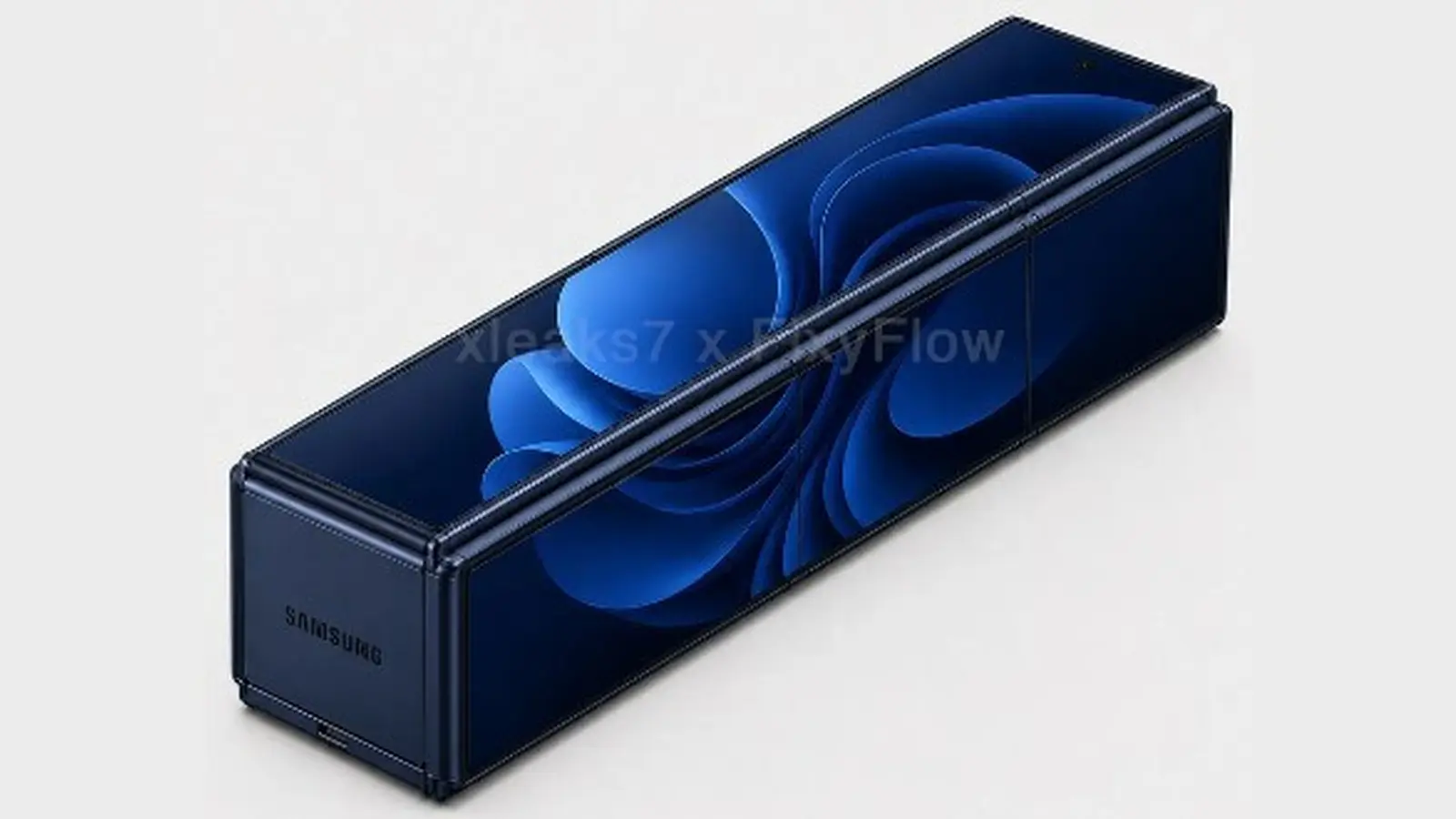
Picture a pocket-sized brick that, with a few precise moves, unfolds into a wide smartphone screen and then rolls out to tablet proportions. It sounds like science fiction, but Samsung's newest patent filing paints exactly that picture: a compact block housing multiple displays that can switch form factors through both folding and rolling mechanisms.
What the filing actually shows
The patent submitted to the United States Patent and Trademark Office describes a device that looks like a dense multi-sided module when closed, with screens on several faces. Open it and the center panel expands into a broad display. Pull farther and a rollable mechanism increases the surface area until the device reaches roughly the size of a small tablet. The diagrams emphasize the two-step metamorphosis: from brick to broad panel, and then from panel to rolled-out tablet. There are no fixed dimensions included, which is a clear sign this remains a conceptual exercise more than a production blueprint.

Why should anyone care? For one, it shows where Samsung Display's research teams are pointing their curiosity. For another, it highlights the blend of foldable and rollable technologies that could define the next wave of mobile form factors—if the engineering and economics line up.
Short answer: doubts persist. Long answer: many hurdles remain.
Durability. Battery layout. Hinge wear. Software that scales cleanly across three distinct states. These are not trivial engineering puzzles. Historically, Samsung has been prolific with bold patents; most never leave the drawing board. The company has introduced unusual products before—think experimental multitiered foldables—but those often land in a high-price, niche bracket rather than mainstream adoption.
Remember the Reddit joke from 2019 about Samsung patenting every conceivable phablet shape? That sentiment still echoes because filings serve multiple purposes: protecting IP, mapping future possibilities, and nudging competitors. Not every patent becomes a product. Many are signposts for where engineers and designers want to push next.

So who is this for? Early adopters and industry watchers. People who buy the latest foldable today probably won't see their phones replaced by a rollable-block hybrid next month. But keep an eye on the trend. Over the next three to four years, elements of this concept—flattening displays, tighter rolling mechanisms, smarter hinge tech—could trickle into real models.
It’s tempting to imagine a single device that does everything: pocket-friendly, expansive for media, and flexible enough to suit different tasks. The patent offers a glimpse of that ambition. Whether consumers will ever carry a literal brick that becomes a tablet is still an open question. For now, it's a provocative chapter in the ongoing story of flexible displays.

“I cover emerging technologies, digital innovation, and the intersection of tech and everyday life. My goal is to make complex trends accessible and inspiring.”

Discussion
Leave a Comment
Comments
No comments yet. Be the first.