
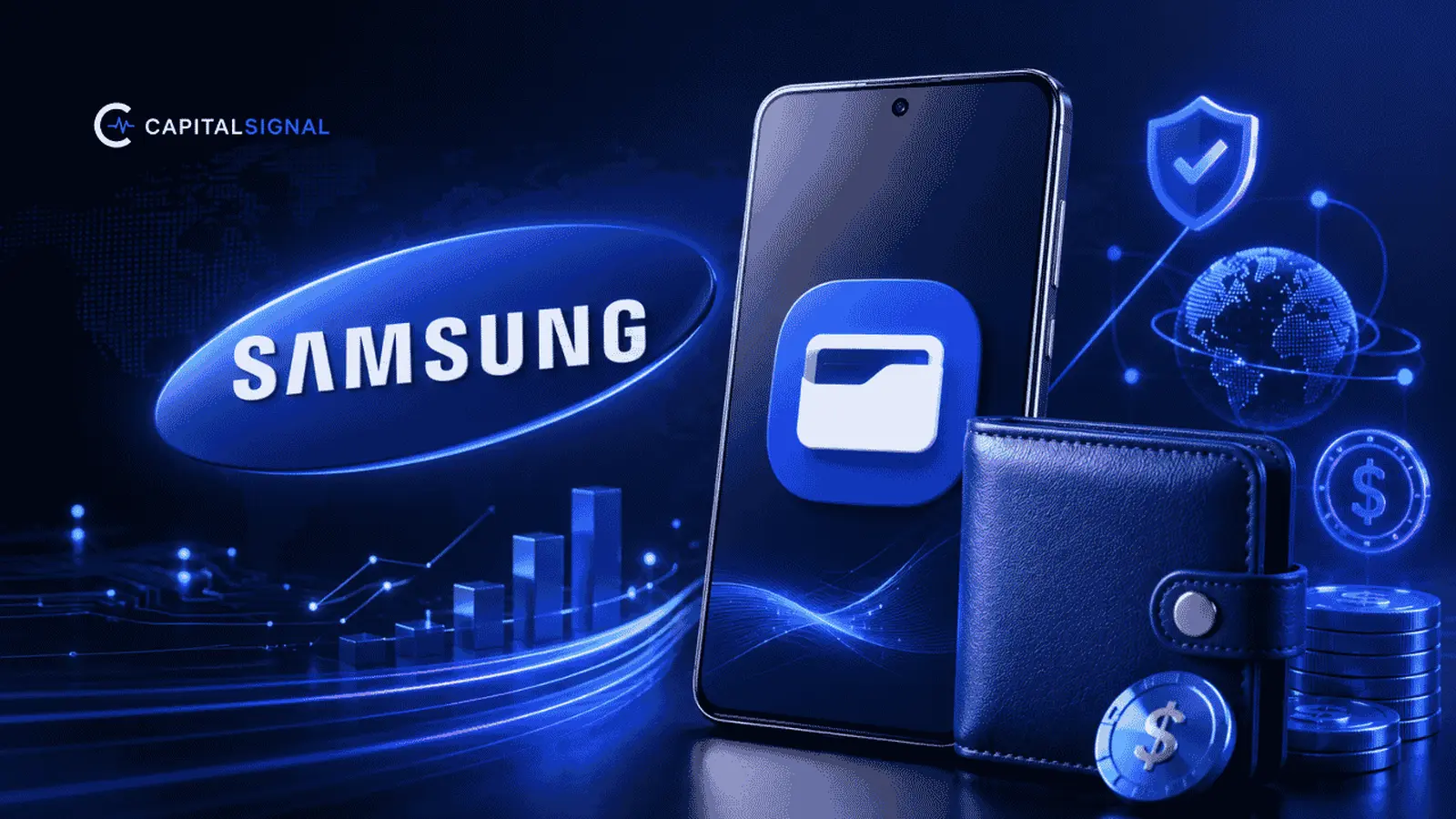
Samsung announced native stablecoin support for Samsung Wallet during Galaxy Unpacked on July 22, 2026. The stage demo included a mockup showing a USDC balance and basic send/receive controls, but the company left crucial implementation details unspecified: no issuer was named, no blockchain was confirmed, no custody model was disclosed and no launch timeline was provided. Behind the headline, a significant equity move — three Samsung affiliates acquiring a combined 4% stake in Dunamu, Upbit’s parent company — and public comments from Samsung SDS reveal a deliberate infrastructure and regulatory posture that could determine whether this becomes a mainstream payments play or remains a conceptual demo.
Samsung framed the initiative as part of a broader strategy to embed digital value directly into the device experience across Galaxy phones and services. The claim that stablecoin capabilities could reach 800 million phones by the end of 2026 is an aspirational distribution number tied to Samsung's Galaxy AI device target, not a direct measure of wallet users or immediate feature availability. This article unpacks what Samsung showed, what it didn’t disclose, the infrastructure moves behind the scenes, regulatory constraints in major markets, and the key technical and commercial questions that will decide whether Samsung Wallet can turn native stablecoins into regularly used payment instruments.
What the Galaxy Unpacked Demo Actually Showed
Onstage, Samsung product management communicated a concise promise: Samsung Wallet will support stablecoins natively on Galaxy devices, enabling fast digital transfers. The demo user interface displayed a USDC label and three action buttons — send, receive and add funds — suggesting a balance-oriented model where a stablecoin denominated wallet sits alongside cards, passes and loyalty credentials.
However, the presentation stopped at the UI. Samsung did not confirm any partnerships, including with Circle (USDC’s issuer), nor did the company explain whether balances would be custodyless, custodial, or custodial-with-user-control via secure elements like Knox. Journalists from multiple outlets asked for clarification and did not receive substantive responses before news reports published. That silence leaves open multiple product architectures, each with different regulatory and user-experience implications.

Why the Missing Details Matter
A mockup matters only if the plumbing behind it is real. Key design decisions will shape Samsung's legal exposure and commercial control over user interactions. These decisions include:
Issuer selection
- Choosing an existing dollar stablecoin issuer like Circle or Paxos would orient Samsung toward a dollar-denominated experience and require working with an issuer that is compliant with the GENIUS Act in the United States or equivalent rules elsewhere. A partnership with Circle, for example, would mean relying on an external issuer's reserve attestations, redemption process and compliance regime.
- Building or supporting a won-pegged stablecoin would prioritize the Korean market and create a distinct regulatory path that may require bank participation under South Korea's proposed Digital Asset Basic Act or the Bank of Korea's preferences.
Settlement network
- A single-chain approach simplifies integration and gives Samsung a default rails provider inside Wallet, but it risks locking users to a single blockchain and its liquidity.
- A multichain design increases routing flexibility but introduces interoperability, bridge risk and a more complex UX that could deter mainstream users.
Custody model
- Hardware-isolated keystores like Knox could support noncustodial keys, preserving Samsung's ability to offer self-custody via the device's secure element. That model prioritizes user sovereignty but limits features such as instant on-ramp/off-ramp liquidity without custodial counterparties.
- Custodial models ease fiat conversion and compliance but hand the user relationship, controls and regulatory compliance burden to a third party. How Samsung divides responsibilities with partners will influence where it keeps strategic control: distribution and UX or asset custody and settlement.
Context: Samsung's Crypto Path to Date
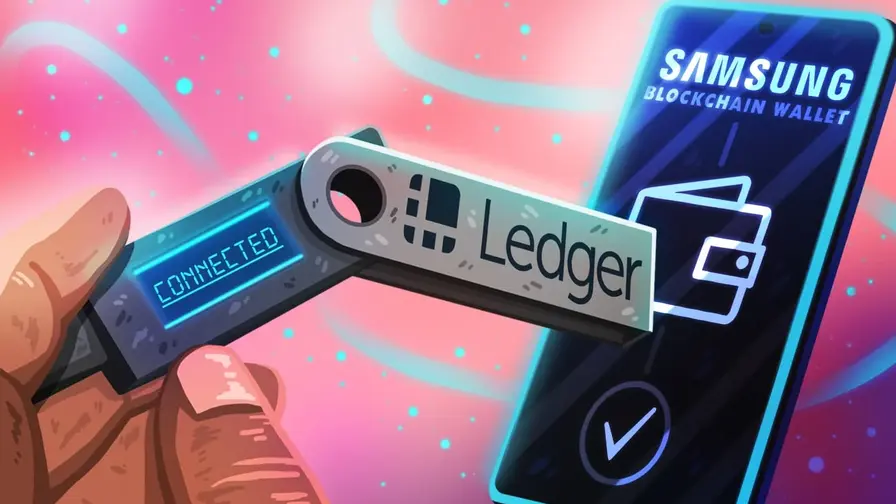
Samsung's relationship with crypto has evolved over seven years. Each stage brought blockchain assets incrementally closer to the mainstream payment flow.
- 2019: Samsung Blockchain Keystore launched with the Galaxy S10. It used Knox to store private keys in a hardware-isolated vault and supported Bitcoin, Ethereum and Tron along with ERC/TRC tokens. That feature targeted enthusiasts and prioritized on-device security.
- 2019: Ledger support was added, enabling hardware wallet connectivity with Galaxy devices for users seeking cold storage integration.
- 2025: Samsung integrated Coinbase into its ecosystem. Samsung Pay became a funding method inside Coinbase, and by October 2025 Samsung Wallet provided direct access to Coinbase benefits such as Coinbase One promotions. This step integrated crypto purchase flows more closely into the Wallet app and brought Coinbase’s trading liquidity and compliance capabilities to Galaxy users.
These steps moved from an on-device security feature to partner-driven custody and liquidity integrations. The 2026 stablecoin announcement, if implemented fully, would make a token balance native to the same interface that consumers already use to store cards and passes — a pivotal shift if executed correctly.
The Dunamu Stake: What Samsung Bought
In May 2026, three Samsung affiliates — Samsung Securities, Samsung SDS and Samsung Card — agreed to acquire 612.8 billion won (~$408 million) in shares of Dunamu, the operator of Upbit, South Korea's largest crypto exchange. The combined purchase represents a 4% stake, with Samsung Securities taking 2% and Samsung SDS and Samsung Card each taking 1%. The shares were acquired from entities linked to Kakao.
This investment is strategic rather than purely financial. Samsung Securities has signaled interest in tokenized securities issuance and distribution. Samsung SDS, the group’s IT services arm, is focused on digital asset infrastructure, cloud and AI capabilities. Samsung Card sees potential in payments, including a won-pegged stablecoin that could integrate with its payment network and the Monimo financial platform. By taking a stake in Dunamu, Samsung obtains closer access to exchange-level liquidity, settlement expertise and regulatory know-how.
Analysts argue this equity move is the infrastructure half of Samsung's play: distribution comes from Galaxy devices and Wallet, while Dunamu brings transaction rails, exchange liquidity, and potential issuer relationships or custody models.
Samsung SDS: Stablecoins as a Priority
On July 30, during Samsung SDS’s second-quarter earnings call, president Lee Joon-hee framed the Dunamu investment as an entry into digital asset infrastructure, not merely a financial holding. Samsung SDS singled out stablecoin infrastructure, AI-driven payments and virtual asset financial system integration as collaboration priorities with Dunamu.
Samsung SDS's cloud business grew strongly, and the company announced plans to scale AI infrastructure capacity significantly by 2031. SDS's involvement signals that Samsung views stablecoins as more than a consumer feature: they see enterprise-grade backend systems, custody, settlement and compliance as essential parts of the plan. SDS’s competence in cloud, AI, and cybersecurity could support stablecoin issuance platforms, reserve accounting systems or custodial services if Samsung elects to build or operate those layers.
Regulatory Context: U.S. and South Korea Move Fast
Stablecoins are squarely in the sights of regulators worldwide. Samsung’s product choices will need to align with two major regulatory frameworks in particular.
United States: the GENIUS Act
The GENIUS Act, enacted in July 2025, established federal rules for payment stablecoins in the United States. Existing stablecoin issuers were given a transition window to comply; after July 2028, noncompliant stablecoins cannot be offered to U.S. users. The law mandates that payment stablecoin issuers hold one-to-one reserves in high-quality liquid assets such as U.S. Treasuries, insured deposits or central bank reserves, and it requires monthly audited attestations of reserve composition.
For Samsung Wallet to offer a stablecoin balance in the U.S., the issuer and custodial arrangement must satisfy GENIUS Act requirements. That constraint narrows Samsung’s viable issuer choices and potentially requires explicit partnerships with regulated custodians, auditors and compliant issuers.
South Korea: the Digital Asset Basic Act

South Korea’s Digital Asset Basic Act aims to consolidate multiple crypto and stablecoin regulations and introduces stringent requirements for stablecoin issuers: authorization, 100% or greater reserves in bank deposits or government bonds, and full redemption rights for holders. The act also classifies cross-border or foreign exchange-related stablecoin usage as a means of payment under foreign exchange law, adding complexity to cross-border settlement.
One sticking point in the Korean legislative debate is who may issue won-pegged stablecoins. The Bank of Korea has favored a bank-led consortium model requiring at least 51% bank ownership of stablecoin issuers. That limitation would significantly shape market participants' ability to lead issuance and distribution.
Technical and Product Design Questions Samsung Must Answer
Samsung’s mockup does not resolve multiple architectural tradeoffs. The company must make choices that balance user experience, compliance, liquidity and strategic control.
Issuer selection and reserve transparency
The choice between an established dollar stablecoin issuer and a new won-pegged issuer will determine legal obligations and go-to-market sequencing. A dollar stablecoin positions Samsung to support global remittance and cross-border payments, subject to U.S. regulation. A won stablecoin confines initial adoption to Korea but may offer regulatory tailwinds if domestic rules favor local incumbents.
Reserve transparency and audit cadence are central. Under many regulatory proposals, issuers must provide frequent, independent attestations of reserve composition. Samsung will need to either rely on third-party issuer attestations or build integrated reserve reporting and transparency systems with an issuer partner.
Custody and key management

Samsung’s hardware security via Knox gives it an advantage for on-device key storage. Noncustodial models using secure elements could appeal to privacy- and self-custody-minded users, but they complicate fiat on- and off-ramp speed. Custodial models simplify liquidity and fiat redemption but risk shifting the user relationship to the custodian.
Hybrid approaches are possible: device-backed keys for user control together with optional custodial rails to enable instant purchases and merchant settlement. How Samsung balances those choices will shape whether the company competes as a distribution platform or becomes a neutral operating system for partner issuers.
Network design and interoperability
Selecting a blockchain network for settlement matters for fees, speed, and merchant integration. A single-chain product reduces integration complexity but risks fragmented liquidity and dependence on that network’s bridges and custodial support. A multichain architecture opens more rails but adds UX complexity and operational risk. The Bank for International Settlements has warned that assets deployed across multiple chains can fragment liquidity and expose users to bridge risk — a concern for consumer-grade payments.
Payments UX and merchant acceptance
Availability alone won’t translate into usage unless stablecoins can be spent at merchant terminals with a seamless UX. Samsung must partner with payment networks, card issuers, acquirers and point-of-sale vendors to enable instant redemption and settlement into fiat for merchants. The Galaxy Card and the new U.S. credit collaboration with Barclays highlight Samsung’s broader ambitions to unify payments, but enabling stablecoin acceptance at scale requires merchant integrations and incentives.
Competitive Landscape: How Apple and Google Compare
No major smartphone rival has integrated native stablecoin balances into its wallet. Apple has not publicly indicated interest in native stablecoin balances within Apple Wallet, and Google’s crypto functionality has remained limited to partner integrations and card-layer features.

Samsung’s theoretical edge is that it controls three key assets simultaneously: device distribution, a hardware security layer (Knox), and now an equity stake in a major exchange operator (Dunamu). That combination could let Samsung coordinate distribution, security and backend liquidity. However, distribution numbers must be read carefully. Samsung ships a high volume of devices globally — IDC reported 241 million units in 2025 — but its proximity payments market share in the United States is smaller than Apple’s. Samsung’s 800 million phone figure references Galaxy AI device targets rather than Samsung Wallet or stablecoin user counts.
Crypto-native platforms still hold advantages in liquidity, developer ecosystems and merchant adoption. If Apple or Google moved aggressively and integrated compliant stablecoin balances first, Samsung’s potential early-mover advantage could narrow.
Arguments For and Against Samsung as a Stablecoin Distributor
Pros:
- Distribution: Preinstalled Wallet on hundreds of millions of devices gives Samsung a powerful reach if users activate the feature.
- Security: Knox and on-device secure elements enable robust key management for noncustodial options.
- Infrastructure positioning: The Dunamu stake and Samsung SDS’s enterprise capabilities suggest Samsung can access exchange liquidity, custody expertise and technical backend support.
Cons:
- Activation vs availability: Historically, preinstalled crypto features have low activation. The Blockchain Keystore debut in 2019 and later Coinbase integrations did not produce publicly disclosed adoption metrics, leaving a large gap between potential and realized users.
- Regulatory complexity: Meeting the GENIUS Act and Korean Digital Asset Basic Act requirements will constrain issuer and custody choices, especially in the United States and South Korea.
- Product maturity: Without revealed issuer, chain and custody decisions, the announcement remains a strategic intention rather than an operational product.
- Partner control: If Samsung’s stablecoin implementation relies on partner-held accounts or custodial arrangements, the distribution benefit may disproportionately favor the issuer or custodian.
Liquidity and Merchant Acceptance: The Toughest Hurdles
Experts emphasize that distribution must be matched by liquidity. Exchanges and market makers supply tradability; merchants require reliable fiat settlement. Even if Samsung provides the consumer wallet, its partners must supply exchange liquidity, clearing and settlement to ensure stablecoins are spendable at checkout with predictable price and settlement behavior.

A single default issuer and settlement network would make routing simple but concentrate risk. A multissuer or multichain model improves redundancy but complicates the UX and risks fragmented liquidity that harms merchant acceptance.
Scenarios That Would Validate Samsung’s Strategy
- Named issuer and custodian that are GENIUS Act-compliant for U.S. users and meet equivalent standards in other target markets.
- A public beta or limited rollout in a regulated market (e.g., South Korea or the United States) demonstrating activation rates, transaction volumes, and merchant acceptance metrics.
- Clear documentation of custody architecture that leverages Knox or a hybrid model balancing noncustodial control with optional custodial liquidity for instant settlement.
- A merchant acceptance program and partner integrations that allow stablecoins held in Wallet to be spent at common point-of-sale systems without onerous user steps.
What to Watch Next
- Samsung names an issuer and custody partner. This choice will reveal whether Samsung aims for dollar-denominated reach, Korea-first won support, or a hybrid approach.
- The fate of South Korea’s Digital Asset Basic Act. Its passage and any 51% bank-ownership requirements for won stablecoin issuance will determine local issuer options and the commercial role Samsung Card and Dunamu can play.
- Samsung discloses global Wallet user counts and crypto activation metrics. The ratio of activated users to available devices is the single most important metric for assessing the distribution thesis.
- A public beta or limited-market launch. A demonstrable rollout in any jurisdiction would indicate that the mockup has moved toward production.
- Responses from Apple and Google. A competing stablecoin integration could close Samsung’s window of relative advantage.
Bottom Line
Samsung’s Galaxy Unpacked mockup signaled intent: to bring native stablecoin balances into Samsung Wallet and, by extension, into the daily lives of Galaxy users. But the announcement is strategic rather than operational. The real work — selecting compliant issuers, designing custody models, choosing settlement networks, integrating merchant acceptance and proving activation at scale — remains to be done.
The Dunamu stake and Samsung SDS’s public statements suggest Samsung is serious about building infrastructure rather than merely adding a UI feature. Yet the announcement leaves open whether Samsung will become a distribution-first partner for third-party issuers or an active infrastructure operator controlling issuance, reserves and settlement. The answers will depend on regulatory constraints in the United States and South Korea, the commercial incentives of potential issuer partners, and Samsung’s willingness to commit enterprise resources to custody, compliance and market-making.
For crypto investors and payments observers, Samsung’s move is a development to watch closely: it could materially lower friction for stablecoin adoption if the company nails issuer selection, custody and merchant acceptance. Alternatively, without those pieces in place, the announcement will remain a high-profile sketch of potential rather than a new channel for everyday crypto payments.

“With a background in economics and digital markets, I write about startups, finance, and the trends transforming the global economy.”

Discussion
Leave a Comment
Comments
No comments yet. Be the first.