
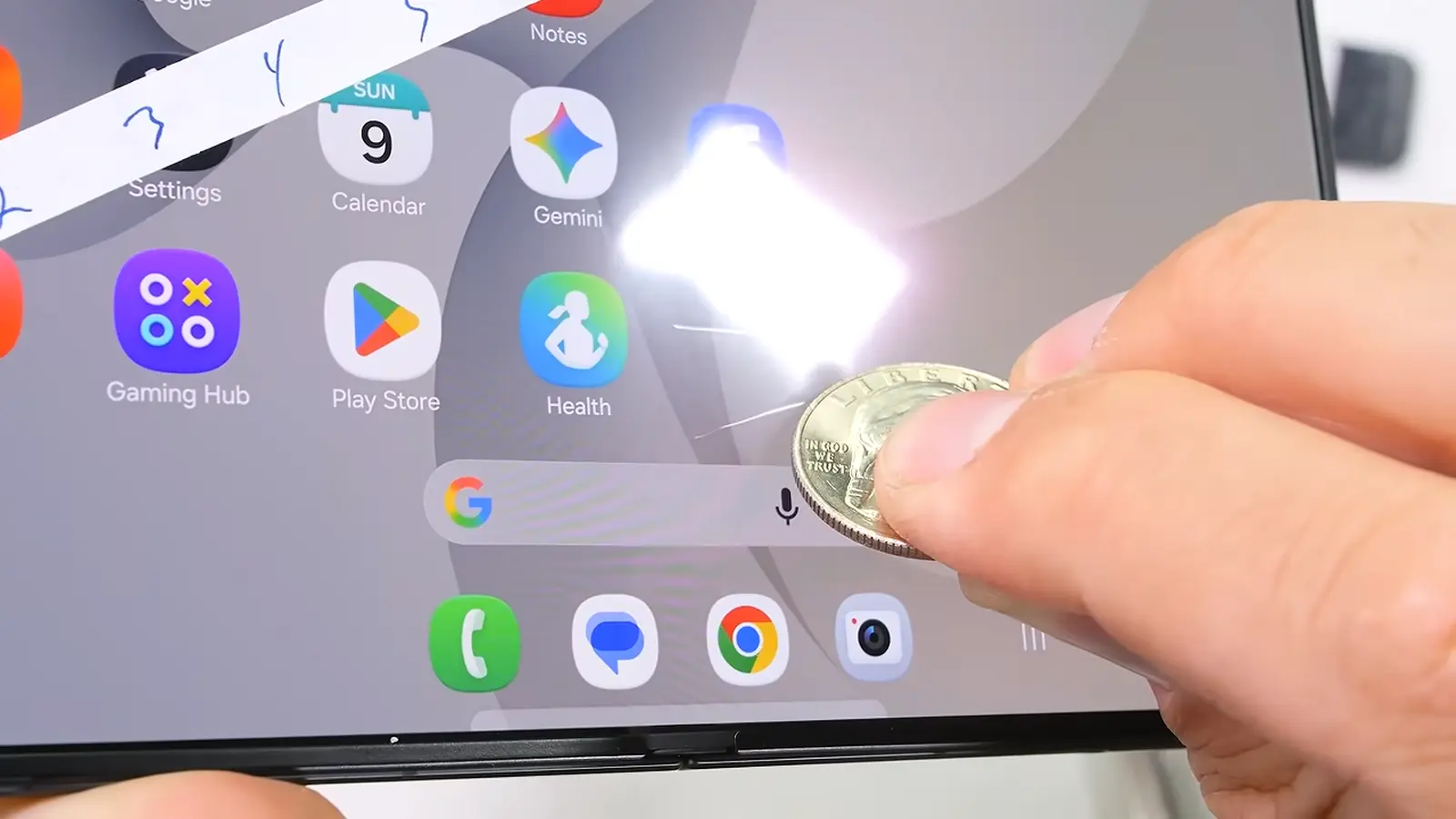
Apple and Samsung are testing selectively etched ultra-thin glass (UTG) for their 2028 foldables, thinning only the fold axis to about 40 micrometers while leaving non-fold areas thicker than 100 micrometers, according to industry reports citing supply-chain sources.
The selective approach aims to keep the hinge area flexible enough to fold while making the main viewing surface more resistant to scratches, keys and fingernails.
Current foldables use a single uniform UTG sheet and face a trade-off between durability and hinge stress. Samsung’s Galaxy Z Fold 8 uses 60 micrometer glass, the Z Flip 8 sits at 50 micrometers, and both the Z Fold 8 Ultra and Apple’s iPhone Duo go down to 45 micrometers.
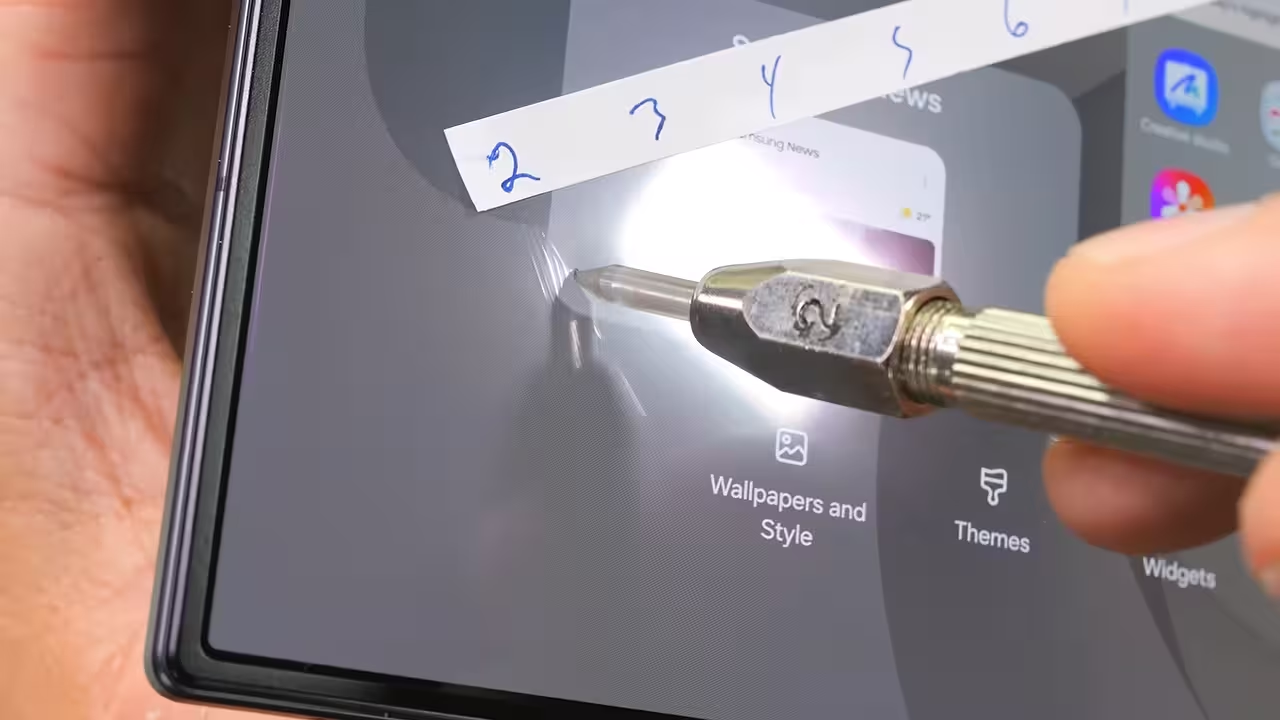
Making the entire sheet thicker raises the risk of cracks along the hinge; keeping it uniformly thin leaves the screen prone to marks from everyday use.
Suppliers must etch the glass precisely and then fill the thinned middle section with a resin that matches the refractive index of the glass so transition lines do not appear under the panel, the reports say.
Under the OLED stack Apple is testing an additional 40 micrometer UTG layer beneath the panel to reduce creasing. Samsung is using titanium support plates for now while it develops its own under-panel glass solution.
Final decisions on whether this selectively etched hybrid glass will ship are expected in the fourth quarter of 2027, and deployment will depend on manufacturing yields.


“I love exploring gadgets, apps, and trends that redefine how we connect, work, and play in a digital world.”

Discussion
Leave a Comment
Comments
No comments yet. Be the first.