
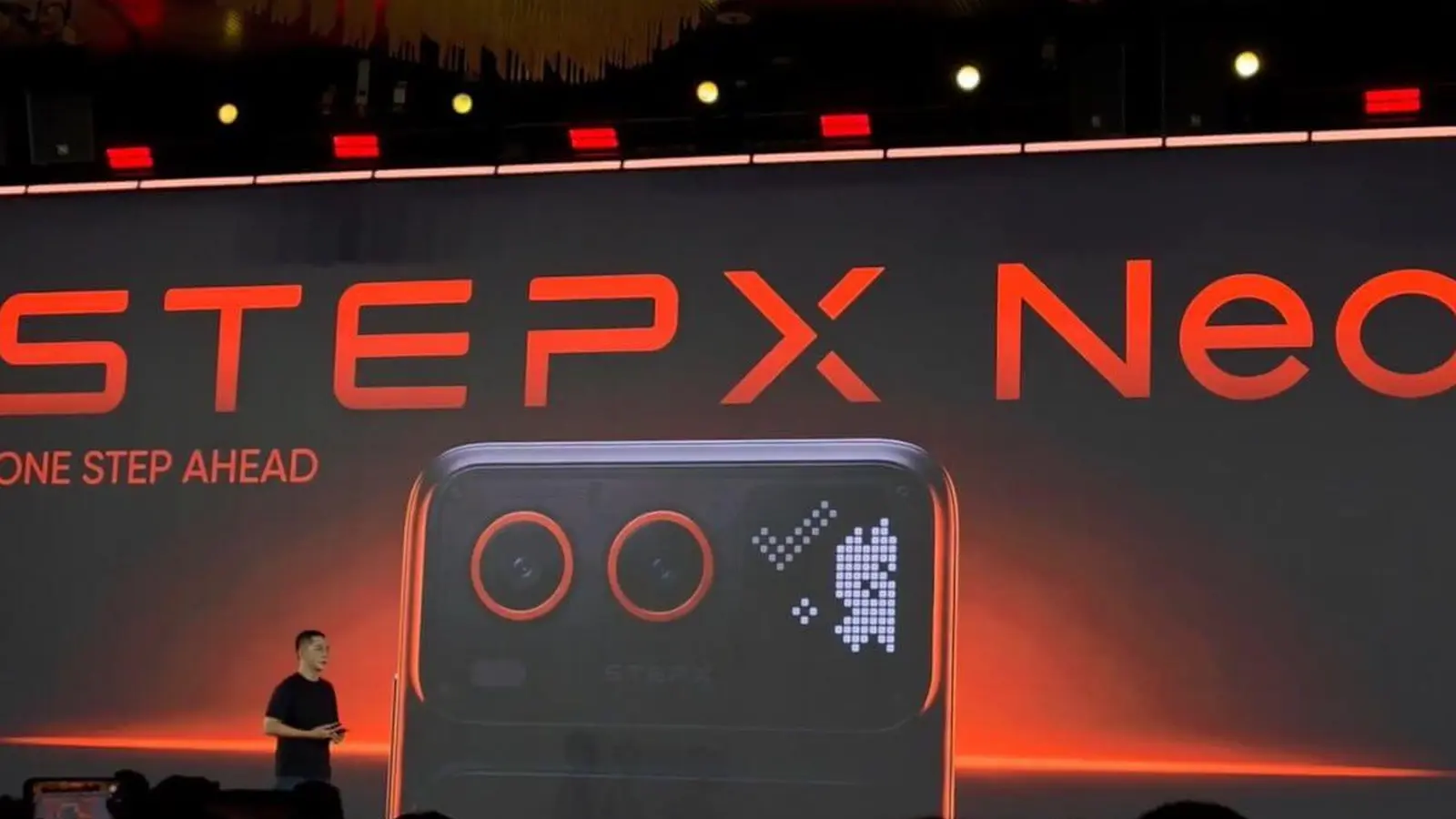
A startup in Shanghai says it has built something different: a smartphone that thinks for you. The company's name is StepFun, barely three years old and staffed by ex-Microsoft engineers, and the device they're teasing is called the StepX Neo. Read the announcement and you hit a wall of confident phrases—personal intelligent agent, native runtime for agents, offline autonomous execution—then the details thin out.
Hype first, hardware later
StepFun positions the StepX Neo around a packaged experience: an operating environment called Step AOS and a conversational agent named Step Amoo. Amoo is the interface you talk to in natural language. The company says the OS creates a 'runtime' optimized for agents and targets three classic pain points: memory, decision-making, and execution. Memory lookups reportedly land in about 15 milliseconds. That's the headline figure that sounds impressive on a slide. But slides are easy. Evidence is not.

There are a few technical claims worth noting. StepFun's on-device model, Step Edge, is said to top peer models across 29 benchmarks. The company hasn't published which benchmarks or which models it compared against. The agent allegedly handles many tasks locally, but can call cloud services for heavier work while promising personal data never leaves the phone. That hybrid approach is sensible and familiar in mobile AI circles, yet the firm gave no architecture diagrams, no model sizes, and no sample workloads that would let outsiders judge the trade-offs.
The operating system description raises questions too. StepFun says Step AOS blends Android, Linux, and RTOS components. That might mean a custom Android build augmented with low-level real-time services, or it could simply be an Android skin with new branding. Either is plausible. Neither is confirmed.
Design choices add another layer of familiarity. The StepX Neo reportedly has a dot-matrix LED panel on the back, visually recalling the Nothing phone aesthetic. No processor, battery, camera, RAM, or display specs have been shared. No release date either. What we have is an aspirational narrative and a list of launch partners that reads like a who's who of Chinese superapps: Meituan, Alipay, Amap, Baidu, Didi, Ctrip and others.

This looks like more show than substance at present.
So why does this matter? For one thing, the phrase 'agentic phone' is becoming a marketing magnet. It implies persistent, semi-autonomous software that can act on your behalf—book the restaurant, triage messages, coordinate calendars—without constant prompts. The idea is appealing. The technical overhead is not. Real agentic behavior needs robust memory management, safe decision-making rules, and reliable execution in messy real-world contexts. Those are hard to ship on a first product from a young startup.

For consumers and industry watchers, the launch is a test case. Does a smaller player still have room to define the experience around an on-device agent, or do we end up with incremental interfaces from major vendors who control hardware, cloud and models? StepFun is trying to grab attention, perhaps to secure ODM capacity, developer partners, or investment. If that attention converts to a working handset that actually runs an agent offline and intelligently coordinates cloud tasks with privacy protections, this will be worth watching. If not, it will join many vaporware claims before it.
Questions remain. Is Step AOS a genuine new OS layer or a rebranded Android? How large and capable is Step Edge, and under what constraints does it run? Will the StepX Neo support third-party agents, and how will security and data access be governed? For now, StepFun has produced an intriguing teaser and a long list of collaborators, but very little verifiable engineering detail.
Maybe the StepX Neo will become the first credible agentic smartphone. Maybe it will be a marketing stunt designed to move headlines. Either outcome would tell us something useful: whether agentic features are primarily a software innovation that can ride on commodity hardware, or whether they are a hardware-software integration problem that only larger incumbents can scale.
Short answer? Watch this space, and ask for benchmarks, demos, and technical papers before buying the story.


“I love exploring gadgets, apps, and trends that redefine how we connect, work, and play in a digital world.”

Discussion
Leave a Comment
Comments (2)
Curious and a bit hyped, but also wary. If StepX Neo actually runs a proper offline agent, huge. until then, meh, prove it
Is this even real? Sounds like slides>spin. 15ms memory lookup, sure - show the tests, model sizes, sample runs. Vaporware vibes, tbh