
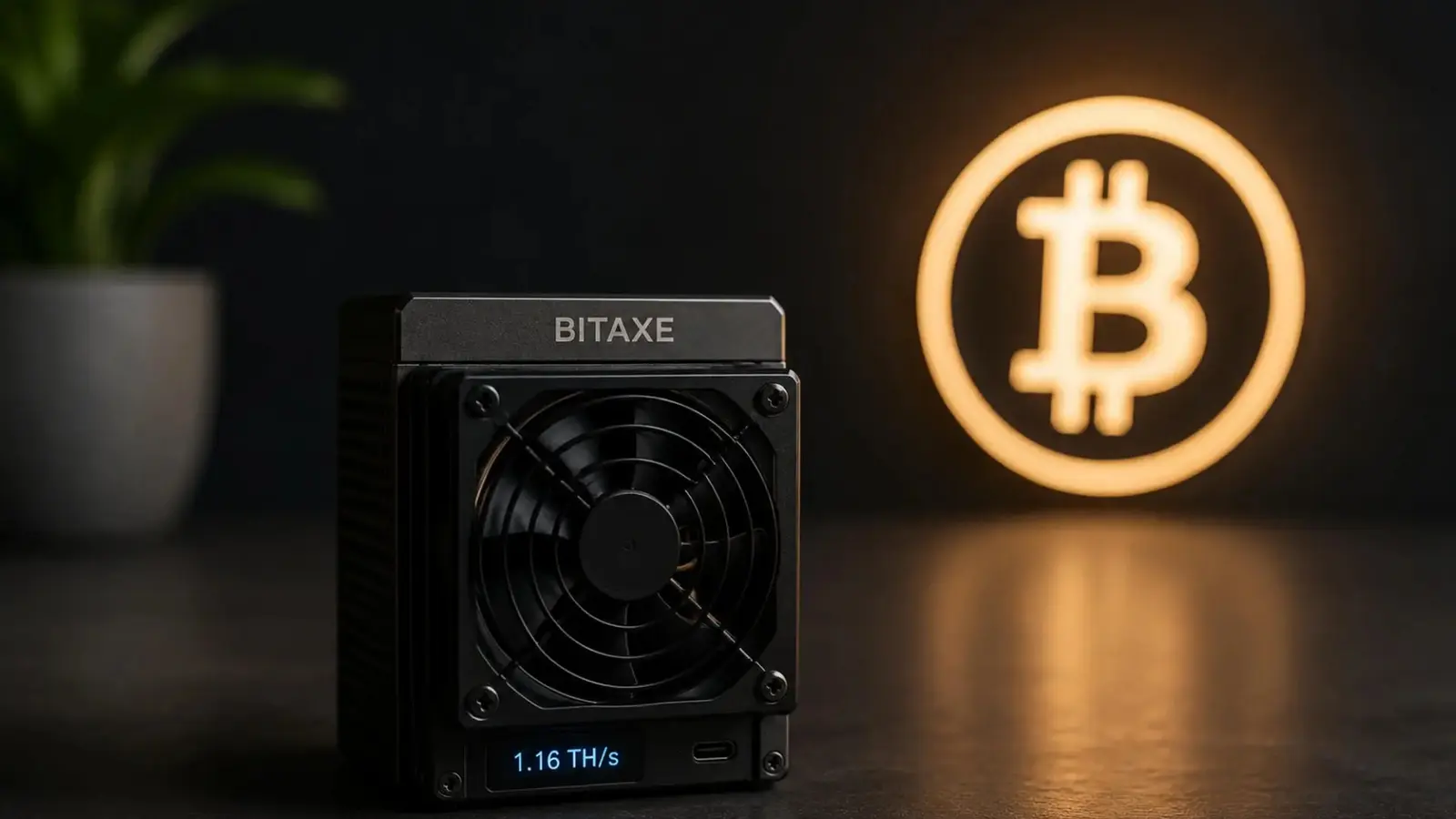
Home Miner Extracts Full Bitcoin Block with $250 Bitaxe Device
A solo home miner using a compact Bitaxe device, retailing for roughly $250, has unexpectedly mined a full Bitcoin block and captured the entire reward. The miner secured a 3.125 BTC block reward plus transaction fees, an outcome that stands out given the modest hash rate and power consumption of the hardware.
How rare is this win?
Statistically, a Bitaxe unit—operating at about 1 to 1.2 TH/s—would need on the order of 18,000 years on average to find a block on its own. That makes this event extraordinarily unlikely. At the time of discovery, the material value of the 3.125 BTC reward was estimated between $200,000 and $270,000 depending on market prices, underscoring the substantial real-world payout from a single solo-mined block.
Bitaxe specs and power efficiency
The Bitaxe miner is an open-source, ultra-compact ASIC miner with a hash rate in the 1–1.2 terahash-per-second range and electricity draw between 15 and 25 watts—less than a typical household light bulb. Its low power use and small form factor make it popular among hobbyist miners experimenting with Bitcoin mining and decentralized blockchain participation.

Context: solo mining vs. industrial farms
Even a 6 TH/s rig—multiple times more powerful than the Bitaxe—has a tiny daily chance (around 1 in 180 million) to discover a block. This demonstrates how improbable solo mining successes are for small-scale equipment, which makes this win noteworthy.
Most home miners connect to solo-mining pools or services such as CKPool or Braiins Solo. These platforms provide the technical infrastructure needed to submit valid blocks to the Bitcoin network while allowing the finder to keep the full block reward instead of sharing it across a pooled group.
Despite several similar reports over the past year of sub-10 TH/s units finding blocks, large industrial mining farms with thousands of high-performance ASICs still control the majority of the network hash rate and play a major role in securing the blockchain.
Market and network impact
This rare solo-mining success had no measurable effect on Bitcoin price or major mining companies’ stock values. The Bitcoin protocol continues to produce a block roughly every 10 minutes, and this event mainly highlights the permissionless, decentralized design of the network—where even an inexpensive device has a theoretical chance to compete with large datacenters.
For enthusiasts and observers, the story is a reminder that solo mining, while extremely unlikely to pay off, remains part of Bitcoin’s open and permissionless mining ecosystem, offering occasional surprising outcomes for hobbyist miners and reinforcing the network’s decentralized nature.


“I cover automotive innovation, electric vehicles, and the future of mobility — where technology meets sustainability.”

Discussion
Leave a Comment
Comments
No comments yet. Be the first.