
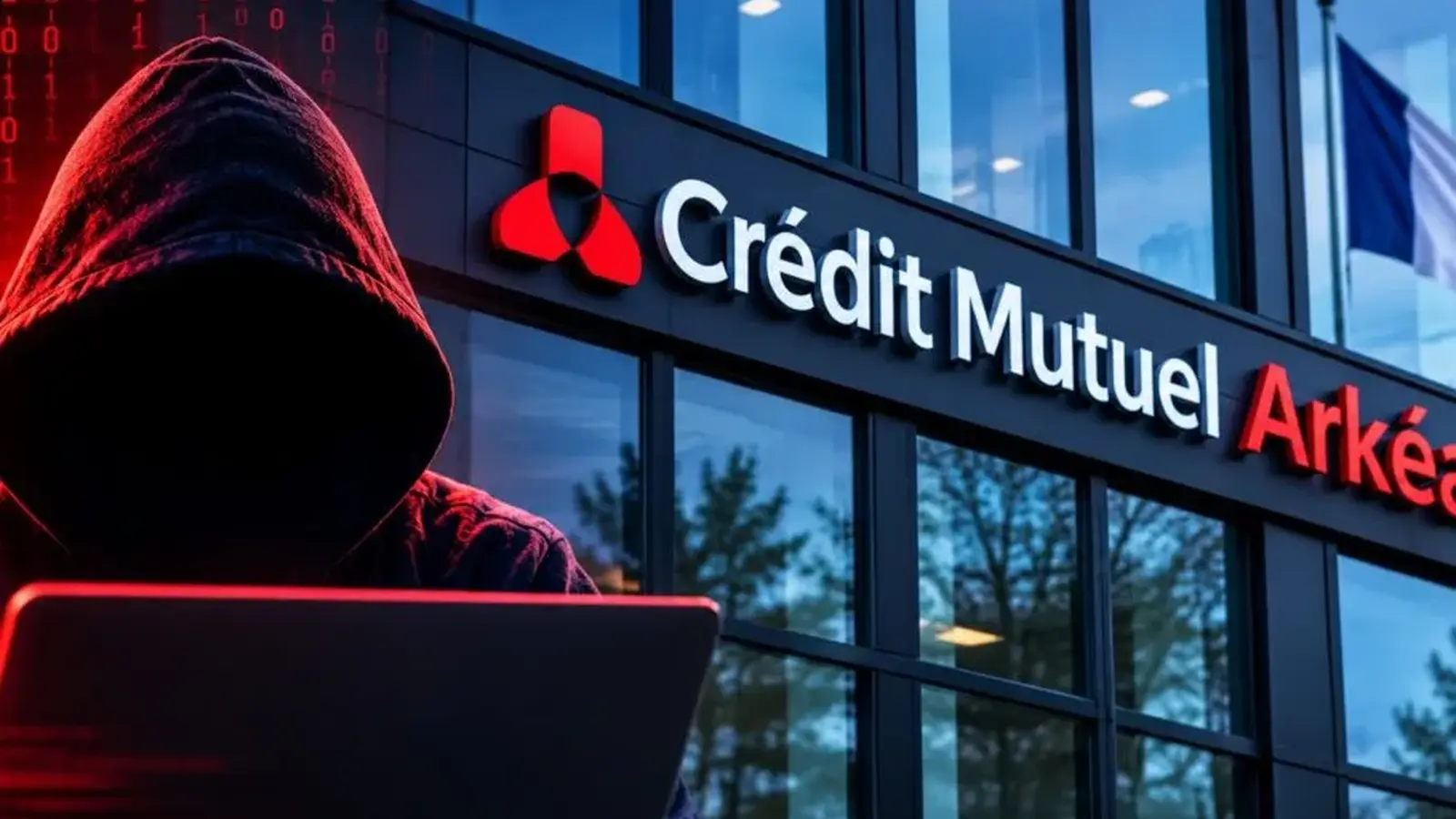
Crédit Mutuel Arkéa says roughly €100 million was siphoned from one of its own bank accounts in an attack its chairman described as likely assisted by advanced artificial intelligence.
The regional French banking and insurance group announced the incident on November 4, after Julien Carmona, chairman of the board, told Agence France-Presse the operation was unprecedented in complexity and caused about €100 million in direct financial loss.
How attackers accessed the bank’s systems
According to the bank, the intrusion began outside Arkéa’s own infrastructure: on October 27 the group detected signs of a compromise at a third-party service provider and severed the provider’s access while notifying authorities. The provider’s identity has not been disclosed; Arkéa said banks collectively decided not to name the vendor to avoid exposing similar suppliers to attack.
Investigators say the attackers then used access to create fake IBANs and submitted payment orders moving funds from the bank’s account to accounts at other banks. Those transfers used the instant payments network, which the bank says provided fewer controls than standard bank transfers. Transfers began on Sunday, November 1, and Arkéa discovered the true extent of the fraud on the morning of Tuesday, November 3. To halt further outflows the bank cut all external access to its IT systems and disconnected from the interbank payment network, removed the fake accounts and reset authentication credentials before publicly disclosing the breach the following day. Reuters reported the attackers targeted the bank’s own account rather than customer accounts.
Was artificial intelligence involved?
Carmona described the perpetrators as a highly organised criminal group and said the operation was "most likely with the help of advanced artificial intelligence," an attribution he made in an AFP interview. To date no group has claimed responsibility and the bank has not published technical evidence that AI was used.
The components of the attack disclosed so far — compromising a service provider, stealing access credentials, registering fraudulent payment orders, routing funds through correspondent accounts and moving money on to cryptocurrency platforms — are known techniques that do not inherently require AI. It remains possible, Arkéa acknowledged, that attackers used AI to identify weaknesses, generate code or forge account-opening documents, but the bank and external reports have not produced evidence to confirm those scenarios.
The bank says the €100 million loss represents roughly 1 percent of the group’s shareholders’ equity, about the size of one quarter’s profit, and will not affect the group’s financial solidity.
At the time of Arkéa’s announcement no perpetrator had taken responsibility and the identity of the affected service provider remained undisclosed.


“I love exploring gadgets, apps, and trends that redefine how we connect, work, and play in a digital world.”

Discussion
Leave a Comment
Comments
No comments yet. Be the first.