
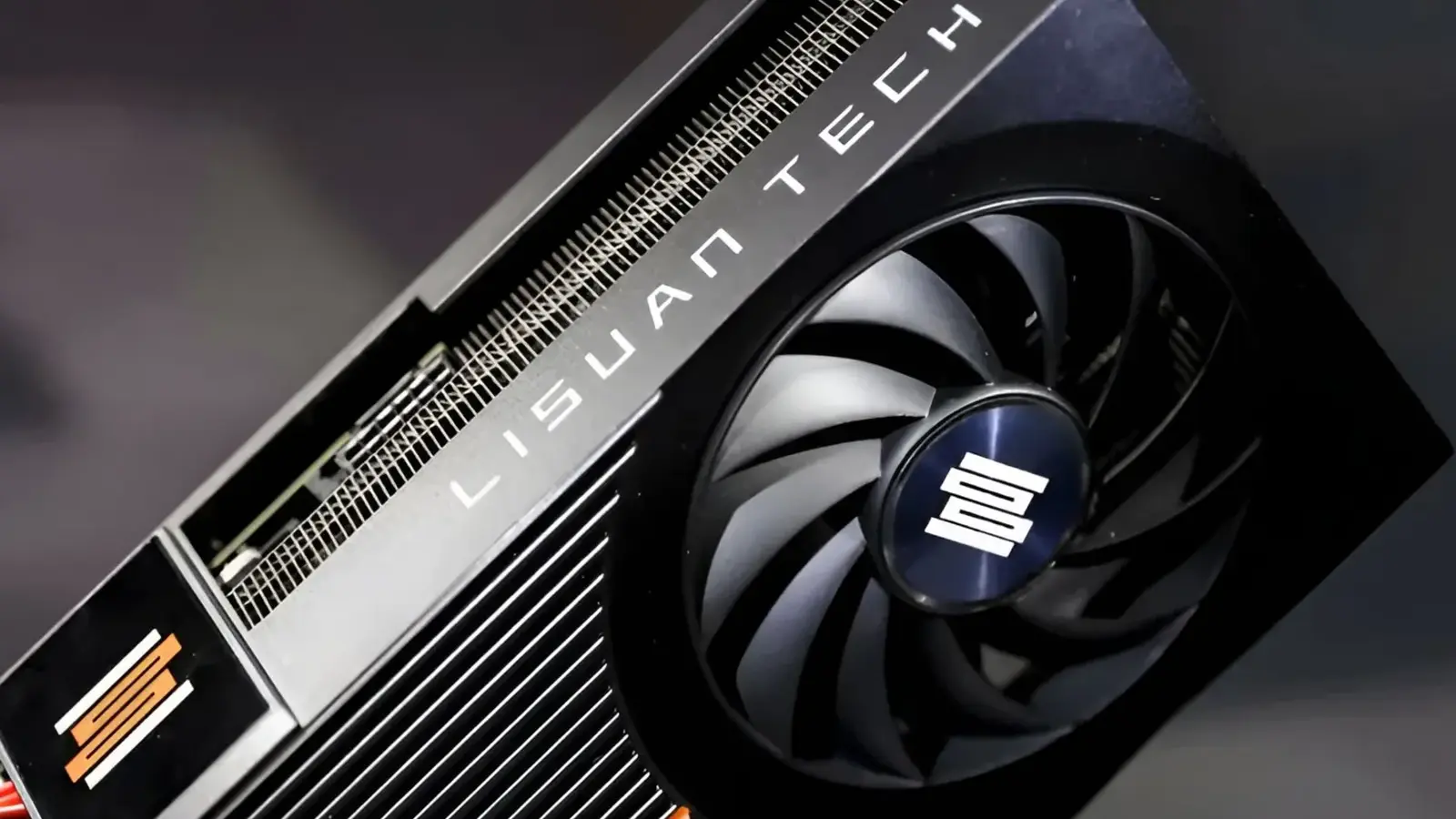
Chinese startup Lisuan has begun shipping its new G100-series graphics cards to domestic customers, signaling a potential new rival in the GPU market dominated by NVIDIA and AMD. Early deliveries target professional customers, but the broader ambitions — and specs — have gamers and industry watchers taking notice.
What the Lisuan 7G106 brings to the table
At the heart of Lisuan’s push is the 7G106, a 6nm GPU built on TSMC processes and designed for both professional workloads and consumer use. The card features 12 GB of GDDR6 memory on a 192-bit bus, PCIe 4.0 support and a 225W power envelope. Lisuan also touts proprietary image-enhancement tech called NRSS, aimed at sharpening and upscaling visuals for everything from CAD to gaming.
Initial shipments of the G100 family have been sent to clients working on digital twin applications, indicating an enterprise-first strategy. Still, Lisuan has shown the cards in gaming contexts before — so retail availability could be a matter of when, not if. Mass production reportedly began in fall 2025, with Chinese retail channels likely to see products by Q1 2026.

Benchmarks released so far place the 7G106 in the midrange performance bracket: respectable for many modern titles and professional tasks, but not yet at the high-end levels of flagship NVIDIA or AMD silicon. That said, a competitive midrange part from a local supplier could shift dynamics in China’s hardware ecosystem and give domestic integrators a native option.
One standout claim is possible support for Windows on ARM — a compatibility angle neither NVIDIA nor AMD have fully prioritized in their discrete lines. If Lisuan nails ARM support alongside solid driver stability, developers and OEMs building ARM-based workstations could have a compelling new choice.
- GPU: Lisuan 7G106 (6nm, TSMC)
- Memory: 12 GB GDDR6, 192-bit
- Interface: PCIe 4.0
- Typical Power: 225 W
- Notable tech: NRSS image enhancement; potential Windows on ARM support
Will Lisuan dethrone NVIDIA or AMD? Not immediately. But by focusing on local demand, professional markets like digital twin platforms, and niche compatibility advantages, Lisuan could carve out a meaningful foothold. Watch for driver maturity, software ecosystem support, and retail reviews when G100 cards reach consumer shelves early next year.

“I cover emerging technologies, digital innovation, and the intersection of tech and everyday life. My goal is to make complex trends accessible and inspiring.”

Discussion
Leave a Comment
Comments
No comments yet. Be the first.