
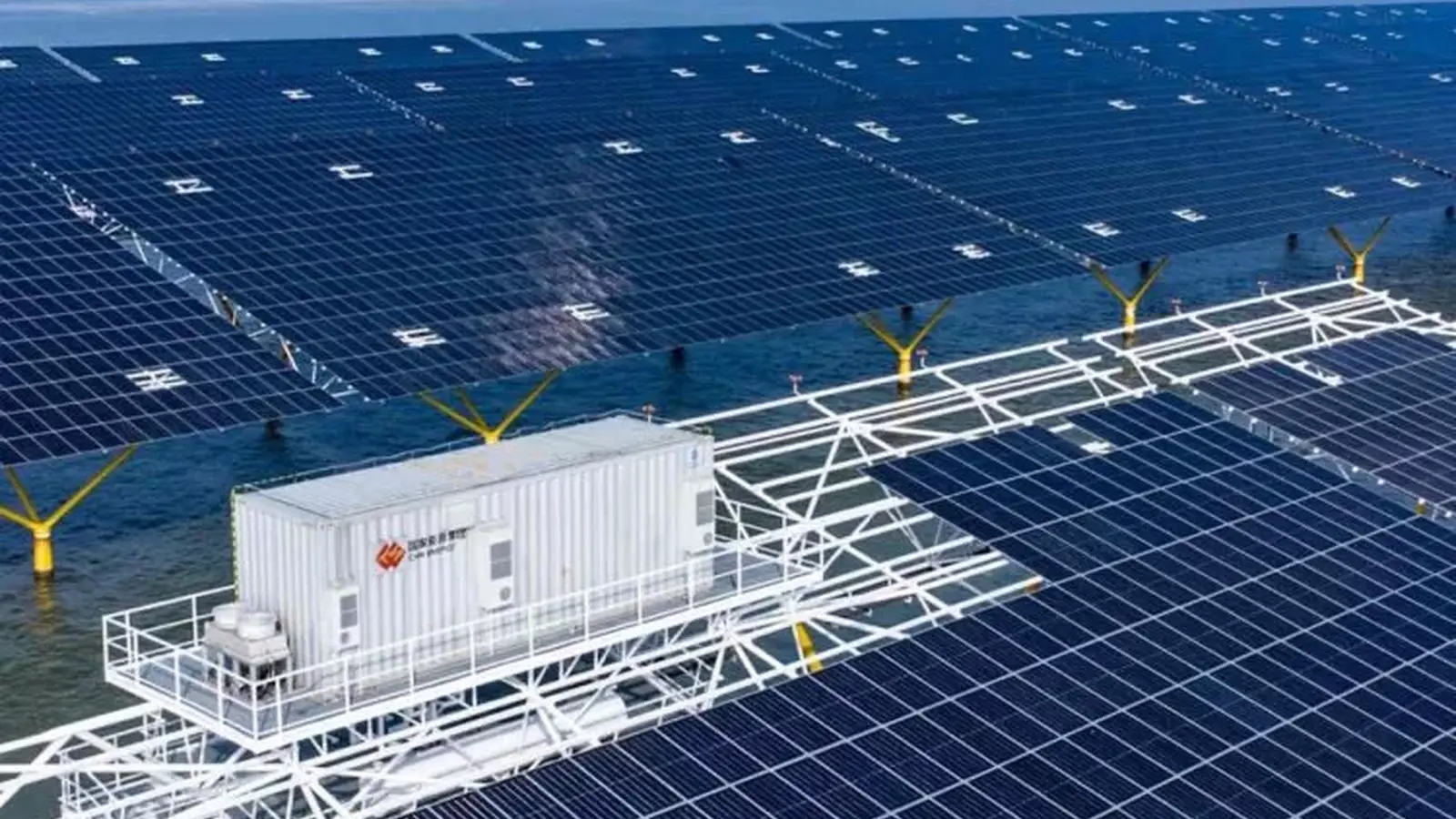
China has completed full operation of the world's largest offshore floating solar farm — a 1-gigawatt photovoltaic installation off the coast of Dongying, Shandong. The project, designed to power roughly 2.6 million people, marks a milestone for large-scale marine renewable energy and innovative offshore PV engineering.
Gigawatt-scale solar built on shallow seas
The Dongying HG14 project, developed by Guohua Investment (a subsidiary of state-owned China Energy Investment Corp), was fully connected to the regional grid in late December 2025. Located about 8 kilometers from shore and covering roughly 1,223 hectares of shallow coastal waters (1–4 meters deep), the farm is the first gigawatt-scale offshore photovoltaic installation using fixed-pile foundations.
Key technical specs
- Capacity: 1 GW (1,000 MW) of photovoltaic generation.
- Panels: Over 2.3 million bifacial solar modules rated at 710 W each, mounted at a 15° tilt to capture direct and reflected light from the sea surface.
- Support structures: 2,934 individual solar platforms anchored by 11,736 steel piles driven into the seabed.
- Transmission: Combination of onshore cabling and the project’s first 66 kV submarine cable in China to move high-voltage PV output over long distances.
Built for waves, wind and ice — and efficiency
CHN Energy and the project engineering team emphasize resilience as a core design requirement. The fixed-pile architecture was engineered to withstand strong storms (up to typhoon-level conditions), large tidal forces, high winds and seasonal sea ice. According to Zhang Bo, deputy project manager at Guohua Energy Investment, the foundation design “not only tolerates severe storms and winter icing, it also reduces steel consumption by more than 10 percent,” providing a blueprint for future offshore PV plants.
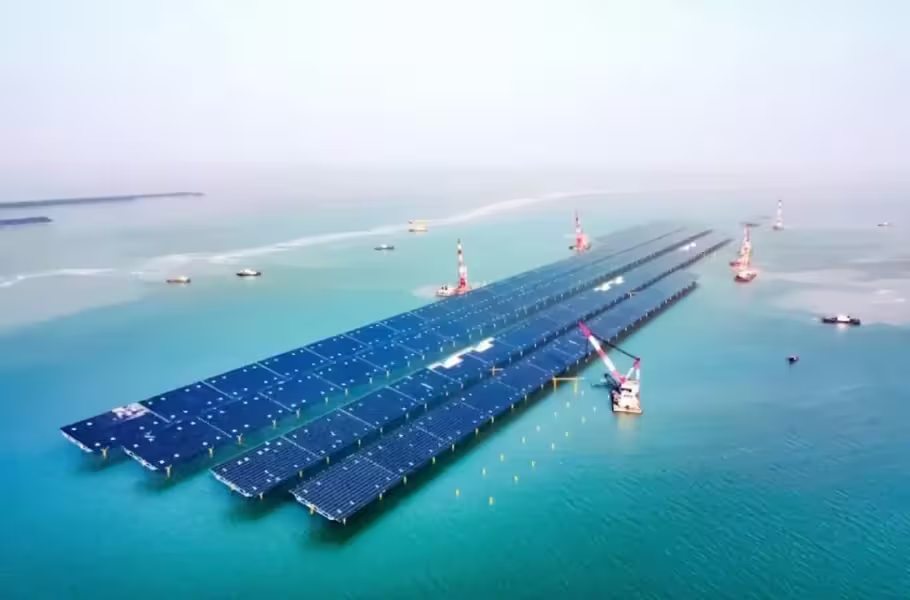
Placing large-format, bifacial modules over cool, reflective seawater enhances performance: lower ambient temperatures reduce panel heat losses while the water surface increases reflected irradiance, lifting energy yield compared with comparable land sites. The 15° tilt and bifacial 710 W cells are optimized to exploit that additional albedo effect.
Implications for renewable grids and coastal energy planning
At 1 GW, the HG14 farm contributes significantly to China’s coastal renewable portfolio and demonstrates a scalable approach to expanding PV capacity without competing for scarce land. The use of a 66 kV submarine transmission link also shows how high-voltage marine cables can integrate large offshore PV plants into distant grids, reducing curtailment and improving system flexibility.
Beyond raw capacity, the project provides practical lessons in materials optimization, marine construction logistics, and long-term durability for PV systems exposed to saltwater, waves and ice. For countries with wide continental shelves, similar fixed-pile offshore arrays could offer a pathway to add gigawatts of clean power while preserving land-based habitats.

“My work centers on sustainability, energy, and environmental science — examining how innovation can lead to a greener future.”

Discussion
Leave a Comment
Comments
No comments yet. Be the first.