
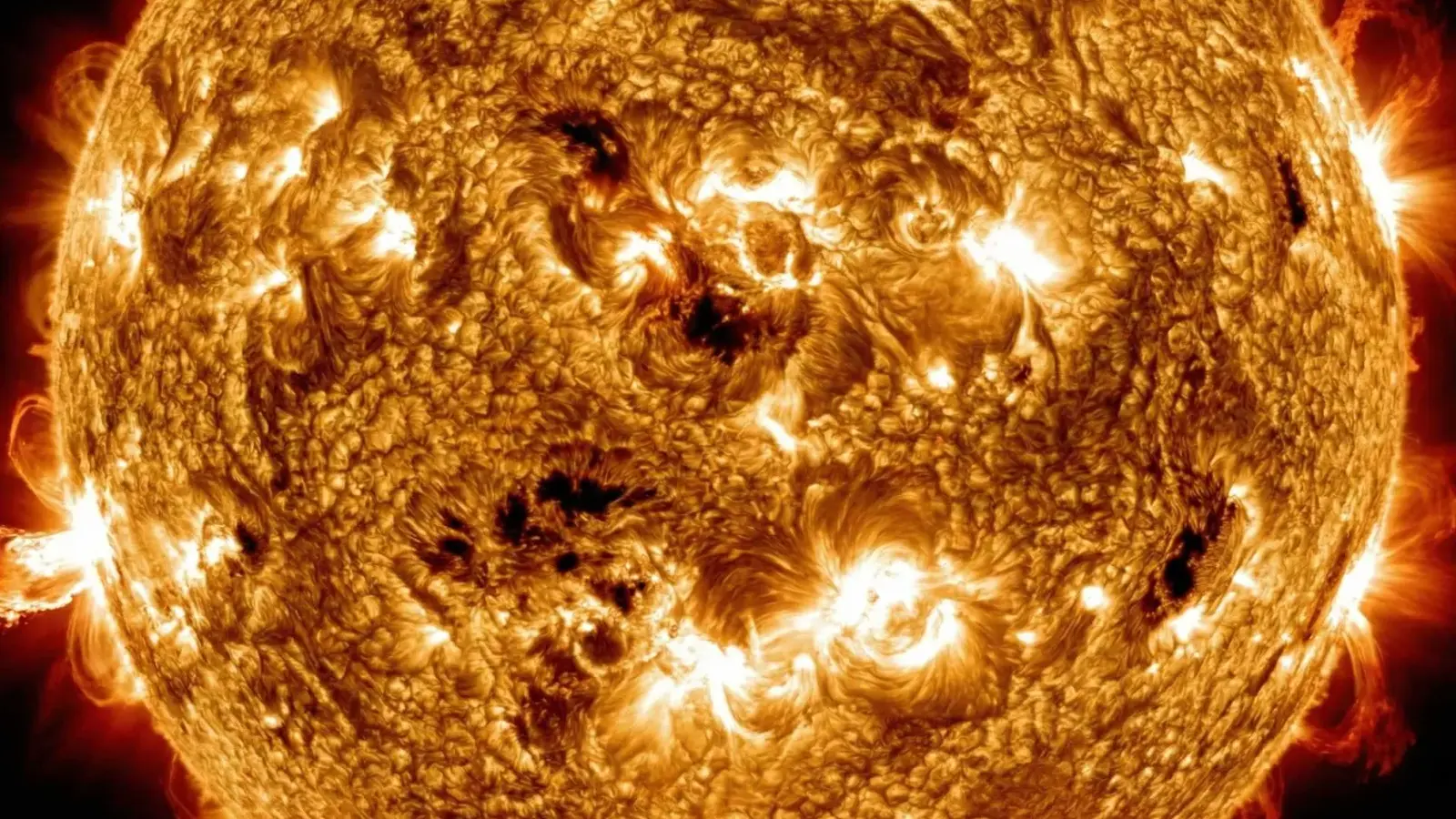
The Sun looms over our sky with a diameter of roughly 1.4 million kilometers — about 109 times wider than Earth. Yet astronomers routinely call it a "dwarf" star. That seemingly odd label comes from how scientists classify stars, not from the Sun's absolute size. This article explains the terminology, the physics behind stellar classification, and what the Sun's label tells us about its past and future.
What "dwarf" means in stellar classification
In astronomy, "dwarf" does not imply small in human terms. The Sun is classified as a G2V star: "G2" indicates its spectral type and surface temperature, while the Roman numeral V — read as "five" — marks it as a main-sequence star, commonly called a "dwarf." The term dates back to astronomer Ejnar Hertzsprung, who, when plotting stars by brightness and color, noticed a split between luminous giants and lower-luminosity stars. He labeled the fainter group "dwarfs" and the brighter ones "giants."
Spectral type, temperature, and color: why the Sun is G2V
Spectral classification groups stars by temperature and the absorption lines in their spectra. Stars of type G have surface temperatures roughly between 5,125 and 5,725 °C (about 5,400–5,900 K). The subcategory G2 places the Sun toward the hotter side of this range; the Sun's effective surface temperature is approximately 5,525 °C (about 5,800 K). These temperatures give solar light a peak visible output in the green part of the spectrum, but because the Sun emits across the entire visible range, its true color is essentially white when seen outside Earth’s atmosphere.
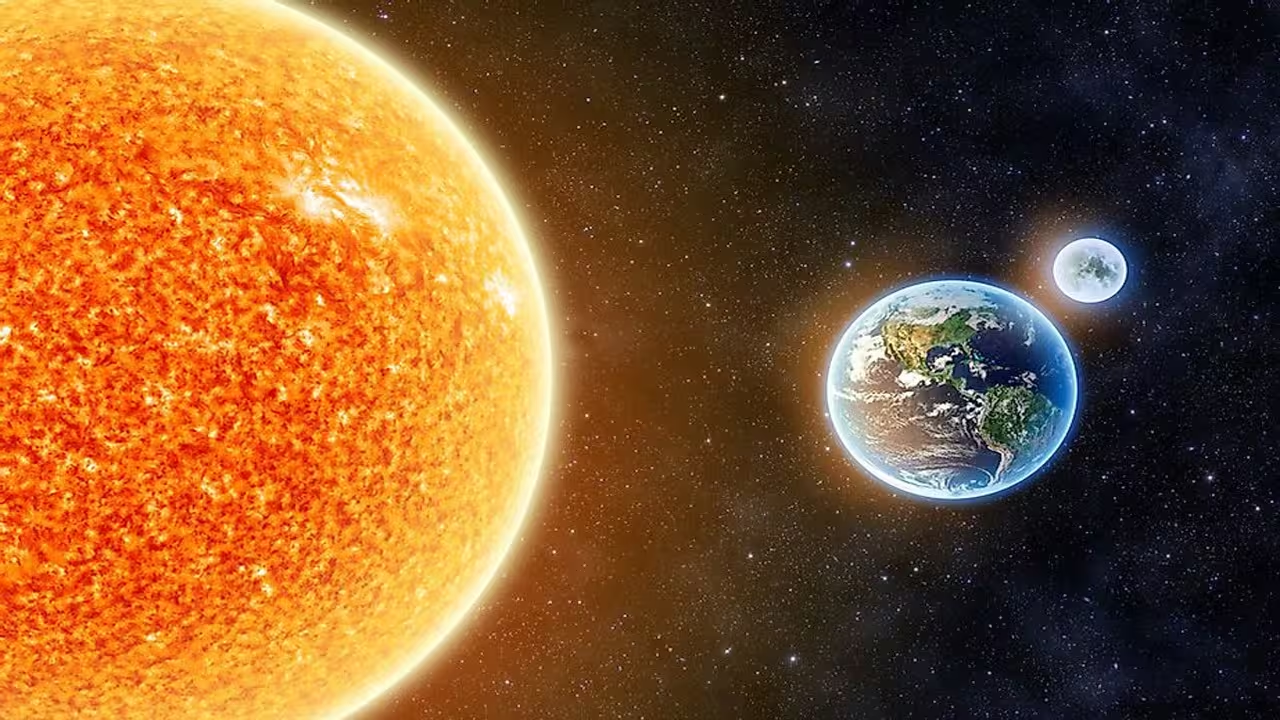
Why the Sun looks yellow from Earth
We often describe the Sun as yellow because Earth's atmosphere scatters shorter-wavelength blue light more than longer-wavelength red and yellow light. The same Rayleigh scattering that paints the daytime sky blue shifts the Sun's apparent color toward yellow when viewed from the ground, especially near sunrise and sunset.
Mass, main sequence, and why "dwarf" makes sense
Stars on the main sequence generate energy by fusing hydrogen into helium in their cores. The Sun sits squarely on this sequence, and within the G-class band its mass is typical: roughly 90% to 110% of the solar mass spans stars labeled G0 to G9. A star's mass determines its luminosity, temperature, and lifecycle. Compared with true giant stars — which have exhausted core hydrogen and expanded to many times their original radius — a main-sequence star like the Sun is compact by stellar standards, hence categorized as a dwarf.

Calling the Sun a "dwarf" emphasizes its evolutionary stage rather than downplaying its sheer scale. Main-sequence stars are extremely common in the Galaxy: most stars you encounter are "dwarfs," with red dwarfs (M-type) being the most numerous. The Sun is comparatively bright among dwarfs because it is more massive and hotter than the typical red dwarf.
Solar evolution: from stable dwarf to red giant
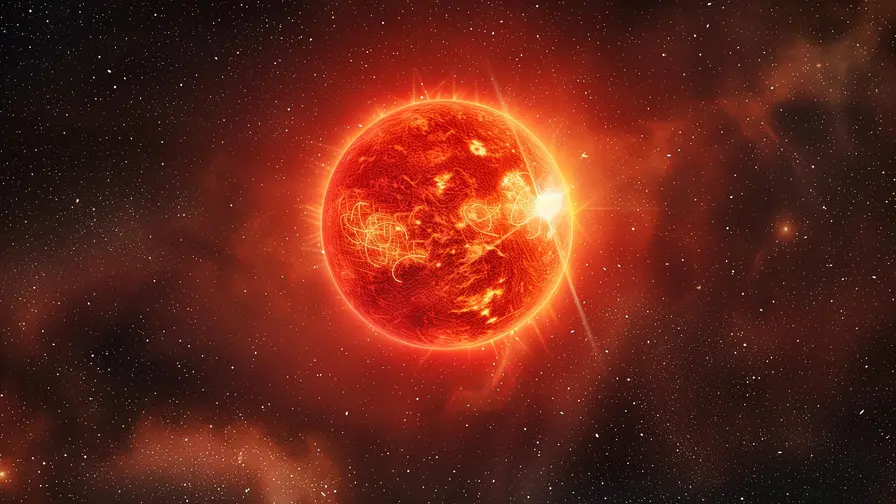
The Sun will not remain a main-sequence dwarf forever. Over the roughly 4.6 billion years since its formation, the Sun has brightened and grown gradually; models indicate it has increased in radius and luminosity by about 10% since settling on the main sequence. In about 5 billion years, once the Sun exhausts the hydrogen in its core, it will leave the main sequence and swell into a red giant. During that phase the outer layers will expand dramatically, likely engulfing Mercury and Venus and possibly Earth. The Sun's color will shift toward red as its surface cools during the giant phase.
These changes are driven by interior physics: hydrogen fusion in a contracting core gives way to shell burning around an inert helium core, causing the envelope to expand. Mass loss, changes in angular momentum, and mixing processes shape the exact timeline and extent of the expansion — active research areas in stellar astrophysics.
Implications for astronomy and life on Earth
Understanding why the Sun is labeled a dwarf clarifies how astronomers organize stellar populations and predict stellar behavior. Classification helps in areas from exoplanet habitability studies to calibrating stellar models used for distance measurements and galactic archaeology. For Earth, the Sun's gradual brightening already affects long-term climate models; over geological timescales, increasing solar luminosity will alter surface conditions well before the red giant phase arrives.
Expert Insight
Dr. Maya Alvarez, an astrophysicist specializing in stellar evolution, notes: "Calling the Sun a 'dwarf' is shorthand that captures its current life stage. It's a precise term in stellar astrophysics, not a comment on relative impressiveness. The Sun's stability as a G2V star has been crucial for life on Earth, and studying other dwarfs helps us place our star in a broader cosmic context."
In short, the Sun's "dwarf" tag is a technical classification tied to its temperature, mass, and fusion status. It sits in the middle of a continuous stellar family: neither the smallest nor the largest, but the star that made life on Earth possible and will, billions of years from now, undergo a dramatic transformation.

“The cosmos has always fascinated me. I write about space missions, astronomy, and the technologies pushing humanity beyond Earth.”

Discussion
Leave a Comment
Comments (2)
Is it really certain Earth will get engulfed when the Sun goes red giant? I heard orbit changes, mass loss etc could save it? kinda confused...
Woah, calling the Sun a 'dwarf' threw me off, thought that was an insult lol. So it's about life stage and fusion, huh? Mind blown, need coffee