
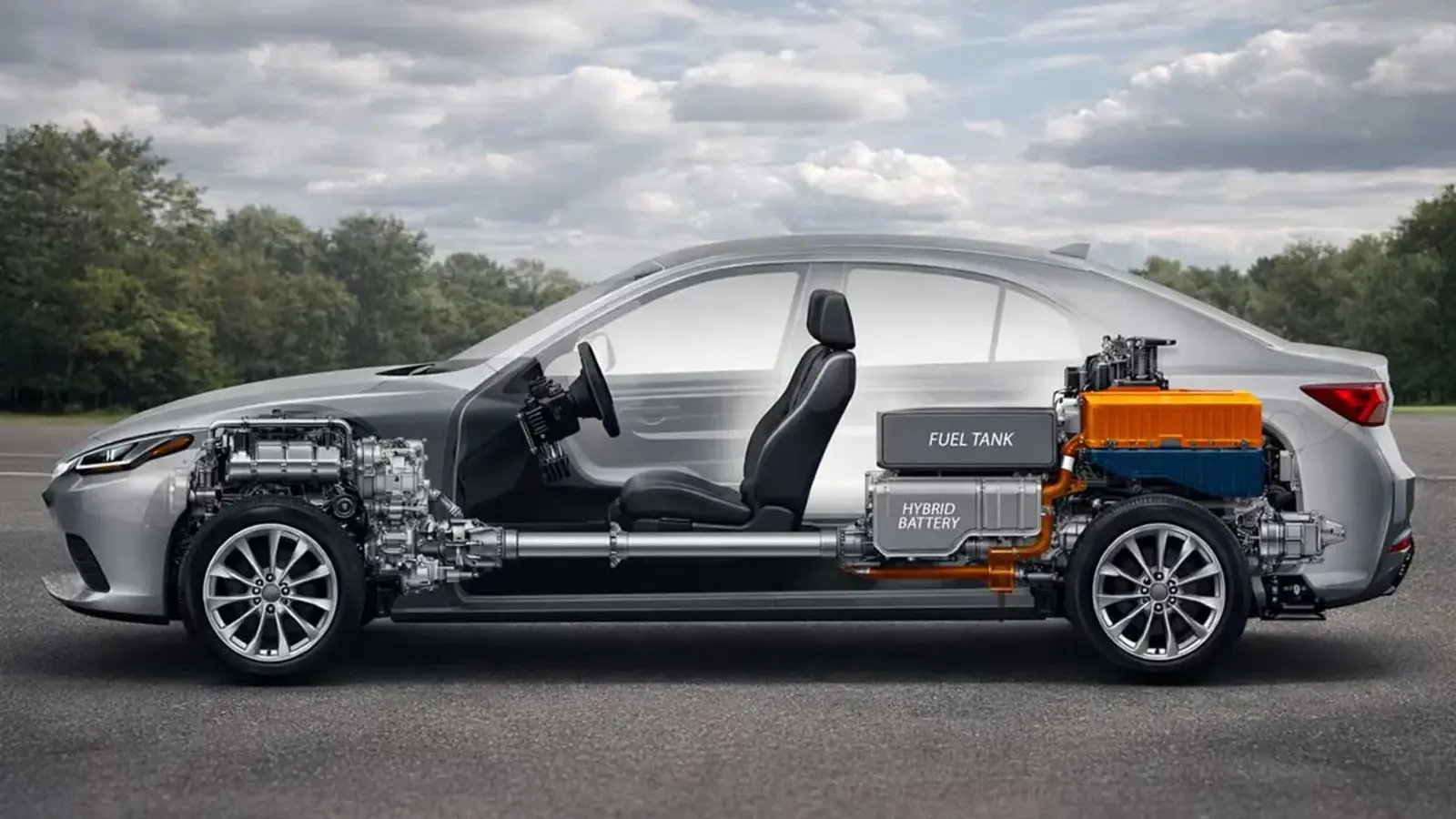
Toyota patents a simple but smart change to hybrid architecture
Toyota has filed a new patent that could make future hybrids feel far more engaging to drive. Rather than inventing a radically new engine or complex powertrain, the company has rethought how core components are arranged, with an eye on handling, traction, and safety for rear-wheel drive hybrids.
What Toyota changed
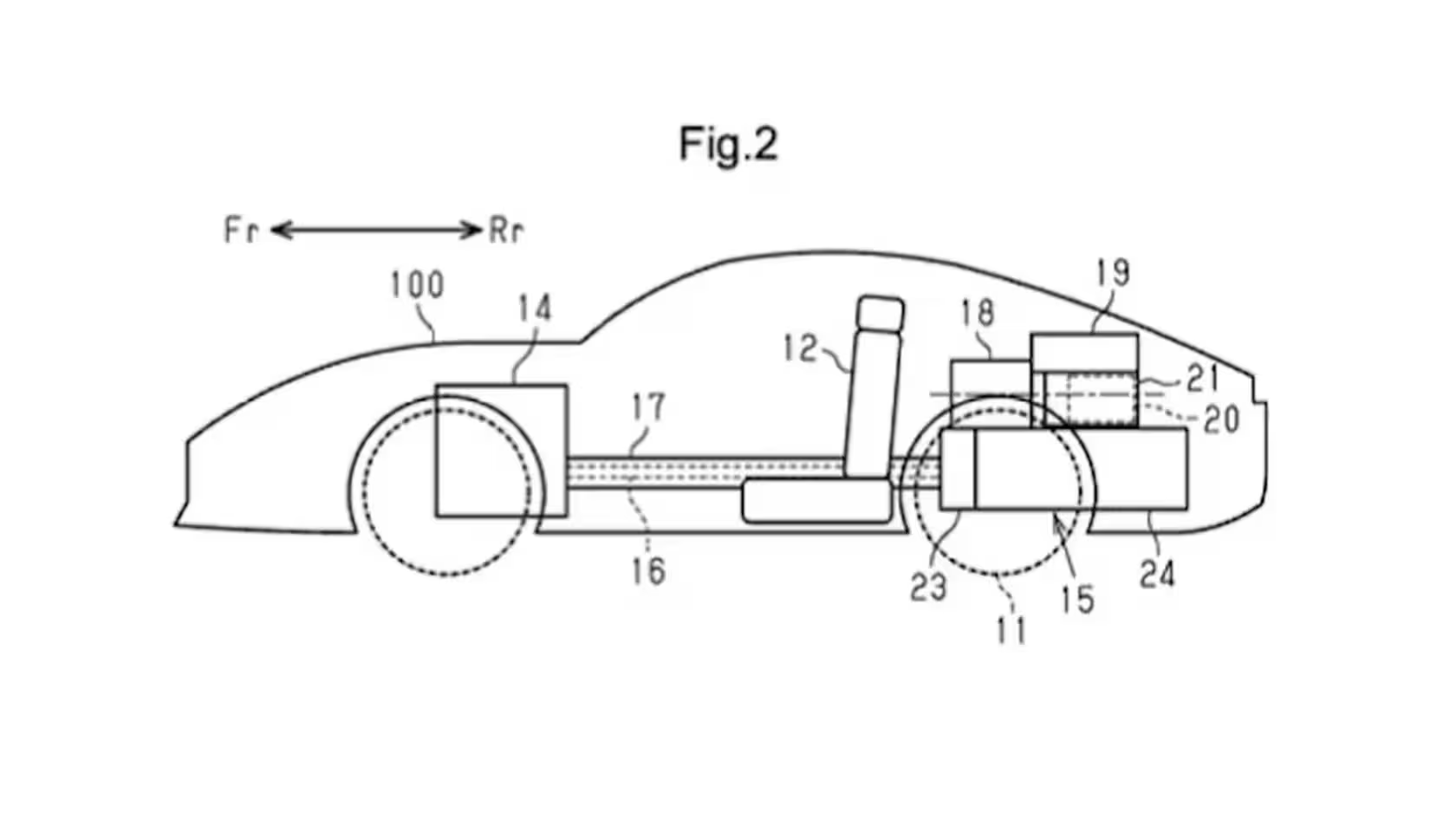
In the layout described in US patent documents, the gasoline engine remains up front and sends drive to the rear axle via a driveshaft. The real shift happens at the back of the car. Instead of the conventional placement where both the fuel tank and the main battery sit at the rear, Toyota moves the fuel tank forward toward the center of the vehicle and mounts the heavy traction battery directly above the rear axle.
This may sound subtle, but in vehicle dynamics every kilogram, and where it sits, matters. The battery is a constant mass while the fuel tank becomes lighter as the car is driven. By bringing the variable mass closer to the center of gravity, Toyota reduces the impact of fuel consumption on balance and cornering behavior.

Benefits for handling, traction, and safety
Placing the battery over the rear axle gives a few tangible advantages:
- Improved rear wheel grip during hard acceleration thanks to increased static load on the driven wheels
- Less wheelspin and stronger initial acceleration in slippery or sporty launch situations
- More consistent handling as the fuel level drops, since the lighter fuel tank is nearer the centerline
- Added protection for the fuel tank in rear impacts, as the battery acts as a buffer and reduces the risk of puncture or fire
Toyota points to both performance and safety as motivations. In essence, this is a low-complexity, high-impact rearrangement that can make hybrids feel more planted and responsive without adding exotic mechanical systems.
With hybrids becoming the norm, buyers want more than efficiency. They want cars with character and confidence in every corner, and Toyota appears to be listening.
Where we might see it
The filing does not name specific models, but the layout makes particular sense for rear-wheel drive platforms. Candidates include sporty Lexus sedans and next generation Toyota models with rear- or all-wheel bias, especially variants tuned for driving dynamics. It could also find a home in performance-oriented hybrids from Toyota's subbrands, where balance and traction are priorities.
Market context and caveats
Toyota has dominated the hybrid market for years, and 2024 sales reinforced that position. As hybrid systems become baseline technology, expectations shift: shoppers, particularly those targeting premium Toyota and Lexus models, expect driving engagement as well as economy. This patent signals Toyota is working to close that gap.
That said, a patent is not a guarantee of production. Many ideas are protected and never make it to showroom floors. Still, the simplicity of this approach makes it plausible for volume application, since it leverages existing powertrain components with only packaging and structural changes.
Key takeaway
This patent is a reminder that small packaging decisions can yield large improvements in vehicle dynamics, traction, and safety. For enthusiasts hoping hybrids can be fun as well as frugal, Toyota may be plotting a clever route forward.

“I cover automotive innovation, electric vehicles, and the future of mobility — where technology meets sustainability.”

Discussion
Leave a Comment
Comments (2)
Interesting idea, but does putting a heavy battery right over the rear axle affect crash safety or suspension wear? curious how they'd tune it tho
Wow this is sneaky smart. Move the battery to the axle, fuel forward, simple packaging change but big payoff. Fingers crossed they actualy ship it