
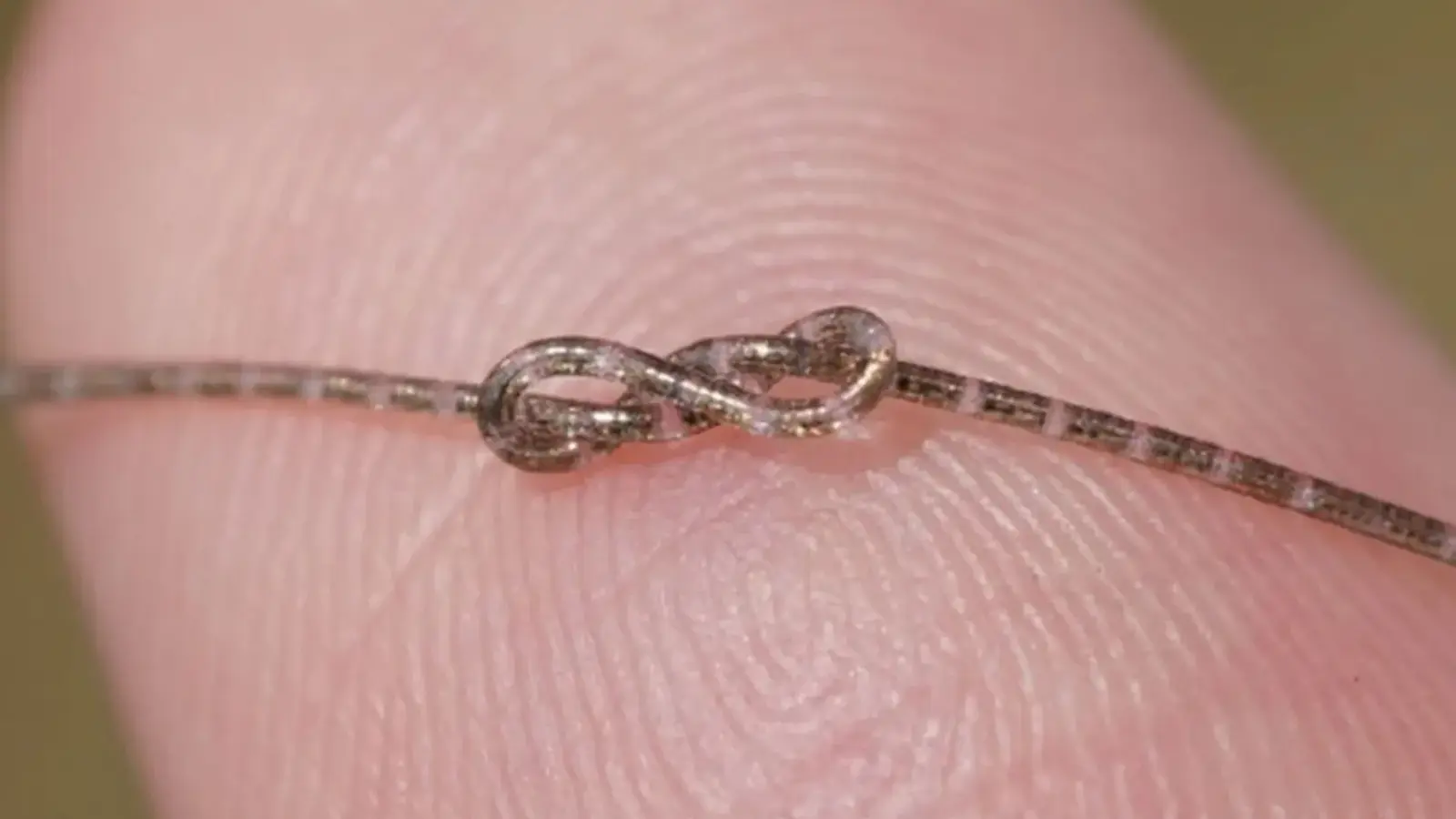
A thread that computes. Imagine stitching intelligence into the very fabric of what you wear.
Researchers at Fudan University have built a fiber-like integrated circuit — a flexible, hair-thin computing thread that can be woven into textiles. They call it a fiber integrated circuit (FIC). At just 50 micrometers across, this spiraled, multilayered fiber is thinner than a human hair and yet houses microelectronic components dense enough to handle both digital and analog signals.
The engineers didn’t tack rigid silicon onto fabric. They fabricated ultra-thin layers on a flexible substrate, then tightly wound them into a compact, spiral architecture. The result behaves like a computer while moving and bending like cloth. Pull it. Twist it. Wear it. It endures.
Durability is not a gimmick. According to tests, the fiber survives 10,000 bending and abrasion cycles, tolerates stretching up to 30 percent, withstands a full 180-degree twist and, astonishingly, resists heavy compression — the team says it can take pressure comparable to a 15.6-ton truck in trials. Those are not the specs of a fragile lab demo. These are the marks of a textile-ready component.

Density matters. Fudan’s team reports integration densities on the order of 100,000 transistors per centimeter — roughly 10 million per meter of fiber — a figure that brings this class of device into the vicinity of commercial chip-level processing for many tasks, including high-precision neural-like signal processing. In short: the thread itself can do serious computing, not just sensing or signal routing.
Why does that matter? Flexible electronics have matured in energy modules, sensors and displays. But wearables still often rely on rigid silicon islands stitched into soft substrates — a compromise that limits form, comfort and continuous operation. FICs remove that compromise. They point toward truly seamless wearables: gloves for VR that feel and move like fabric, brain–computer interfaces integrated into headbands or scarves, and smart clothing that processes data locally instead of offloading everything to a phone or cloud.
There are engineering hurdles ahead — manufacturing scale-up, long-term reliability in real-world washes, and integration with power and communication layers — but the core idea is shifting the boundary between electronics and textiles. The computer no longer needs to sit in a box; it can be braided into life.
Would you wear a jacket that thinks? The thread has been spun; now designers and manufacturers must decide what to weave.

“I cover emerging technologies, digital innovation, and the intersection of tech and everyday life. My goal is to make complex trends accessible and inspiring.”

Discussion
Leave a Comment
Comments
No comments yet. Be the first.