
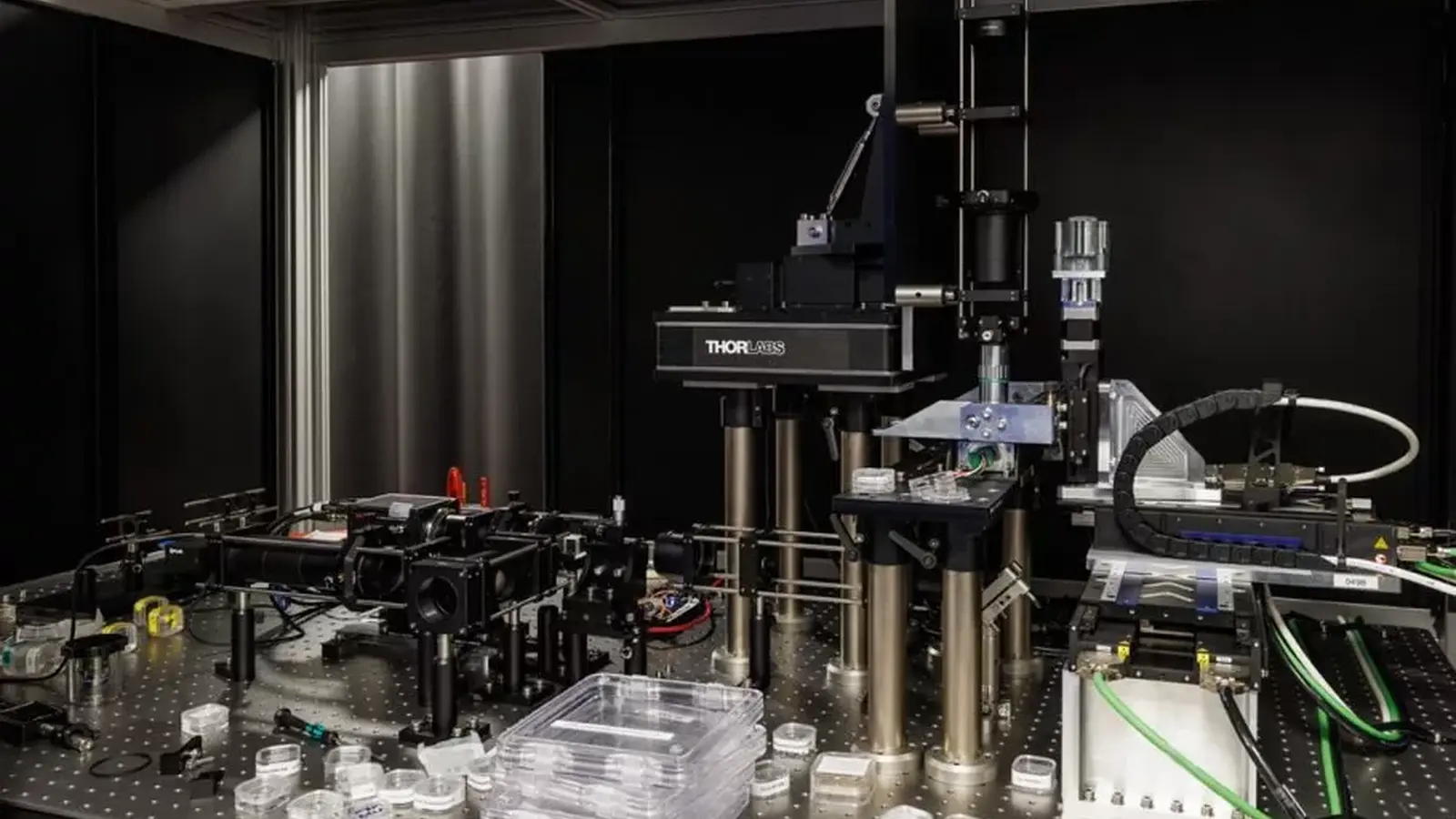
Imagine a CD-sized disc that could outlive entire civilizations. Strange, perhaps. But Microsoft’s Project Silica is chasing exactly that kind of stubborn longevity: laser-etched data trapped inside fused silica glass, engineered to survive millennia.
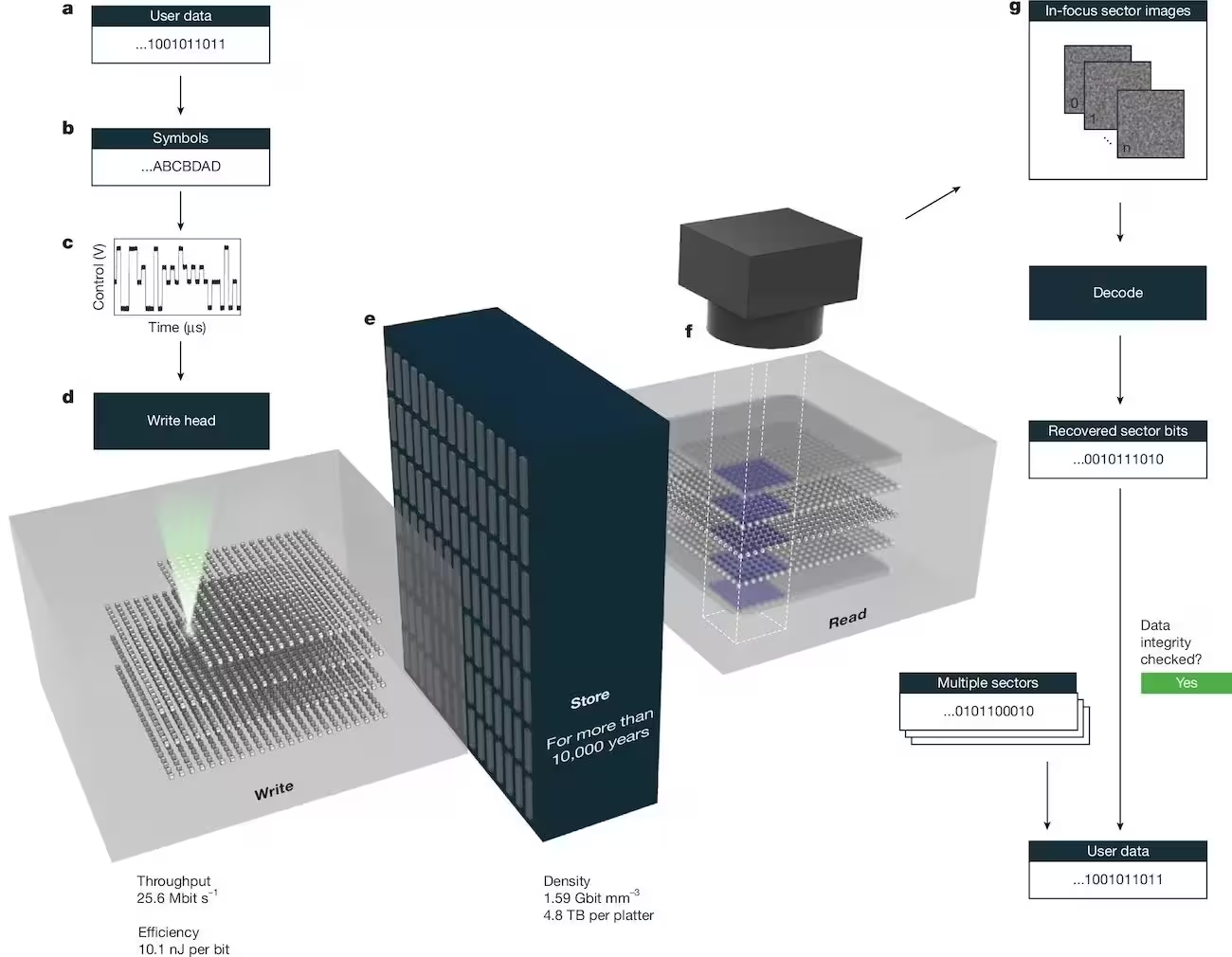
The idea is delightfully analog in feel and radically futuristic in execution. Data is converted into tiny three-dimensional patterns and then written layer by layer with a high-powered laser into a sheet of silica glass. The marks are microscopic. Invisible to the naked eye. Yet each plate can hold an astonishing amount of information—Microsoft researchers say one piece of glass can store about as much as two million printed books or roughly 5,000 4K films.
How do you read something written inside glass? You photograph each layer under a microscope, reconstruct the pattern in software, and hand the result to an AI-powered decoder that translates those optical patterns back into usable files. It’s a hybrid workflow: optical physics meets computational pattern recognition. The physical medium is passive, but the meaning of the bits lives in math and algorithms—so the storage is durable, but the retrieval still depends on specialized hardware and software.

Microsoft’s tests, reported in Nature, show these silica plates can survive more than 10,000 years under simulated aging conditions—enduring heat, humidity and electromagnetic noise far better than typical magnetic or flash media.
That resilience comes with practical benefits. Archives and institutions that now move data between formats every decade could one day write a canonical copy to glass and stop chasing migrations. Unlike power-hungry, climate-controlled data centers, fused silica needs no electricity to preserve content and is impervious to electromagnetic interference. It’s also naturally tamper-resistant: you can’t easily rewrite or hack what’s been laser-locked inside crystal.
There are trade-offs, of course. Project Silica is still experimental. Reading the plates requires microscopy and bespoke decoding pipelines; the team has not yet stress-tested how well the data survives deliberate physical sabotage—such as crushing or aggressive chemical corrosion. And while the labs report survival at temperatures up to 290°C in accelerated tests, practical deployment will demand robust standards for readers, file formats and metadata—otherwise the glass risks becoming inscrutable, like an unreadable relic with no Rosetta Stone.

Think of this as a different philosophy of preservation. Instead of continuous migration and duplication, you invest once in an immutable, low-maintenance vault. The payoff is time: a single write could persist across generations, perhaps even centuries of technological churn. But to make that future real, the ecosystem around the glass—readers, decoders, open standards—must be built, agreed on, and deployed. Will libraries and governments take the leap? The technology is promising. The next move is human.

“I cover emerging technologies, digital innovation, and the intersection of tech and everyday life. My goal is to make complex trends accessible and inspiring.”

Discussion
Leave a Comment
Comments
No comments yet. Be the first.