
Reimagining wind power for modern shipping
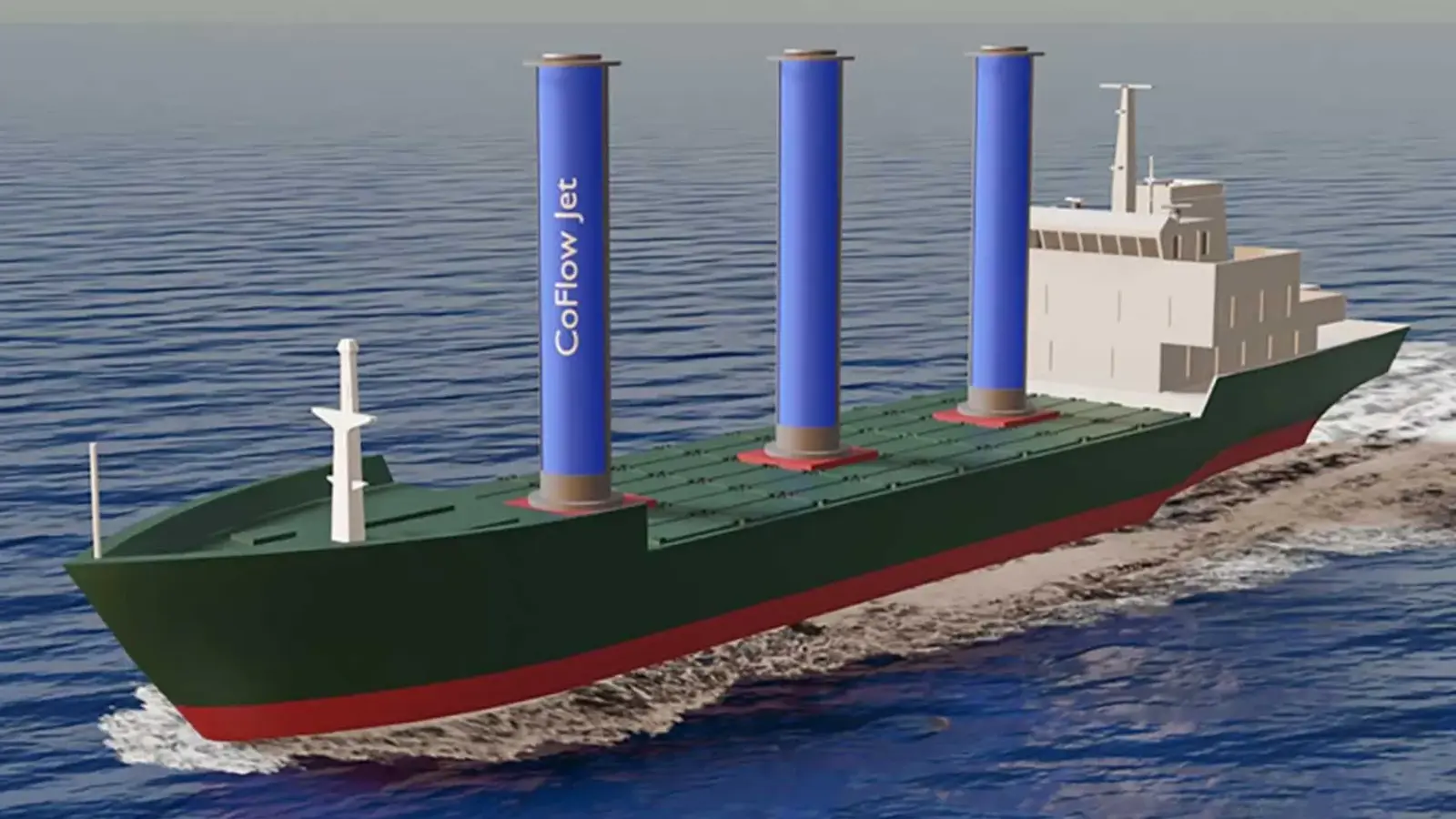
A new startup claims its fixed cylindrical sails can slash fuel consumption for cargo ships by as much as 90% on smaller vessels and deliver major savings on larger tonnage. The technology—devised by researchers including Professor GeCheng Zha—retools a century-old idea into a modern, low-maintenance wind-assist system that could become a practical route to greener maritime logistics.
How the system works
Unlike classical cloth sails or rotating Flettner rotors from the 1920s, CoFlow Jet's solution uses stationary, tubular columns mounted on deck. These cylinders draw wind into an internal chamber, compress it and eject it at pressure from a different aperture. The directed suction-and-jet effect creates asymmetric pressure around the cylinder and generates substantial thrust without spinning parts.
Key technical advantages
- No large moving components or complex gearboxes, reducing maintenance and downtime.
- Retractable design lets the cylinders collapse or lower for port entry and storms.
- Retrofit-friendly: can be installed on existing cargo ships, container vessels, and Ro-Ro carriers with minimal structural changes.
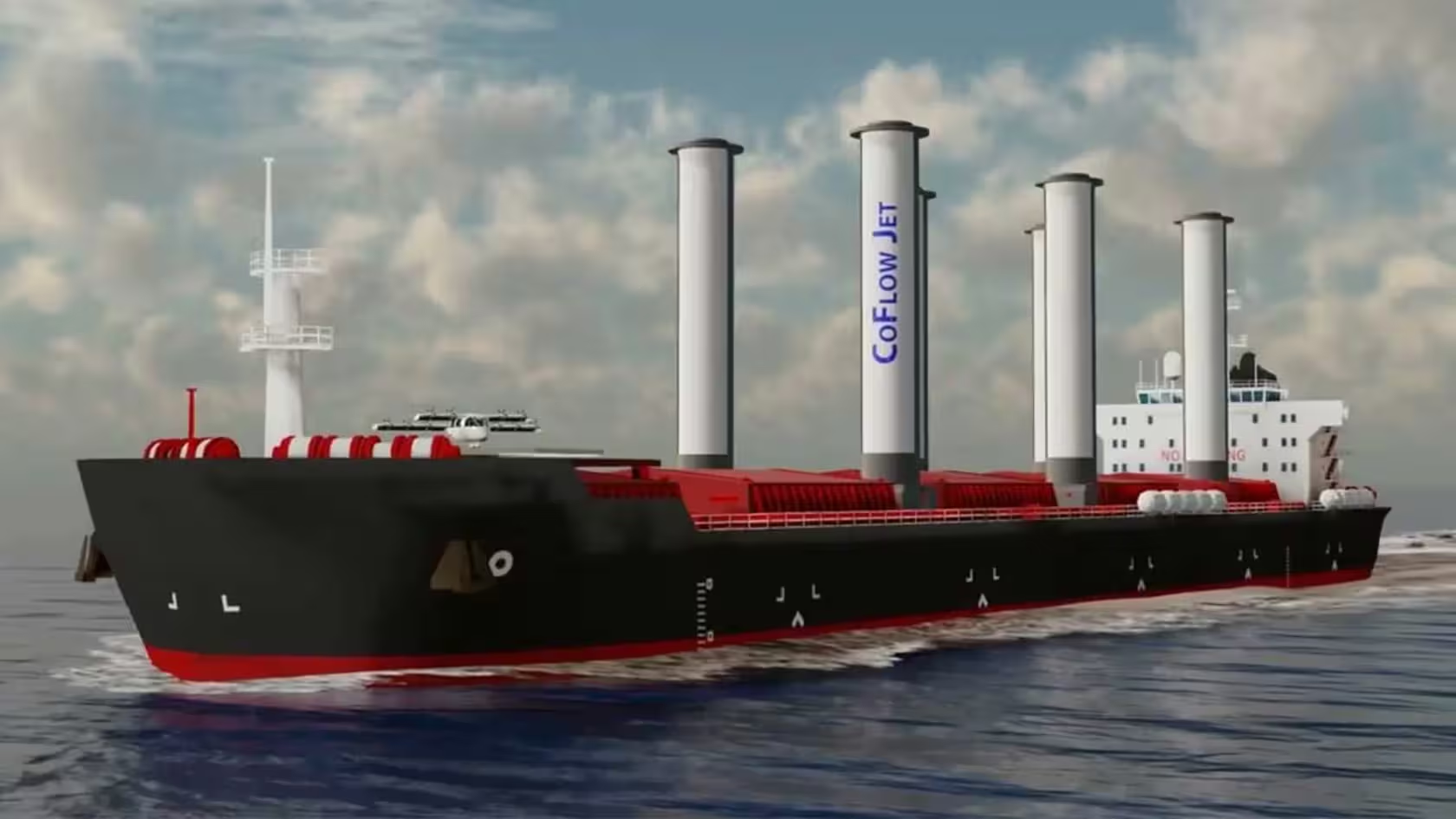
This combination addresses two historical problems with sail power: staffing requirements and dependence on wind direction. The fixed-cylinder approach is less crew-intensive and can operate effectively across a wider range of wind angles when integrated with modern navigation and route-planning systems.
Real-world performance and market context
Professor Zha reports that the system can, in ideal conditions, provide up to 100% of a vessel's propulsion—meaning a fully wind-driven passage is conceivable for some voyages. More conservatively, the company forecasts average fuel reductions of around 50% for large commercial ships and up to 90% for smaller vessels when wind conditions are favorable.
Shipping faces growing commercial pressure: bunker fuel prices and tightening emissions rules push carriers to seek fuel-efficiency measures. The industry is responsible for roughly 3% of global greenhouse gas emissions, and decarbonization targets for 2050 are prompting investments in wind propulsion, alternative fuels and hull/engine optimization. Cylindrical sails position themselves as a complementary technology to cleaner marine engines and hybrid powertrains used in port operations.
Implications for automotive and transport industries
Although the technology is maritime, its market logic mirrors trends in road transport and commercial fleets: reducing fuel cost per ton-mile, meeting emissions regulations, and minimizing lifecycle maintenance. Fleet operators and logistic companies that integrate shipping and heavy-truck operations could benefit from combined fuel and emissions savings across intermodal routes.
Considerations for shipowners
- Route dependence: wind-assisted propulsion yields the best results on certain trade lanes and seasons.
- Capital expenditure vs. operational savings: payback depends on fuel price and utilization.
- Integration: works best alongside hull-optimizing retrofits and improved voyage planning software.
'With today's advances, wind is a viable diesel alternative,' says Professor Zha. 'It's an effective lever to decarbonize an industry that has been slow to change.'
Whether cylindrical sails become a mainstream retrofit for container and bulk carriers will depend on pilot results, commercial trials and how rapidly shipowners adopt combined technical and operational measures. But for car enthusiasts and transport professionals watching fuel-efficiency innovations, this marine development is a compelling reminder that ancient energy sources can be reinvented with modern engineering.
Highlights:
- Fixed, retractable cylindrical sails reduce moving parts and maintenance.
- Retrofit-capable for existing fleets; ideal for long-haul, wind-rich routes.
- Potential to pair with cleaner engine tech to accelerate shipping decarbonization.


“Cars are evolving faster than ever. I cover electric vehicles, smart mobility, and the future of transportation worldwide.”

Discussion
Leave a Comment
Comments (2)
Nice throwback to sails, low maintenance is a big plus. Still, retrofits and payback time matter, route limits too. Not a silver bullet but promising. Curious about ports
Is that 90% real or just in perfect test runs? Sounds amazing but I wanna see long term trials, harbor ops, storms...