
4 Minutes
Some Starship launches feel like big science experiments. This next one feels like a job interview.
SpaceX is aiming to fly Starship for the 12th time this month, and on paper it’s “just another test.” In practice, it’s the moment the program has to start looking less like a rolling series of prototypes and more like the rocket NASA is betting on for the Moon—and potentially the vehicle that drags humanity’s ambitions toward Mars out of the slide deck and into orbit.
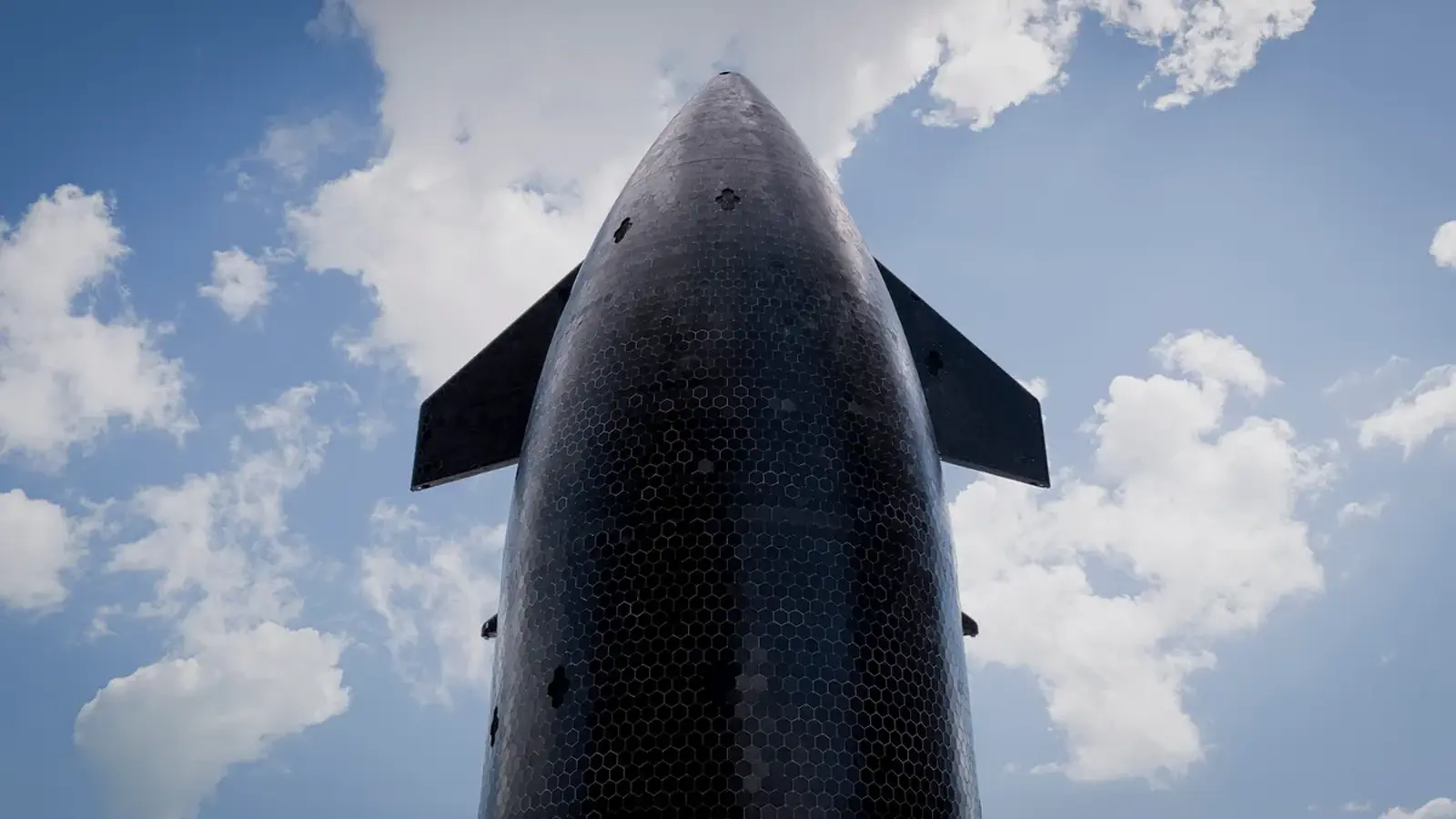
The headline change is simple: this is a new Starship. Not a minor tweak. A Version 3 build that leans much closer to the architecture SpaceX expects to use for real missions. It’s slightly taller—124.4 meters versus 123.3—and it wears noticeably larger grid fins, the control surfaces that help the booster steer itself back through the atmosphere with more authority.
The test flight that stops being “just a test”
Version 3 isn’t about flashy cosmetics. It’s about growing up. SpaceX has folded earlier flight lessons—hard-earned ones—into structural refinements, system upgrades, and a more muscular engine setup powered by the latest Raptor variants. The direction of travel is clear: fewer experimental edges, more operational intent.
Most importantly, this redesign is positioned as the first Starship configuration that’s truly meant to chase orbital-class performance as a baseline, rather than as a best-case scenario. That matters because “close” doesn’t count when you’re building a human-rated lunar landing system. NASA, its partners, and a watching industry want proof that iteration is turning into repeatability.
What does SpaceX need out of Flight 12? Not perfection. Credibility. A clean stage separation. A controlled ascent profile that looks deliberate rather than improvised. Solid performance from the newest Raptor engines. And a haul of high-quality data on booster recovery systems—the unglamorous plumbing of reusability that ultimately decides whether Starship becomes routine hardware or remains a spectacular demo machine.
If this flight reads as “progress is accelerating,” SpaceX keeps the narrative—and the timetable—alive.
That timetable is the real pressure point. SpaceX currently holds the contracts tied to Artemis III and Artemis IV, missions intended to return astronauts to the Moon, with Artemis III now framed around operations in low-Earth orbit in 2027 and Artemis IV potentially following later. When NASA’s schedule shifts, the scrutiny doesn’t fade; it sharpens. Every delay makes the question louder: can Starship mature fast enough to be dependable when the mission stops being optional?
And then there’s the competition, no longer a punchline or a footnote.
Jeff Bezos-led Blue Origin is pushing its own path to NASA relevance, with New Glenn as the heavy-lift workhorse and Blue Moon as its lunar lander concept. Blue Origin has less flight history in this specific arena—New Glenn is still early in its story, and Blue Moon remains untested in the way Starship has been tested in public, at full scale, under real-world stress. But NASA procurement doesn’t reward vibes. It rewards measurable progress and reduced risk.
That’s why Starship Flight 12 is so strategically loaded. If SpaceX shows the kind of forward momentum that reassures stakeholders—engine reliability, controllability, recovery progress—it becomes harder for rivals to argue they can deliver sooner or safer. If it stumbles in familiar ways, the door cracks open wider for alternatives, especially as NASA recalibrates missions and timelines.
SpaceX hasn’t posted an exact launch date yet. But when Flight 12 finally lights, it won’t just be another spectacle over the Texas coast. It’ll be a signal: is Starship turning into a system NASA can plan around, or still a prototype that only SpaceX can love?
Source: digitaltrends


Comments
datapulse
wow this is huge! new Starship actually built closer to the real deal, fingers crossed they get a clean ascent and recoveries work. hype but nervous
astroset
is NASA really betting on a rocket that still reads like a prototype? curious how many clean separations they need, seems risky, lots to prove, if that fails…

Leave a Comment