
5 Minutes
In the rush to bolt AI onto every business tool on the market, Oracle NetSuite is taking a different route. Quietly, and with a fair bit of confidence, it is betting that the smartest AI is the kind people barely notice.
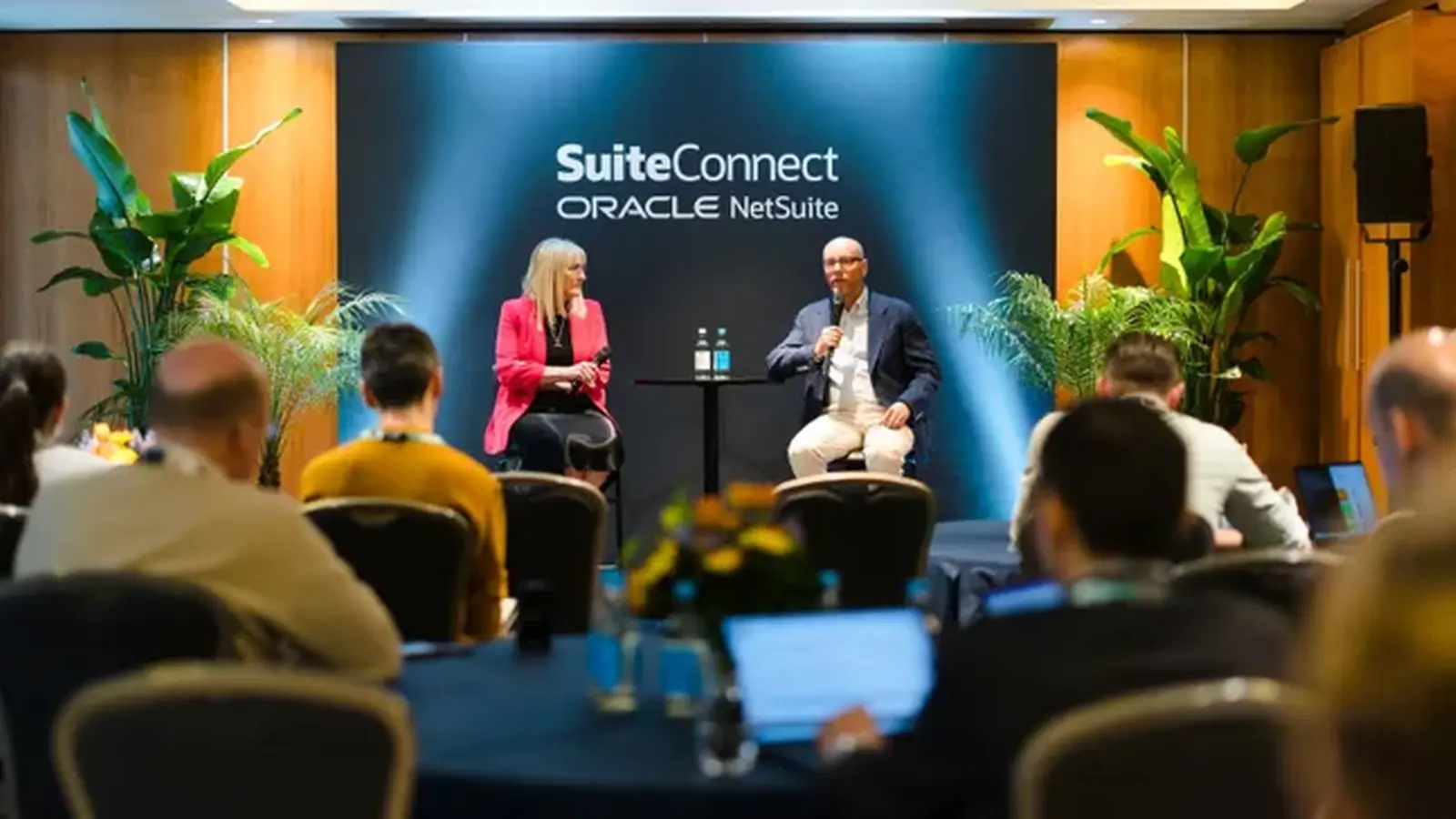
That was the message from Evan Goldberg, NetSuite’s founder and CEO, during SuiteConnect London 2026, where he described the company’s latest direction as a rethink from the ground up. Not a cosmetic update. Not a flashy add-on. A full rebuild around AI.
“We’re reinventing NetSuite from the ground up around AI,” Goldberg said, and the phrasing matters. The idea is not to make users jump through hoops to get value from AI. It is to make AI show up where work already happens.
Nicky Tozer, Senior Vice President for EMEA, said the timing is no accident. Businesses are under pressure to do more with less, and the lessons of the past few years have pushed efficiency, resilience, and productivity back to the top of the agenda. “Doing things smarter is common across all businesses who are looking to grow,” she said.
For many companies, especially in financial services, the stakes are higher. Sensitive business data, regulated workflows, and strict governance rules can make AI feel like a risky guest at the table. NetSuite’s answer is to keep control intact while opening the door to new capabilities.
That is where its new AI Connector Service comes in. The idea is simple enough, but the execution is what counts. Customers can connect tools such as Claude to their NetSuite environment in a secure, governed way, while still deciding how those assistants access and interact with data, workflows, and analytics. No free-for-all. No black box. Just a controlled bridge between enterprise systems and AI models.
Goldberg believes this approach makes AI adoption far less intimidating. Instead of asking companies to rebuild processes around a new technology, NetSuite is embedding AI into the software teams are already using. The result, he argues, should feel less like implementation and more like an upgrade that just works.

That matters because AI adoption can fail for a very human reason: friction. If a tool is hard to deploy, hard to trust, or hard to fit into existing systems, most teams will simply avoid it. NetSuite’s pitch is that AI should behave like a natural extension of business operations, not another platform demanding extra training and extra effort.
There is also a structural advantage here. NetSuite is not a narrow point solution. It sits at the center of finance, operations, planning, and reporting, with a unified data model across the platform. That matters more than it may sound. AI systems work best when the data beneath them is clean, connected, and consistent. Feed them scattered inputs from disconnected systems, and the picture gets messy fast.
Goldberg is blunt about that reality. Unified data, he says, is a major advantage for AI because it reduces confusion and creates a stronger foundation for insights. In other words, AI is only as good as the system it lives in. If the system is fragmented, the intelligence will be too.
Trust remains the bigger question. Business leaders want automation, but not at the expense of accuracy or oversight. Goldberg acknowledges that AI, like people, will not always get everything right. The point, he says, is to keep improving the models while guiding them with domain knowledge and strong governance. That balance, between speed and reliability, is where enterprise AI either earns its place or gets pushed aside.
For small and mid-sized businesses, the opportunity may be even greater. SMB teams often wear too many hats, moving from finance to operations to planning in the same day. They do not have the luxury of long deployment cycles or sprawling IT teams. If AI can save time, remove repetitive work, and surface better decisions quickly, it becomes less of a trend and more of a competitive edge.
“We’ve always been about democratizing technology,” Goldberg said. It is a familiar line, but in this context it feels central to NetSuite’s strategy. Make the tools easy to adopt. Make them easy to trust. Make them useful without turning them into a project.
Tozer added that market conditions are starting to shift again, with renewed investment and more ambitious growth plans returning to the conversation. That usually brings complexity in its wake. More customers. More data. More moving parts. Which is exactly where automation starts to matter.
The real question is no longer whether businesses will use AI. They already are. The better question is whether the technology can be woven into core systems in a way that feels secure, practical, and genuinely helpful. NetSuite clearly thinks the answer is yes, as long as AI stays in the background, doing the heavy lifting while people stay in control.
Source: techradar


Comments
astroset
Is connecting Claude to core finance really safe for banks and brokers? sounds neat, but where are the governance details, audits and access logs? show me the docs.
mechbyte
wow didnt expect NetSuite to go stealthy like this, subtle AI that blends into workflows sounds great but who watches the model outputs? curious, kinda excited.

Leave a Comment