
7 Minutes
Apple’s smart home ambitions have been sitting in the wings for so long that they have almost become folklore. A HomePod with a screen. A wall-mounted control panel. A tabletop robot. A smarter doorbell. Depending on which rumor cycle you caught, the same idea has worn several different costumes.
Now the story appears to be sharpening. Apple is reportedly preparing at least three AI-focused hardware categories tied to its broader Apple Intelligence roadmap, with the company’s upgraded foundation models expected to play a central role. The catch? Timing is still slippery, and Apple’s recent AI delays have made every launch window feel a little provisional.
According to Bloomberg’s Power On newsletter, Apple is concentrating on three smart home products built around artificial intelligence. None of these devices sounds entirely new to longtime Apple watchers. In fact, the Home Hub in particular has been circling production rumors for months, possibly longer. What has changed is the context: Apple now needs hardware that can make Apple Intelligence feel useful outside the iPhone, iPad, and Mac.
The Home Hub still sounds like Apple’s missing room remote
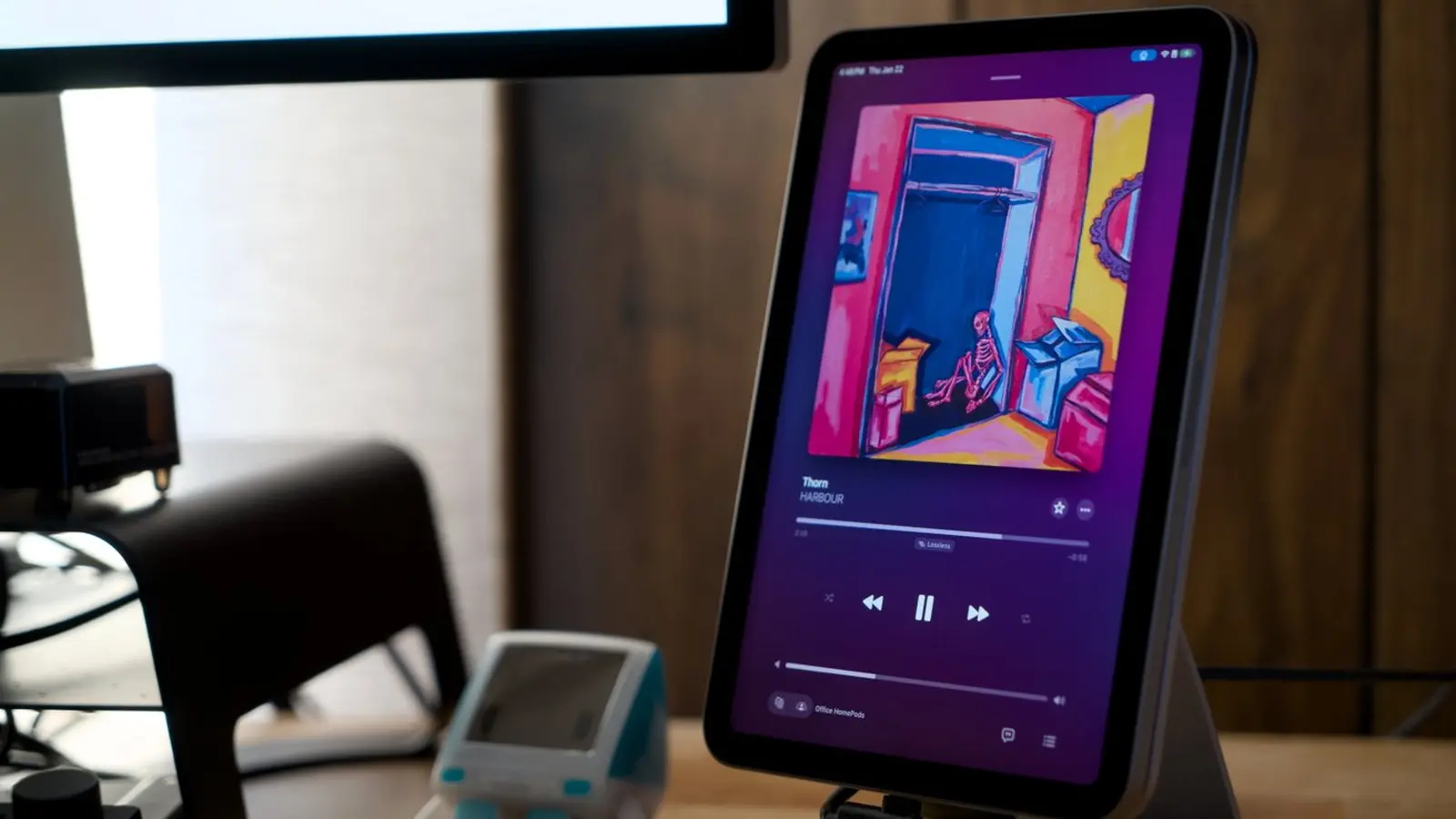
The most talked-about device is the so-called Apple Home Hub, although that name remains unofficial. Calling it a HomePod with a screen is tempting, but that label may undersell what Apple seems to be building. Based on earlier reports, the product sounds less like a fixed speaker and more like a small, modular tablet designed to move around the house.
Earlier descriptions pointed to a compact display of around six inches, small enough to carry from room to room and dock into different accessories. Later reports shifted toward a seven-inch version, with two possible setups: one paired with a speaker base and another designed for a wall mount. That may sound messy, but the core idea is fairly coherent. Apple could be building a home-first interface that is not quite an iPad, not quite a HomePod, and not just another smart display.
Think of Google’s Nest Hub Max, then imagine Apple pulling the concept deeper into its ecosystem: FaceTime, HomeKit, Siri, Apple Music, calendars, reminders, shared family controls, security feeds, and AI-generated suggestions all wrapped into a device that looks at home on a kitchen counter.
The second rumored product, often described as a tabletop robot, may simply be the more ambitious branch of the same Home Hub family. Reports have suggested a larger nine-inch display mounted on a motorized arm, allowing the screen to turn toward whoever is speaking or move during a video call. If Apple gives that model more computing power, it could become the actual Apple Intelligence hub of the home while smaller displays act as satellite devices.
That would make sense. A seven-inch Home Hub could handle everyday controls, timers, music, and smart home commands. A more capable nine-inch version could manage richer AI features, household context, and proximity-aware interactions. It might know who is standing nearby, which room they are in, and what device or scene they are trying to control.
The real trick would be the docking system. If Apple uses consistent magnetic connectors across the lineup, users could move a Home Hub between a wall mount, a speaker dock, and perhaps other accessories without caring which base belongs to which screen. That sounds like a small detail. It is not. For a device meant to live in kitchens, bedrooms, hallways, and home offices, flexibility could be the feature that makes the whole category click.
There is still plenty of fog around the plan. Apple may launch the smaller and larger models together. It may split them into separate product lines. It may have changed the entire roadmap again while waiting for Apple Intelligence to mature. At this point, many of the public details are recycled from earlier reporting rather than fresh leaks.
A doorbell camera, Apple style
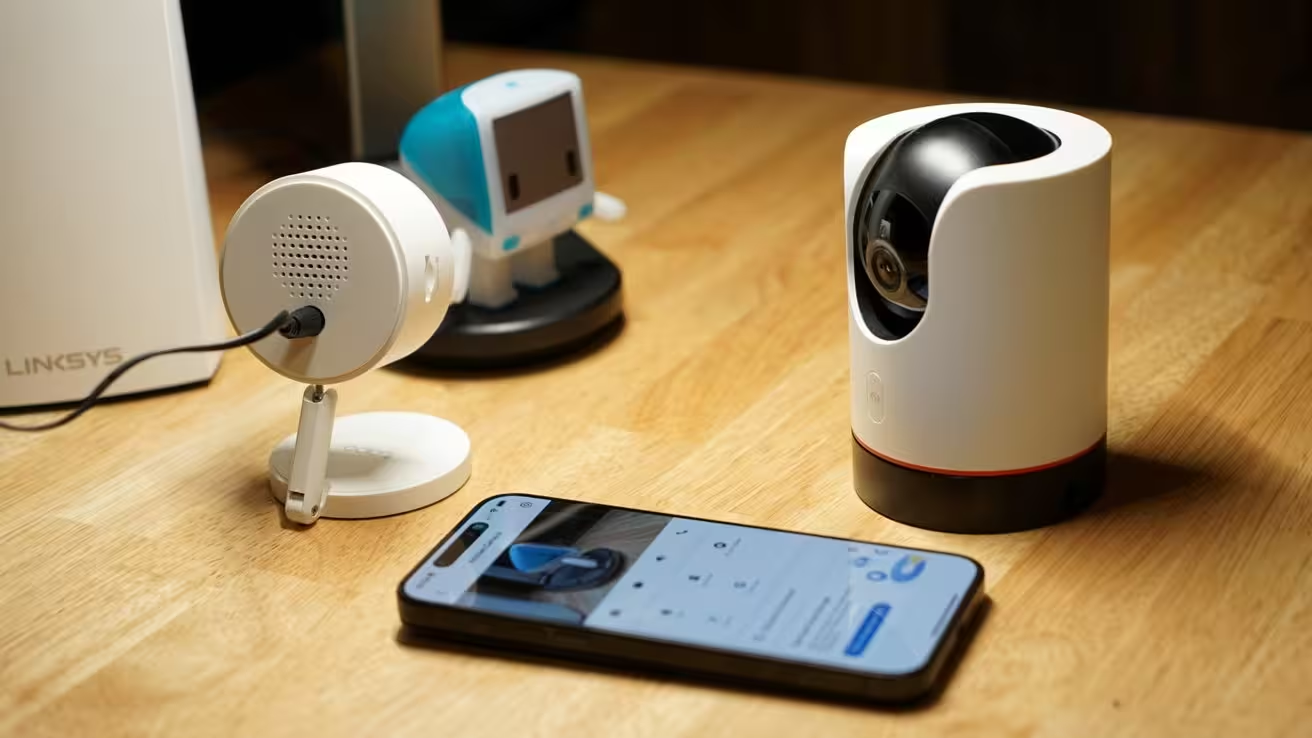
The third device is expected to be a smart security camera, and the most obvious form factor is a video doorbell. Apple already has a partial version of this experience through HomeKit Secure Video, which can identify familiar faces using people tagged in the Photos app. When someone recognized rings a compatible doorbell, Siri can announce the visitor through a HomePod.
An Apple-made doorbell would likely push that idea further. With Apple Intelligence, the device could offer more natural alerts, better recognition, smarter summaries of activity, and tighter privacy controls than many cloud-heavy rivals. Apple would almost certainly lean on its usual pitch: local processing where possible, encrypted storage, and a system that works neatly with iPhone, Apple Watch, HomePod, and Apple TV.
The big question is whether Apple can make the product feel meaningfully different. The smart doorbell market is crowded, and companies such as Ring, Google Nest, Eufy, and Aqara already offer plenty of capable options. Apple’s advantage would not be novelty. It would be trust, integration, and the promise that a doorbell is not just a camera but another sensor in a smarter home network.
Launch timing remains uncertain. If Apple’s new foundation models arrive around September, the company could preview these home products near the next iPhone event. October may be the safer bet, especially if Apple wants a separate moment for smart home hardware rather than letting it disappear beneath the annual iPhone spotlight.
There is also the larger drama around Apple’s AI reputation. Some commentary has suggested that future leadership, often linked in reports to hardware chief John Ternus, will need to deliver several breakthrough AI product categories to avoid being seen as falling behind. That feels a bit overheated.
Apple has rarely chased every technology wave at full speed. Under Tim Cook, the company added major categories carefully, including Apple Watch, AirPods, and Vision Pro. Not all arrived as instant cultural earthquakes, but Apple’s pattern has usually been patience, polish, and ecosystem gravity.
The pressure is real, of course. Investors want proof that Apple Intelligence is more than a software label. Users want Siri to feel modern. Developers want clearer signals. A Home Hub, a tabletop AI display, and a smart doorbell would give Apple a way to bring ambient computing into daily life without asking people to wear another headset or learn a new interface.
Apple does not need these devices to save the company, but it does need them to make its AI strategy feel visible, useful, and comfortably at home.
Source: appleinsider


Comments
DaNix
Feels a bit polished for polish's sake. apple loves polish, sure, but do we need another screen in every room? if it docks right maybe..
labcore
is this even true? apple doorbell with private on-device ai sounds neat, but will it actually outpace Ring or just cost more?
atomwave
wow ok, a roaming Home Hub? if that's real it could actually make smart homes less annoying. still skeptical tho, timing feels off

Leave a Comment