
4 Minutes
The next big wearable may not sit on your wrist at all. It may not glow, buzz, or demand a charger every night. It might simply look like a shirt.
Researchers at the National University of Singapore have developed a battery-free smart textile system that can track blood pressure in real time, pointing to a future where ordinary clothing quietly doubles as a health monitoring platform. The work, published in Nature Electronics and highlighted by Tech Xplore, takes aim at one of wearable technology’s most persistent irritations: power.
Smartwatches have made health data feel normal. Smart rings made it less obvious. But both still behave like gadgets. They need charging, pairing, updating, and remembering. Clothing, by contrast, is already part of the daily routine. That is what makes this research so intriguing. The health tracker disappears into something people are already wearing.
The phone becomes the power socket
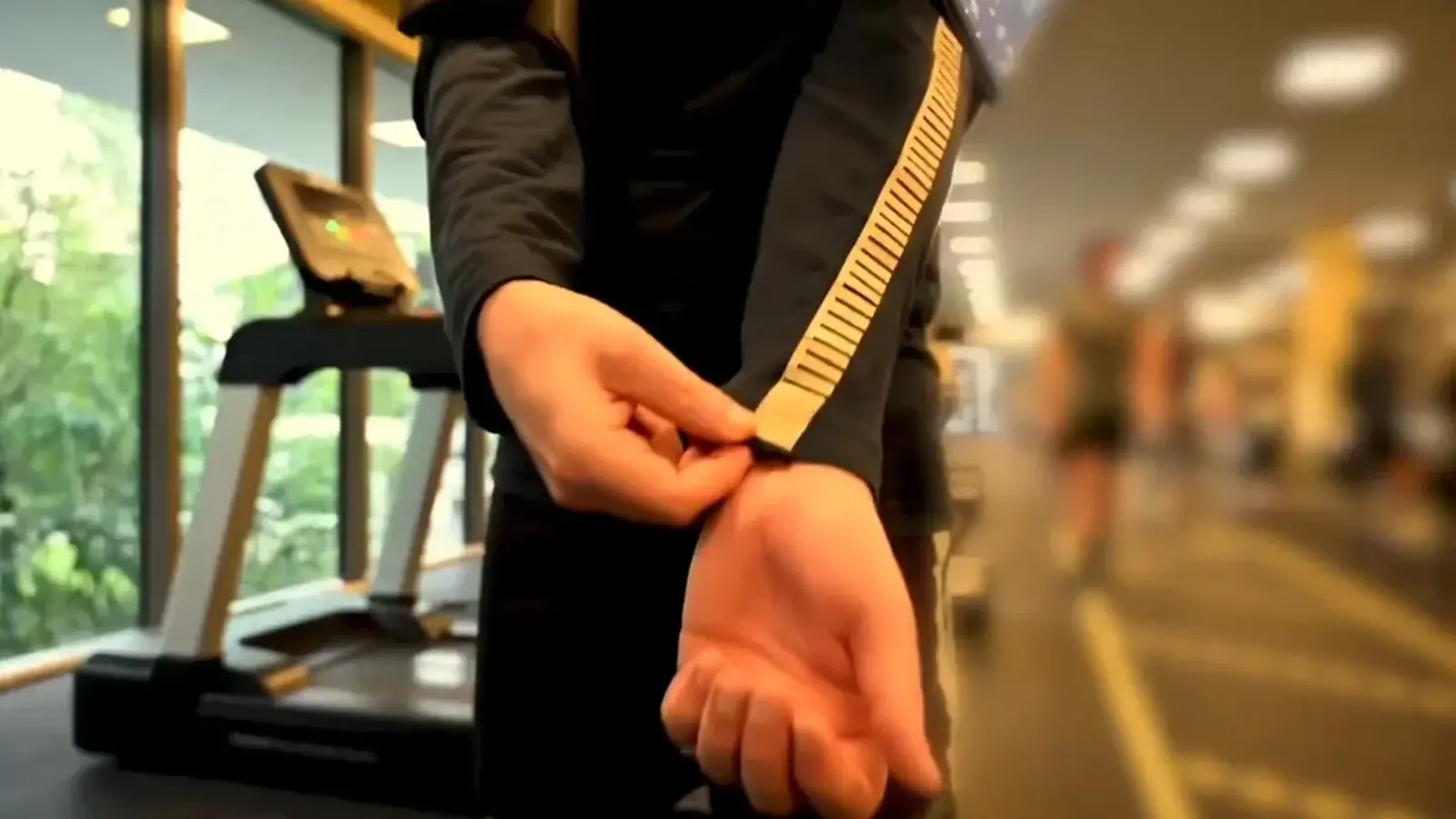
The system does not hide a tiny battery in the fabric. Instead, it uses ultra-thin, flexible sensors that sit directly on the skin and connect through a specially engineered textile. At the heart of the design is a metamaterial, a fabric structure built to move wireless energy from a nearby smartphone to the sensors.

In plain English: your phone helps power the sensors and collects the data. No extra charging puck. No second device to babysit. No dead wearable halfway through the day.
The researchers also separated power delivery and data transmission into different frequency channels. That matters because wireless systems can easily trip over themselves when energy and information are moving through the same crowded space. By keeping those streams apart, the fabric can maintain a steadier signal and reduce interference.
The first target is systolic blood pressure, the pressure created when the heart contracts and pushes blood through the arteries. It is one of the most closely watched cardiovascular readings, yet continuous, convenient monitoring remains difficult outside clinical settings.
Early testing suggests the smart fabric can track systolic blood pressure accurately even while the wearer is exercising. That is a difficult environment for wearable sensors. Movement, sweat, shifting contact with the skin, and changing blood flow can all distort readings. If the textile approach holds up in larger trials, it could become useful for long-term cardiovascular monitoring, fitness recovery analysis, and earlier detection of health changes that might otherwise go unnoticed.
The sensors are designed to be thin enough to move with the body rather than fight against it. The textile layer links multiple sensors into a network, allowing data to be gathered from different points across the wearer’s body. That opens the door to clothing that does not just measure a single metric, but builds a broader picture of physical state over time.
This is not the first attempt at battery-free wearables, but the Singapore team’s approach feels closer to something people could actually live with. The difference is integration. Instead of asking users to strap on another device, the technology is woven into the fabric of daily life.
There are still obvious hurdles. A smartphone needs to be nearby. The system will have to prove durability through washing, stretching, heat, and long-term use. Medical accuracy, privacy protections, and regulatory approval will also matter if smart clothing moves from research labs into clinics, gyms, or consumer wardrobes.
Still, the direction is hard to ignore. Wearable health technology is becoming less like a gadget category and more like an invisible layer around the body. If smart fabrics mature, the most advanced health tracker you own may be the one you forget you are wearing.
Source: digitaltrends


Comments
skyspin
Interesting idea but is this even practical? Does it need the phone in your pocket or just nearby? what if my phone is in a bag across the room... also who owns the health data?
bioNix
wow this actually gave me chills. a shirt that measures systolic BP while I run? If it can handle sweat, washing, and still be accurate, thats huge. hope privacy isnt an afterthought

Leave a Comment