

3 Minutes
Market snapshot
Ethereum traded near $1,616 on June 11, 2026, slipping about 3.14% over 24 hours as selling pressure kept ETH down more than 13% on the week. Crypto.news data recorded a 24-hour low of $1,610.33 and a high of $1,679.76. Market cap hovered near $195 billion with daily volume around $13.06 billion.
Key takeaways
Price action and structure
ETH remains close to the $1,600 support zone. A decisive drop below this area would refocus attention on the recent June low, while a break above $1,680 could relieve immediate selling pressure. From its June high near $1,890, Ethereum has shed roughly 14%, and it remains about 66% below the 2026 peak near $4,800. Recovering stronger upside requires reclaiming resistance levels at $1,680, $1,750 and $1,890.
On-chain adoption vs. market mood
Wallet growth signals long-term demand
On-chain analytics from Santiment show Ethereum approaching 195 million non-empty wallets — roughly 230% more than Bitcoin’s 59 million — and just about 5 million wallets shy of the 200 million milestone. Growth in DeFi activity, staking and broader on-chain use is supporting long-term network adoption, even as crowd sentiment remains muted.
Derivatives and leverage risk
Open interest and perp-spot imbalance raise volatility stakes
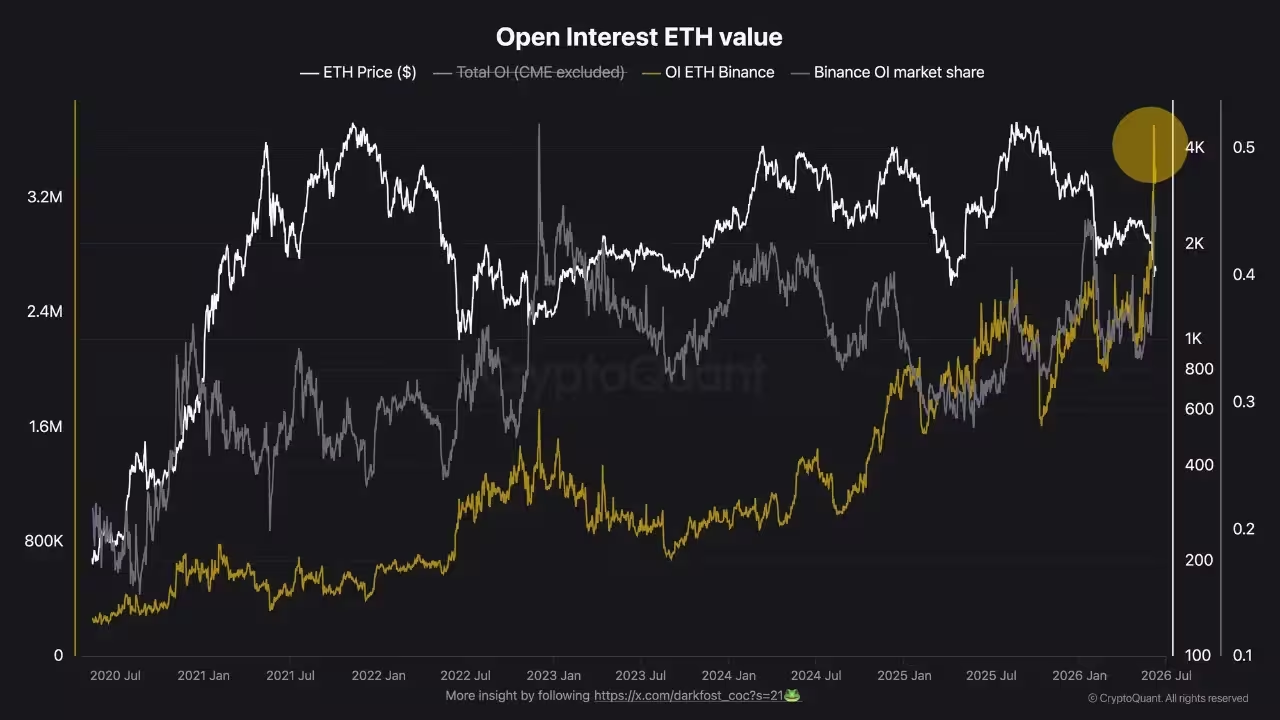
Derivatives metrics point to elevated leverage. Binance ETH open interest and an increasing perp-spot imbalance suggest traders are adding size even in a weak market, which raises the likelihood of sharper, leveraged moves. Higher open interest combined with negative sentiment often amplifies volatility and can accelerate directional swings.
What traders should watch
Practical risk management steps
Monitor open interest, funding rates and perp-spot imbalances for signs of building leverage. Track wallet growth and DeFi/staking metrics to gauge long-term adoption. Given the mixed setup — solid on-chain growth but growing derivatives risk — traders should manage position sizes, set clear stops and prepare for rapid moves in either direction.
Conclusion
Ethereum’s on-chain fundamentals reflect continued network expansion, yet rising leverage in derivatives markets increases short-term volatility risk. The interplay of wallet growth and elevated open interest will likely dictate ETH’s next major swings.
Source: crypto


Leave a Comment