
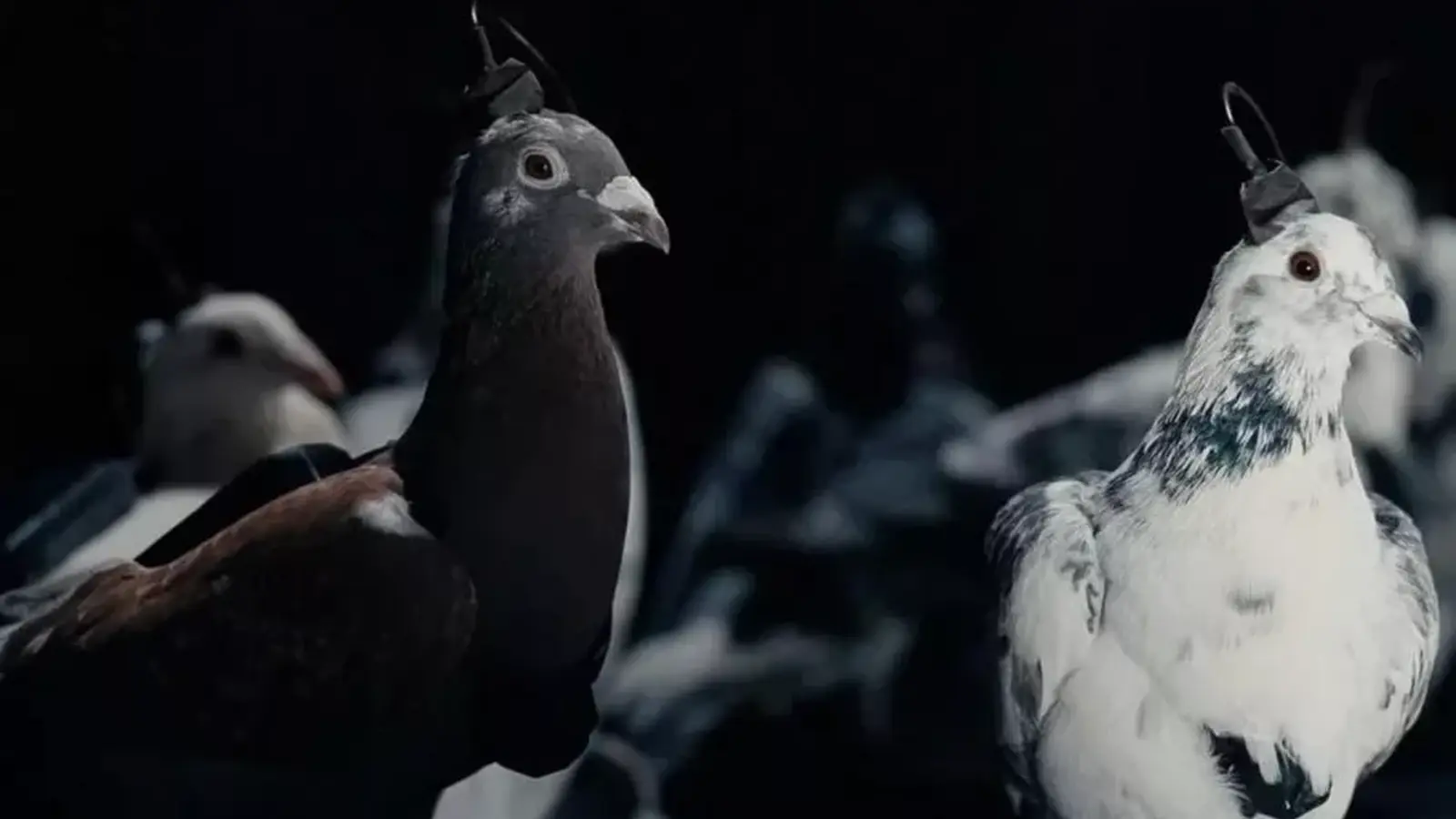
A Russian company says it has turned ordinary pigeons into controllable "biodrones" by surgically implanting neural electrodes and attaching a small wearable module. The announcement raises technical curiosity—and ethical questions—about whether animals could increasingly be used as living sensors or long-range reconnaissance platforms.
How the system works: implants, signals and solar modules
According to the developer, the technique does not rely on behavioral training. Instead, surgeons place tiny electrodes into targeted regions of the bird's brain. Those electrodes connect to a compact electronics module mounted on the pigeon’s back; the company says the module is powered by a small solar array. When the unit transmits electrical pulses to the implanted electrodes, the bird experiences the sensation of deciding its flight path, while the direction is in fact determined by the controller.
Navigation is reportedly aided by an onboard GPS. In practice, the system combines a neural interface (an implanted electrode array), an external wearable for power and control, and position tracking. This mix of technologies mirrors broader research in brain–machine interfaces, where electrical stimulation is used to influence perception or movement.
Why pigeons? Endurance, economy and next steps
The company touts pigeons as an alternative to mechanical drones because of their natural efficiency. Developers claim a model called PJN-1 can fly roughly 500 kilometers in a day—far beyond the range of many electric quadcopters—making pigeons attractive for long-duration missions. Lower energy needs, innate maneuverability and camouflage among urban wildlife are additional advantages the team highlights.
Neiry also says it plans to adapt the system for larger birds such as crows and albatrosses to enable heavier payloads. That would expand potential applications from lightweight sensors to more capable surveillance or environmental-monitoring packages.
Planned uses and the ethical landscape
Proposed applications include power-line inspection, environmental studies, search-and-rescue support and reconnaissance. The company has suggested outfitting birds with cameras that anonymize faces through AI to address privacy concerns. Still, many animal-rights and environmental organizations are likely to object to invasive implants and nonconsensual use of wildlife.
Experts in animal welfare stress that surgical implantation and forced behavioral control present welfare risks. In addition to surgical complications, altered sensory input could disrupt feeding, migration or social behavior—effects that require careful long-term study.
Context: brain–machine interfaces and dual-use debates
This announcement arrives amid broad interest in neural interfaces. Companies such as Neuralink are exploring interfaces for human therapeutic use, while academic groups investigate stimulation to restore function in injured animals and people. The Neiry project differs by focusing on direct control of animals for operational tasks rather than medical rehabilitation.
That distinction underlines a dual-use dilemma: technologies that might enable beneficial research can also be repurposed for surveillance or military tasks. Policymakers, ethicists and scientists will need to consider regulations that balance innovation with animal welfare and public safety.
What to watch next
Independent verification of the claims—flight range, safety data, and long-term effects on birds—will be critical. Transparent peer-reviewed studies or third-party field trials could clarify technical feasibility and ecological impact. Until then, the story remains a provocative example of how neural engineering and autonomous systems are converging in unexpected ways.


“The cosmos has always fascinated me. I write about space missions, astronomy, and the technologies pushing humanity beyond Earth.”

Discussion
Leave a Comment
Comments (2)
wow, wild tech but poor pigeons... 500km? sounds exaggerated. Need peer reviewed data and ethics review pronto
Is this even real? Implanting electrodes in pigeons sounds dystopian. Who vets safety, migration effects or misuse? Feels like military tech hiding as innovation...