

3 Minutes
Google has opened the door for developers to start creating apps for Samsung’s yet-to-be-revealed smart glasses by releasing Android XR SDK Developer Preview 3. The update brings tools designed specifically for transparent displays and wearable AR experiences, so when Samsung finally unveils its Galaxy smart glasses, a ready-made app ecosystem could already be waiting.
What’s in the latest Android XR SDK
Developer Preview 3 focuses on wearable-first features. Google introduced new libraries and API improvements that make it easier to design augmented experiences for devices with see-through screens. Two of the standout additions are Jetpack Compose Glimmer — a UI toolkit built for transparent displays — and Jetpack Projected, which lets developers extend an Android mobile app directly onto glasses without rebuilding everything from scratch.

Beyond UI, the SDK also bundles ARCore for Jetpack XR updates like Geospatial capabilities for wayfinding, improved headset API support, and performance tweaks that help mixed-reality apps feel smoother on low-power wearable hardware. In short: better tools for navigation, overlays, and cross-device continuity.
A head start for Samsung’s smart glasses
Google briefly hinted during The Android Show: XR Edition that Samsung is working on smart glasses. There’s no launch date yet, but this SDK release means developers can begin experimenting now. That could translate to a far stronger app lineup on day one for Samsung’s glasses compared with previous XR product launches.
- Faster porting: Jetpack Projected helps bring phone apps to glasses more quickly.
- Transparent UI: Jetpack Compose Glimmer is tailored for overlays that don’t obstruct your view.
- Location-aware AR: ARCore Geospatial makes step-by-step wayfinding and location-based experiences feasible.
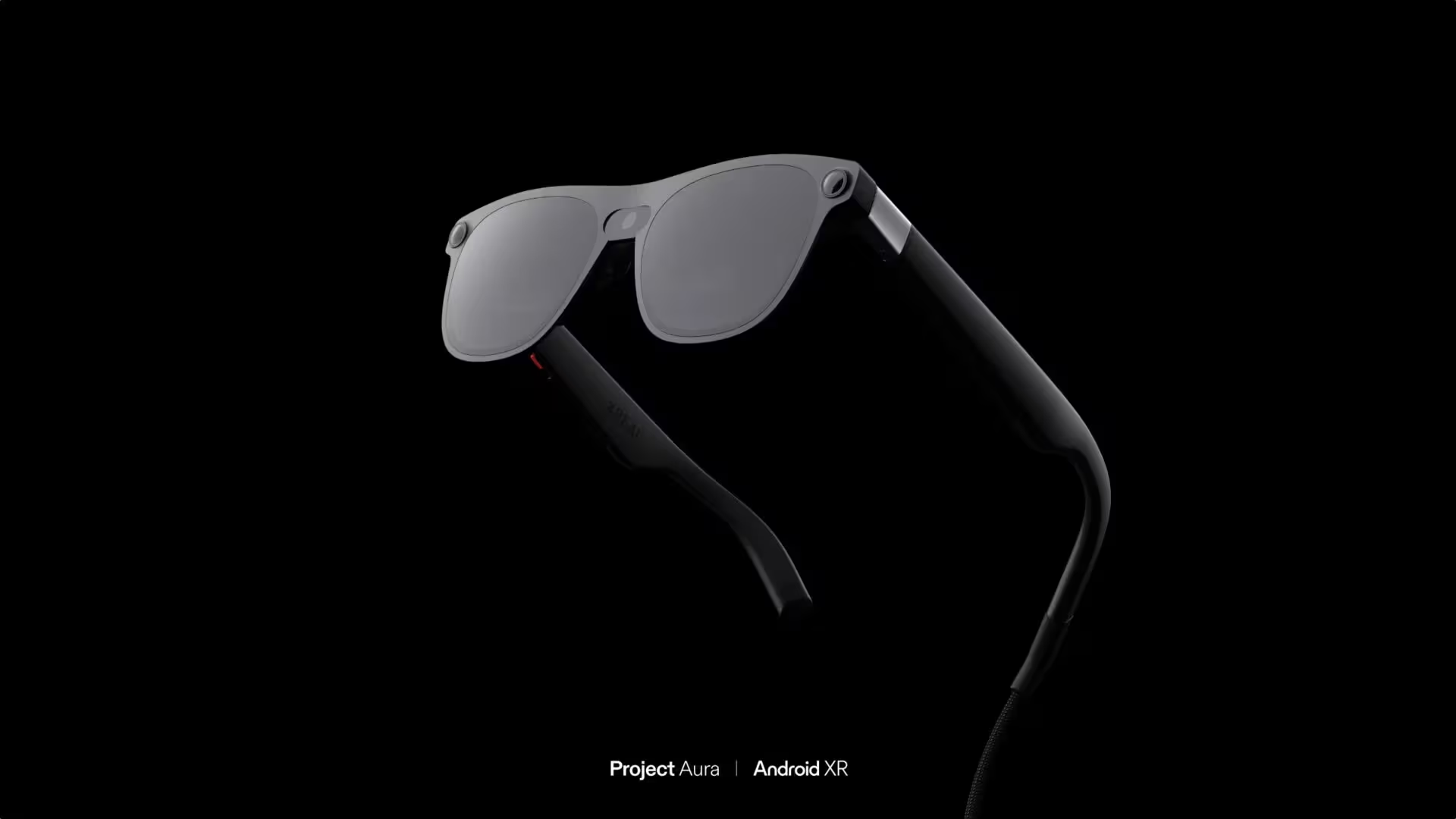
For developers eyeing the next wave of wearables, this is a clear signal: start building and testing now. Whether you’re working on navigation, productivity, media, or context-aware utilities, the updated Android XR SDK gives you the building blocks to prototype for transparent displays and low-latency AR scenarios.
And for consumers, the upside is simple: a broader selection of polished apps the moment Samsung launches its Galaxy smart glasses — provided developers take advantage of these new tools. The momentum behind Galaxy XR apps is already increasing, and with Google enabling glasses-focused development, Samsung’s wearable debut may arrive with a much healthier ecosystem than past launches.
Source: sammobile



Leave a Comment