
To understand the future of humanity in space, you don't need to visit the scorching launchpads of Cape Canaveral or the vast hangars of Boca Chica, Texas. In the winter of 2025, a more instructive pilgrimage takes you to a nondescript industrial park on the outskirts of Vilnius.
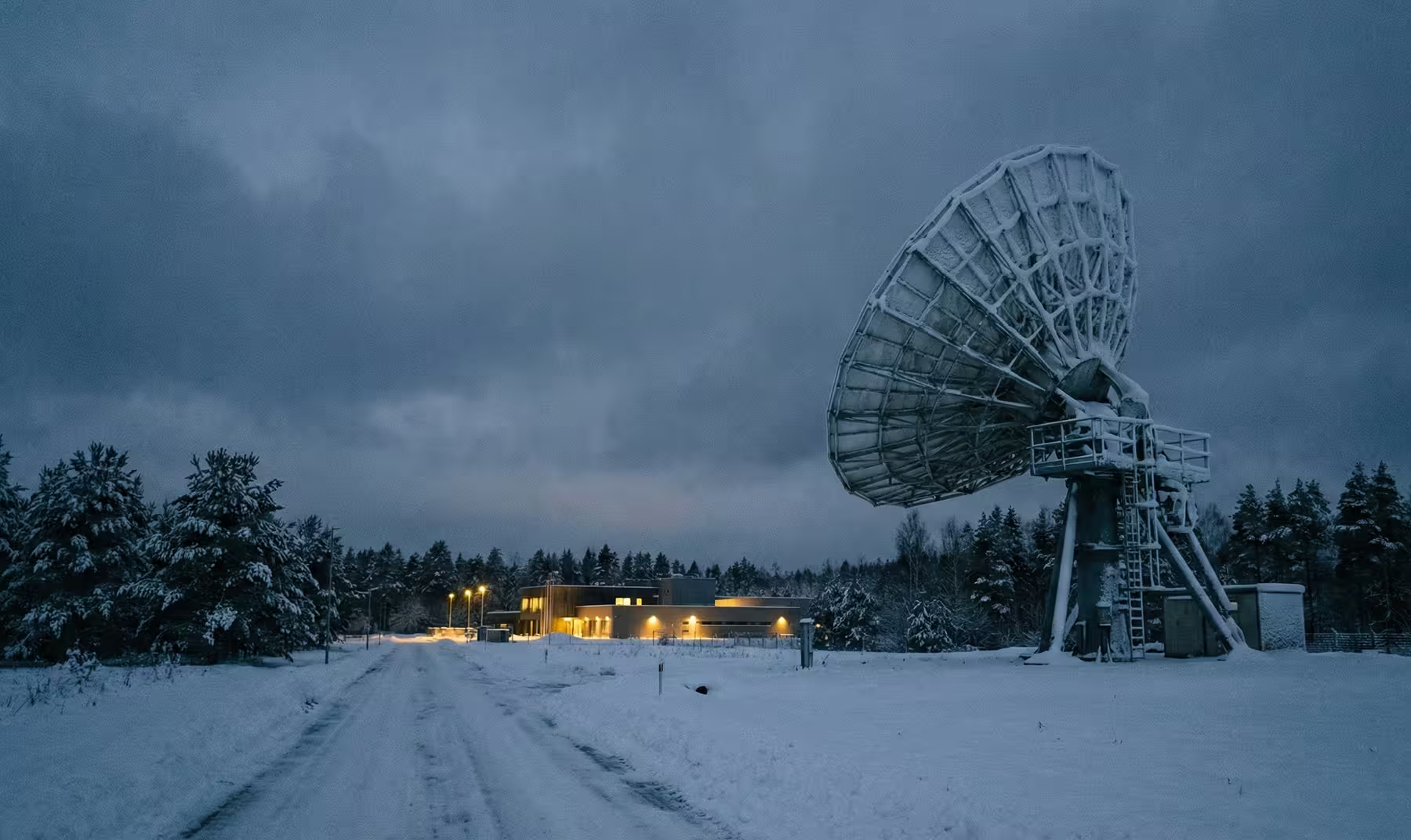
Outside, the temperature is minus eight degrees Celsius. A relentless Baltic wind whips snow across the parking lot, burying cars that haven’t moved since morning. The sky is a monolithic slab of grey, the kind that hangs over Lithuania for five months of the year, obscuring the very stars we are here to discuss.
But inside the cleanroom of a leading photonics facility, the atmosphere is controlled to a surgical precision of 21 degrees, 45% humidity, and near-zero particulate matter. Here, beneath the hum of HEPA filters and the glow of amber safety lights, an engineer named Darius (not his real name, due to the sensitive nature of defense-related contracts) is staring through a microscope at something thinner than a human hair.
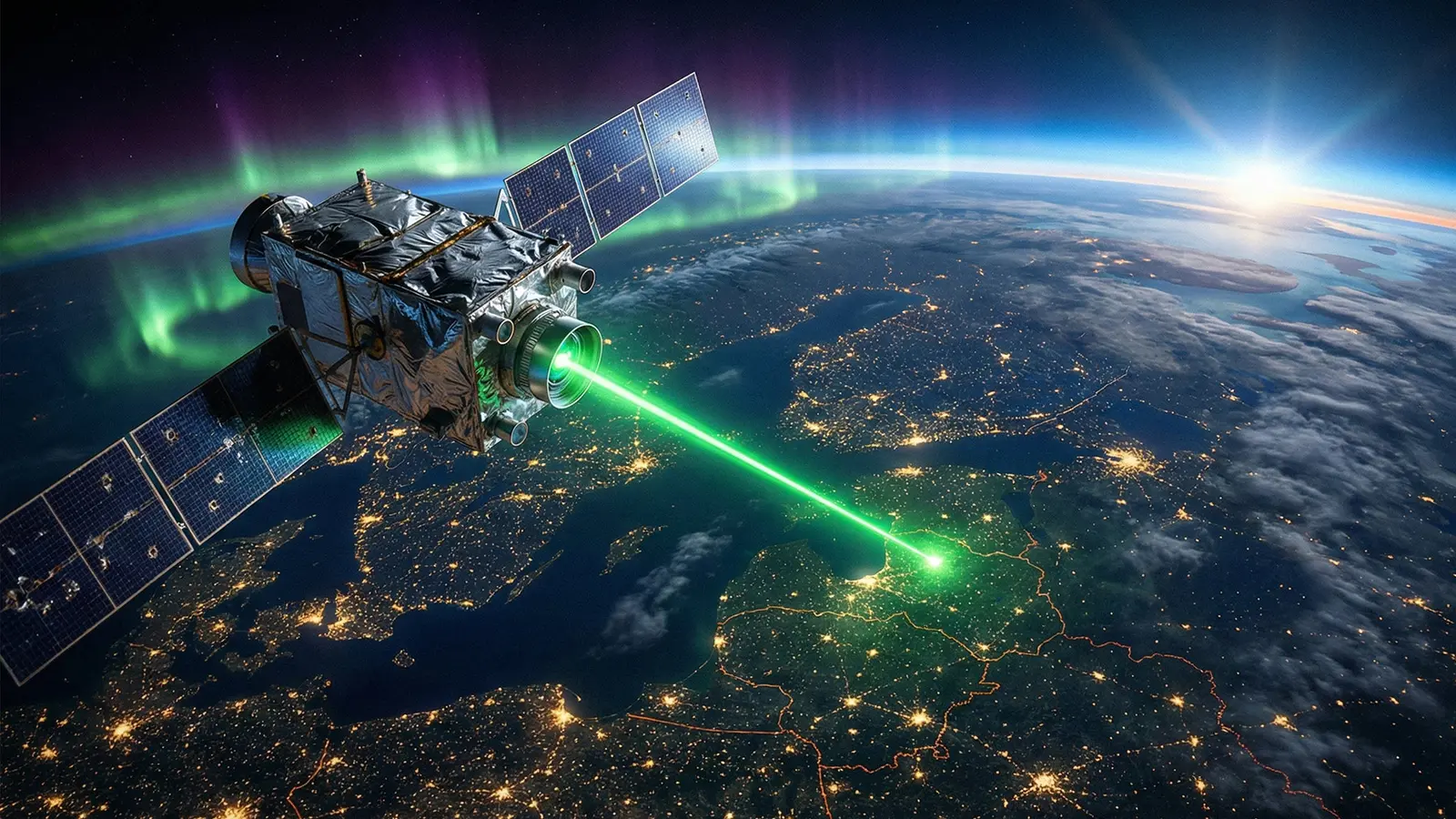
It is a dielectric mirror coating, applied to a laser lens that will soon be integrated into a satellite constellation orbiting 500 kilometers above our heads.
Darius doesn't look like an astronaut. He looks like a tired watchmaker. He hasn't seen the sun in three days. Yet, the component he is calibrating is the linchpin of a global communication network that big tech companies in Silicon Valley are betting their futures on.
This juxtaposition—the frozen, unassuming ground reality versus the soaring extraterrestrial ambition—is the defining characteristic of the Baltic SpaceTech ecosystem in 2026.
For decades, space was the exclusive playground of superpowers. It was about massive rockets, national flags planted on dusty moons, and budgets counted in percentages of GDP. That era is over. The "New Space" age is defined by democratization, miniaturization, and commercialization. It is an age where agility beats brute force.
And in this new gravitational landscape, Vilnius has emerged as an unexpected, critical center of gravity. We are not building the rockets that escape Earth's well; we are building the nervous systems, the eyes, and the communication links that make the machines up there actually work.
This is the story of how a region known for its quiet forests and medieval architecture became the silent engine room of the orbital economy.
Part I: The Democratization of Orbit
To appreciate the Baltic position, one must first understand the seismic shift in the economics of space that occurred between 2015 and 2025.
For half a century, the primary barrier to space was the sheer cost of fighting gravity. Launching a kilogram of payload into Low Earth Orbit (LEO) used to cost upwards of $20,000. Building a satellite was a billion-dollar, ten-year project, resulting in a school-bus-sized machine that was obsolete by the time it flew.
Then came reusable rockets. The cost per kilogram collapsed. Suddenly, the bottleneck wasn't getting to space; the bottleneck was what you did once you got there.
This created an opening for a different kind of engineering mindset. It was no longer about building one massive, perfect, "too big to fail" satellite. It was about building swarms of small, cheap, iterative satellites—CubeSats and nanosatellites—that could be launched in batches of fifty.
If the old space era was about mainframe computers, the New Space era is about smartphones.
This shift played perfectly into the hands of the Baltic states. Estonia, Latvia, and Lithuania didn’t have billion-euro space agency budgets. They couldn't compete in the heavy lift game. But they had a deep legacy of Soviet-era precision engineering, a surplus of hungry software talent, and a cultural predisposition towards efficiency and "bootstrapping."
While the big European aerospace conglomerates in France and Germany were struggling to adapt their bureaucratic processes to this fast-paced new reality, Agile teams in Vilnius and Tallinn were already 3D printing satellite thrusters and coding orbital maneuvering software on shoestring budgets.
By 2026, the results are undeniable. A disproportionate percentage of the hardware currently operating in LEO has some DNA—a piece of code, a sensor, a laser optic, or a thruster component—that originated in this region.

Part II: The Photonics superpower
If there is one technology that gives Lithuania an "unfair advantage" in the space race, it is photonics—the science of generating and controlling light.
It’s an open secret in the deep-tech world: If you need the world's most precise laser technology, you come to Vilnius. This isn't a recent development. It's the result of a fifty-year academic obsession that began in Vilnius University in the 1970s and has matured into a dominant global industry. For years, these lasers were used primarily for scientific research or high-end manufacturing (like cutting the glass for smartphones).
In the 2020s, however, space became the ultimate market for lasers.
Why? Because radio waves—the traditional way we talk to satellites—are running out of bandwidth. They are slow, easily jammed, and the frequency spectrum is overcrowded. The future of space communication is Optical Intersatellite Links (OISL). In simple terms: using lasers to beam terabytes of data between satellites in orbit, creating an internet backbone in the vacuum of space.
To hit a moving satellite thousands of kilometers away with a laser beam requires optical components of unimaginable precision. The mirrors must be perfectly smooth down to the atom. The coatings must survive the harsh radiation of space without degrading.
This is where Vilnius excels.
In 2025, several major global satellite constellation operators (the companies trying to provide global broadband from space) quietly signed long-term supply agreements with Lithuanian photonics firms. They aren't buying off-the-shelf parts; they are funding R&D labs here to push the boundaries of physics, needing optical terminals that are smaller, lighter, and more power-efficient than anything currently in existence.
When you read about high-speed internet being available on a cruise ship in the middle of the Pacific or a research station in Antarctica, there is a very high probability that the data packets traveled on a beam of light sculpted by Lithuanian glass.
Part III: The Eyes in the Sky (Earth Observation)
Beyond communication, the second major pillar of the Baltic space economy is Earth Observation (EO).
The commoditization of satellite hardware means we can now monitor the planet in near real-time. But the hardware is just the delivery mechanism. The real value is in the data.
Estonia, the world's premier digital society, was quick to realize this. They didn't just want to build satellites; they wanted to build the software infrastructure to interpret what those satellites saw.
In 2026, Baltic startups are leaders in processing "hyperspectral" imaging data. Standard cameras see red, green, and blue light. Hyperspectral sensors see hundreds of bands of light across the electromagnetic spectrum that are invisible to the human eye.
From orbit, a Baltic-made sensor doesn't just see a forest. It sees the chemical signature of chlorophyll in the leaves, allowing it to detect a bark beetle infestation months before the trees turn brown. It doesn't just see a patch of ocean; it sees the thermal signature of an illegal fishing vessel that has turned off its AIS transponder.
This data is the new oil.
Agriculture: Farmers in the American Midwest subscribe to data feeds processed in Tallinn that tell them precisely which acre of corn needs nitrogen fertilizer, optimizing yield and reducing chemical runoff.
Climate Monitoring: European governments use Baltic EO data to verify carbon credit claims, using space-based sensors to measure methane leaks from industrial plants with unprecedented accuracy.
Infrastructure Monitoring: Insurance companies use orbital radar data (Synthetic Aperture Radar - SAR) processed in the region to monitor the millimeter-level sinking of bridges or dams, predicting failures before they happen.
The Baltics have moved up the value chain. They are no longer just bending metal for space; they are selling the actionable intelligence that space provides.

Part IV: The Shadow of Geopolitics (Dual-Use Reality)
Writing about space technology in Vilnius in December 2025 without mentioning the geopolitical context would be naive. The war in Ukraine changed everything for this region, and space was no exception.
The conflict was the first "full-scale space war." Both sides relied heavily on commercial satellite imagery (like Maxar and Planet) for intelligence, and satellite internet (like Starlink) for communication when terrestrial infrastructure was destroyed.
It served as a brutal wake-up call for European defense planners: Space is critical infrastructure, and Europe was dangerously dependent on American private companies.
This realization unleashed a flood of defense spending into the Baltic space sector under the banner of "Dual-Use" technology—tech that has both civilian and military applications.
A company in Lithuania building autonomous navigation systems for nanosatellites is now seen as a strategic defense asset. Why? Because if GPS satellites are jammed in a conflict scenario, you need satellites that can navigate using star-trackers and onboard AI.
A startup in Latvia developing radiation-hardened memory chips for deep space probes is suddenly receiving grants from NATO innovation funds. Why? Because chips that survive Jupiter's radiation belts can also survive the electromagnetic environment of electronic warfare.
The mood in Vilnius’s SpaceTech hubs is serious. The engineers here know that what they are building isn't just for counting trees or providing in-flight WiFi. They are building the orbital eyes and ears that form the first line of defense for NATO’s eastern flank. This proximity to danger has instilled a sense of urgency and pragmatism that is sometimes missing in the posher tech hubs of Western Europe.

Part V: The Talent and the Ecosystem
Who are the people driving this quiet revolution?
If you walk into a space startup in Vilnius or Tartu, you won't find the "hustle culture" bros of Silicon Valley wearing Patagonia vests and talking about "changing the world" while sipping kombucha.
You find physicists, mechanical engineers, and mathematicians. You find people who are deeply skeptical of marketing hype because physics doesn't care about your pitch deck.
The ecosystem is tight-knit and academically rooted. The talent pipeline from universities like Vilnius Tech, Kaunas University of Technology (KTU), and Tartu University is robust. These institutions have pivoted quickly, offering specialized masters degrees in Space Technology that are co-taught by industry leaders.
Unlike the software boom of the 2010s, where a boot-camp graduate could become a senior developer in two years, space engineering requires deep, foundational knowledge. You can't "move fast and break things" when a single mistake costs millions of euros and vaporizes in the upper atmosphere.
This requirement for deep expertise has created a sticky talent pool. Engineers here tend to stay in the region. The quality of life in Vilnius, combined with the genuine intellectual challenge of the work, outweighs the higher salaries offered in London or Zurich. They are building generational industrial knowledge, not just chasing the next stock option vesting cliff.
Conclusion: The Essential Node
As the year 2025 draws to a close, the global space industry is poised for exponential growth in 2026. We are on the verge of seeing the first truly massive commercial space stations, the beginnings of lunar infrastructure, and the explosion of the "in-orbit servicing" economy (robots fixing other satellites).
The Baltic states will likely never launch a massive rocket from their own soil. They will never have a flashy astronaut corps that becomes household names.
But that is not their role. Their role is to be the indispensable node in the supply chain of the future.
When the first commercial lunar lander touches down on the Moon's south pole in the coming years, look closely at the spec sheet. There is a good chance the laser altimeter guiding it down, or the radiation sensor protecting its computer, started its journey in a snow-covered industrial park in Lithuania.
The giants of the new space race—the billionaires and the superpowers— are reaching for the stars. But they are doing so standing on optical benches built in Vilnius.
In the cold light of the Baltic winter, the future is being forged, one photon at a time.

“With a background in economics and digital markets, I write about startups, finance, and the trends transforming the global economy.”

Discussion
Leave a Comment
Comments (5)
pretty balanced take. small countries punching above weight in deep tech, not glam but crucial. geopolitics will keep it interesting, and risky.
feels slightly overhyped, optics are great but scaling and supply chains bite back big time. dual use also messy, hope safeguards exist. still nice tech porn tho
I used to visit a tiny optics lab in Kaunas, brutal standards and long nights. they really sweat the details, this rings true. proud to see local tech scale up
is this even true tho? Lithuania photonics as backbone of space internet sounds bold 🤔 where are the numbers, contracts, export data… curious, not trolling
wow, Vilnius doing lasers for space? didn't see that coming. love the image of engineers like watchmakers in snow, working on stuff that literally keeps the internet alive. amazing