
3 Minutes
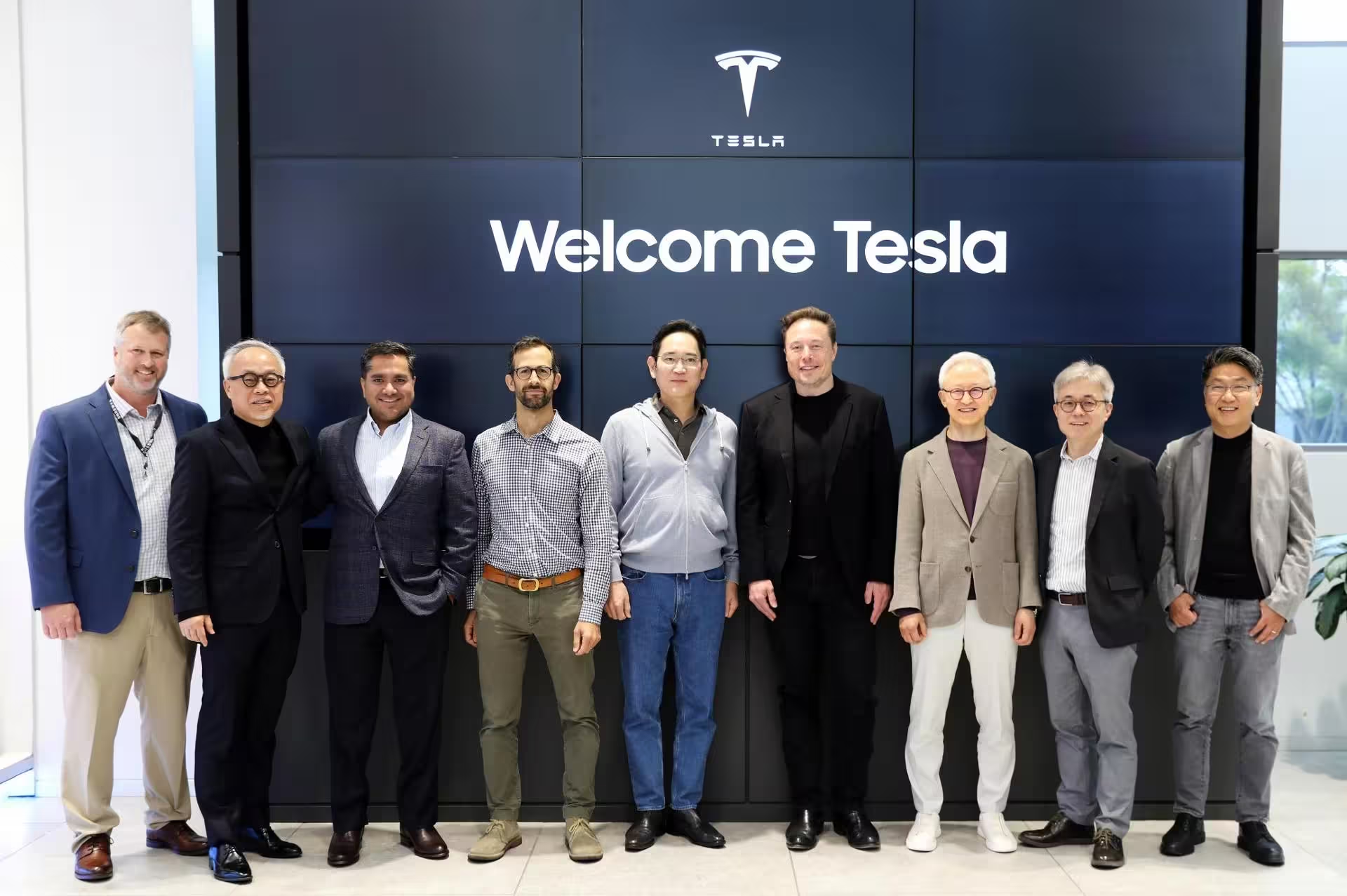
Samsung’s Executive Chairman Lee Jae-Yong and Tesla CEO Elon Musk met at Samsung’s semiconductor plant in Taylor, Texas, to review chip production and talk about deepening their manufacturing partnership. The visit highlights how chip supply and on-site collaboration are becoming central to the next generation of electric vehicles.
Inside the Taylor plant: production, partnerships and new operating models
The meeting follows a string of wafer deals between the two companies. Samsung already manufactures Tesla’s AI4 chips, picked up AI5 for current models, and in July secured the contract to produce Tesla’s next-generation AI6 chips. At Taylor, the leaders walked production lines, discussed yield targets and explored tighter operational ties to speed up development cycles.
One notable request from Musk was for Tesla to have a dedicated workspace inside Samsung’s Taylor foundry so Tesla engineers can monitor production directly. That kind of embedded presence is part of a broader experiment at Samsung Foundry: a client-involved manufacturing model where customers participate across chip design, plant construction, line configuration and packaging. The idea is to reduce feedback loops, improve yields and attract more high-profile foundry customers.
For Samsung, the Tesla partnership is more than a single revenue stream. Demonstrating a seamless, end-to-end foundry service—where clients co-design and co-manage manufacturing—could make Samsung Foundry more competitive against rivals. Faster iteration between design and fab also matters as automakers push complex AI-enabled silicon into EV architectures.
Beyond Tesla-specific work, Samsung is also trying to pull in other major clients by licensing advanced thermal tech from its Exynos line. The Exynos 2600's Heat Path Block (HPB) tech, designed to lower chip temperatures and improve efficiency, is being offered to other firms—an attractive proposition for companies like Apple and Qualcomm that prioritize performance-per-watt in mobile and compute chips.
In short, the Taylor visit underlines two trends: carmakers demanding closer, more collaborative relationships with chipmakers, and Samsung expanding its foundry pitch to include co-development and thermal innovations. As EVs rely more on custom AI silicon, those kinds of ties could determine which suppliers win long-term vehicle contracts.
Source: sammobile



Leave a Comment