
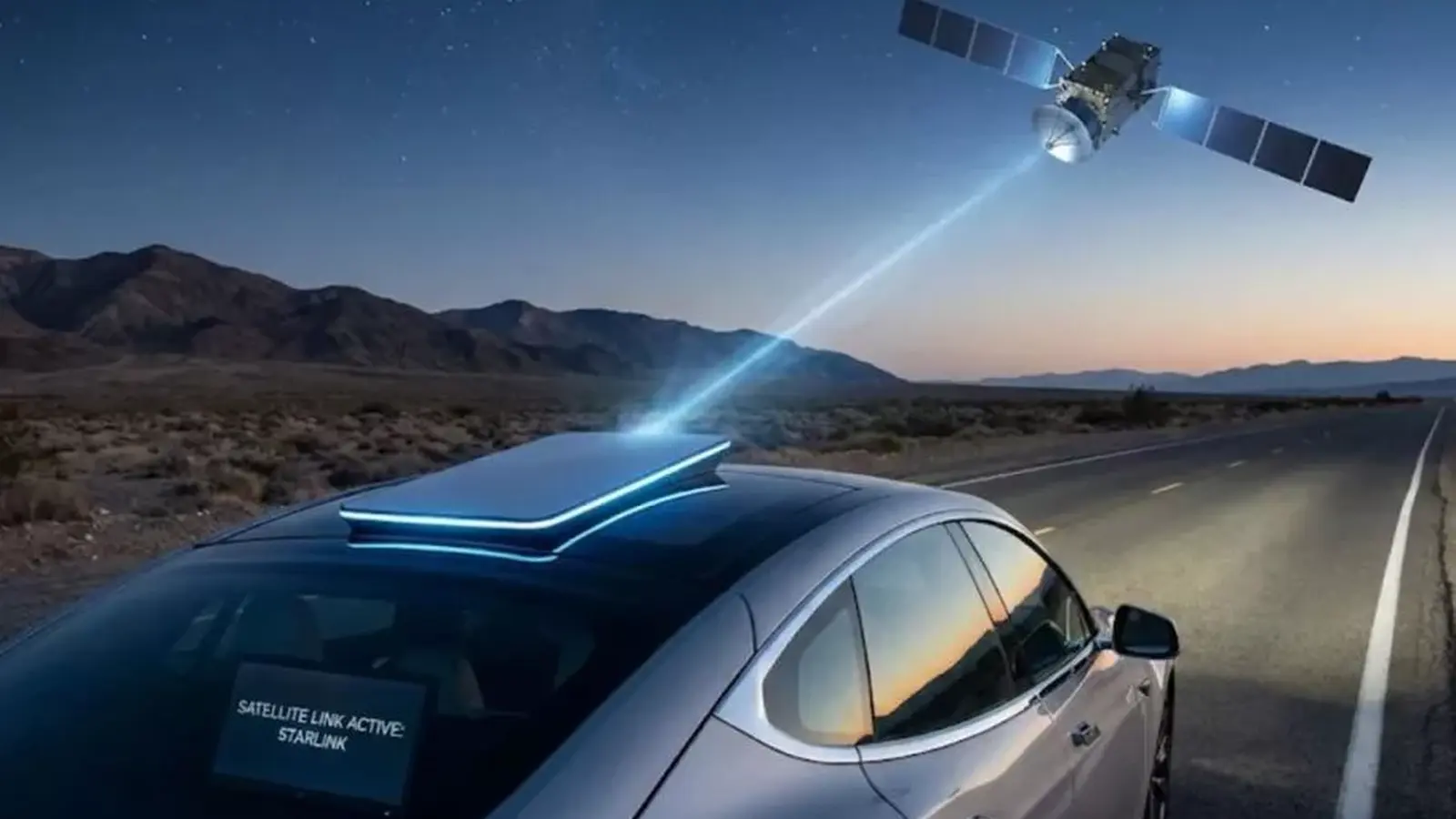
Tesla plans roofs that won’t block satellite internet
Tesla has filed a patent revealing a fresh approach to integrate Starlink-style satellite internet directly into its vehicles. Instead of tacking an antenna onto a glass roof or trunk, the company proposes reengineering the roof itself using materials that let high-frequency satellite signals pass through.
From ‘shield’ to ‘window for data’
Automotive roofs built from traditional materials — steel, conventional glass or laminates — can act like shields, attenuating or blocking radio-frequency (RF) bands used by satellites. The new patent describes RF-transparent polymer layers that turn the roof into a literal "window for data." That would help provide stable, high-bandwidth connectivity for in-car services and autonomous systems.
Tesla’s patent calls out robust aerospace-grade polymers such as polycarbonate, ABS and ASA, arranged in a four-layer laminate that balances RF transparency with crashworthiness. The design aims to meet federal safety regulations (FMVSS), so occupants’ protection and structural integrity remain priorities alongside connectivity.
"This isn’t about fashioning a hole in the roof — it’s an engineered composite that keeps passengers safe while letting signals through," the filing reads in part.

Key benefits for drivers and Tesla’s product roadmap:
- Reliable satellite internet for over-the-air updates and remote diagnostics
- Enhanced connectivity for robotaxi fleet operations and teleoperations
- Cleaner, integrated appearance compared with aftermarket Starlink mini-dish hacks
Some Tesla owners have already experimented by mounting mini Starlink dishes under panoramic glass, but the patent suggests Tesla intends to offer a factory-integrated solution that’s optimized for signal performance and vehicle safety.
Market context and implications
For car buyers, integrated satellite internet could change expectations around in-car connectivity, especially in rural or low-cell-coverage areas. For Tesla, it supports long-term ambitions: connected features, fleet management for autonomous services, and smoother software delivery.
Whether the technology reaches all models or first appears on robotaxi prototypes remains unclear, but the patent underscores a strategic move: design vehicle architecture for seamless connectivity, not retrofit it later.
Highlights:
- RF-transparent multi-layer polymer roof
- Focus on safety compliance and durability
- Potentially ideal for Starlink and other satellite broadband
This patent could be a meaningful step toward always-on, manufacturer-supported satellite connectivity for future cars.

“I cover automotive innovation, electric vehicles, and the future of mobility — where technology meets sustainability.”

Discussion
Leave a Comment
Comments
No comments yet. Be the first.