
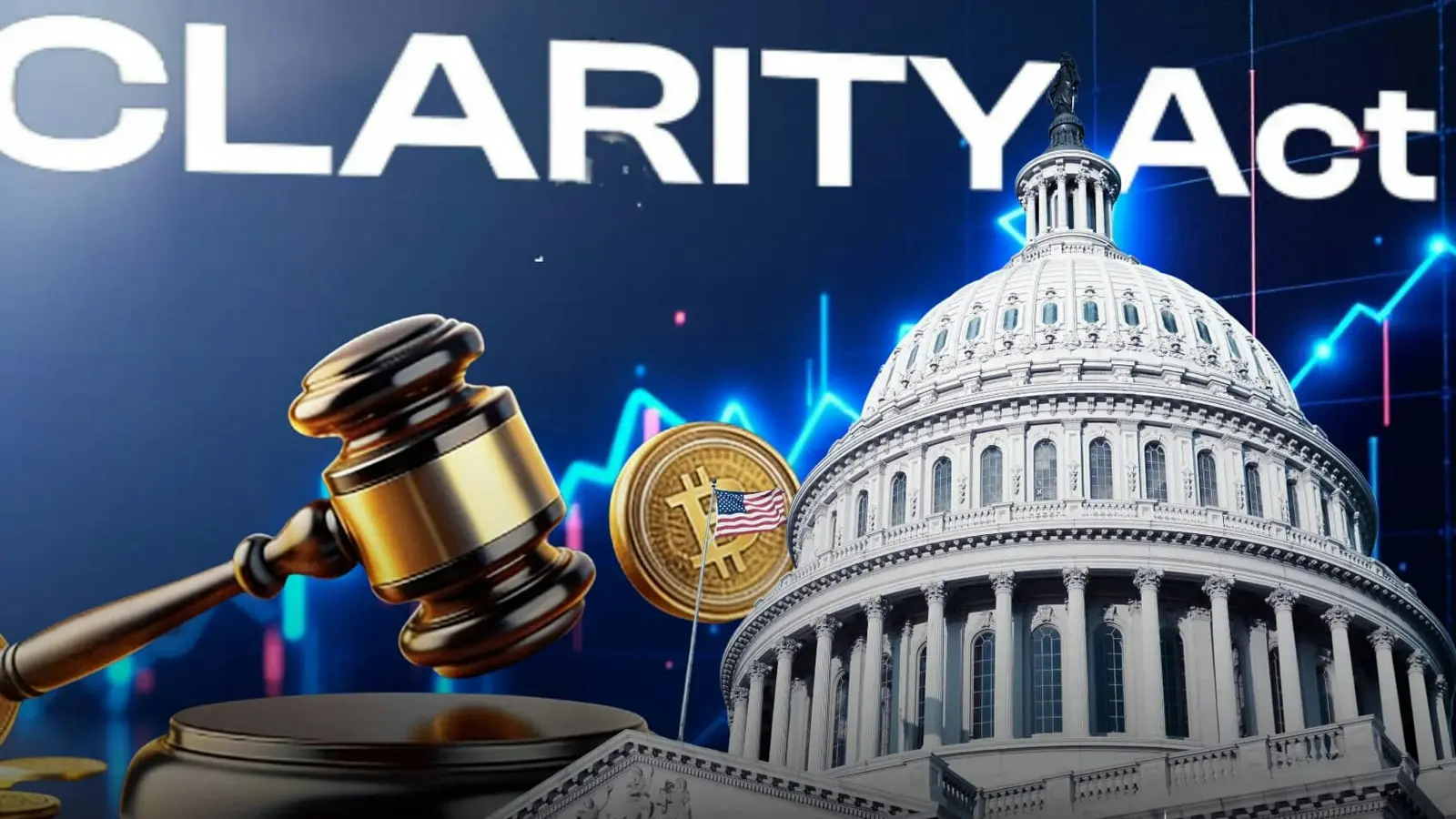
Polymarket traders push CLARITY Act odds to a new low
Polymarket trading prices show the CLARITY Act's chances of becoming law in 2026 falling to 27% on July 29, marking the lowest level since the market opened. That price reflects traders' collective assessment rather than an independent forecast, but it signals rising skepticism among investors and policy watchers about the bill's ability to clear the remaining legislative hurdles before the Senate recess on Aug. 8.
Market reaction and analysts’ outlook
Market-focused firms have echoed Polymarket's sentiment. Galaxy Digital revised its estimated probability of passage to roughly 30% as Senate negotiations extended and the legislative calendar tightened. The shift in sentiment reverberates across the crypto and blockchain communities: traders, token issuers, exchanges and institutional investors all watch the bill closely because it would reshape crypto regulation in the United States.
Senate priorities and the shrinking legislative window
Senate leaders moved to prioritize a Russia sanctions package and a slate of federal nominations, delaying action on the CLARITY Act. On July 28 the Senate advanced the sanctions bill, leaving fewer working days to consider complex crypto market-structure legislation before the Aug. 8 recess. That change in calendar reduces the opportunity for either a cloture vote or a full floor vote, increasing the odds that the CLARITY Act will remain unresolved into the fall.

Industry groups have lobbied Senate leadership to at least take a procedural vote before the recess. A cloture vote could determine whether the measure has the 60 votes typically needed to overcome filibuster threats and proceed to a final vote later in the year. Without that procedural step, the path forward becomes more uncertain and could push any substantive debate into a crowded post-recess calendar.
Key sticking points: ethics and stablecoin rules
Two negotiation areas stand out. First, ethics provisions addressing elected officials’ financial interests in digital assets have been heavily contested. Democratic Sen. Ruben Gallego and Republican Sen. Thom Tillis are reportedly finalizing a bipartisan counteroffer focused on ethics language; they expect to send their proposal to the White House within days. The Tillis-Gallego approach may shift enforcement authority by giving state attorneys general standing to enforce ethics rules, rather than relying solely on the Department of Justice.
Second, stablecoin yield and rewards remain a flashpoint. Banking groups want tighter limits on yield-bearing stablecoin products that could compete with insured bank deposits, while crypto firms argue that broad restrictions would harm innovation and reduce consumer choice. If negotiators cannot bridge those differences, the bill could face additional delays even if ethics language is resolved.
What the CLARITY Act would mean for crypto market structure
The CLARITY Act proposes a statutory division of authority between the Securities and Exchange Commission (SEC) and the Commodity Futures Trading Commission (CFTC). Proponents say the framework would deliver clearer jurisdictional lines for exchanges, token issuers, custodians and tokenized securities, helping projects and financial institutions plan product launches, compliance programs and listings.
Supporters from both traditional finance and digital-asset firms have made economic arguments for clarity. Major asset managers and brokerages — including BlackRock, Goldman Sachs, Franklin Templeton, Fidelity, Charles Schwab and SoFi — have publicly signaled support for legislation that creates durable regulatory certainty. Republicans and Democrats on key committees have warned that protracted uncertainty could drive capital, jobs and blockchain development offshore, undermining U.S. leadership in digital markets.
Voices from Capitol Hill and the industry
Florida Rep. Mike Haridopolos reiterated support for a clear legislative framework, warning that delays risk shifting investment to countries with more predictable rules. Sen. Cynthia Lummis pushed back on claims that Wall Street uniformly opposes the bill, arguing that a broad swath of financial firms want a workable regulatory path for crypto innovation and tokenized assets.
Regulators may act if Congress stalls
SEC Chair Paul Atkins has signaled that the agency can move to address parts of the crypto market through rulemaking if lawmakers fail to produce legislation. Atkins described the SEC as "ready, willing and able" to exercise existing authority to regulate tokens, trading platforms and tokenized securities. While agency action could provide some clarity, many in the industry prefer statutory language because rules issued by regulators can be revised or reversed by subsequent administrations.
Independent regulatory action by the SEC would not fully replace a statutory jurisdictional split with the CFTC, leaving open questions about which agency controls oversight of certain derivatives, tokens and exchange activities.
What to watch next
The immediate test for the CLARITY Act is whether the bipartisan ethics counteroffer secures White House buy-in and whether Senate leaders will take procedural steps before the August recess. Even with a compromise on ethics, negotiators must still reconcile Senate and House differences and secure enough bipartisan support to overcome procedural roadblocks.
For crypto market participants, the stakes are high: the CLARITY Act could set long-term rules for token classification, exchange operations, custodial services, stablecoin frameworks and tokenized securities. As traders update odds and institutional players adjust positioning, the legislative and regulatory developments over the next weeks will be essential reading for anyone tracking U.S. crypto policy, blockchain regulation, and digital-asset market structure.

“I cover automotive innovation, electric vehicles, and the future of mobility — where technology meets sustainability.”

Discussion
Leave a Comment
Comments (2)
Is Polymarket really the right pulse here? traders can overreact, looks like politics/calendar not policy is driving this. curious if White House will sign off
wow didnt expect CLARITY odds to slip to 27%... that feels brutal. if it dies till fall startups and jobs could get pushed abroad, big oof