

Senate recess stalls CLARITY Act as election politics intensify
Senate Majority Leader John Thune has signaled that the CLARITY Act, a high-profile bipartisan bill designed to create a U.S. crypto market structure, will not get a floor vote before the Senate breaks for its August recess. That announcement removes a timing pressure that many in the digital asset industry had viewed as critical for getting comprehensive federal crypto regulation across the finish line this year.
Where the CLARITY Act stands
The CLARITY Act aims to deliver clearer rules for cryptocurrencies, stablecoins, exchanges, and other digital asset participants. Supporters say it would reduce regulatory fragmentation, encourage market stability, and set consistent operating standards for the crypto industry. Yet the bill has run aground on several contentious points, including ethics enforcement for senior officials, whether stablecoin holders should be able to receive rewards, and which agency would have enforcement authority.
Election-year dynamics reshape legislative calculus
Ron Hammond, head of policy and advocacy at Wintermute, told reporters that the core problem is less about vote counts and more about election politics. With November midterms approaching, Democrats are gearing up campaign messaging that focuses on allegations of corruption related to the administration. Hammond says this has made some senators wary of advancing major crypto legislation that could be framed as a political win for the other side before voters go to the polls.
'The votes are there, but the election politics are louder,' Hammond said. He predicts that once campaign pressure subsides after the midterms, a narrow window may reopen to finalize the bill — though that opportunity will compete with post-election deadlines such as government funding and defense measures.

Voting math and Senate dynamics
Republicans currently hold 53 Senate seats, meaning they would typically need support from at least seven Democrats to reach the 60 votes usually required to overcome procedural hurdles. Some Democratic senators have publicly objected to key provisions in the latest draft over concerns about ethics, consumer protection, and enforcement mechanisms.
A focal point of the dispute involves how to handle potential conflicts of interest for senior officials, including provisions that would address allegations tied to former President Trump and other federal figures. The current draft would route enforcement of ethics restrictions through the Department of Justice. Several Democrats criticize that approach because the DOJ is part of the executive branch and could be seen as the wrong venue to police a sitting president.
Banking lobby and industry reactions
Banking groups have also mobilized against parts of the bill, with particular opposition to language that could enable tokenized rewards on stablecoin deposits. Banks warn that such products might siphon customer funds away from traditional deposits, reducing lending capacity. Opponents used protracted negotiations to press their positions, prolonging disputes over stablecoin rewards, regulatory authority, and enforcement controls as the legislative calendar contracted.
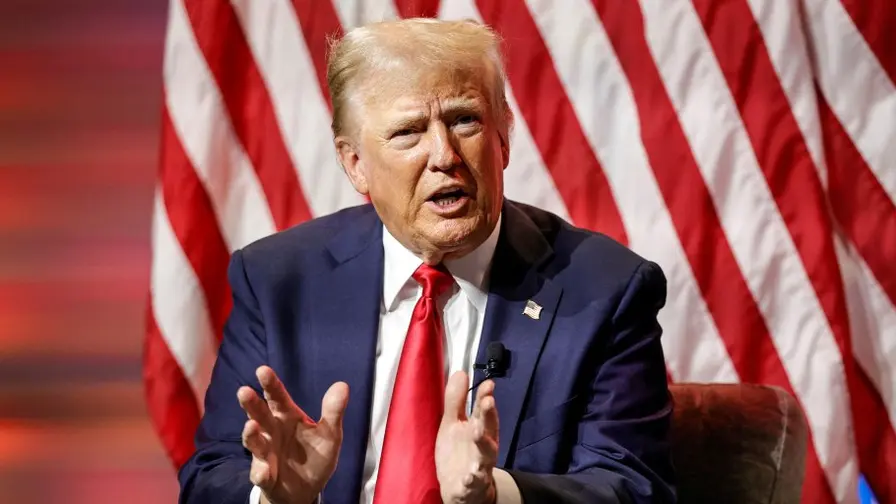
Yet not all financial leaders are aligned with banking trade groups. Goldman Sachs CEO David Solomon has indicated support for advancing the CLARITY framework, arguing that a coherent U.S. market structure for crypto could bring greater stability and clarity for digital asset firms, even if certain provisions remain imperfect. Solomon's position underscores a split between some large financial institutions and industry trade associations.
Crypto executives and firms continue to push for action. Ripple CEO Brad Garlinghouse and Coinbase CEO Brian Armstrong have urged senators not to abandon a workable bipartisan bill in pursuit of a perfect text. Their message: federal crypto rules are needed to provide legal certainty and to help U.S. firms compete globally.
Polymarket trims odds as timetable collapses
Prediction-market traders have reacted to Thune's announcement and the mounting political obstacles by cutting the probability that the CLARITY Act will become law in 2026. Polymarket now assigns roughly a 33% chance to passage, down sharply from a high above 80% in late February. The market shows more than $2.56 million wagered on the contract, reflecting significant trader interest and the shifting odds as ethics debates, banking opposition, and the looming recess weigh on expectations.
What could change after the midterms
If the November elections reduce the immediacy of campaign-driven messaging, lawmakers may return to negotiations with a clearer path to hammer out a compromise. Proponents see a post-midterm window when pressure may ease enough to resolve remaining sticking points: which agency enforces ethics provisions, how to safeguard consumers, and whether stablecoin reward structures should be permitted.
But any comeback effort will not be easy. When Congress reconvenes, it will confront critical deadlines for government funding and defense measures, limiting the floor time available to resolve a complex bill. Even with bipartisan interest, senators will need to balance political priorities, constituent pressure, and competing legislative obligations.
Implications for crypto markets and companies
The deferral of a vote keeps regulatory uncertainty in place for crypto exchanges, stablecoin issuers, and institutional participants. Firms that have been planning compliance and product strategies around the CLARITY framework may now face longer timelines before federal guidance is locked in. Conversely, a successful post-election push could accelerate U.S. adoption of clearer rules and reduce compliance fragmentation between agencies.
Industry advocates argue that an imperfect CLARITY Act is better than continued ambiguity, while critics caution against rushing measures that could create loopholes or consolidate excessive authority in one agency. For traders and investors, the legislative delay is a reminder that crypto policy outcomes can pivot quickly with political tides.
Bottom line
John Thune's statement that the Senate will not vote on the CLARITY Act prior to the August recess has trimmed optimism for near-term passage. The bill's fate now looks tied to a narrow, post-midterm window complicated by ethics disputes, bank lobbying, and a crowded congressional agenda. Polymarket's falling odds reflect the market's judgment that 2026 passage is far from certain, even as industry leaders continue to advocate for a durable U.S. regulatory framework for cryptocurrencies and stablecoins.

“With a background in economics and digital markets, I write about startups, finance, and the trends transforming the global economy.”

Discussion
Leave a Comment
Comments (3)
Pretty balanced take, politics reshaped the voting math. Still sucks for startups and traders — uncertainty drags on, hope they wrap it up post-midterms
Ugh, typical. Election fear tactics stall decent regulation. We needed CLARITY now not after the circus, if they wait firms lose time
Is this even true? So they punt crypto cuz of midterms, not lack of votes. Politics > policy, sigh... such a mess