
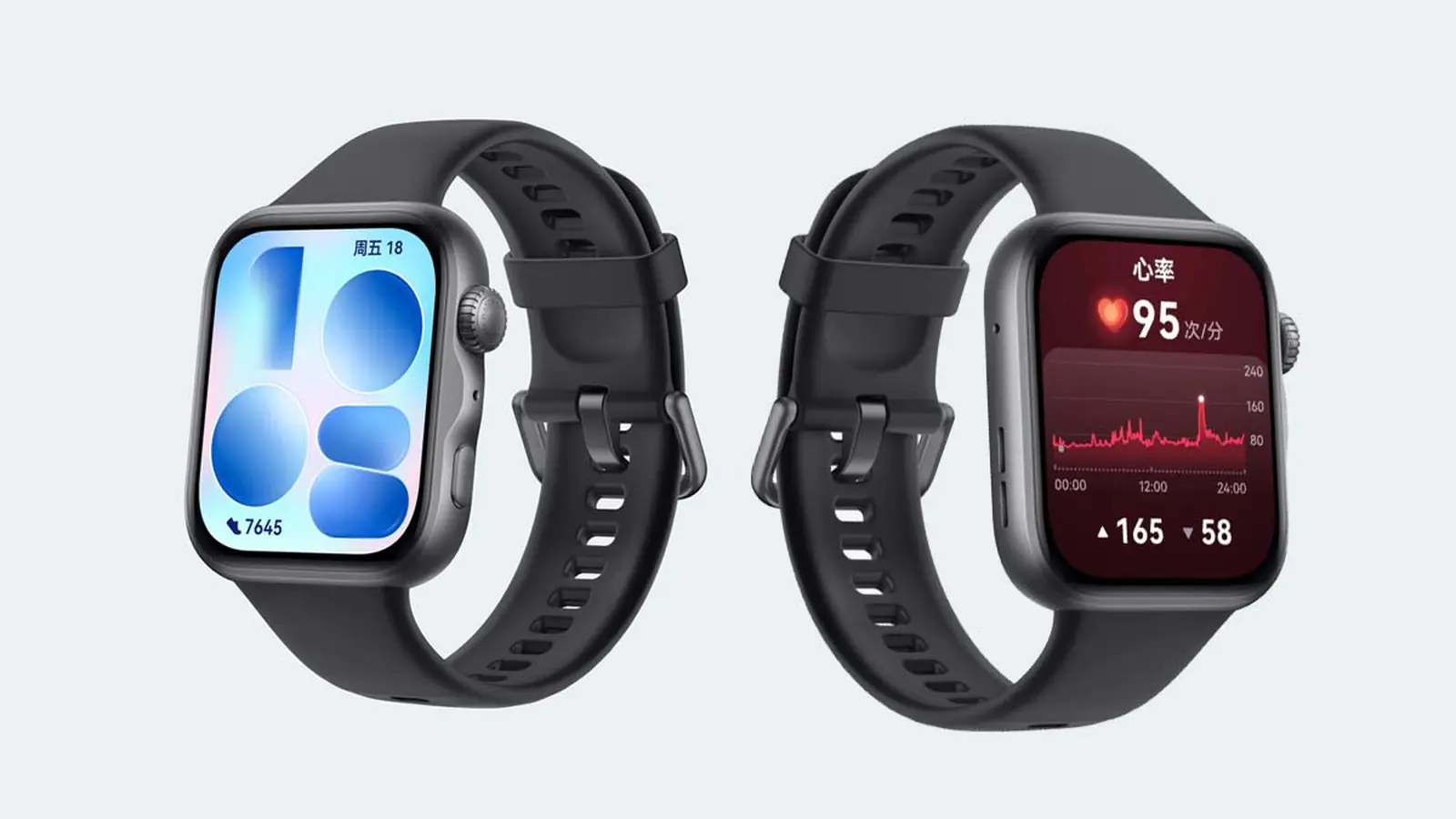
It’s 8 a.m. and the sun is already glaring through the glass of a downtown office tower. You check your wrist and, for the first time today, your smartwatch actually reads like paper. That’s the selling point Huawei is pushing with the Qingyun H3550: a watch that stays readable under real-world lights while staying quietly tailored for business use.
The Qingyun H3550 wears its rectangular DNA plainly. A rounded aluminum case measures 42.9 x 38.2 x 9.5 mm and manages to tip the scales at just 27 grams, which means it rarely feels like anything at all. The 1.82-inch AMOLED display runs at 480 x 408 pixels (about 347 pixels per inch) and peaks at 2,500 nits, so whether you’re on a sunlit terrace or under fluorescent office lighting, the screen stays crisp and legible. It’s water resistant to 5 ATM, too, so a swim or an unexpected shower won’t interrupt a workday.

Sensors get a clear upgrade. Huawei fitted the watch with an advanced PPG array — six LEDs paired with six photodiodes — for cleaner heart-rate reads. You get SpO2 tracking and the TruSleep 5 suite for sleep insights. There’s HRV analysis to help score recovery, an emotional health tracker for quick check-ins, and even a playful panda-themed coach for short desk exercises. Built-in GPS supports untethered runs and rides, while NFC covers contactless payments and digital keys.
Not a consumer showpiece. A tool for companies.
Here’s what makes the Qingyun H3550 different: it isn’t primarily a status device. Huawei aimed this at organizations. Corporations can request custom packaging, boot-up logos, branded watch faces, and bespoke straps for employee programs. There’s an SDK for deeper integrations, cloud hooks for centralized data, and health-service features aimed at corporate wellness, early risk detection and rehabilitation support.
This is a smartwatch built for businesses, not applause.
Battery life is practical rather than headline-grabbing. Huawei’s figures point to up to 10 days in power-saving mode, about 7 days with typical mixed use, and roughly 4 days when the always-on display is active. Those numbers matter when wearables are handed to teams rather than sold as fashion items.

Pricing and broad retail availability remain under wraps. For now, the device looks positioned for corporate procurement channels rather than mainstream stores. That strategy makes sense. Companies buying at scale care about durability, management tools and long-term health insights more than bezel designs.
Will the Qingyun H3550 find a foothold among HR departments and occupational health programs? It has the hardware chops and integration points to make a compelling case. The real test will be how employers adopt its customization and analytics to keep employees healthier, safer and actually using the devices day to day.

“I cover emerging technologies, digital innovation, and the intersection of tech and everyday life. My goal is to make complex trends accessible and inspiring.”

Discussion
Leave a Comment
Comments (1)
This reads like a corporate toy. But is it about employee wellness or subtle surveillance? NFC+GPS+health data sounds risky, who owns it, how long stored?