
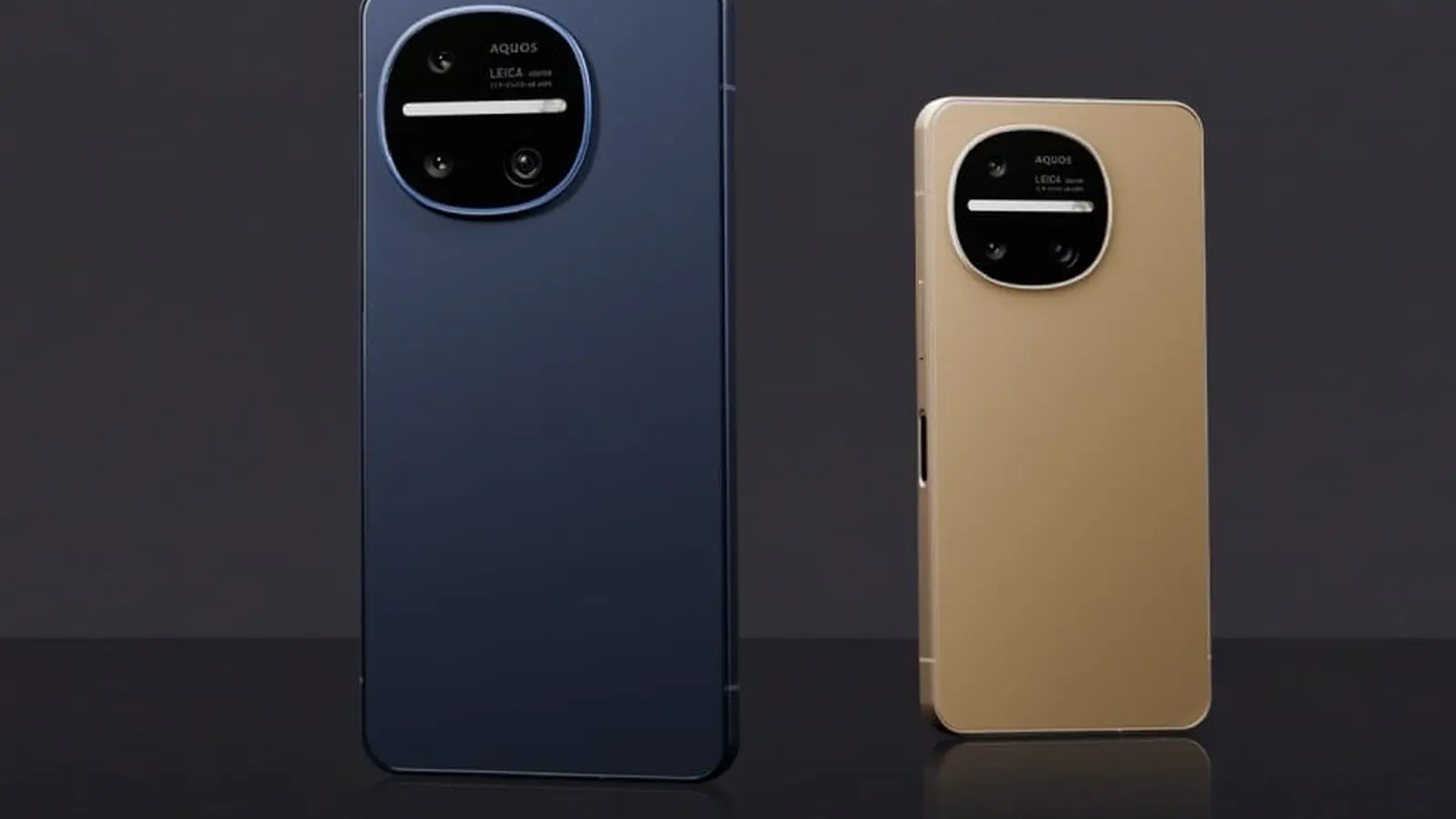
Phones that surprise you rarely shout. The Aquos R11 quietly arrives with a few bold ideas and a handful of compromises, the kind that make you nod and then ask a few questions.
Brightness and polish that catch the eye
Sharp kept pushing its Pro IGZO OLED tech. The R11 uses a 6.5 inch panel at 1080 by 2340 and an adaptive 1 to 240 hertz refresh rate. Peak brightness tops out at 3,600 nits. Yes, really. That’s roughly 20 percent brighter than the R10, and it still manages 1,800 nits at a full-white screen.
Both faces wear Gorilla Glass Victus 2. The handset carries IP68 and IP69 dust and water protection, plus MIL-STD-810G and 810H durability claims for drops, temperature swings and shocks. Sharp even says you can clean it with alcohol wipes or hand soap without worry.

Leica optics, with mathematical ambition
Sharp leaned on Leica for its lens design and stacked three sizable sensors on the back. The main camera is a 50.3 megapixel sensor at about 1/1.55 inch with a 23mm f/1.9 lens and both optical and electronic stabilization. The ultra-wide mirrors that resolution with a second 50.3 megapixel sensor and a 13mm 122 degree f/2.2 lens.
The new piece of hardware is the tele camera: 38.5 megapixels, 2.9x optical reach (roughly a 68mm equivalent) and an f/2.4 aperture with OIS and EIS. There’s also a 14-channel spectral sensor to help with color profiling. Selfie shooters get a 50.3 megapixel front cam with electronic stabilization and a 23mm f/2.2 lens.
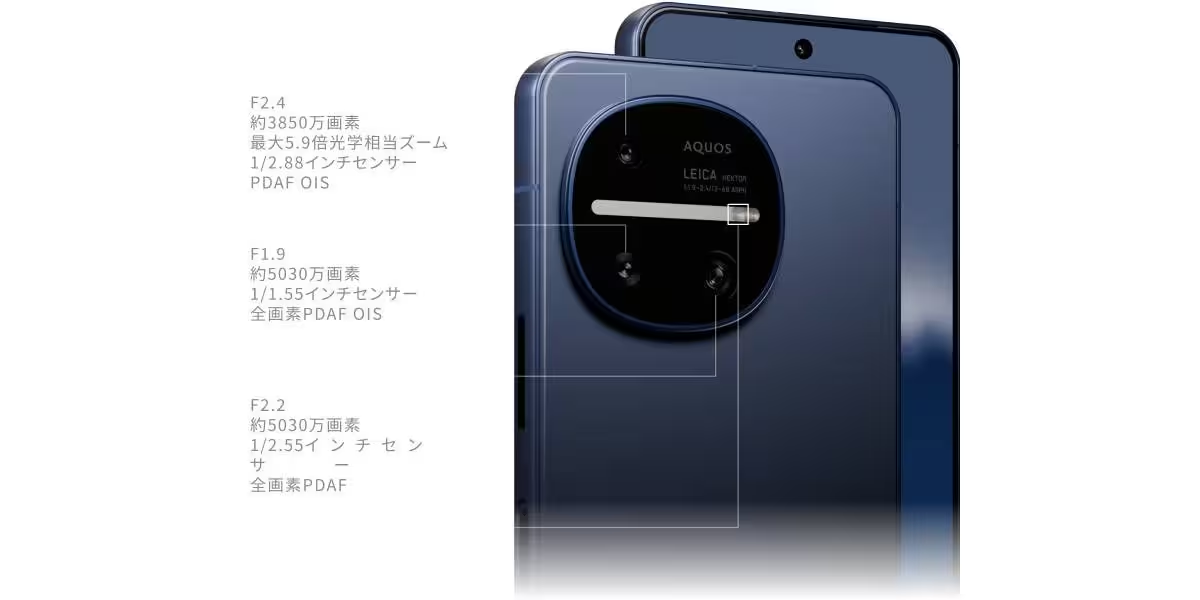
Numbers like 50, 50 and 38 suggest a camera system built around high resolution rather than tricks. That can pay off when algorithms are strong, and when Leica glass tames lens flare and contrast.
Speed, heat, and a curious choice on storage
Under the hood sits Qualcomm's Snapdragon 8s Gen 4, stepping up from the R10’s Snapdragon 7+ Gen 3. It’s a bit quicker at CPU clocks and gives the GPU a stronger push. Sharp also installed a larger vapor chamber to keep thermals in check.
The phone ships with 12 gigabytes of LPDDR5X RAM and 512 gigabytes of UFS 4.1 storage. There is no microSD slot. Why? You can still complain about that. You can also argue that most people will be fine with half a terabyte, but the absence will sting for those who still rely on expandable storage.
Out of the box the R11 runs Android 16. Sharp promises three major OS upgrades and five years of security patches, which softens the storage argument for buyers who plan to keep the phone long-term.

The I/O setup is modern: a USB-C port with USB 3.2 Gen 1 and DisplayPort 1.4 support, Wi-Fi 7, Bluetooth 6.0 and dual-band GPS.
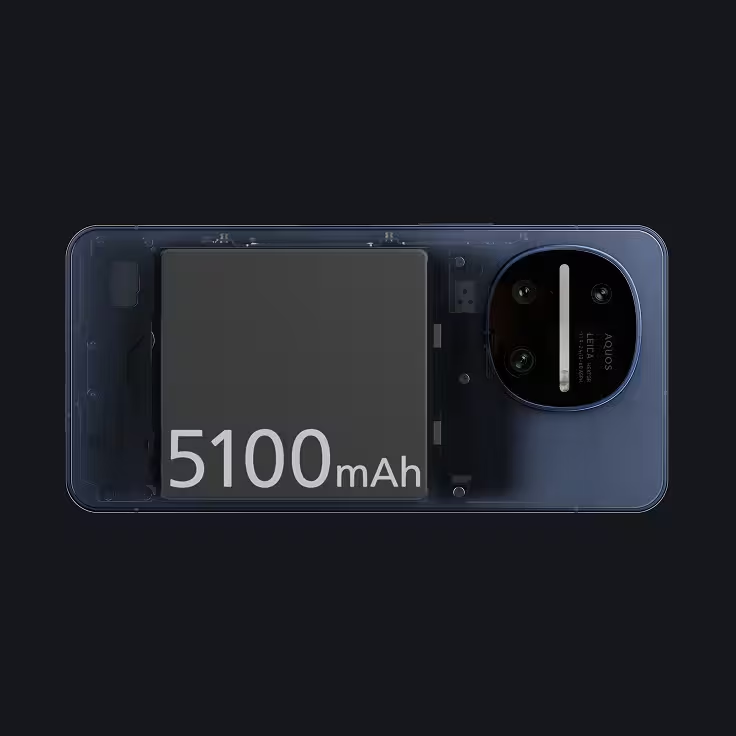
The battery is 5,100 milliampere hours, a small bump over the previous model. Charging is wired-only at 36 watts and Sharp says a full charge takes about 90 minutes.
Small touches that try to charm
Look for a back-mounted bar light that Sharp calls Aquarium. It functions as an LED fill and notification light but also runs themed ambient animations with accompanying sound effects. The audio bits were supervised by sound designer Shinya Kiyokawa. It’s playful, and a little theatrical.
Sharp will sell the Aquos R11 in Japan for €880 starting in early July.
Available colors are Terracotta, Navy and Ivory, and carriers DoCoMo and SoftBank will carry the phone alongside Sharp’s own online store. For now this looks like a Japan-first release, so international availability remains uncertain.
It’s a phone of contrasts: a flagship-grade display, Leica-branded cameras and a stronger chipset, paired with the pragmatic choices of no microSD and wired-only charging. If you prize a bright screen and unusual camera hardware in a durable, locally available device, the Aquos R11 deserves a closer look.

“I cover emerging technologies, digital innovation, and the intersection of tech and everyday life. My goal is to make complex trends accessible and inspiring.”

Discussion
Leave a Comment
Comments (2)
36W wired only and 90 mins for 5100mAh? feels slow for a flagship, is that deliberate or just cost cutting. Also Japan first release, hmm international buyers left waiting
Whoa 3,600 nits?? That's insane, might actually work outdoors. Leica cameras look legit, and the Aquarium light is oddly charming. But no microSD... really? still intrigued tho