
The morning at Brownsville looked like any other port day until a line of tanker trucks came into focus. They were rolling, relentlessly, carrying the raw ingredient for Starship launches: natural gas, soon to be liquefied into methane. That supply chain, once a choreography of tankers and tight schedules, is about to change.
From trucks to pipe: a practical pivot
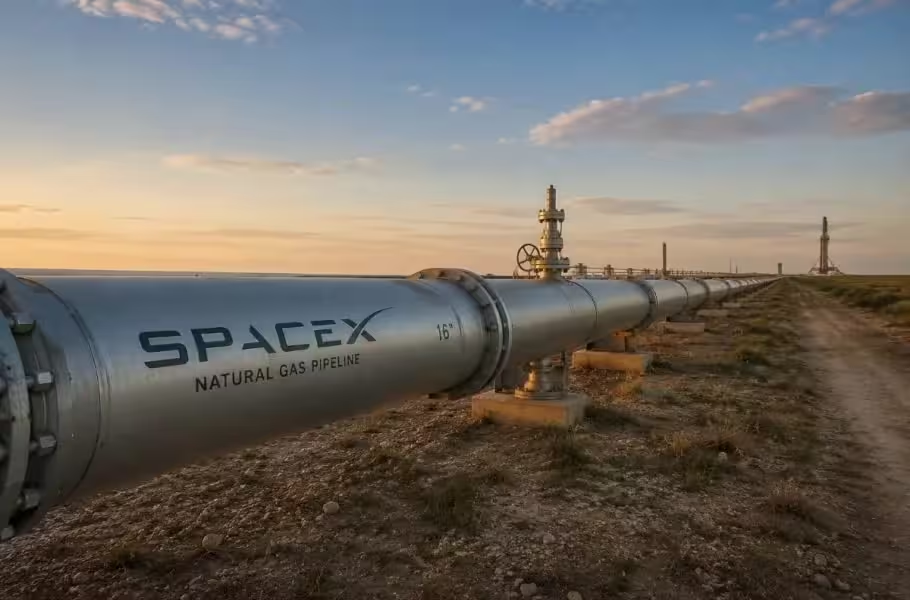
Documents reviewed by Reuters and the Rio Grande Valley Business Journal show SpaceX plans to lay roughly 13 kilometers of 16-inch pipeline from the Port of Brownsville to its Starbase facility. Construction is slated to begin next month, with the company aiming to have the line operational by 26 January. The line will feed natural gas directly to a planned liquefaction site where it will be converted into the liquid methane that Starship uses as fuel.
Think of it as vertical integration on steroids. Today, each Starship launch consumes around 630000 gallons of liquid methane, which is hauled by hundreds of tanker trucks. A pipeline changes that math. Fewer truck convoys. Fewer scheduling bottlenecks. Faster turnaround between launches. It is efficiency framed as infrastructure.
Regulatory context matters. The Federal Aviation Administration has authorized up to 25 launches a year from Starbase, though SpaceX has launched the rocket only 12 times since its first flight in April 2023. If cadence increases toward the FAA limit, a steady, on-site gas supply becomes a strategic advantage rather than a convenience.
What locals and environmentalists worry about
Not everyone welcomes the idea. The corridor around Starbase includes sensitive coastal wetlands and fragile habitats. Local conservation groups have already flagged concerns about construction impacts, potential pipeline routing, and the possibility that SpaceX could explore further drilling in the region. Those are not theoretical questions for nearby communities; they are immediate, practical worries about noise, disruption, and long-term ecological change.
SpaceX previously shared engineering plans for a liquefaction facility with the Army Corps of Engineers. That document trail, along with land records, suggests the company has considered broader development options across the region. The pipeline project tightens the logistical knot: easier fuel delivery could enable more frequent operations, which raises fresh scrutiny about the cumulative footprint of repeated launches and ancillary activity.
For SpaceX, the calculus is clear. Controlling fuel logistics reduces dependence on a large fleet of tanker trucks and the costs and delays they carry. For opponents, control raises questions about how infrastructure choices will reshape a sensitive coastal landscape over time. Who carries the risk? Who reaps the reward?
If the pipeline is completed, SpaceX will cut reliance on hundreds of tanker trucks but face increased environmental scrutiny over impacts to coastal wetlands and local communities.
Numbers will tell part of the story. But so will permits, public hearings, and the choices regulators make when weighing launch ambitions against habitat protection. Expect debate to accelerate as construction gets underway next month.


“I cover emerging technologies, digital innovation, and the intersection of tech and everyday life. My goal is to make complex trends accessible and inspiring.”

Discussion
Leave a Comment
Comments (2)
Is this even legal without a full environmental review? A pipeline that close to coastal marshes seems risky, plus long term drilling if that happens...
wow, trucks to pipeline in one month? crazy. efficient sure, but what about the wetlands, noise and ppl? feels rushed