

The central development: YouTube channel WhistlinDiesel subjected a $3.2 million Koenigsegg Regera with the rare Ghost package to off-road and high-stress driving, revealing electrical failures, high-temperature warnings, an exhaust fire and carbon-fibre damage despite the car's advanced hybrid Direct Drive layout.
How the Regera is engineered and what was tested
The Regera is a distinctive Koenigsegg hypercar that pairs a gasoline engine with electric motors in a hybrid powertrain and uses a single-speed Direct Drive system rather than a conventional multi-gear gearbox. Its bodywork, many chassis components and interior elements use extensive carbon fibre to save weight. The example used in the video carries the Ghost package, which the owner says includes engine, aerodynamic and performance upgrades; the owner also stated that only ten Ghost-package cars are in the United States. The vehicle shown is reported to cost about $3.2 million.
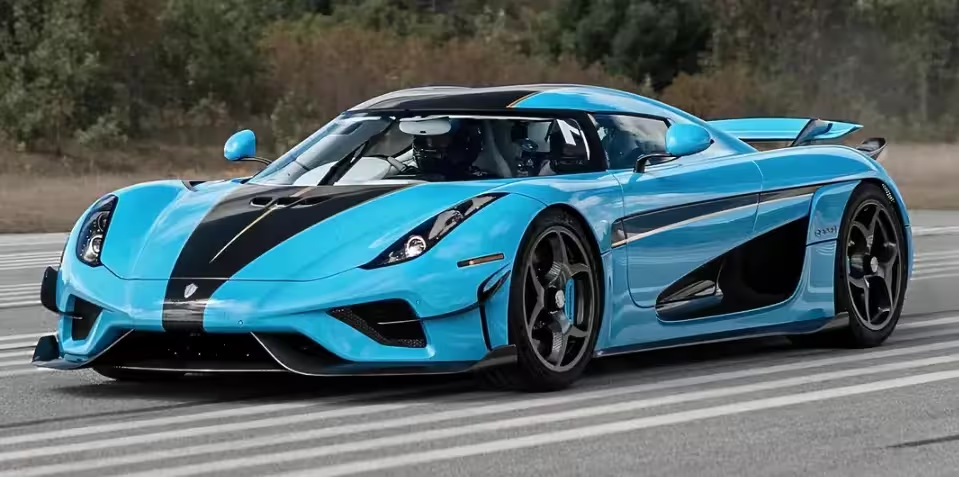
The test deliberately pushed the Regera beyond typical use: starting and restarting the car, driving over large bumps and rough tracks, running the drivetrain at full throttle on a jack to force sustained load, and exposing the exhaust and powertrain to unusually high thermal stress. These are not industry-standard durability procedures but rather an extreme, informal stress test by an independent channel.
Problems under stress and what they indicate
Early in the session the car would not enter its electric-drive mode and several body-to-electronics commands failed. Technicians on site performed a hard reset by disconnecting and reconnecting the electrical circuit via a dedicated switch to re-establish systems—an intervention the video presents as the first sign of the Regera's complex electronic architecture being vulnerable to fault conditions.
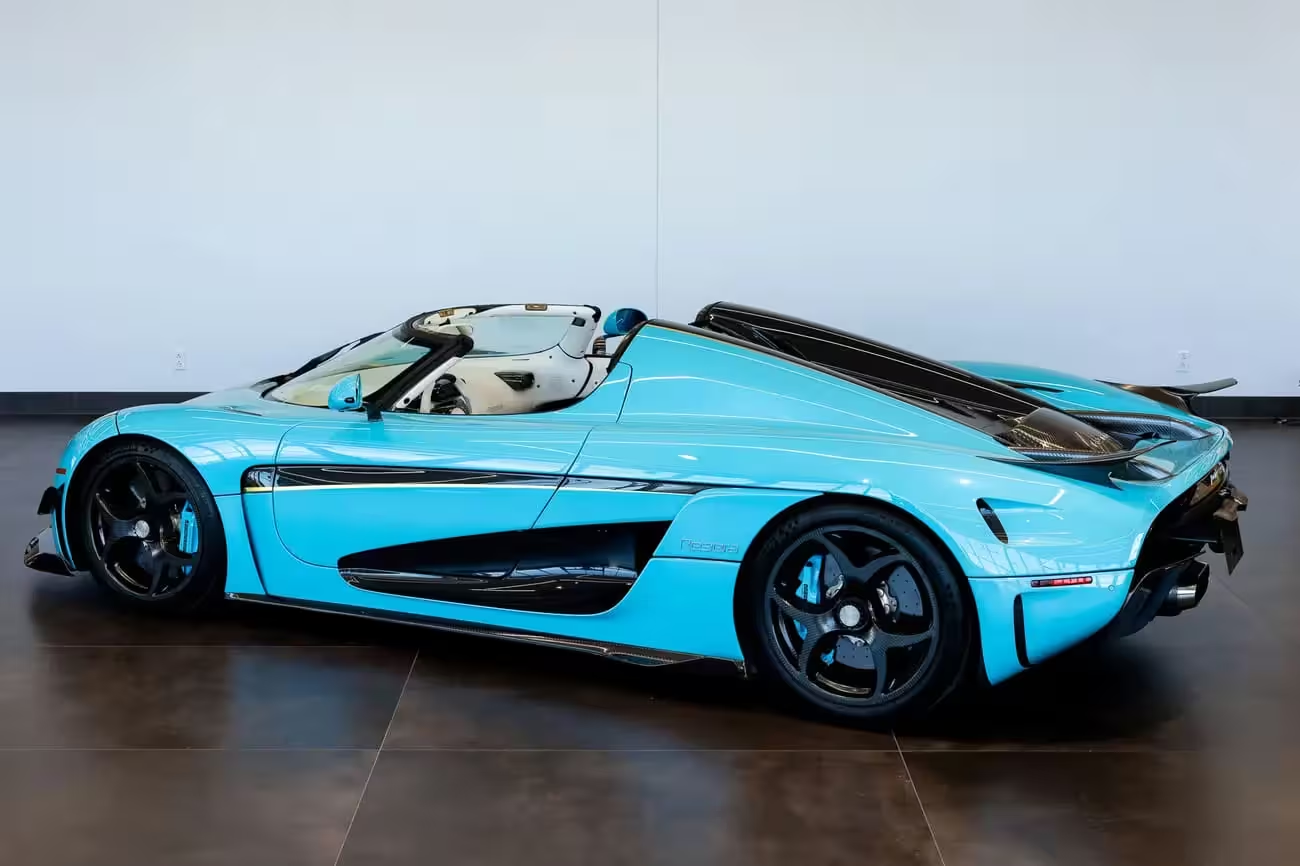

Once running, the car experienced further electrical and ancillary failures: a non-functional brake light, a malfunctioning side window, and repeated warnings that the rear cover or tail section was open or incorrectly detected. Under sustained engine and drivetrain load the Regera displayed high-temperature warnings and eventually entered limp-home mode, a protective state that reduces power to prevent damage. At one point flames were visible from the exhaust outlet; the crew used a fire extinguisher to put the fire out. The video also documents unusual engine noises and signs consistent with irregular combustion, and the crew notes a risk of the exhaust relighting if temperatures remain high.
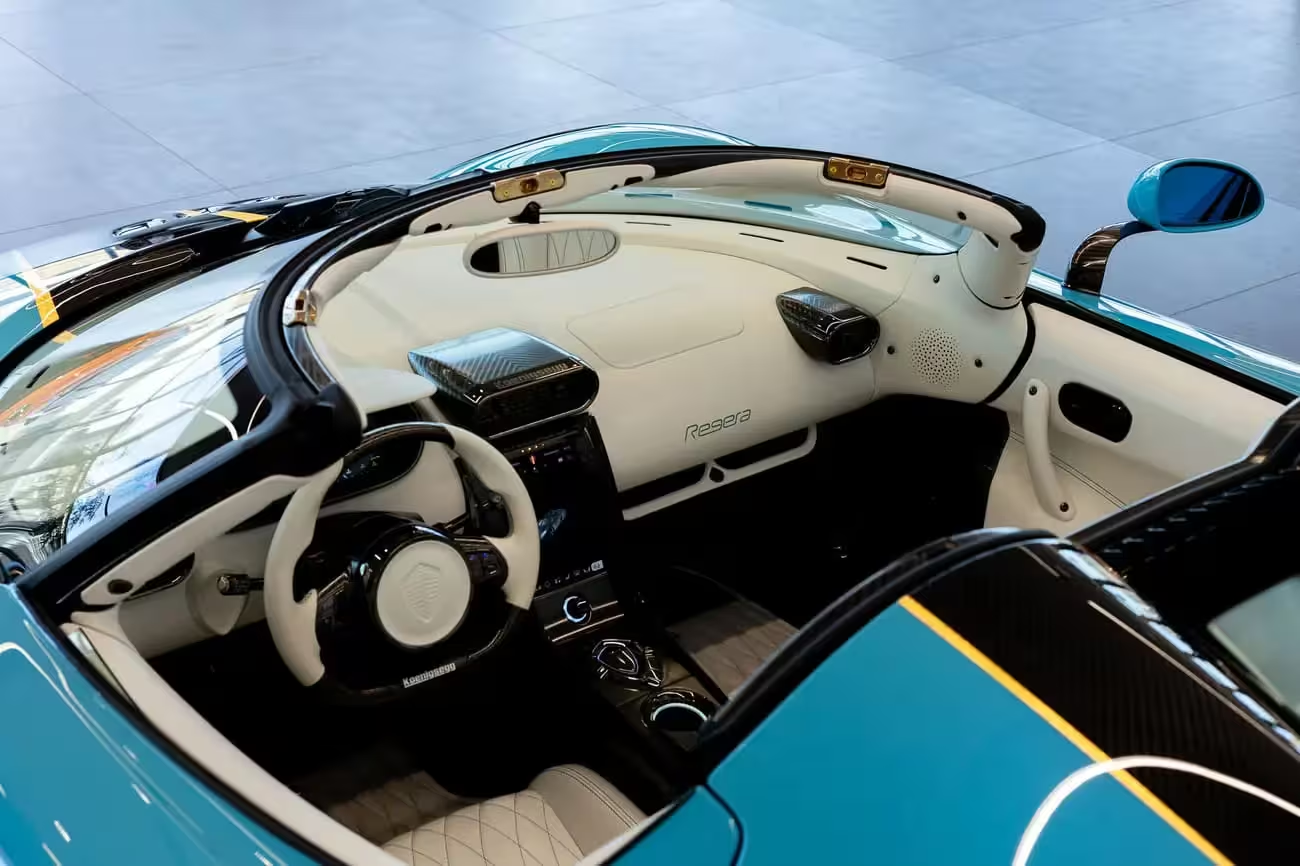
The Regera's speedometer is calibrated to 280 miles per hour (about 450 kilometres per hour), which the presenter notes as a display range rather than a measured test speed. The single-speed Direct Drive arrangement—advantageous for high-speed efficiency on track—was discussed by the group as a limitation off-road, where rapid changes in load and traction can benefit from multiple gear ratios. In the rough-track sections the single-ratio setup, combined with heat buildup, correlated with the drivetrain reaching protective limits.
Physical damage occurred when the car traversed obstacles and uneven surfaces not intended for a ground-hugging hypercar. Side mirrors were damaged and some carbon-fibre panels showed impact marks; the team documented instances where the car bottomed out and contacted the ground. The video highlights that carbon fibre, while light and strong in many load cases, can crack or suffer structural failure under concentrated impacts in ways different to metal panels.
Even with Koenigsegg's advanced engineering and a multi-million-dollar price tag, this Regera displayed clear vulnerabilities when exposed to deliberate, unconventional abuse: electrical glitches, heat-related protective shutdowns, an exhaust fire and carbon-fibre impact damage.

One additional context point provided in the video is the owner’s prior experience: he said a previously purchased Koenigsegg Agera was usable for only about two months out of two years of ownership and spent roughly four months in a repair shop before failing again shortly after return. The owner raised that history as part of why the Regera's reliability under stress was of particular interest, but the video’s authors also note that a single owner’s experience cannot be generalized to the entire brand or model line.
Finally, the presenters emphasize that this is not a controlled, standardized durability test. Formal industrial durability testing uses defined protocols, environments and instrumentation; the stresses applied in the video were intentional, non-standard and in some cases outside the Regera's design envelope. The result is a stark illustration of the boundary between highly advanced, lightweight engineering and susceptibility to specific types of physical and electronic failure when a car is used far beyond its intended conditions.


“Cars are evolving faster than ever. I cover electric vehicles, smart mobility, and the future of transportation worldwide.”

Discussion
Leave a Comment
Comments (1)
Taking a Regera off-road is wild, but those electrical glitches started before the rough stuff... kinda worrying for $3.2 million.