
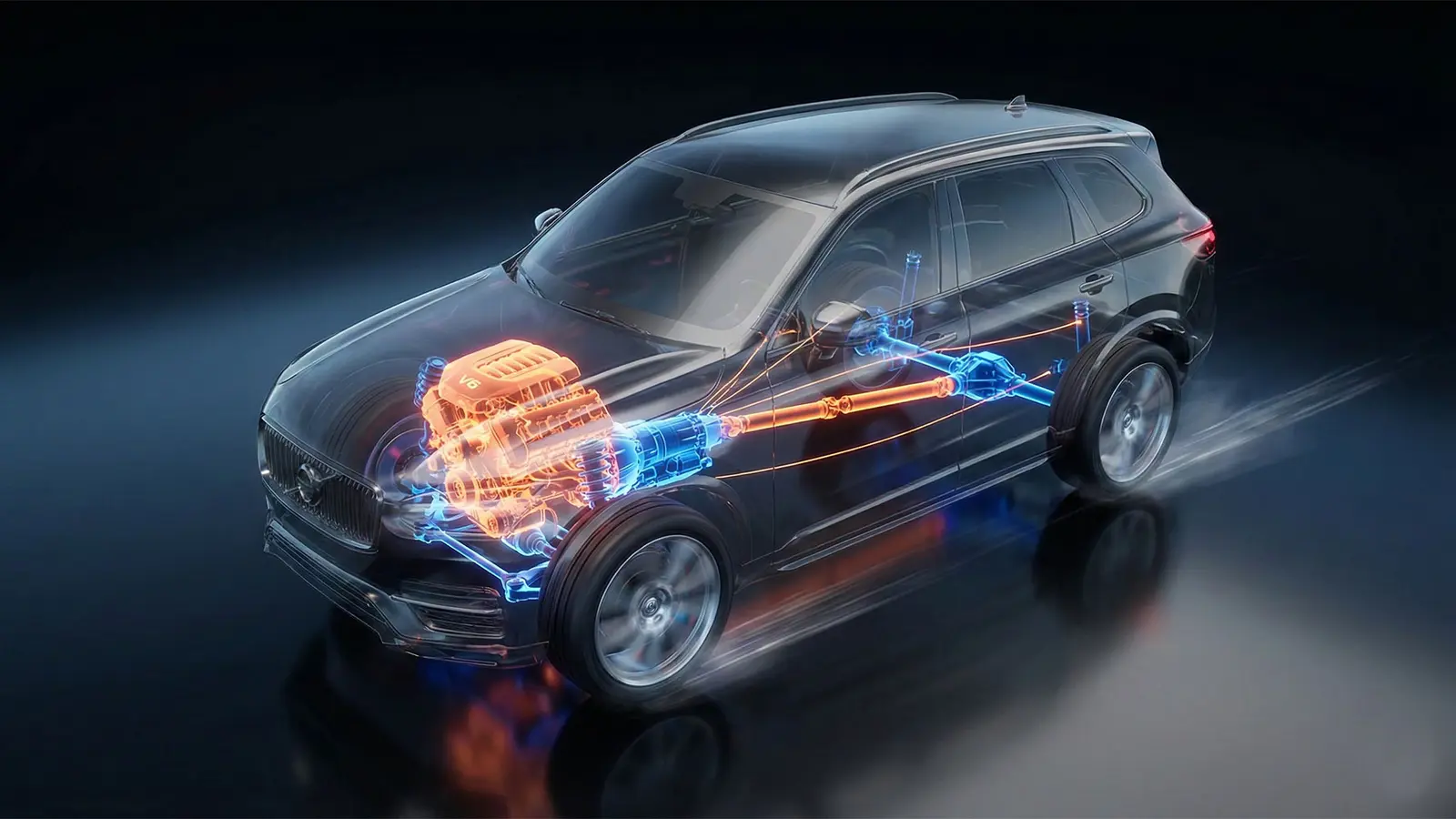
The Strategic Role of Drivetrain Engineering
In the high-stakes environment of automotive consultancy, the drivetrain is far more than a collection of gears and shafts; it is the critical interface between the power unit and the vehicle’s environmental adaptability. A sophisticated understanding of drivetrain architecture is essential for consultants to mitigate client risk and ensure that vehicle utility is maximized across specific duty cycles. The drivetrain governs how effectively torque is translated to the pavement or terrain, directly influencing safety, efficiency, and performance.
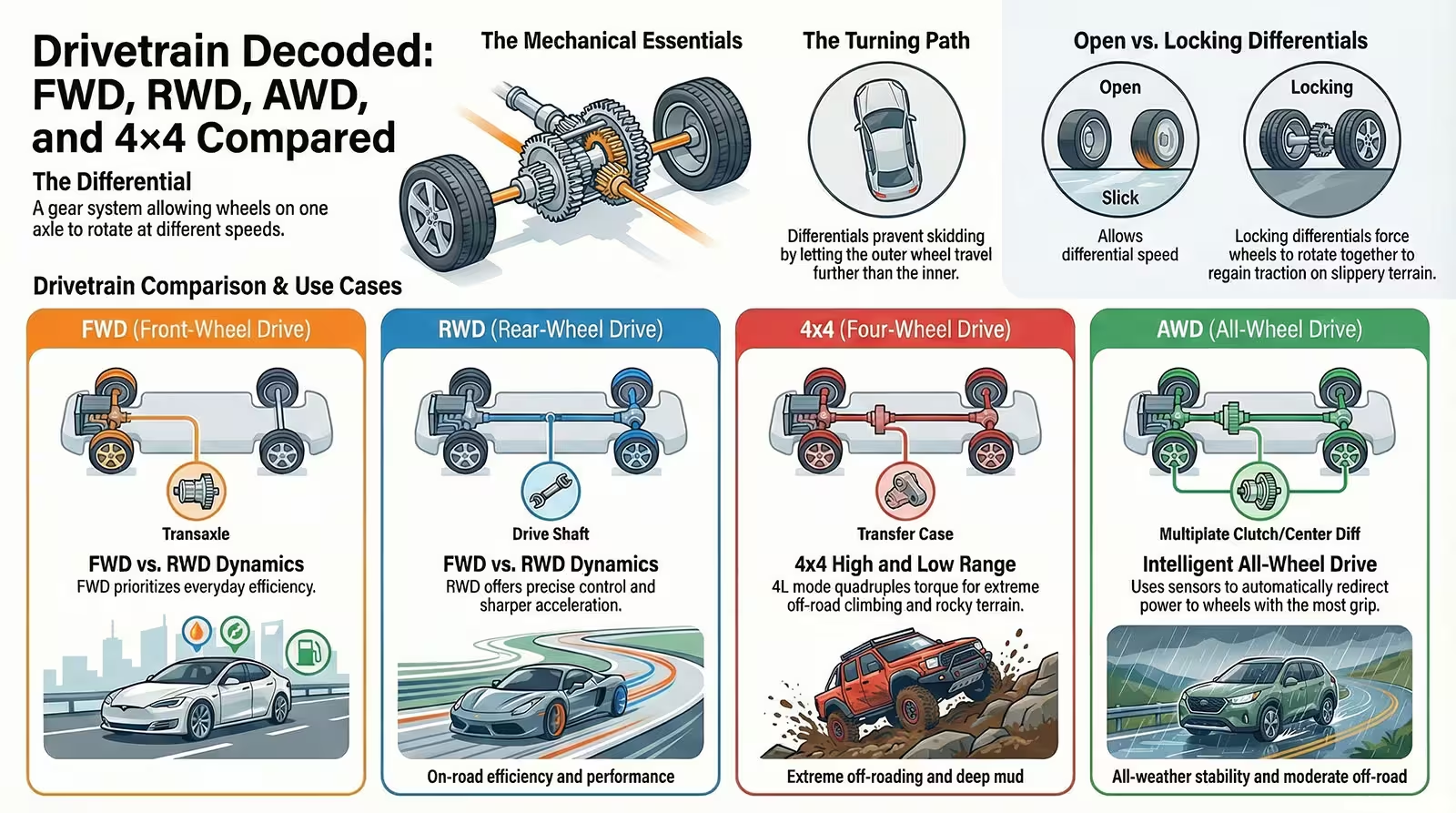
To provide expert guidance, one must distinguish between the four primary configurations defined by their operational environments:
- Front-Wheel Drive (FWD): Engineered for space-efficient urban and suburban commuting.
- Rear-Wheel Drive (RWD): The benchmark for high-performance lateral dynamics and luxury applications.
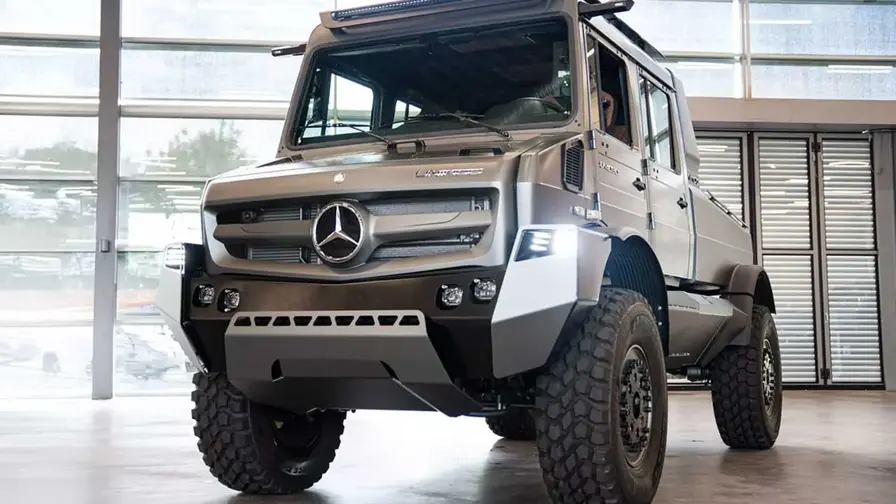
- Four-Wheel Drive (4x4): A heavy-duty system designed for extreme off-road terrain and maximum torque multiplication.
- All-Wheel Drive (AWD): An automated, "always-active" solution for on-road stability and moderate environmental shifts.
Mastery of these systems begins with the fundamental component that governs all controlled movement: the differential.
The Differential: The Foundation of Controlled Motion
The necessity of the differential is dictated by the immutable laws of geometry. During a cornering maneuver, the outer wheel must traverse a longer arc than the inner wheel. Without a mechanism to facilitate this speed discrepancy, the tires would be forced to fight for traction, compromising vehicle stability and accelerating component wear. For the strategic consultant, the differential is the primary safeguard of tire longevity and handling precision.

Mechanical Operation
The differential is a mechanical assembly positioned between the two wheels of an axle, distributing power while allowing for variable rotational speeds. Its operation relies on a specific gear set:
- Pinion Gear: The input gear that receives torque from the engine and transmission.
- Ring Gear: Driven by the pinion to rotate the entire differential housing.
- Side Gears: Splined to the axle shafts to deliver power directly to the wheels.
- Spider Gears: The internal "intelligence" of the unit. During straight-line travel, spider gears stay stationary relative to their housing—minimizing heat and wear—but spin during turns to allow the wheels to differentiate their speeds.
The Strategic "So What?"
A rigid, solid axle without a differential would force both wheels to rotate at identical speeds, leading to "inner wheel skidding." This mechanical binding results in poor lateral control and unpredictable handling. Thus, the differential is a non-negotiable requirement for road safety. In modern engineering, the integration of this universal component into a single, compact transaxle represents the pinnacle of front-axle packaging efficiency.
Front-Wheel Drive (FWD): Engineering for Efficiency and Practicality
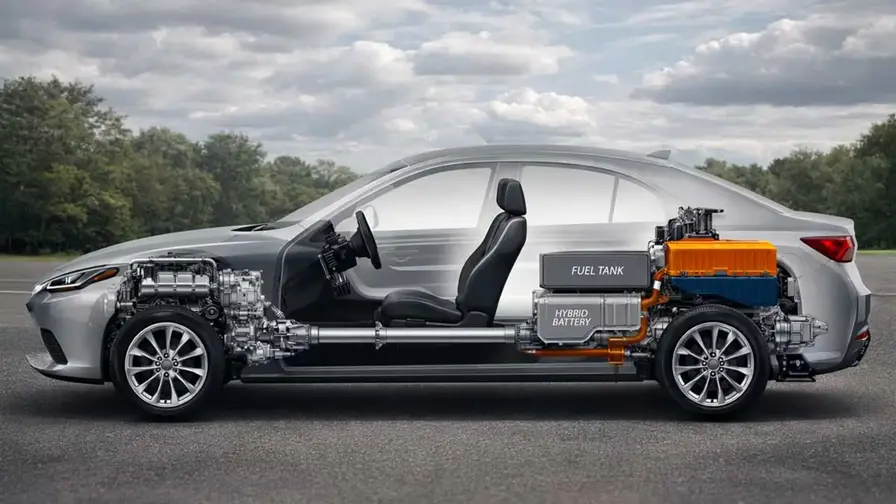
Front-Wheel Drive has become the industry standard for consumer vehicles, driven by the strategic need to maximize interior volume and manufacturing throughput. By consolidating the drivetrain at the front of the chassis, engineers can eliminate the floor hump required for a drive shaft, providing a flat floor and a more spacious cabin for passengers or cargo.
.avif)
The Transaxle Configuration
In an FWD architecture, the engine and transmission are integrated into a compact unit called a transaxle. This housing contains the transmission gears and the differential. Power is delivered from the transaxle to the wheels via CV (constant velocity) axles, allowing for simultaneous steering and propulsion.
The Strategic "So What?"
While FWD offers unparalleled packaging efficiency, it introduces performance trade-offs in lateral acceleration and weight transfer. Because the front axle is burdened with both steering and propulsion, FWD vehicles have a higher propensity for understeer and torque steer under heavy acceleration. These vehicles are optimized for "everyday use" where predictable handling and efficiency take precedence over high-limit performance.
Rear-Wheel Drive (RWD): The Standard for Performance Dynamics
Rear-Wheel Drive remains the engineering benchmark for luxury and high-performance vehicles due to the strategic distribution of mechanical labor. By separating the steering and propulsion duties, RWD allows for a more balanced chassis and superior weight distribution.
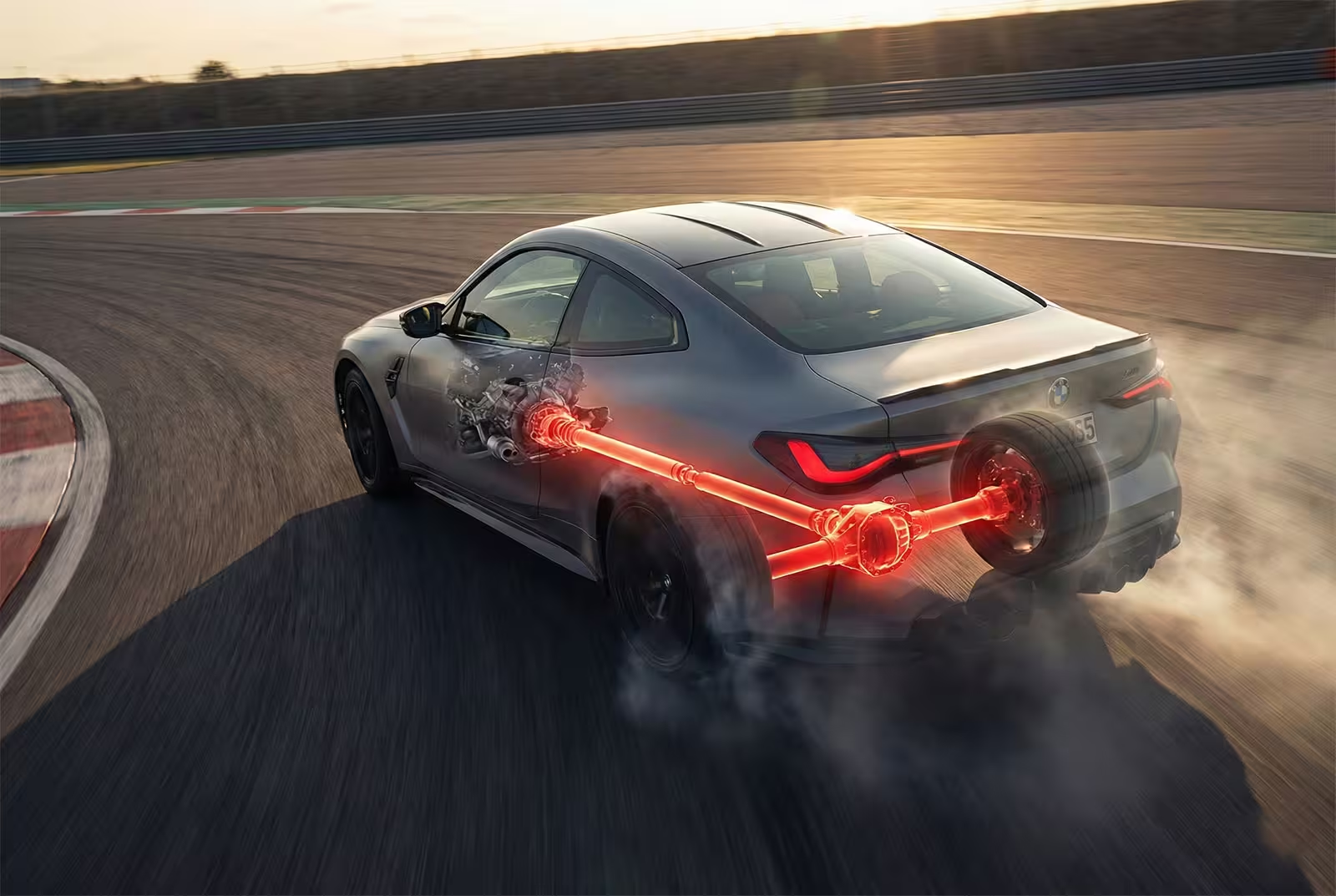
Power Flow Path
In an RWD configuration, the engine is typically oriented longitudinally. Power flows from the transmission through a long drive shaft to a dedicated rear differential. This differential then distributes torque to the rear wheels, which push the vehicle forward while the front wheels focus exclusively on directional control.
The Strategic "So What?"
The separation of steering and power results in more precise control and sharper acceleration. Under heavy throttle, weight shifts to the rear, increasing the vertical load on the drive wheels and enhancing grip. However, this configuration carries an inherent risk in "slippery conditions like snow or ice," where the lack of weight over the drive wheels can lead to sudden traction loss and oversteer.
Four-Wheel Drive (4x4): Mastering Extreme Terrains and Torque Multiplication
When the operational environment shifts to unpredictable or extreme terrain, 4x4 systems become the essential tool for survival and progress. The "heart" of this system is the transfer case, which manages torque distribution between the front and rear axles.

Operational Modes and Torque Analysis
Most 4x4 systems offer manually selectable modes to match terrain resistance:
- 2H (Two-High): Default mode sending power only to the rear axle for high-efficiency highway cruising.
- 4H (Four-High): Engages the front axle for a 50/50 power split. It is intended for surfaces with limited traction and is typically restricted to speeds between 30 and 55 mph.
- 4L (Four-Low): The extreme-duty mode. It utilizes a low gear range (e.g., a 4:1 ratio) to multiply torque. If the engine produces 300 Nm of torque, the 4L mode transforms this into 1,200 Nm at the wheels, providing the massive force required for rock crawling or deep mud recovery.
The Necessity of Locking Differentials
On extreme terrain, an "open differential" is a failure point; it sends power to the wheel with the least resistance (the one spinning in the mud). A locking differential is the "nuclear option"—it effectively deletes the differential from the axle, forcing both wheels to rotate at the exact same speed regardless of traction. Furthermore, "Full-time 4x4" systems often include a Center Differential to allow the front and rear axles to rotate at different speeds on dry pavement, preventing the drivetrain from "binding."
All-Wheel Drive (AWD): Automated Intelligence for On-Road Stability
All-Wheel Drive is an "always-ready" evolution designed for the modern driver who requires performance without manual intervention. Unlike 4x4 systems, AWD is a high-speed, automated solution optimized for variable road conditions rather than extreme off-road recovery.

The Multi-Plate Clutch and Dynamic Engagement
Modern AWD systems utilize wheel speed sensors to monitor traction at 10-millisecond intervals. Most systems default to a single axle (typically the front) for efficiency. When a sensor detects slip, the AWD control unit engages a multi-plate clutch, which gradually connects the rear drive shaft to the transmission. This redirects torque to the axle with more grip, maintaining stability before the driver even perceives a loss of traction.
The Strategic "So What?"
AWD excels in providing confidence in rain or light snow. However, it lacks a low gear range, making it unsuitable for extreme rock crawling. Its value proposition lies in the "automatic" transition of power, offering a seamless balance of performance and safety that requires zero user input.
Consultant’s Selection Matrix: Matching Drivetrain to Environment
| Drivetrain | Optimal Environment | Primary Mechanical Advantage | Critical Limitation |
| FWD | Urban/Suburban commuting | Packaging efficiency; maximize cabin space | Torque steer and front-end grip during weight transfer |
| RWD | Dry highways / Performance | Balanced weight distribution; precise steering | Propensity for traction loss in snow/ice |
| 4x4 | Extreme off-road / Heavy-duty | High torque multiplication (4L mode) | Inefficient for dry pavement; requires manual mode selection |
| AWD | Variable weather / All-road | Automated, dynamic torque redirection | Lacks low-range gearing for extreme inclines |
By aligning these mechanical foundations with the client's specific operational needs, the consultant transforms a technical specification into a strategic asset. Mastering these nuances ensures that every vehicle recommendation prioritizes safety, performance, and long-term client satisfaction.

“Cars are evolving faster than ever. I cover electric vehicles, smart mobility, and the future of transportation worldwide.”

Discussion
Leave a Comment
Comments (3)
Worked on fleet specs, FWD packing wins costwise but clients always grumble about torque steer. The matrix is useful tho, but needs more on maintenance costs.
is the 50/50 split in 4H really universal? seems vendor dependent, many center diffs bias torque. Anyone got real-world numbers or examples?
Wow, never thought diffs were so tactical, they're like the unsung heroes of handling. Mind blown, need to read again. torque stuff 😅