
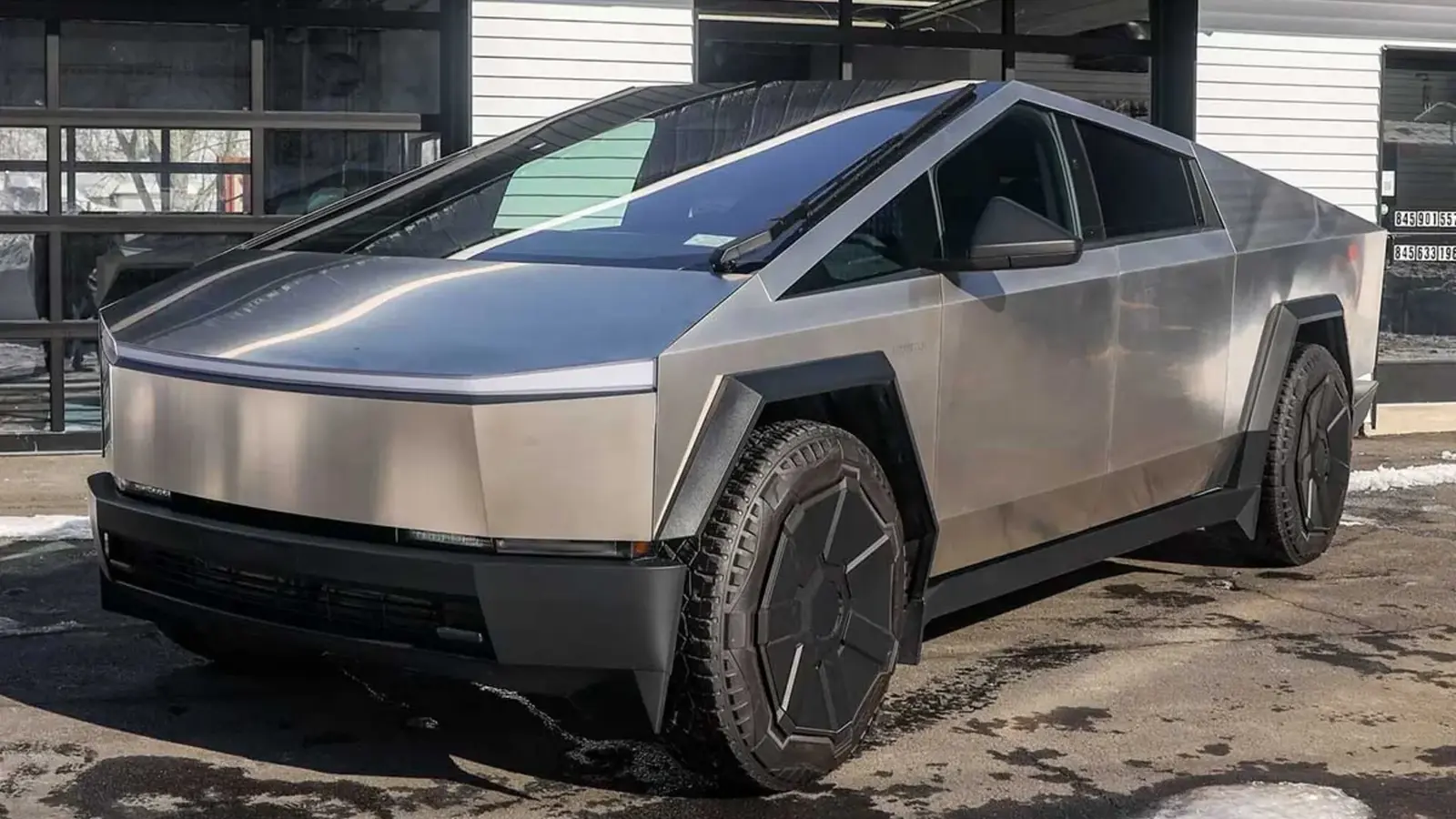
New lawsuit claims Cybertruck Autopilot sent vehicle toward bridge drop
A Texas owner of a used Tesla Cybertruck has filed a lawsuit seeking more than $1 million, alleging the truck's Autopilot steered the vehicle straight into a concrete barrier and toward a bridge edge. The complaint is the latest in a string of legal and safety challenges that continue to cloud the future of Tesla's driver-assist and autonomous ambitions.
The plaintiff, identified in court filings as Justin Saint Armour, says he purchased the Cybertruck from a used-car dealer in February 2025. According to the lawsuit, the incident occurred in August 2025 while the truck was operating in Autopilot mode on Highway 69 near a Y-shaped exit. Rather than following the right-hand curved exit ramp, the complaint alleges the Cybertruck attempted to drive straight toward a concrete barrier and the ravine below the bridge. Saint Armour reportedly tried to disengage the system and take manual control but was unable to avoid a heavy collision with the barrier.
Allegations against Tesla and Elon Musk
The complaint names Tesla and CEO Elon Musk, accusing them of negligence and of marketing dangerous systems with exaggerated capabilities. Saint Armour's filing also criticizes Tesla's sensor strategy, noting the company relies heavily on cameras rather than adding LiDAR sensors used by many competitors. Critics argue that a camera-only approach can leave blind spots in complex scenarios such as split exits, low light, or unusual lane geometry.

Key unanswered questions
- Speed of the Cybertruck at the time of impact has not been disclosed.
- The extent of the driver's injuries and any further medical details have not been made public.
- Tesla has not yet issued a public statement in response to this particular complaint.
Legal backdrop: a growing pattern of litigation
This suit appears days after a federal judge declined to vacate a $243 million verdict in a separate case involving a Tesla Model S crash. Together, these rulings and complaints underscore growing scrutiny of Autopilot, Full Self-Driving (FSD) marketing, and the gap between customer expectations and the current reality of advanced driver-assistance systems (ADAS).
Tesla points to thousands of miles and millions of miles of crash-free driving data in which Autopilot reportedly reduced accidents. Yet high-profile incidents tied to Autopilot and FSD have prompted regulators to push for clearer labeling and, in California, have even forced Tesla to change how it markets "Autopilot" to avoid misleading consumers.
Why LiDAR is part of the debate
Many rivals developing autonomous vehicles use LiDAR as part of a sensor fusion strategy to map precise distances and objects around a vehicle. Tesla insists its camera-first approach, combined with neural networks and radar (in some models), is sufficient. Plaintiffs and safety advocates counter that LiDAR would provide redundancy and better spatial awareness in complex roadway geometries.
What this means for Tesla's robotaxi plans
The timing is notable: Tesla has ambitions for a fully autonomous robotaxi service (sometimes referred to as Cybercab), and incidents like this could complicate regulatory approval and public acceptance. If courts find systemic defects or misleading marketing, it could slow development and increase compliance costs.
For owners and enthusiasts, this case is a reminder of the trade-offs between cutting-edge tech and real-world operating limits. Purchasers should stay informed about current Autopilot capabilities, follow recommended safety practices, and monitor official recalls or software updates.
Highlights
- Owner sues for >$1M, alleging Autopilot steered Cybertruck toward bridge drop.
- Complaint criticizes Tesla's camera-only sensor strategy and names CEO Elon Musk.
- Case adds to legal pressure after a separate $243M verdict stood in a Model S crash case.
As the lawsuit proceeds, attentive readers will want to watch for evidence disclosures about vehicle speed, system logs, and sensor data—items that often decide whether ADAS incidents are caused by user error, system limitations, or product defects. For now, the case fuels a broader conversation about safety, regulation, and the pace at which fully autonomous vehicles should be allowed on public roads.

“Cars are evolving faster than ever. I cover electric vehicles, smart mobility, and the future of transportation worldwide.”

Discussion
Leave a Comment
Comments (2)
Pretty clear sign regulators need teeth. Tech can't be marketed as 'self driving' yet, real world is messy, not lab perfect
is this even true? Autopilot aiming for a drop.. how does that happen, sensors fail? feels like a nightmare, hope guy's ok