
3 Minutes
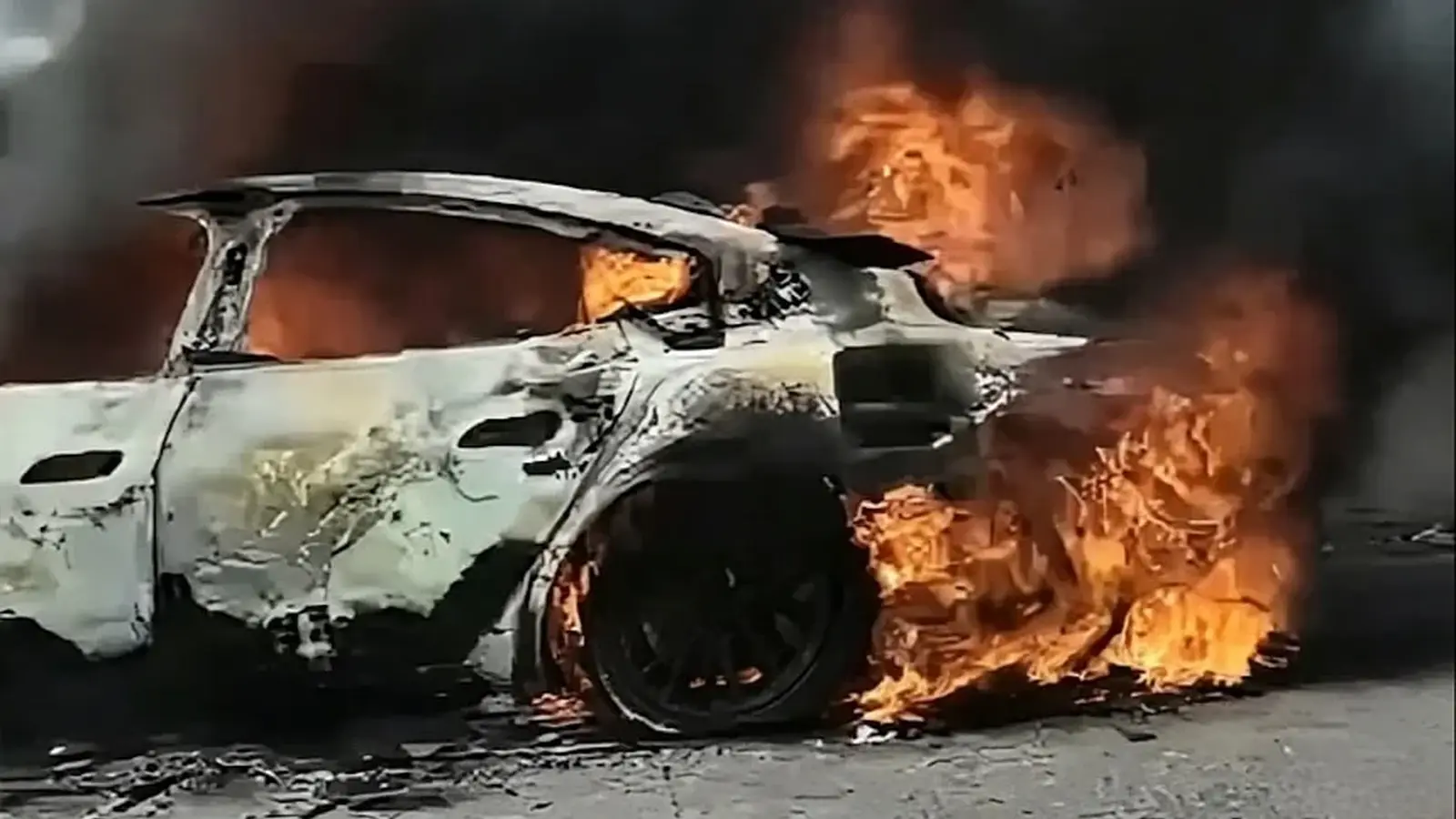
Smoke rose over Hero Bridge in Nanchang and by the time firefighters arrived the Xiaomi SU7 Ultra was already a charred shell. The scene was quick, brutal, and unsettling: a high-performance electric car reduced to metal and ash on a busy span of road.
Why investigators are looking beyond the battery
Xiaomi says preliminary telematics and backend diagnostics show no thermal runaway. The car’s battery system reported normal operating parameters right up until the blaze was detected. That may sound like a relief, but it only deepens the mystery. If the pack did not self-ignite, what did?

Officials have not released details about speed, weather, or other external factors. Xiaomi contacted the owner immediately and informed regulators; the company is awaiting the fire department’s full inspection and forensic report. For now, investigators are left to consider electrical faults unrelated to the main cell pack, ancillary systems, wiring harnesses, or outside influences such as debris or a collision.
The SU7 Ultra is not a modest commuter. It’s a track-capable machine with a tri-motor setup producing 1,548 horsepower (1,527 metric horsepower) and 1,305 lb-ft (1,770 Nm) of torque. Xiaomi advertises a 0 to 60 mph time of 1.9 seconds and a top speed limited to 217 mph (350 kph). A 93.7 kWh CATL Quilin 2.0 NMC battery underpins a claimed range of about 373 miles (600 km).
- Spring 2025: A highway crash in Anhui resulted in three fatalities; reports say occupants were trapped when doors locked after impact.
- October 2025: A collision saw a SU7 Ultra cross a median and burst into flames, killing the 31-year-old driver; witnesses reported the doors were locked.
- February 2026: Another fire involving the model; Xiaomi said at the time the battery pack was not the cause while investigators explored other possibilities.

Put together, these incidents form a troubling pattern that has nothing to do with sales figures. Yet sales remain strong: roughly 26,800 SU7s were sold in April 2026, accounting for 73.1 percent of Xiaomi Auto’s monthly deliveries according to local market reporting. It’s a reminder that public appetite for performance EVs can coexist with safety concerns.
There’s an odd contrast here. Industry leaders like Ford CEO Jim Farley have praised China’s automakers, and reports say Farley drives one of the domestic models himself. Still, praise and ownership don’t erase questions when cars catch fire on open roads.

The battery appears not to be the culprit — investigators will need to widen the net and examine wiring, auxiliary systems, and possible external triggers.
Expect regulators to watch this investigation closely. Xiaomi has acted quickly to report the incident and cooperate, but answers will depend on forensic analysis that can take weeks. Until then, drivers and industry watchers will be left to weigh how a high-voltage, high-performance EV can turn into a public-safety puzzle overnight.
Source: autoevolution


Comments
mechbyte
Is this even true? Xiaomi logs normal battery, yet multiple SU7 fires... sounds fishy, idk who to trust. Need independent probes, wiring checks, full forensics.
driveline
Wow, that scene is haunting... if the battery wasn't the cause, then what? wiring, collision, or some freak failure? doors locking in other crashes is terrifying, people trapped. hope they find answers soon

Leave a Comment