
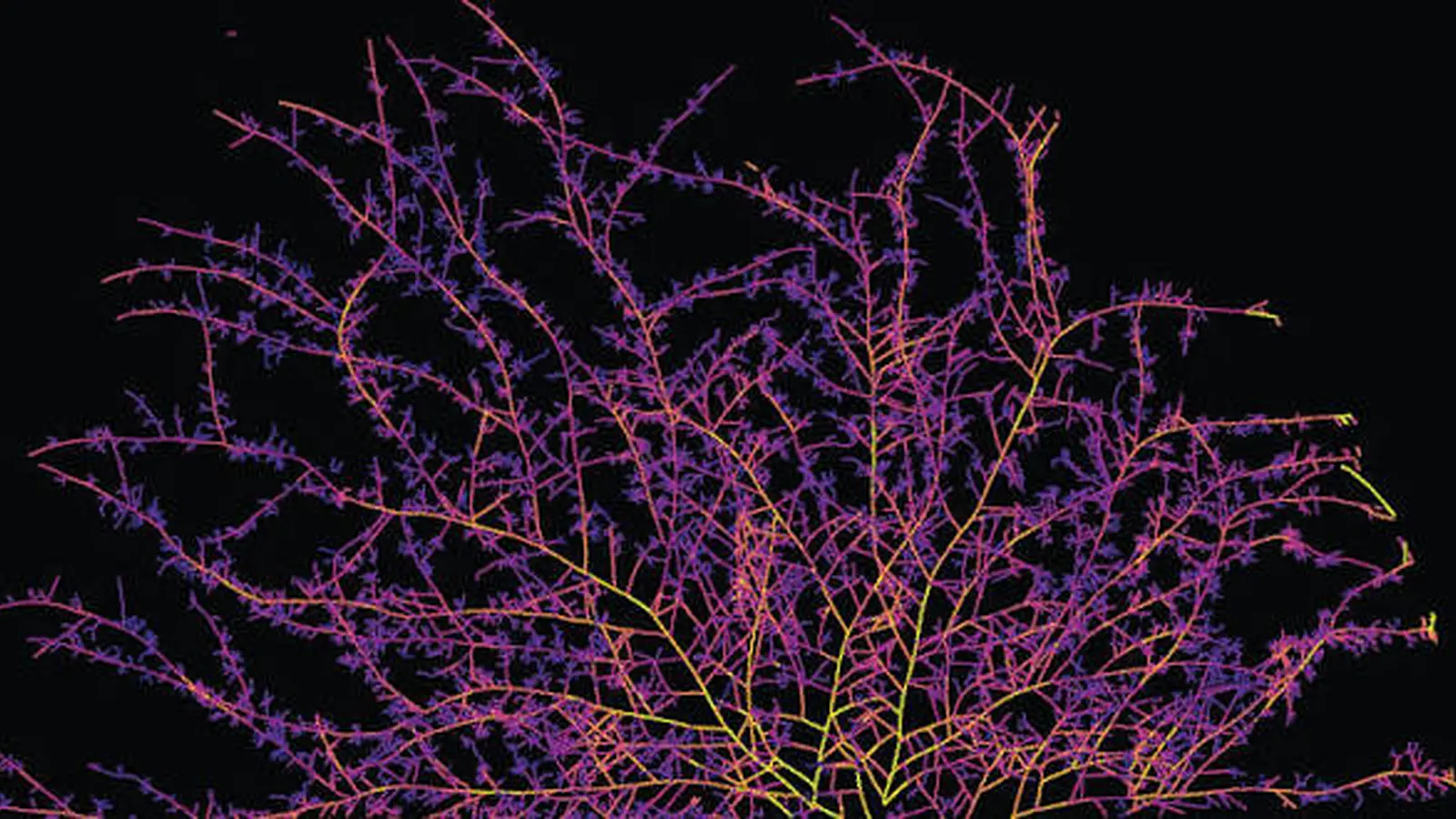
Picture scooping a teaspoon of garden soil and finding a miniature highway system. Fine threads span out, invisible to the casual eye, connecting roots, moving water and nutrients, and quietly shaping whole ecosystems. Now imagine stretching every one of those threads end to end. Scientists estimate the total would reach roughly 110 quadrillion kilometres, about 750 million times the distance from Earth to the Sun.
How scientists mapped an invisible world
That staggering figure comes from a new global survey of arbuscular mycorrhizal fungi, a group of soil fungi that form intimate partnerships with plant roots. These fungi grow as hairlike filaments called hyphae and trade nutrients for plant carbon. The partnership is ancient. Fossil evidence suggests mycorrhizal associations go back roughly 475 million years, effectively helping the first land plants to establish themselves.
Until now, researchers lacked a reliable global picture of how widespread and dense these underground networks are. In response, an international coalition formed a group dedicated to studying and protecting subterranean networks in 2021. Using machine learning models trained on more than 16,000 soil samples collected worldwide, the team has produced the first global map of arbuscular mycorrhizal fungal networks.

The method combined field measurements with environmental datasets to estimate hyphal lengths across biomes. The result: a much larger footprint than earlier estimates. Lead author Justin Stewart highlights a striking detail. He notes that a single teaspoon of healthy soil can contain up to 10 metres of fungal filaments. Small spaces house enormous connectivity.
Threats to the underground web and why they matter
Maps are useful because they reveal not just extent, but vulnerability. The study found that agricultural lands typically host 47.3 percent fewer fungal filaments than comparable natural ecosystems. The reasons are familiar to anyone who works with soil. Tillage physically severs hyphae. Heavy use of synthetic fertilizers and fungicides disrupts the mutualism by changing nutrient balances and killing beneficial microbes. The result is a thinning of the network where human use is most intense.
Why should we care about fungal density? Because these networks do vital jobs. They transport water and phosphorus and other micronutrients to plants. They help soils retain carbon. They act like living filters, reducing the flow of excess nitrogen, phosphorus and agrochemicals into rivers and coastal waters. Lose these filaments and the soil loses both function and resilience.
Key drivers of fungal decline
- Frequent ploughing and soil disturbance
- High reliance on synthetic fertilizers and pesticides
- Conversion of grasslands and wetlands for agriculture
- Lack of habitat protection in key hot spots

The global map also highlights where fungal networks remain dense: grasslands, some wetlands such as the Florida Everglades, the Sudd wetlands of South Sudan, and many prairie and steppe regions. Ironically, many of these high-density areas lack robust protection and are under pressure from land-use change.
Toby Kiers, one of the study authors, warns that losing fungal networks is not merely an ecological curiosity. She points out that reduced network density will likely increase chemical runoff into waterways and weaken soil carbon storage, amplifying both local pollution and global climate consequences. The map gives policymakers and land managers a tool to identify where networks are intact and where restoration should be prioritised.
Opportunities for agriculture and climate
There is a practical upside. Supporting fungal communities in farmland can bolster natural nutrient uptake and could reduce dependence on chemical fertilisers. Healthy mycorrhizal partnerships sequester more carbon in soils, which in turn helps mitigate climate change. Practices that keep soils covered, reduce tillage, and reintroduce plant diversity can foster fungal recovery.
Technology plays a role too. The combination of large soil datasets and machine learning allowed researchers to scale local measurements into a coherent planetary picture. That approach opens the door to monitoring change over time, testing the effects of agricultural interventions, and identifying landscapes most likely to benefit from conservation or regenerative practices.
Expert Insight
Dr. Maya Alvarez, a soil ecologist who works on soil restoration strategies, offered a practical frame: "Think of fungal networks as an underground circulatory system. If you damage that system, the whole organism suffers. But the upside is real. With better land management we can repair connectivity and restore multiple ecosystem services at once."
Her comment points to the dual promise of the new map. It is both a diagnostic tool and a roadmap for action. Farmers can use it to target practices that restore symbiosis, conservationists can prioritise protection of fungal-rich landscapes, and scientists can track whether policy and practice actually change the soil's living architecture.
Conclusion
The research reframes soil as more than dirt. It is a living, interconnected network with global reach. The new global map of arbuscular mycorrhizal fungi quantifies that reach and highlights areas under threat. Protecting and restoring these subterranean networks offers a practical strategy: it supports plant health, improves water quality, and locks more carbon into soils. The first global picture is only the start. With better monitoring and changes in land management, those filaments underfoot can become allies in agriculture and climate resilience.

“The cosmos has always fascinated me. I write about space missions, astronomy, and the technologies pushing humanity beyond Earth.”

Discussion
Leave a Comment
Comments (2)
Is that 110 quadrillion km number really solid? sounds huge. ML on 16k samples is neat, but any regional sampling bias? curious but skeptical.
wow, didn't expect that... a teaspoon can hold up to 10m filaments? mind blown. we're walking on a web, and farming rips it apart. fix soils now