
Ideally, saving the planet shouldn't require a sacrifice in profit. But for decades, the financial sector has operated on a binary assumption: you either make money, or you do good. The twain, we were told, rarely meet without one side subsidizing the other.
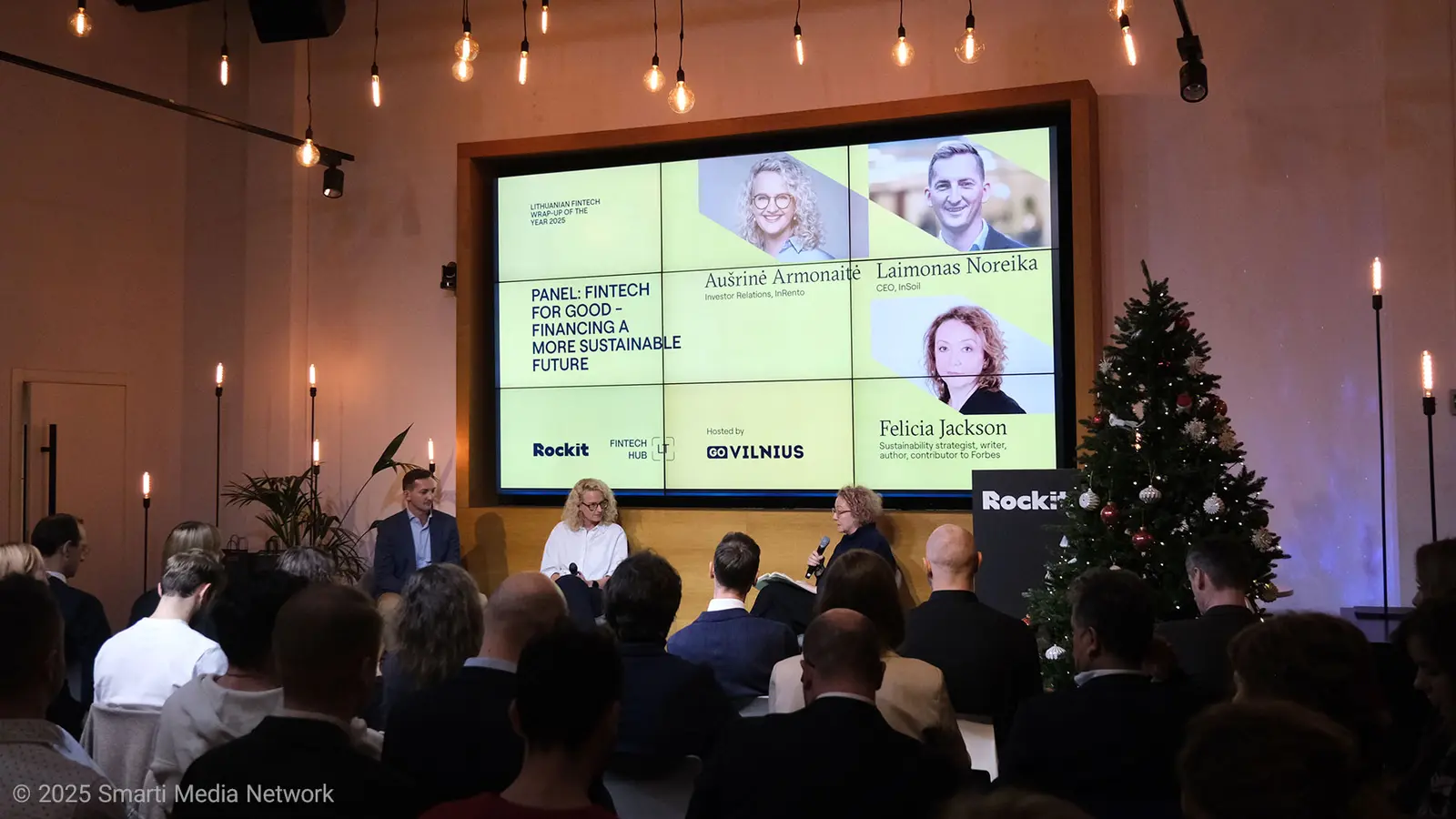
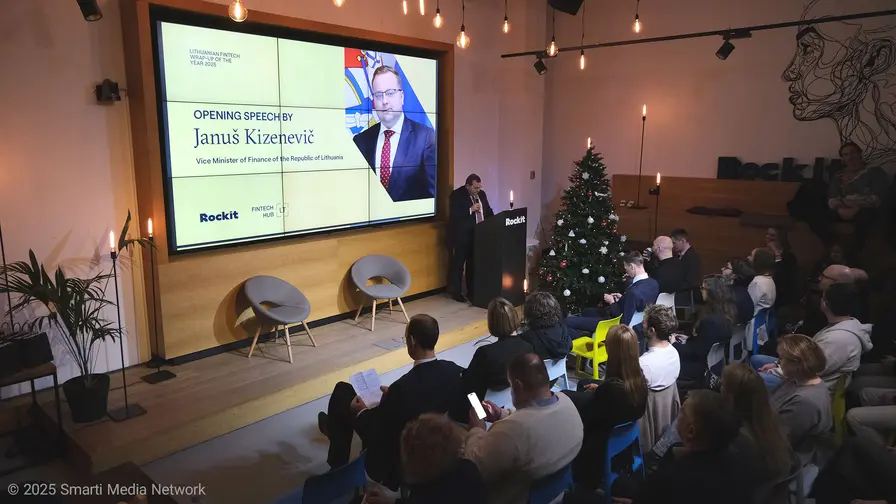
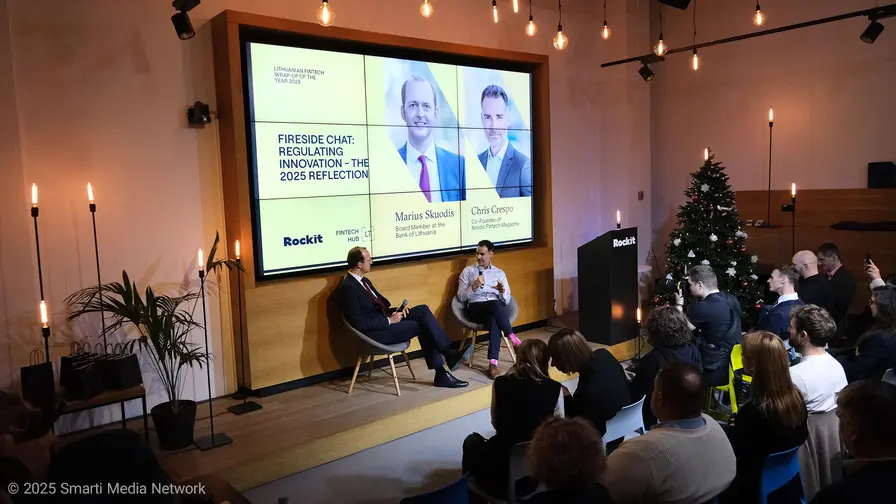
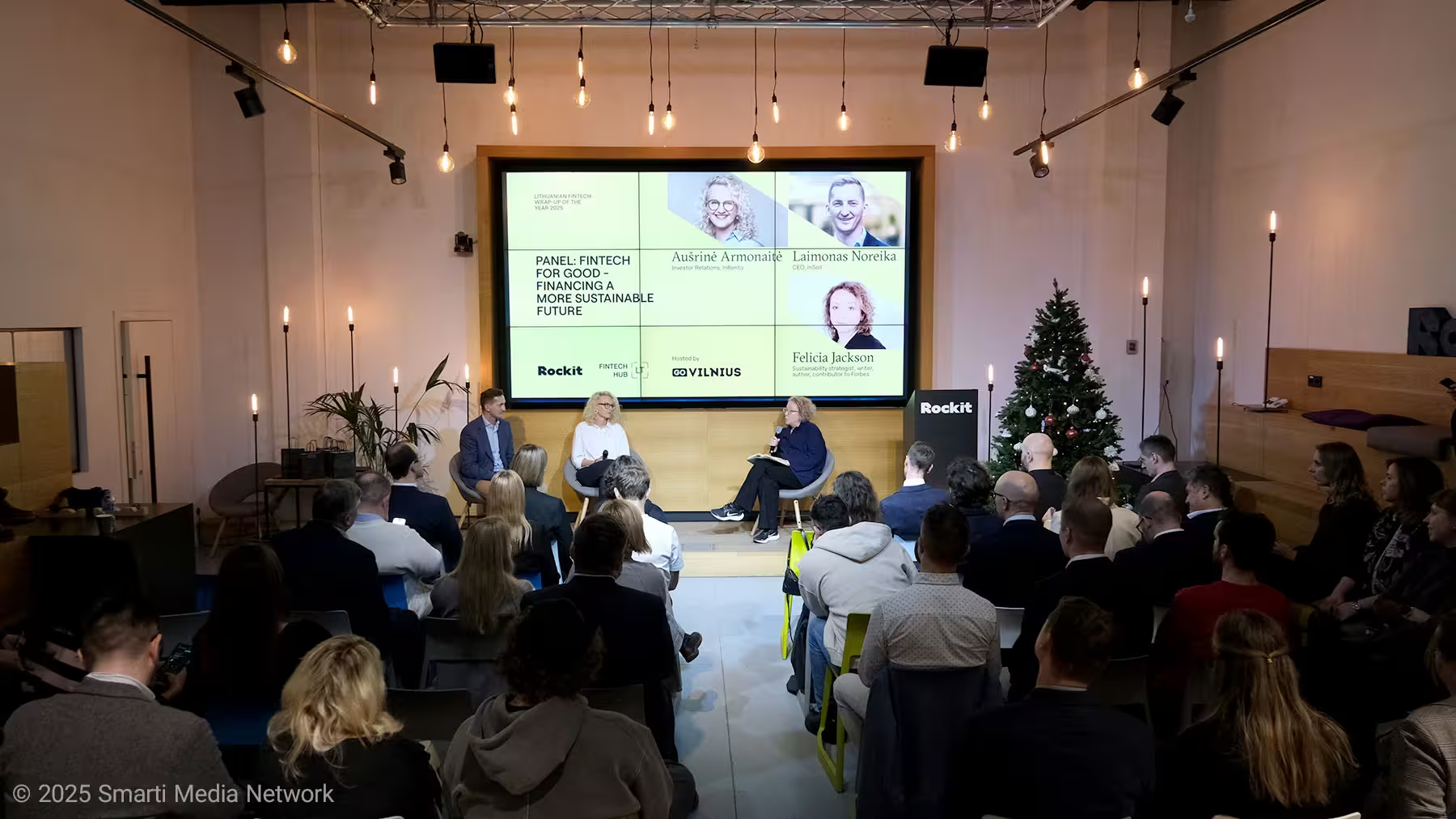
At the Lithuanian Fintech Wrap-up of the year 2025, held at ROCKIT, this binary was dismantled.
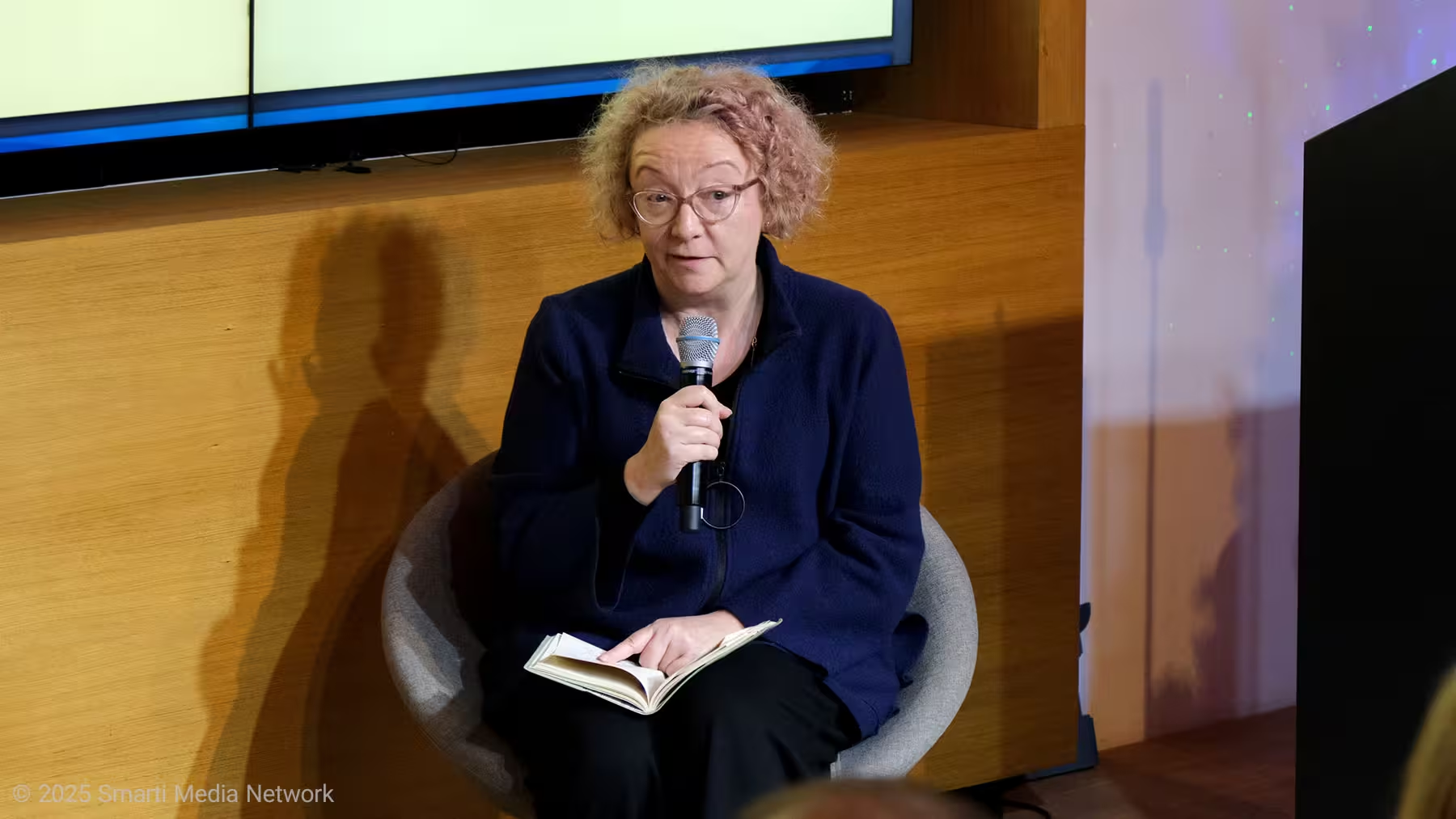
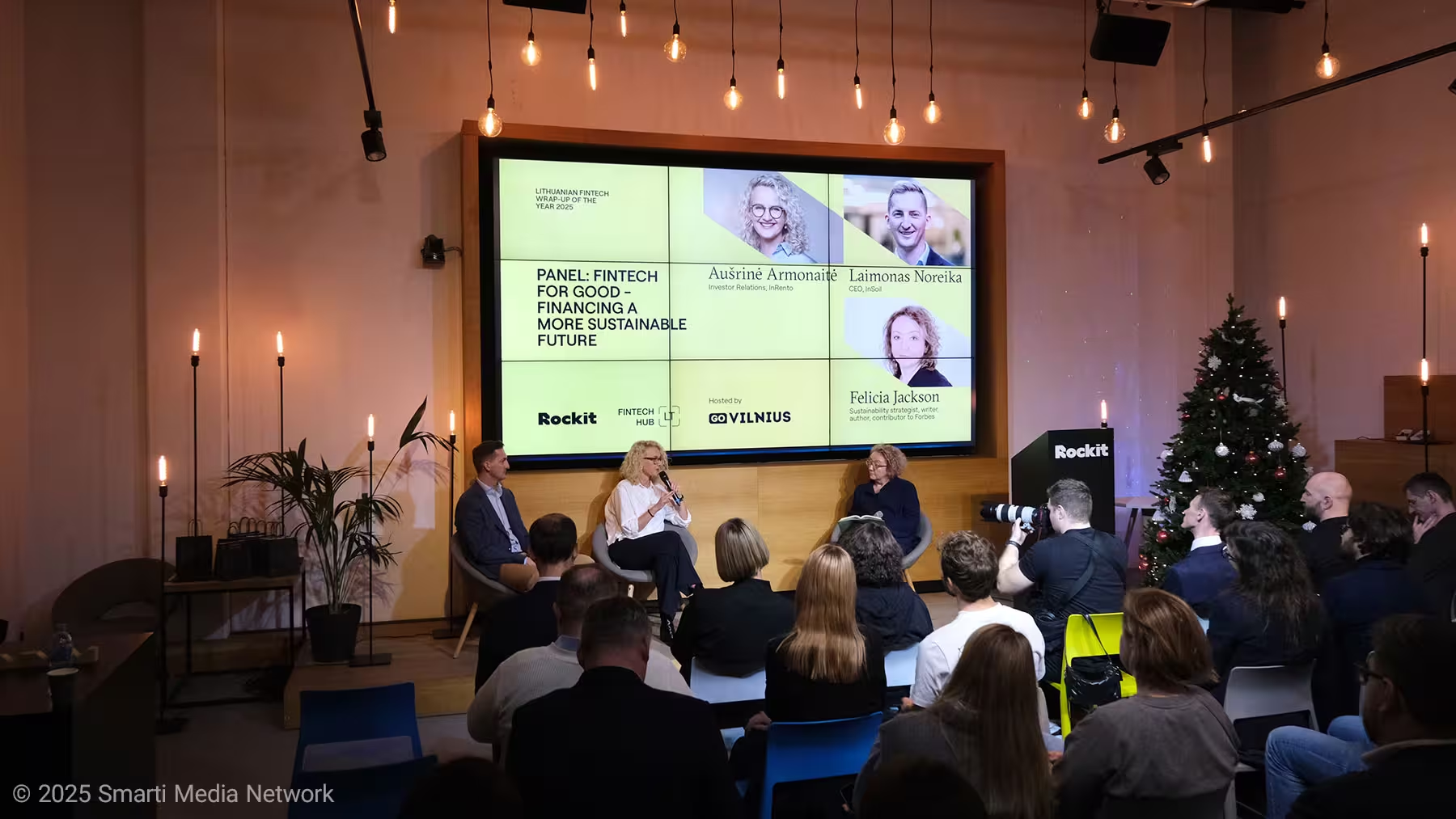
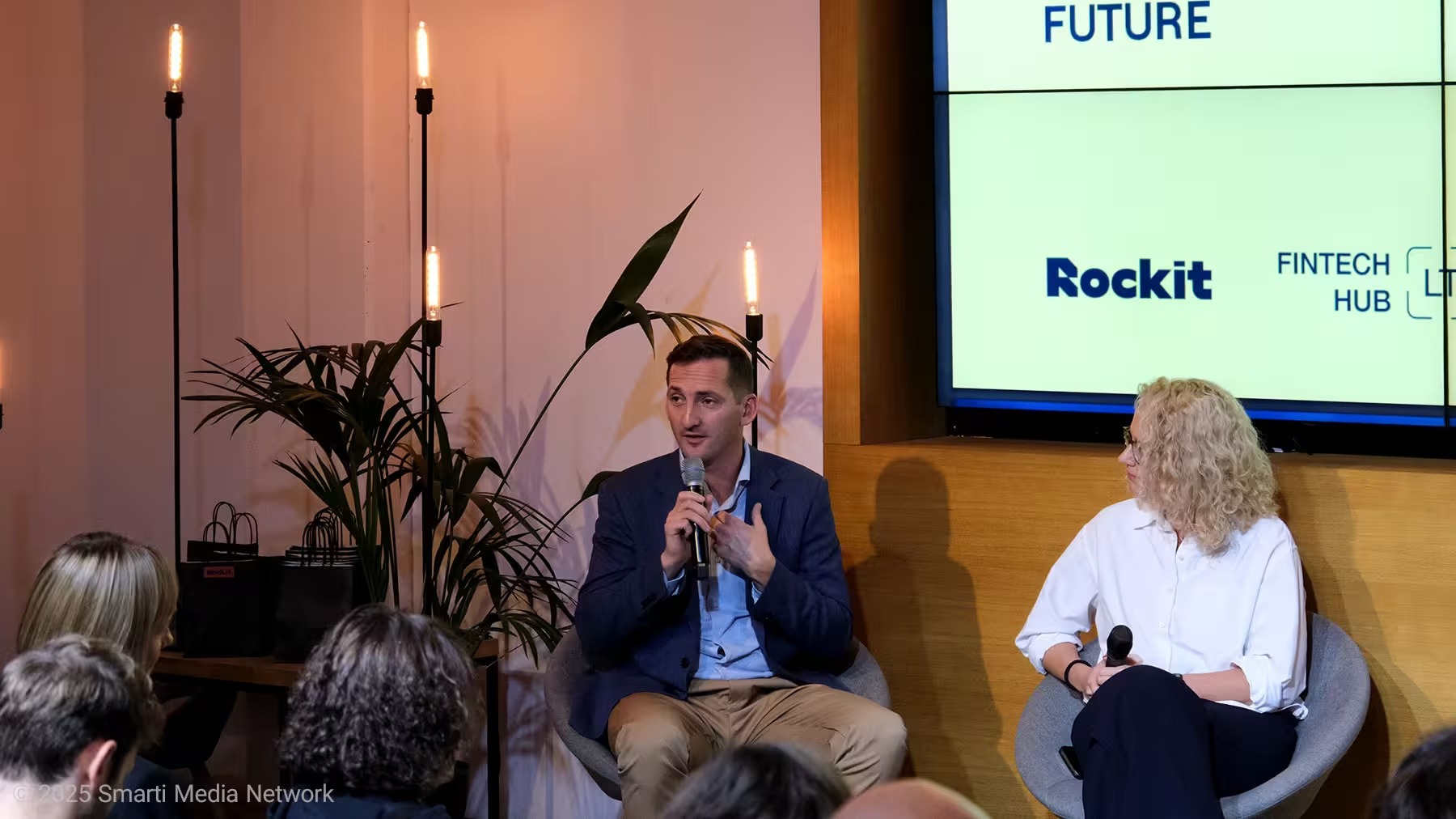
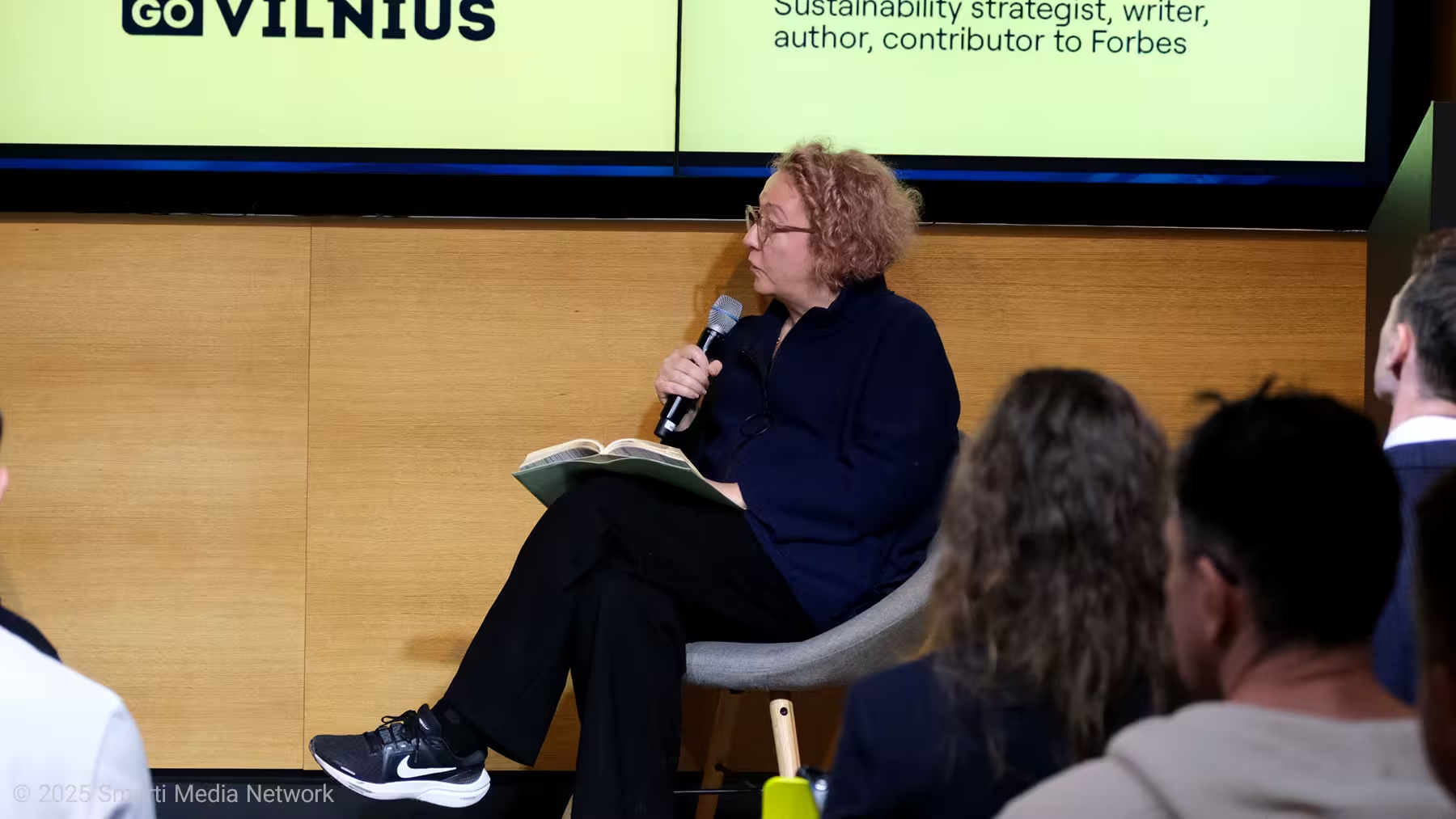
In a panel titled "Fintech for Good - Financing a More Sustainable Future," moderated by Forbes contributor and sustainability strategist Felicia Jackson, two of Lithuania’s most prominent sector leaders—Aušrinė Armonaitė of InRento and Laimonas Noreika of InSoil—took the stage to argue that sustainability is no longer a charity project. It is, in fact, a superior business model.
The discussion moved rapidly from the philosophical to the hyper-practical. It wasn't a conversation about vague "green goals" or corporate social responsibility (CSR) brochures. It was a hard-nosed look at how re-engineering financial flows can regenerate soil, revitalize decaying urban districts, and deliver double-digit returns to investors who might only have €500 to their name.
The Premise: Sustainability as a Business Imperative
Felicia Jackson opened the session by building on the earlier remarks from the Bank of Lithuania regarding the "maturity" of the ecosystem. "One of the things about fintech for good is that it's arguable that every business model is going to have to be sustainable in some way," Jackson posited. "But what does that mean? Is it just a slogan?"
The backdrop of this conversation is crucial. In 2025, Europe is grappling with the implementation of the Green Deal, forcing industries to decarbonize. The financial sector, often seen as the villain of the climate crisis, is now being positioned as the engine of transition. But as Jackson noted, "We’ve seen the beginning of the energy transition, but the two sectors that are the most problematic are real estate and agriculture."
These two heavy industries—responsible for a massive chunk of global emissions—are notoriously slow to change. They are capital intensive, risk-averse, and physically grounded. This is where fintech steps in, not as a disruptor of code, but as an enabler of physical transformation.
Part I: The Real Estate Revolution (InRento)
Aušrinė Armonaitė, representing InRento, brought a unique perspective to the stage. A former politician turned investor relations expert, she bridges the gap between public policy goals and private market realities.
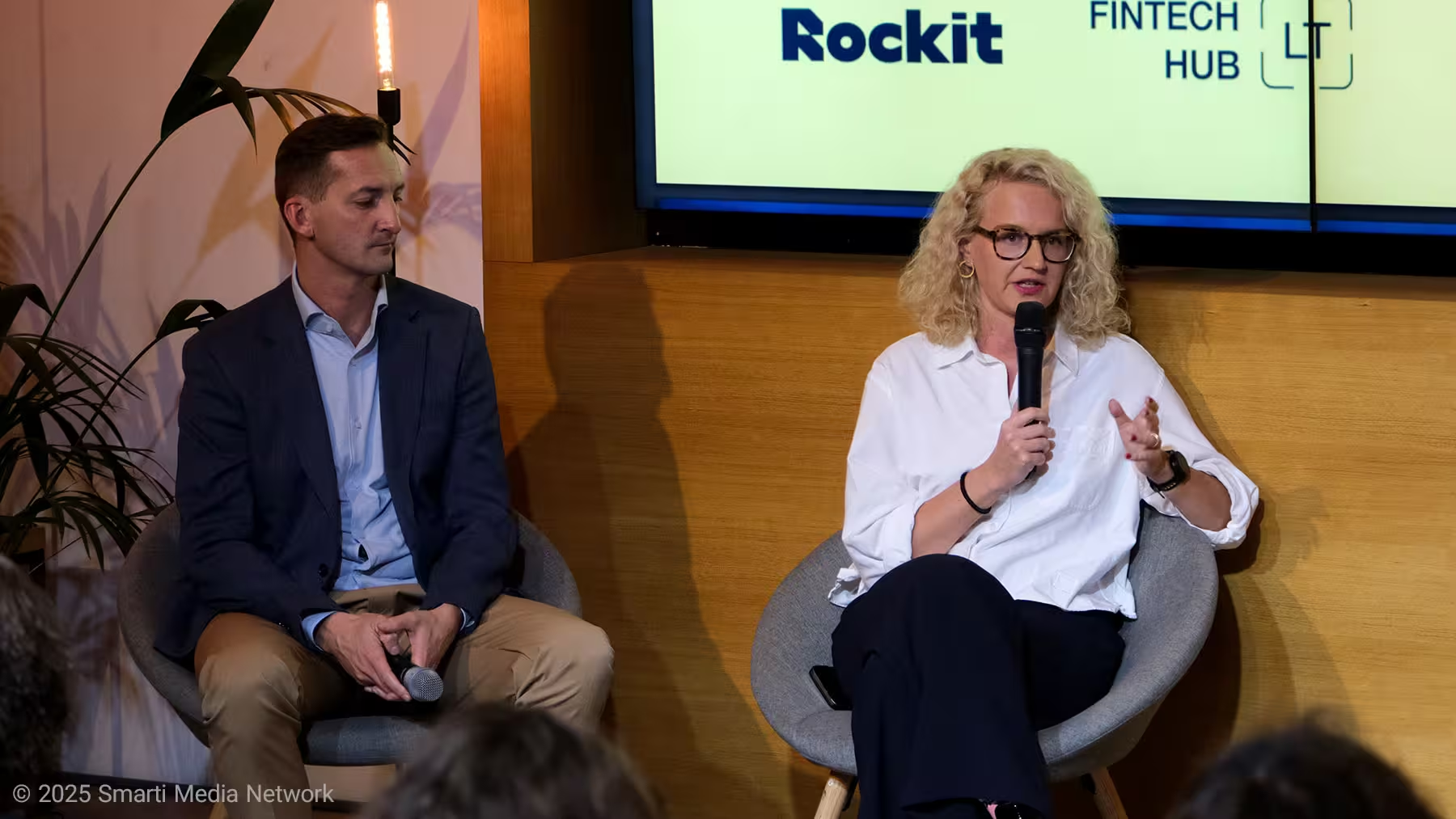
InRento operates in a specific niche of the crowdfunding market: Buy-to-Let.
The Economics of "Conversion"
"We focus on conversions and renovations," Armonaitė explained. "Old buildings, poorly used buildings, factories—they are being brought to new life."
This focus on retrofitting rather than new construction is the cornerstone of their sustainability strategy. The construction industry is a carbon bomb; the production of concrete and steel for new buildings is incredibly energy-intensive.
But here is where the "Fintech for Good" model diverges from philanthropy. InRento isn't financing these renovations just because it’s nice for the planet; they are doing it because the math works better.
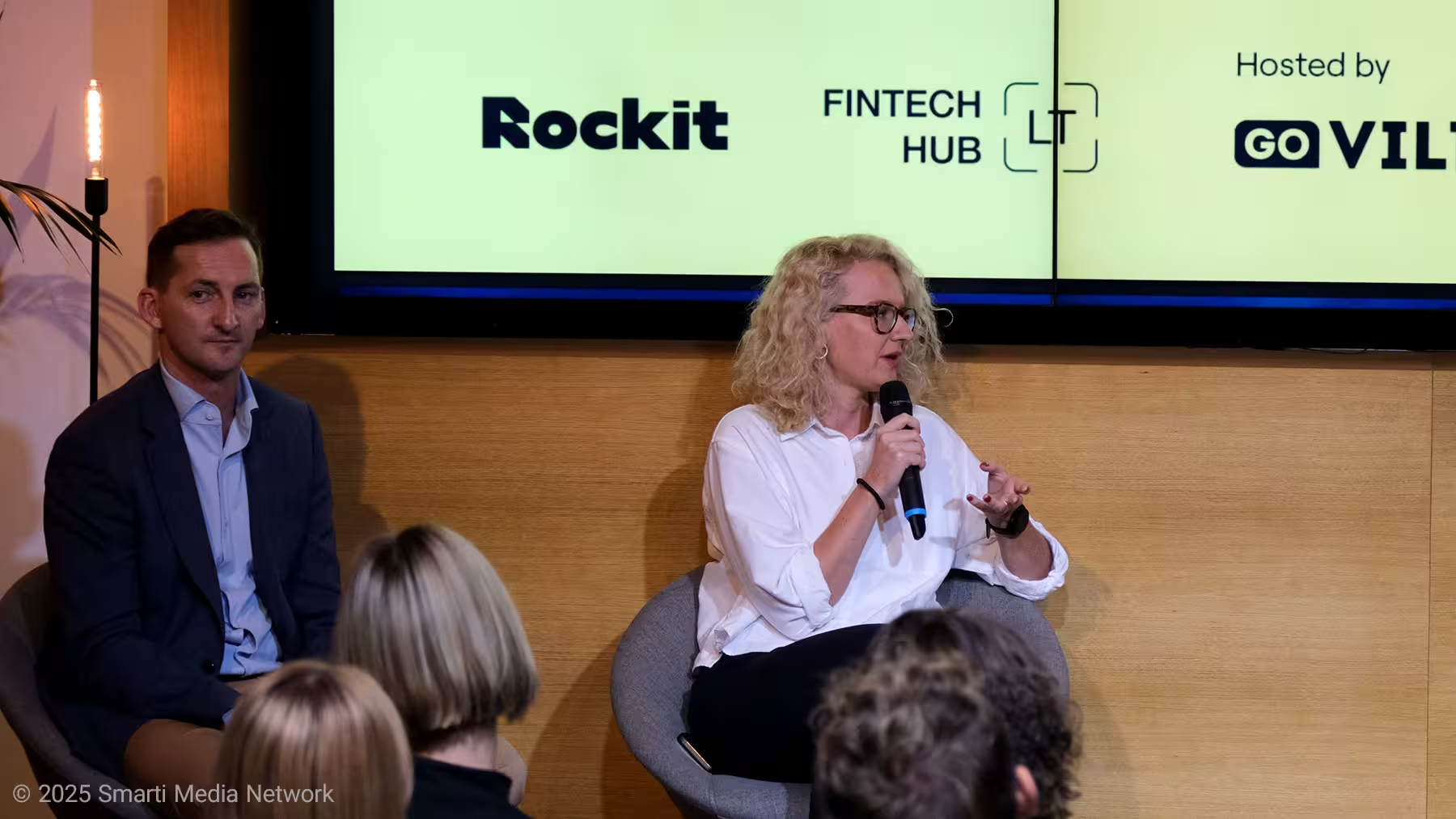
"What we have noticed within our portfolio is that conversion and renovation projects earn around 12% or even more in returns, compared to 9% for traditional buy-to-let," Armonaitė revealed.
This statistic flips the traditional narrative on its head. Usually, "green" investments are expected to carry a "greenium"—a lower return accepted by investors for the sake of impact.
Democratizing the Concrete Jungle
Armonaitė also touched on the social aspect of sustainability—specifically, inequality in wealth generation. Historically, real estate investment was the playground of the wealthy. "For decades, the general public thought that investment was only available to so-called capitalists," she said.
InRento has lowered the barrier to entry to just €500.
By allowing a 22-year-old in Vilnius to own a fractional share of a renovated factory loft, fintech is redistributing the wealth-creation power of real estate assets. It transforms the user from a passive renter into an active stakeholder in the city's development.
Part II: The Agricultural Transition (InSoil)
If real estate is difficult to decarbonize, agriculture is a minefield. Farmers are operating on razor-thin margins, dealing with unpredictable weather, and facing immense pressure to produce cheap food while simultaneously being blamed for soil degradation and nitrogen pollution.
Enter Laimonas Noreika and InSoil.
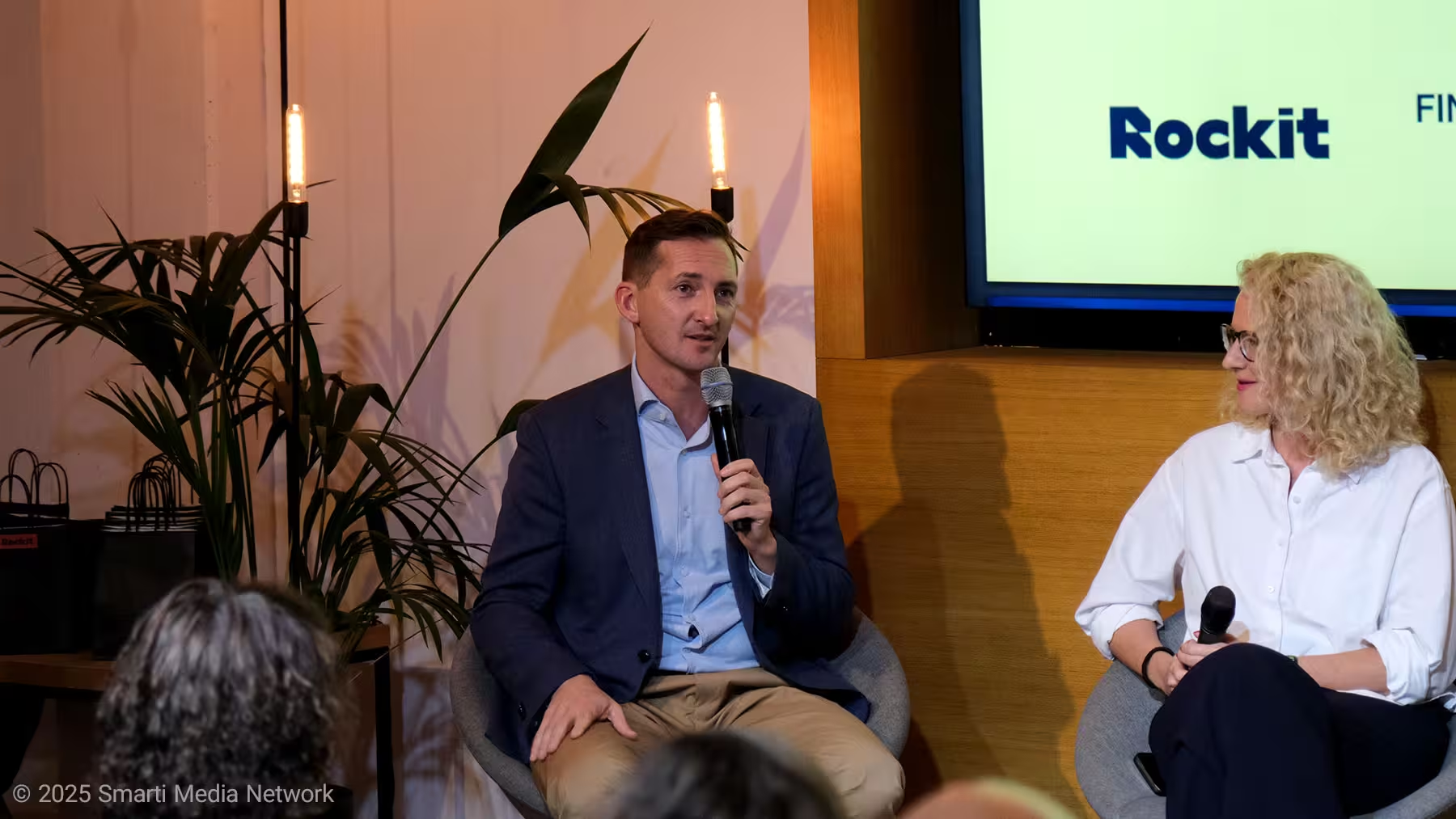
Noreika, a veteran finance entrepreneur, was refreshingly blunt about the industry's approach to "green" terminology. "I personally am tired of the word sustainability," Noreika declared, drawing laughs from the audience. "Who wants to buy sustainability? No one. But who wants to buy healthier food? Who wants to buy lower costs?"
The "Measurable or Fake" Doctrine
InSoil’s business model is built around Transition Finance. They provide ultra-cheap (often 0% interest) capital to farmers who are willing to switch from industrial farming methods to regenerative agriculture.
Regenerative agriculture improves soil health, sequestering carbon back into the ground rather than releasing it.
"It is either measurable, or it is fake," Noreika stated as his core thesis.
InSoil doesn't rely on self-reported data from farmers. They use science. "We literally go in the fields, put a stick in it, take organic matter, and send it to the lab," Noreika explained. They establish a "baseline" of organic carbon in the soil before financing.
Selling the Byproduct
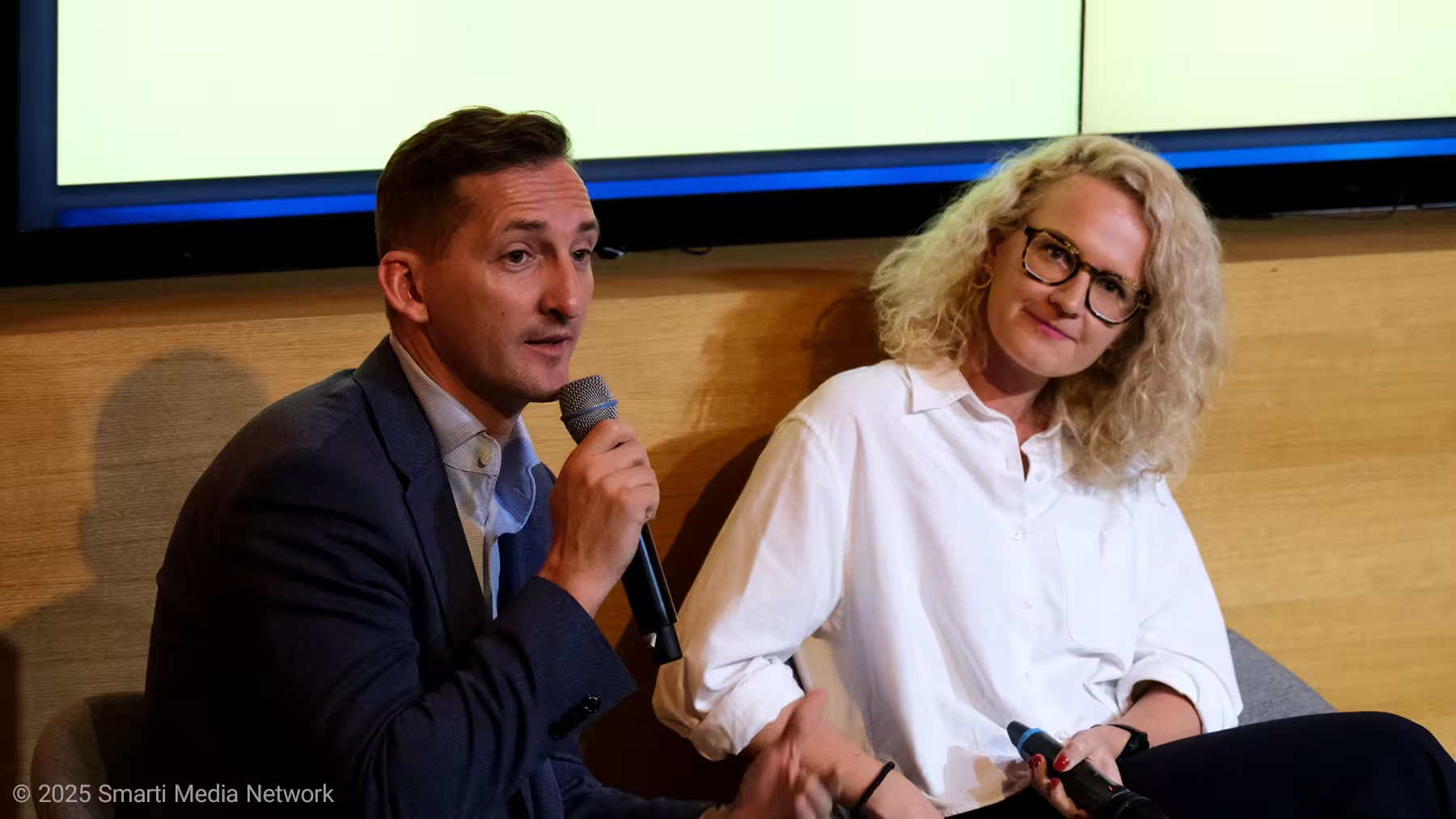
Noreika’s most provocative argument was that sustainability should be viewed as a byproduct, not the product itself. "If we want to speed up farmers to regenerating, we need to sell the benefits," he argued.
The sales pitch to the farmer is not "save the planet." It is: "Dear farmer, you will need to work less, use less fertilizers (lowering costs), and you will get the same yields." The result of this financial logic is healthier soil and carbon sequestration (the sustainability part).
"Money should talk. Only then does it make sense," Noreika insisted. "Sustainability is a nice word to explain finance for good, but the mechanism must be profitable."
Part III: The "Cowboys" and the Regulators
A recurring theme throughout the Lithuanian Fintech Wrap-up event was the role of regulation. In the earlier session, the regulator lamented the lack of maturity in crypto. In this panel, the entrepreneurs embraced regulation as a competitive advantage.
When Moderator Felicia Jackson asked about building trust at scale, Noreika offered a controversial take for a tech founder: "I am a huge fan of regulation."
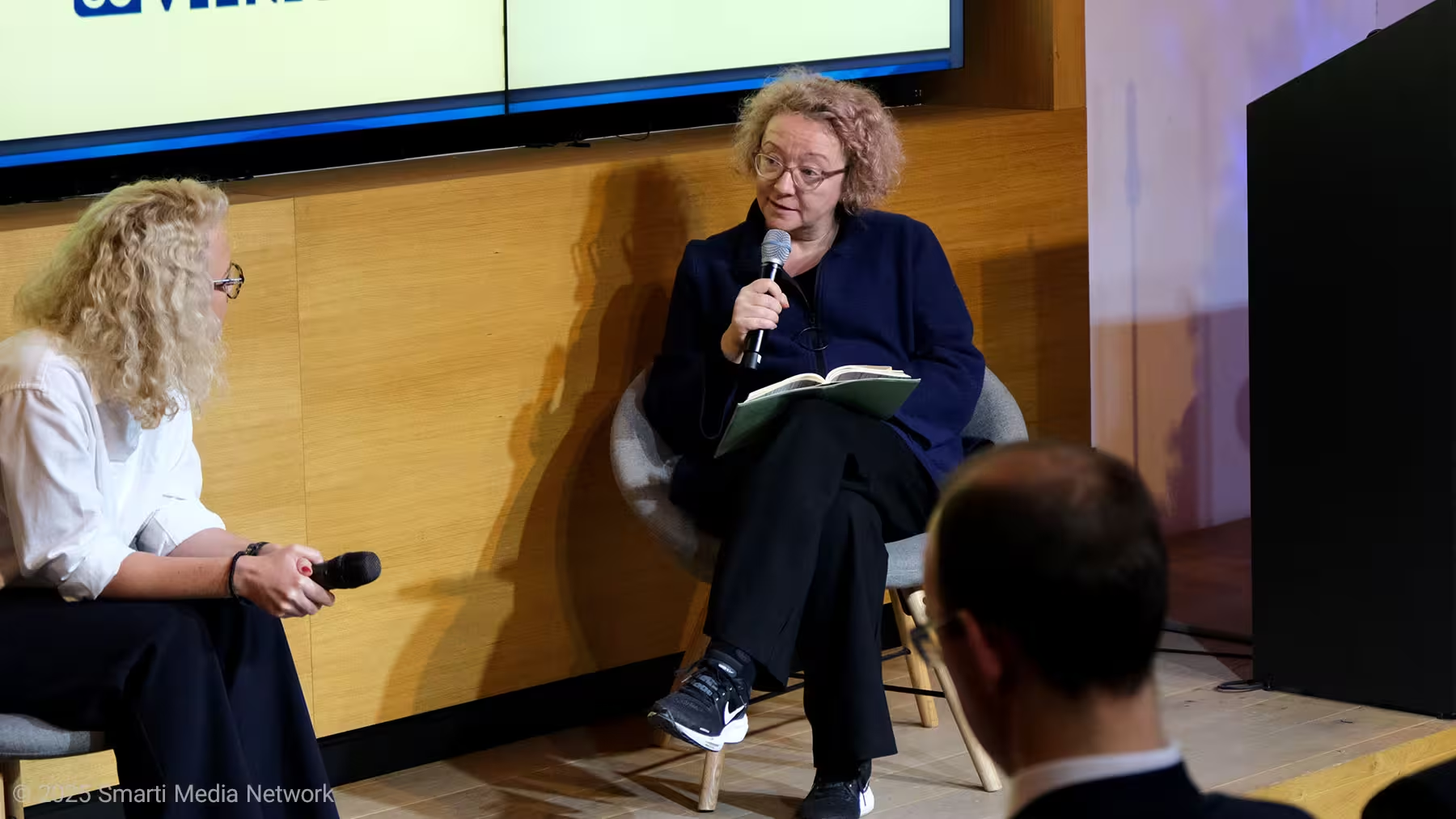
His reasoning was strategic. "Regulation eliminates the 'cowboys' in the market," he said. In the nascent world of carbon credits and regenerative finance, scams are a real risk. By operating as a regulated entity, InSoil gains access to institutional capital that unregulated startups can only dream of. "If we were not a regulated entity, it would be way harder for us to deal with organizations like the EIF (European Investment Fund) or EIB (European Investment Bank)," Noreika noted. "Kudos to our government for the really good job done in setting standards."
Armonaitė echoed this sentiment, focusing on the importance of a clean track record. "We have financed €70 million in projects with zero defaults," she stated. For a Peer-to-Peer (P2P) platform, a 0% default rate on such a volume is practically unheard of. It speaks to a rigorous risk assessment model that prioritizes the safety of investor capital over the speed of growth.
Armonaitė also drew an interesting parallel between her past life in politics and her current life in business. "In politics, it's a zero-sum game. You say bad things about your opponent, and you benefit," she reflected. "In the business world, it is in your best interest that your competitors also succeed. If they have bad stories, it hurts the whole sector."
Part IV: Is "Fintech" Dead?
Toward the end of the discussion, Felicia Jackson posed an existential question: Is fintech still a disruptor, or is it just the new normal?
The consensus was clear: The "disruption" phase is over. We are now in the integration phase.
"It used to be a disruptor," Armonaitė agreed. "Now, it is part of traditional finance. We are not a competitor anymore; we are a partner."
Noreika took it a step further, deconstructing the very definition of banking to explain fintech's future role. "If you see what banks do, they have three core functions: they borrow and lend money, they do payments, and they invest on the client's behalf," he analyzed. "What fintechs do is specialize. They pick one function, focus on it, and create competition for that specific vertical."
In this view, InRento hasn't replaced the bank; it has optimized the investment and lending vertical for real estate. InSoil hasn't replaced the agricultural bank; it has optimized the lending and verification vertical for farming.
The Education of the Market
As the panel concluded, the overarching challenge for 2026 became clear. It isn't technology—the platforms work, the soil sensors work, the carbon measurement works. It isn't capital—there is plenty of money looking for returns.
The challenge is Education.
"We need to work a little bit more on the knowledge of the society and, of course, about trust," Armonaitė summarized.
For InSoil, this means educating farmers that changing 100-year-old habits won't bankrupt them. For InRento, it means educating retail investors that their €500 can do more good (and earn more money) in a renovation project than in a savings account.
The Lithuanian Fintech Wrap-up of the year 2025 made one thing abundantly clear: The era of "Fintech for Fintech's sake" is over. The next generation of unicorns coming out of the Baltics won't just be moving money faster from Point A to Point B. They will be using finance to physically rebuild our cities and regenerate our soil.
As Laimonas Noreika put it best: “Finance is the blood of any ecosystem. If we want to make any change, be it sustainable or business, we start there.”
Deep Dive: The Data Behind the Claims
To better understand the arguments presented by InRento and InSoil, we broke down the key data points discussed during the panel:
InRento’s "Green" Economics:
Cost Efficiency: Renovation is 20-30% cheaper than new construction.
Carbon Reduction: Renovating existing structures saves up to 50% of the carbon footprint compared to building new.
Investor Returns: Renovation projects average ~12% return vs. 9% for standard buy-to-let.
Track Record: €70 Million funded, 0 defaults.
InSoil’s "Regenerative" Metrics:
Methodology: Physical soil sampling (Laboratory analysis of organic matter).
Timeline: 3-Year monitoring periods (Baseline vs. Result).
Farmer Incentive: Lower input costs (fertilizers/fuel) + Same yields = Higher Profit.
Financial Instrument: 0% or low-interest "Transition Finance."
 | .avif) | 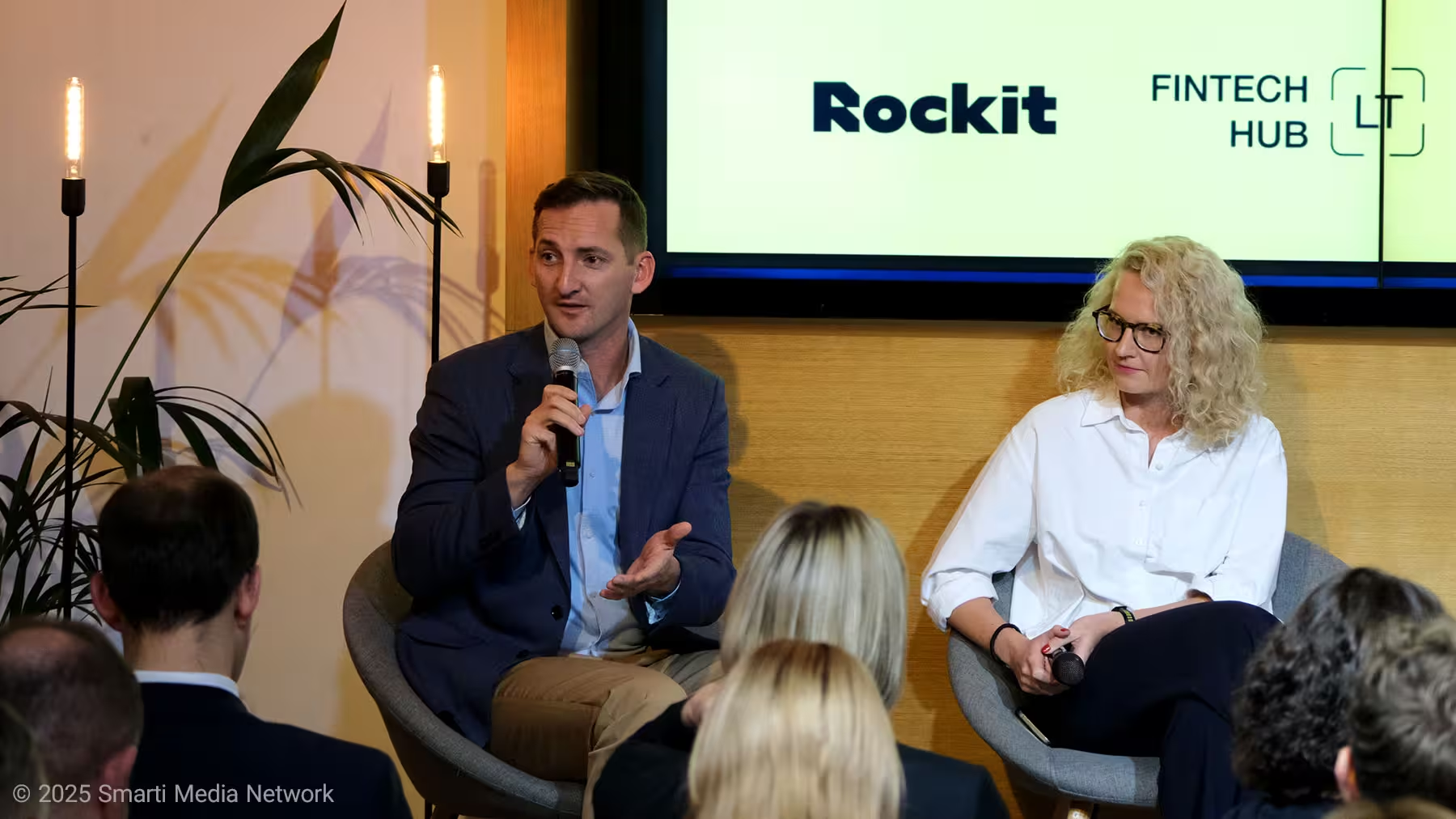 |

“Some times I write about breakthrough startups, digital ecosystems, and how innovation is changing the way we build businesses.”

Discussion
Leave a Comment
Comments (5)
Feels a bit overhyped, like selling sustainability as the cherry on top. Good model but watch the hype, if not backed by data it collapses fast
I've seen conversions lift small towns, ppl get jobs, cafes pop up. But it takes years, patient capital and trust. Education is huge, yup
Is this even true? 0 defaults on €70M and 12% returns sounds too good. Where's the catch, selection bias or some hidden subsidies..?
Makes sense tbh. Measurable soil metrics beat greenwashing, full stop. Labs cost money though, who covers testing and audits at scale?
wow, didn’t expect renovation returns to outpace classic buy-to-let. If that’s real, urban change could be fast! still skeptical about scaling tho…