
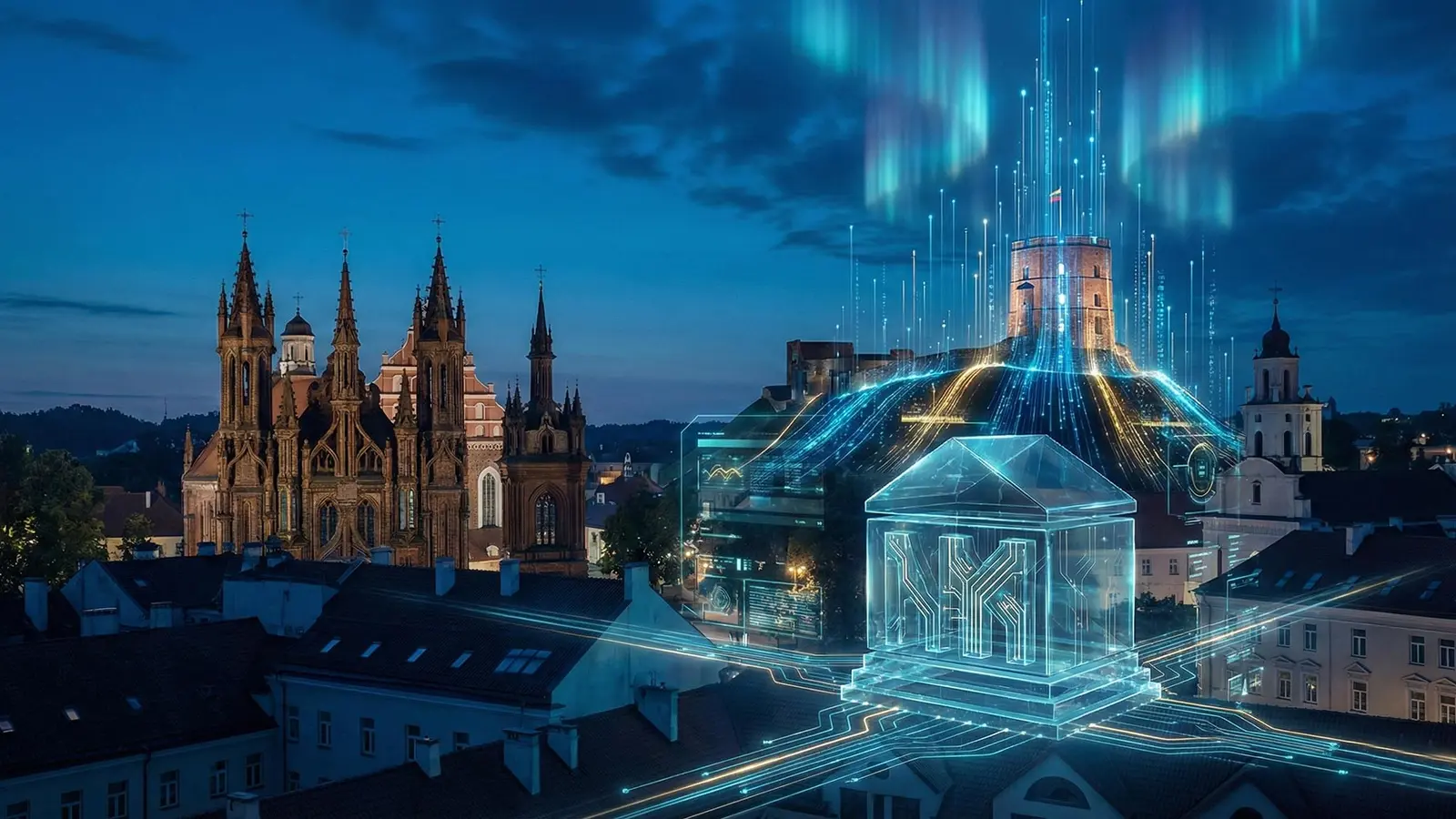
As the Gregorian calendar prepares to turn the page to 2026, the European technology landscape looks drastically different than it did a decade ago. London is recalibrating post-Brexit realities, Berlin is grappling with bureaucratic stagnation, and Paris is fighting hard for the AI crown. Yet, quietly, efficiently, and without the flashy chaos of its western counterparts, a small Baltic nation has cemented itself as the operating system of European finance.
Lithuania, a nation of just 2.8 million people, enters 2026 not as a "promising startup hub," but as a mature, dominant force. It is no longer just a sandbox; it is the castle.
This deep dive explores how Vilnius transformed from a hidden gem into the undisputed Fintech capital of the EU, and why 2026 marks the beginning of its "Golden Era of Maturity."
Chapter 1: The Regulatory Superpower
To understand Lithuania's dominance, one must look past the glass towers of Konstitucijos Avenue and look at the paperwork. The secret sauce of Lithuania’s success has never been just cheap labor or fast internet—it was, and remains, the Bank of Lithuania.
In the early 2010s, while other central banks treated startups with suspicion, Lithuania’s central bank rolled out the red carpet. They created a "regulatory sandbox" that allowed companies to test financial innovations in a live environment under supervision but without the full weight of compliance crushing them immediately.
Heading into 2026, this advantage has evolved. It’s no longer just about speed; it’s about "Passporting Rights." An Electronic Money Institution (EMI) license issued in Lithuania is valid across the entire European Economic Area (EEA). With the UK out of the EU picture, Lithuania became the primary gateway for global fintechs (from Israel, Singapore, and the US) to access 450 million European customers.
In 2025, we saw a stabilization of license issuance. The "Wild West" days are over. The regulator has shifted focus from quantity to quality. For 2026, the narrative is "Compliance as a Service." The Bank of Lithuania is now pioneering automated reporting and API-based supervision, setting a standard that the European Central Bank (ECB) is reportedly studying closely.
Chapter 2: The "Revolut Effect" and the Unicorn Mafia
You cannot talk about the Lithuanian ecosystem without addressing the elephant in the room: Revolut. While headquartered in London, Revolut’s European operations—its banking license—live in Lithuania.
But the story for 2026 isn't about Revolut anymore; it's about the "Revolut Mafia" (similar to the PayPal Mafia in Silicon Valley). Hundreds of senior employees, product managers, and compliance officers who cut their teeth scaling a global unicorn have now left to found their own ventures in Vilnius.
This has created a "Flywheel Effect."
Talent Density: Vilnius now has the highest concentration of AML (Anti-Money Laundering) and KYC (Know Your Customer) specialists per capita in the world.
Second-Generation Founders: The founders launching startups in late 2025 and early 2026 are not novices. They are veterans who have already seen a company go from 0 to 10 million users.
Beyond fintech, we see this maturity in Vinted (the second-hand fashion giant) and Nord Security. These titans have proven that you can build global products from the Baltics without ever needing to relocate HQ to San Francisco.
Chapter 3: From Payments to "Embedded Finance"
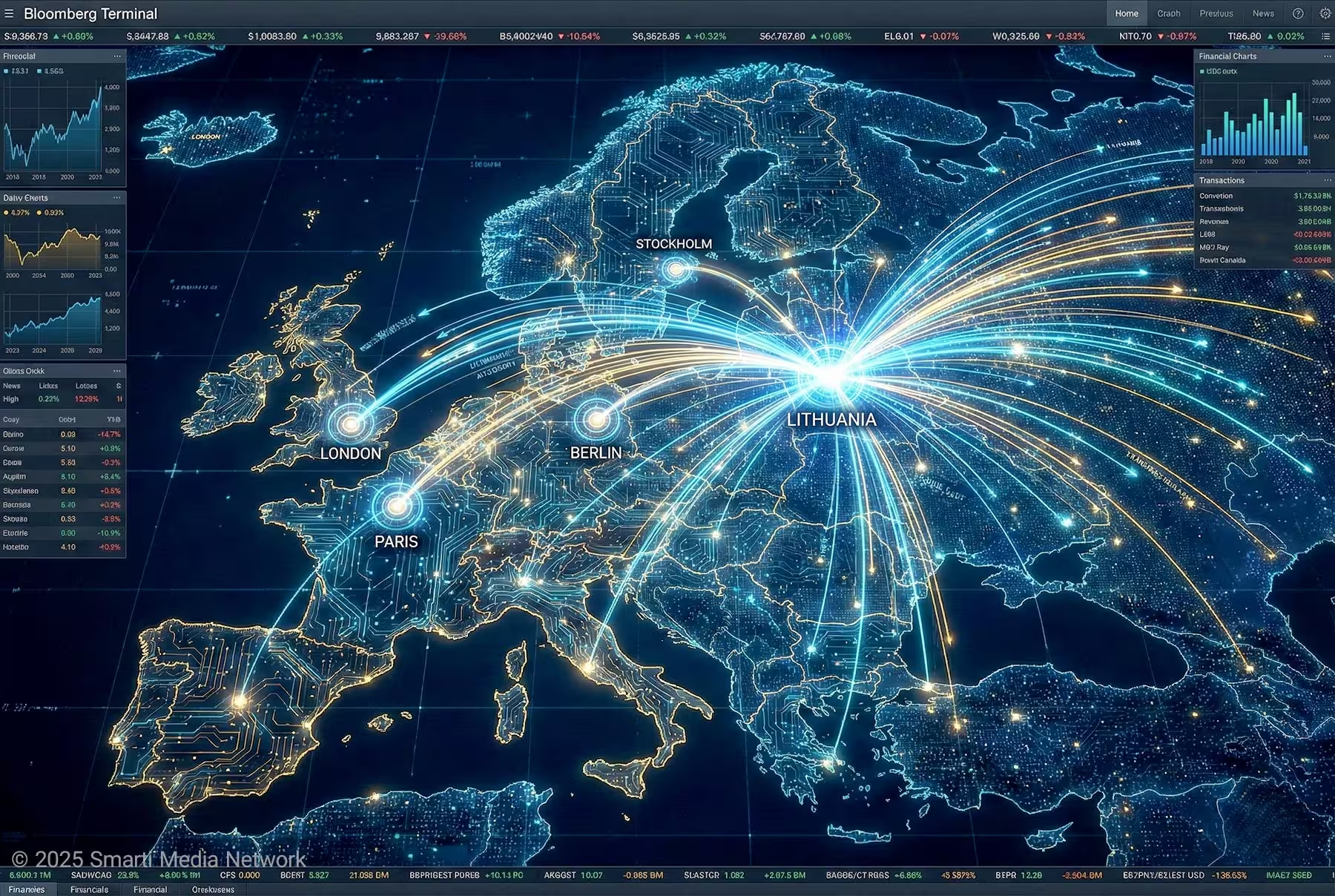
For years, Lithuania was known as the backend of payments—the "plumbing" of the financial internet. If you transferred money in Europe between 2020 and 2025, there is a high statistical probability that your money touched a Lithuanian server via companies like Railsbank (now embedded in the ecosystem) or local champions like Kevin. or Ondato.
However, the trend for 2026 is Embedded Finance. Non-financial companies are becoming fintechs. Logistics companies, energy providers, and retail chains are integrating wallets and lending directly into their apps. Lithuania is positioning itself as the "API Factory" for this shift.
The ecosystem is moving up the value chain. We are seeing a surge in:
WealthTech: Startups democratizing investment for the Baltic and CEE region.
Green Finance: Leveraging the Nordic influence to build tools for carbon credit tracking and ESG reporting.
Defi & Web3: With the full implementation of the EU’s MiCA (Markets in Crypto-Assets) regulation in late 2024/2025, Lithuania has seamlessly transitioned crypto firms into regulated entities. 2026 will see institutional crypto banking rise from Vilnius.
Chapter 4: The Talent War and The "Workcation" Advantage
Why do developers stay in Vilnius when they could earn double in Zurich or London? The answer lies in the Quality of Life Arbitrage, which remains valid in 2026.
While the cost of living in Vilnius has risen (a natural side effect of success), it remains significantly lower than Western Europe. A senior developer in Vilnius enjoys a purchasing power parity that rivals their peers in Berlin.

Moreover, the city itself has adapted. The "Tech Zity" projects and the conversion of Soviet-era factories into massive, Google-style campuses have created a physical infrastructure that screams innovation.
But there is a challenge looming for 2026: The Talent Shortage. Lithuania has practically exhausted its local supply of senior engineers. The strategy now pivots to aggressive immigration policies. The "Blue Card" process has been streamlined largely due to pressure from the tech lobby. We are seeing an influx of talent not just from neighboring Belarus or Ukraine (due to geopolitical shifts), but increasingly from Southern Europe and South America, attracted by the booming tech sector.
Chapter 5: The Geopolitical Firewall
We must address the geopolitical elephant. Sharing a border with unpredictable neighbors has historically been seen as a risk. However, the Lithuanian tech sector has turned this into a unique selling point: Resilience and Cybersecurity.
Heading into 2026, Lithuania is not just a Fintech hub; it is a GovTech and CyberSec fortress. The intense focus on national security has bled into the private sector. Lithuanian fintechs are marketed as "battle-tested." When a Lithuanian startup says their data is secure, investors believe them because they operate in a high-alert environment.
This "Security-First" branding is becoming a major asset for attracting enterprise clients from Germany and the UK who are increasingly paranoid about data sovereignty and cyber warfare.
Conclusion: The Outlook for 2026
So, what does 2026 hold for the Lithuanian ecosystem?
Consolidation: We will see fewer new licenses but more M&A (Mergers and Acquisitions). The big players will buy the small niche tools.
The IPO Dream: Rumors are swirling about the next wave of Baltic IPOs. 2026 might be the year the Nasdaq Baltic sees tech action, or more likely, Lithuanian companies ringing the bell in Amsterdam or New York.
Exporting Regulation: Lithuania’s greatest export in 2026 might not be software, but "Governance." Developing nations are looking to Vilnius to copy their regulatory playbook.
Lithuania has proven that geography is irrelevant in the digital age. It didn't just survive the volatility of the early 2020s; it thrived on it. As we enter 2026, the question is no longer "Where is Lithuania?" but rather "Can the rest of Europe catch up?"

Discussion
Leave a Comment