
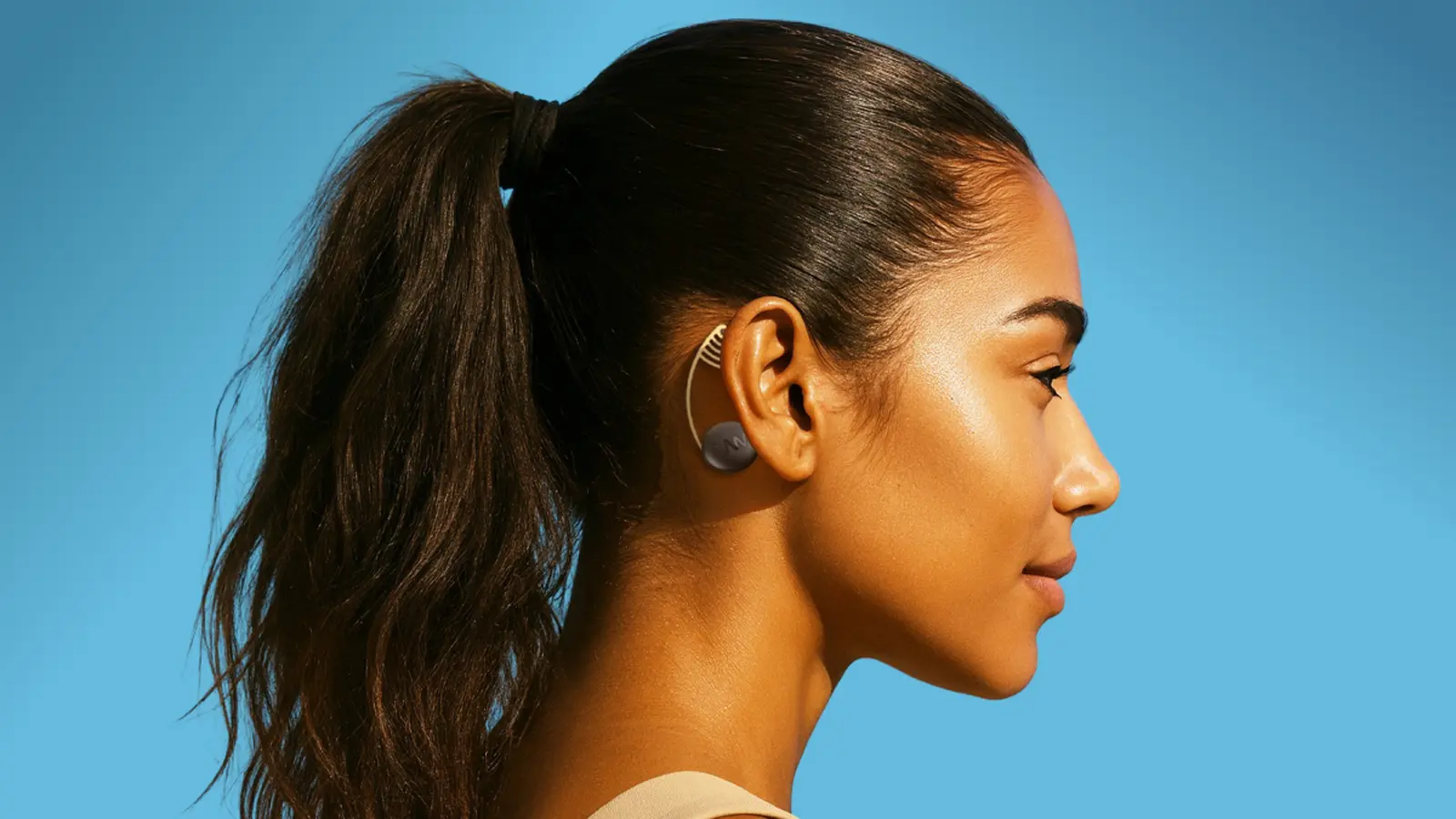
A wearable that listens to your brain instead of your heartbeat is aiming to turn stress management into something you can actually measure, track, and improve—just like daily steps or sleep.
When telecom executive and engineer Antonio Forenza realized he was burning out, he went looking for a "Fitbit for stress." A few years earlier he had lost 40 pounds with the help of an Apple Watch, obsessively counting steps and calories. Naturally, he wondered: why isn’t there a wearable that helps you shed “40 pounds of stress” too?
There wasn’t—so he decided to build one.
A brain-sensing wearable that sits behind your ear
Instead of inventing a brand-new sensor, Forenza went back to a proven medical technology: the electroencephalogram, or EEG. For more than a century, EEG has been used in hospitals to monitor electrical activity in the brain and diagnose conditions such as epilepsy and sleep disorders.
But EEG can also reveal something far more everyday: how stressed you are. When your brain spends too long in high-frequency “beta” waves—patterns associated with alertness and cognitive load—it can translate into exhaustion, insomnia, anxiety, and chronic stress.
Working with data scientists and biomedical engineers, Forenza turned this clinical staple into a consumer gadget called Awear: a compact sensor worn discreetly behind the ear that continuously monitors brainwaves throughout the day.
The device streams data to a companion app, which translates raw brain signals into insights about mood, cognitive strain, and stress levels. From there, Awear pushes AI-powered coaching suggestions—short, on-the-fly prompts aimed at helping users step away from constant “fight or flight” mode and build emotional resilience.
“Our brain is phenomenal at self-adjusting and making us believe we are not stressed,” Forenza says. “It’s fine to be in ‘fight or flight’ every once in a while. It’s part of our nature. But if you fall into the trap of constant ‘fight or flight’, then that leads to chronic stress, depression, anxiety.” By flagging prolonged periods of elevated beta activity, Awear is designed to help users intervene before stress turns into something harder to reverse.
From hospital tech to consumer wellness companion
Awear sits in a fast-growing niche between medical-grade monitoring and lifestyle wearables. While smartwatches and rings rely heavily on proxies like heart rate variability or sleep patterns to infer stress, Awear goes straight to the source: electrical activity in the brain itself.
That angle has caught the attention of researchers. Stanford University’s psychiatry department is currently testing the device to monitor confusion and disorientation in older patients after surgery—complications that are often subtle and easy to miss. It’s an early signal that brain-based wearables could have a role well beyond wellness apps and productivity hacks.
Still, Forenza is clear that the company’s main target is the consumer market. The strategy looks familiar: position Awear as a next-generation wearable for knowledge workers, founders, and anyone living in a permanent state of notification overload—much like how the Oura ring turned sleep and recovery into aspirational metrics for tech-savvy early adopters.
Awear has already earned industry recognition as a Startup Battlefield 200 finalist at TechCrunch Disrupt 2025, where it took home the top prize in the health category pitch competition. That kind of validation matters in a sector crowded with wellness gadgets that often blur the line between science and self-help.
Early access now, crowdfunding and scale later
To fuel its next phase, the startup closed a pre-seed round led by Hustle Fund, Niremia Collective, Techstars, and The Pitch Fund. The company is now preparing a $5 million seed round, planned for early 2026, to ramp up production, expand its software capabilities, and validate more use cases with clinical and academic partners.
At the moment, Awear is available only through an early-access program. The device costs $195 and includes a lifetime subscription to the app—an unusual move in a market where recurring subscriptions have become the norm. Unsurprisingly, many of the first customers are other startup founders and operators, a demographic that practically defines chronic stress.
Once the seed round is in place, Awear plans to launch a Kickstarter campaign, borrowing from the playbooks of Peloton, Oura, and other hardware brands that used crowdfunding to both finance production and build a vocal early community.
“It is a path that worked for many other wearables,” Forenza notes. “It gives you a lot of visibility, and it’s a good way to acquire customers.” For a brand new category—brainwave-driven, AI-powered stress coaching—that visibility may prove as critical as the underlying neuroscience.
Whether Awear becomes the go-to “Fitbit for your brain” or not, it points to where the next wave of digital health is headed: beyond counting steps and heartbeats, toward measuring what’s happening in the mind itself.

"Hey! I’m John. Whether it's about films or the latest streaming hits, I’m here to bring you everything!"

Discussion
Leave a Comment