
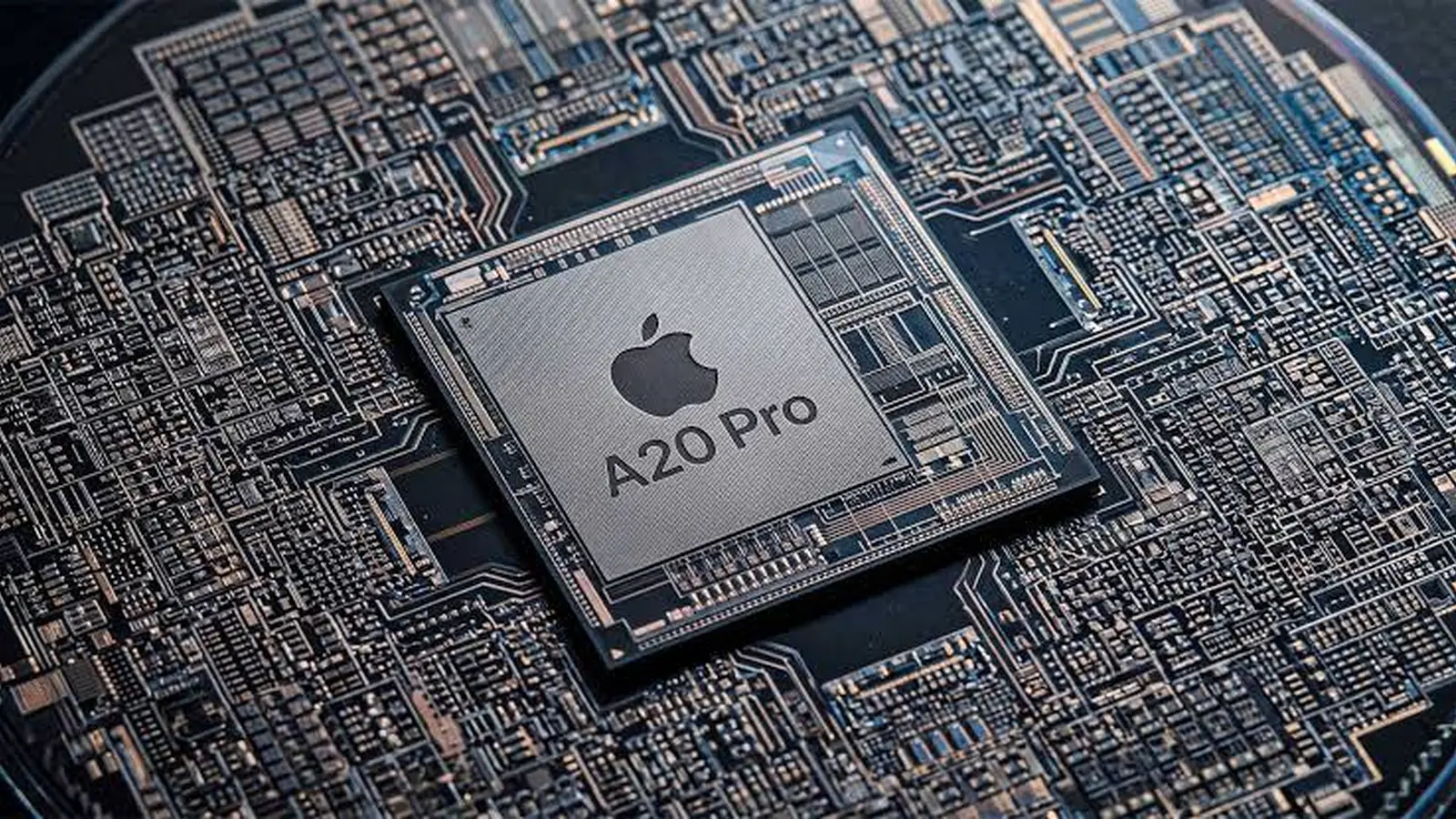
There’s a small solder diagram stirring a big debate among chip sleuths. Shared on Chinese social platforms, the image has been picked apart by reverse-engineers who say it maps out Apple’s next flagship silicon: the A20 Pro, likely to power the iPhone 18 Pro and the new iPhone Ultra.
What the circuitry appears to mean
According to the leak, Apple sticks with a 2+4 CPU configuration but increases graphics muscle to a 7-core GPU. That’s a tidy step up for sustained graphics work without jumping to a wildly different architecture. Short and long story: incremental, focused gains.
The whisper on cache is where things get interesting. The so-called small efficiency cores are reported to carry 8MB of L2 cache each, up from the 6MB per small core on the A19 Pro. The larger performance cores appear unchanged at 16MB of L2. How much system-level cache Apple will include remains unclear; that’s often where real-world gains hide.
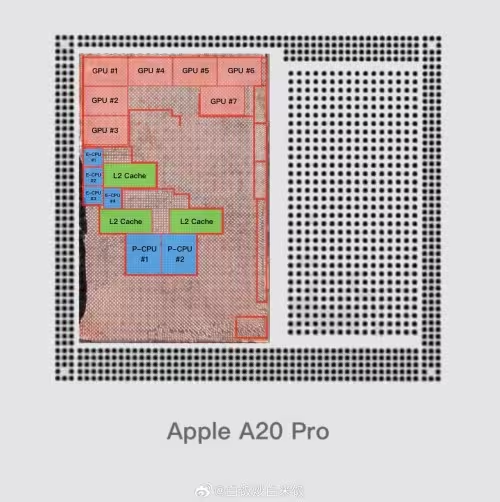
Why does cache matter? Because more L2 can improve single-threaded responsiveness and background task juggling. It’s not flashy, but it changes how a phone feels in everyday use. Apples-to-apples comparisons suggest Apple is tightening bottlenecks rather than chasing headline GHz numbers.
All of this comes from pattern-reading: traces, pad placements and component layouts. It’s forensic work more than official documentation, and that means room for error. Still, the leak aligns with a conservative upgrade path—one that favors efficiency and modest GPU growth over radical redesign.
If the leak holds up, expect the A20 Pro to be an evolutionary step focused on smarter cache and a stronger GPU, not a wholesale overhaul.
Apple is scheduled to unveil the iPhone 18 Pro and Ultra on September 9, where the company will either confirm these specs or send analysts back to the diagrams for another round of speculation.


“I love exploring gadgets, apps, and trends that redefine how we connect, work, and play in a digital world.”

Discussion
Leave a Comment
Comments
No comments yet. Be the first.