
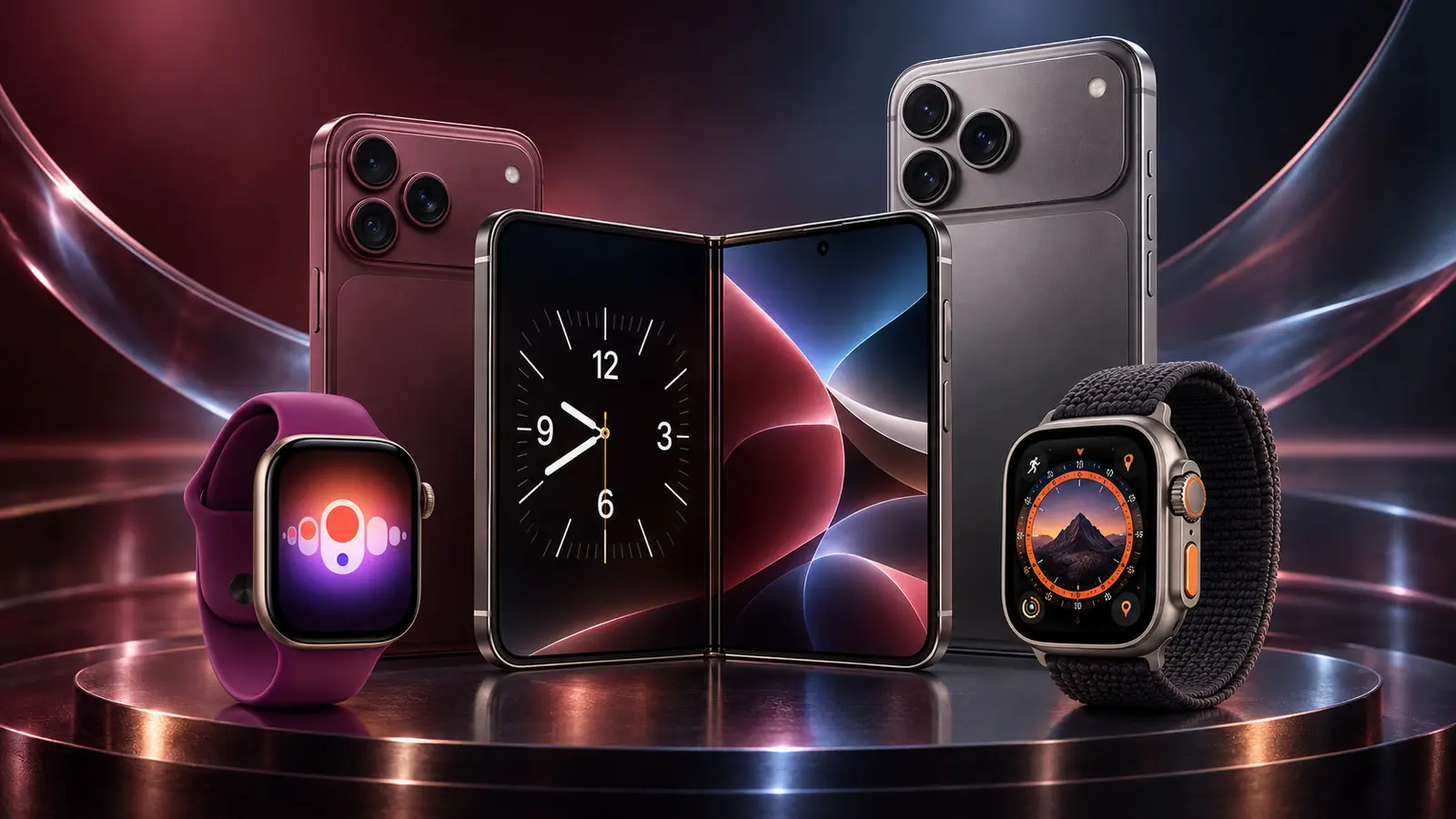
Apple has held one of its most consequential product events in years, unveiling its first foldable iPhone alongside the iPhone 18 Pro and Pro Max, Apple Watch Series 12, Apple Watch Ultra 4 and AirPods 5.
The event was significant for another reason: it was Apple’s first major product launch under the leadership of John Ternus.
The real star of the presentation was not the iPhone 18 Pro, but the iPhone Duo, a $1,999 foldable device that finally brings Apple into a market where Samsung, Huawei, Honor and several Chinese manufacturers have been competing for years.
Meanwhile, the iPhone 18 Pro models arrive with the A20 Pro chip, a 48MP main camera with variable aperture, longer battery life and a $100 price increase.
Apple also broke with its usual launch schedule by not announcing the standard iPhone 18. Reports suggest the base model may debut alongside other lower-priced iPhones in early 2027. For now, Apple appears to be concentrating its attention on premium devices with higher profit margins.
Everything Apple Announced at a Glance
| Product | Key feature | Starting price | Availability |
|---|---|---|---|
| iPhone 18 Pro | 48MP camera with variable aperture | $1,199 | September 18 |
| iPhone 18 Pro Max | Larger battery and 6.9-inch display | $1,299 | September 18 |
| iPhone Duo | 7.6-inch foldable inner display | $1,999 | October 23 |
| Apple Watch Series 12 | New health sensors and S11 chip | $399 | September 18 |
| Apple Watch Ultra 4 | Satellite connectivity and 50-hour battery | $799 | September 18 |
| AirPods 5 | Stronger ANC and redesigned acoustic architecture | $129 | September 18 |
iPhone 18 Pro and Pro Max: Cameras, Battery and AI Take Priority
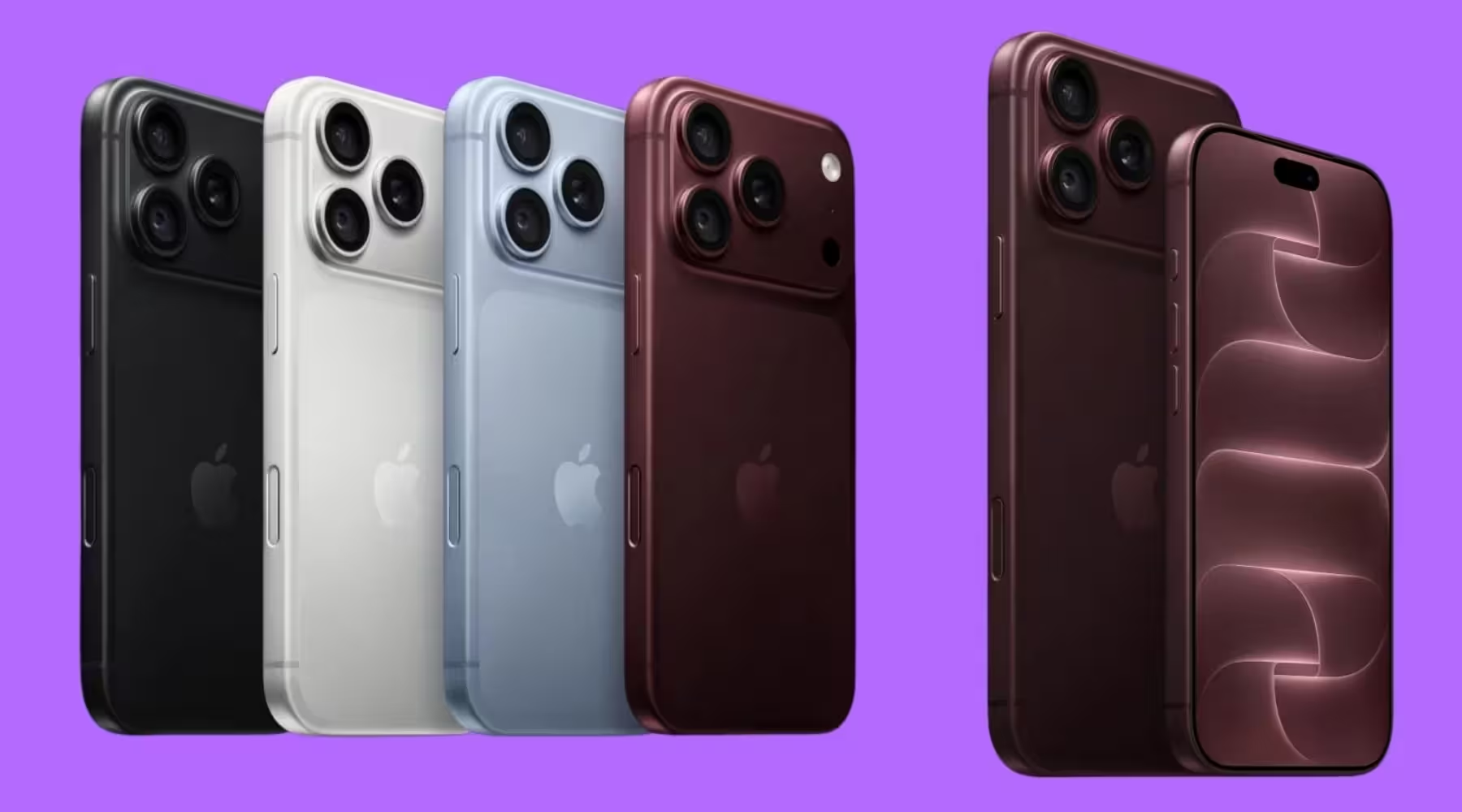
The iPhone 18 Pro features a 6.3-inch display, while the iPhone 18 Pro Max has a larger 6.9-inch Super Retina XDR panel. Both displays support ProMotion with refresh rates of up to 120Hz.
The overall design has not changed dramatically, but Apple has redesigned Dynamic Island. The updated version can display up to three Live Activities simultaneously, offering more information about navigation, music playback and live sports scores at a glance.
Both phones use an aluminium unibody design, Ceramic Shield on the back and Ceramic Shield 2 on the front. Apple claims the front glass is three times more scratch-resistant than the glass used on the iPhone 16 Pro.
The available colours include Black, Silver, Glacier and Burgundy. Burgundy is clearly the signature colour of this generation and offers the most immediately recognisable visual difference compared with previous iPhones.
Full details about the displays, design and colours are available on the official iPhone 18 Pro page.
A20 Pro: The First 2nm iPhone Chip
Both iPhone 18 Pro models are powered by the A20 Pro chip, manufactured using a 2nm process. It combines a six-core CPU, a seven-core GPU with Neural Accelerators and dual 16-core Neural Engines.
Apple says the A20 Pro CPU is up to 20 percent faster than the A19 Pro, while memory bandwidth has increased by as much as 50 percent. The extra bandwidth will have a limited effect on ordinary apps, but it should prove useful when running demanding AI models directly on the device.
Apple has also adopted an M-series-inspired packaging design that places the processor and memory side by side. This arrangement improves heat transfer and allows the chip to maintain peak performance for longer periods.
A Three-Times-Larger Vapour Chamber, Not Three Times the Cooling Power
One inaccurate claim in the original source suggested that Apple compared the iPhone 18 Pro Max cooling system with the standard iPhone 17. That is not the case.
Apple says the next-generation vapour chamber has three times the surface area of the one used in the iPhone 17 Pro. Combined with more thermally conductive materials and the redesigned A20 Pro package, the system delivers up to 40 percent better sustained performance than the iPhone 17 Pro.
The distinction matters. Apple is not claiming that the phone has three times the cooling performance. It is saying that the vapour chamber has three times the surface area. Independent testing will ultimately reveal how much of a difference this makes during prolonged gaming, video editing and AI workloads.
Variable Aperture Brings Real Optical Control to the iPhone Camera
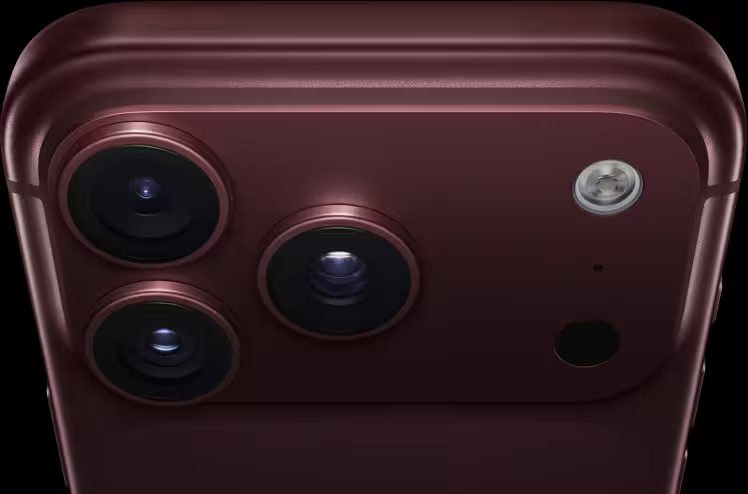
The most important technical upgrade in the iPhone 18 Pro is its 48MP Fusion Main camera with variable aperture.
The physical aperture can move between four settings:
- f/1.48 for maximum light intake
- f/1.8 for everyday photography
- f/2.8 for greater depth of field
- f/4.0 for keeping more of the scene in focus
Apple claims that low-light performance has improved by approximately 50 percent.
The advantages are not limited to night photography. By changing the physical aperture, users can control depth of field more naturally and decide how much of the foreground and background should remain in focus without relying entirely on software-generated blur.
The new Pro Controls interface also provides manual access to aperture, shutter speed and white balance, alongside a live histogram. These features move the iPhone closer to the level of control offered by dedicated cameras, although real-world image quality will need to be assessed through independent reviews.
The ultrawide and telephoto cameras also use 48MP sensors. The telephoto camera provides equivalent focal lengths of 100mm and 200mm for 4x and 8x optical-quality zoom.
At the front, an 18MP Center Stage camera can automatically adjust framing according to the number and position of people in the shot.
For video creators, Apple continues to offer 4K recording at 120fps, ProRes RAW, Apple Log 2 and Genlock for synchronising multiple cameras. Cinematic effects can also be applied or adjusted after a video has been recorded.
Faster Charging and the Best Battery Life on an iPhone
The iPhone 18 Pro Max offers up to 45 hours of video playback, six hours more than the iPhone 17 Pro Max. The smaller iPhone 18 Pro reaches up to 36 hours.
With a compatible 60W or higher power adapter, both devices can charge from zero to 50 percent in approximately 15 minutes. MagSafe and Qi2 wireless charging are supported at up to 25W.
Both phones are available with 256GB, 512GB, 1TB or 2TB of storage. Starting prices have increased by $100 compared with the previous generation.
| Storage | iPhone 18 Pro | iPhone 18 Pro Max |
|---|---|---|
| 256GB | $1,199 | $1,299 |
| 512GB | $1,399 | $1,499 |
| 1TB | $1,799 | $1,899 |
| 2TB | $2,399 | $2,499 |
Preorders begin on September 12, with general availability scheduled for September 18. Full pricing is listed on the official Apple Store.
iPhone Duo: Apple’s First Foldable Starts at $1,999
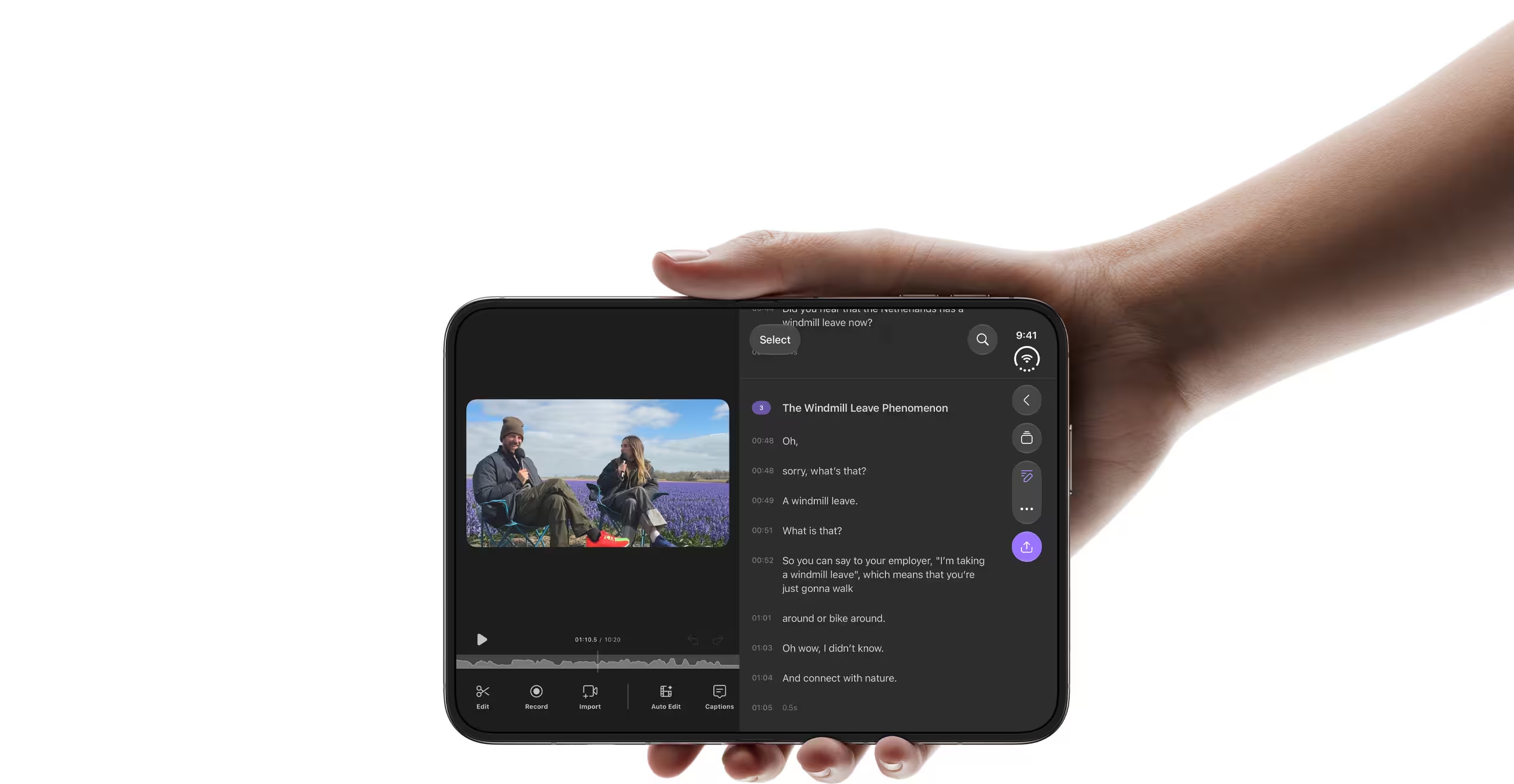
The biggest announcement of the event was the iPhone Duo.
Apple’s first foldable smartphone features a 7.6-inch Super Retina XDR inner display and a 5.4-inch outer screen. The inner display reaches a peak brightness of 3,000 nits and uses a nano-texture finish to reduce glare.
The frame and hinge cover are made from Grade 5 titanium, while the device carries an IP68 rating for water and dust resistance. Apple has also used Ceramic Shield on the front and back, along with a scratch-resistant coating on the inner display.
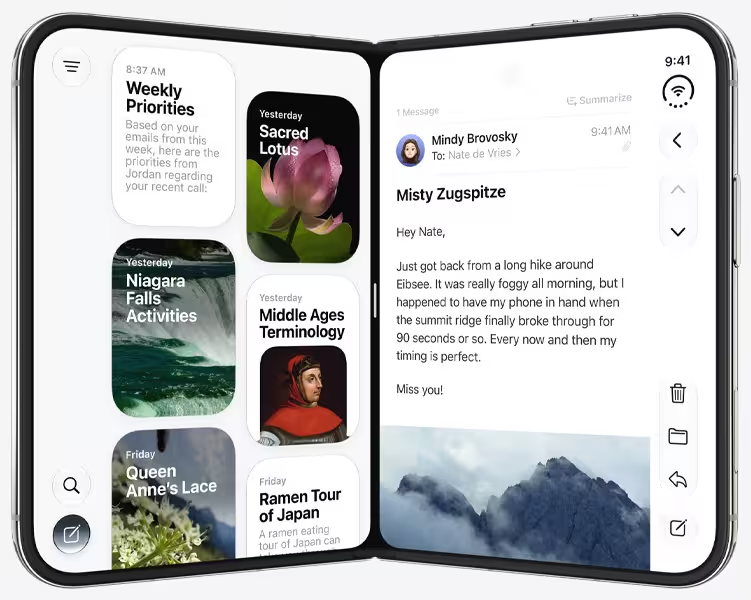
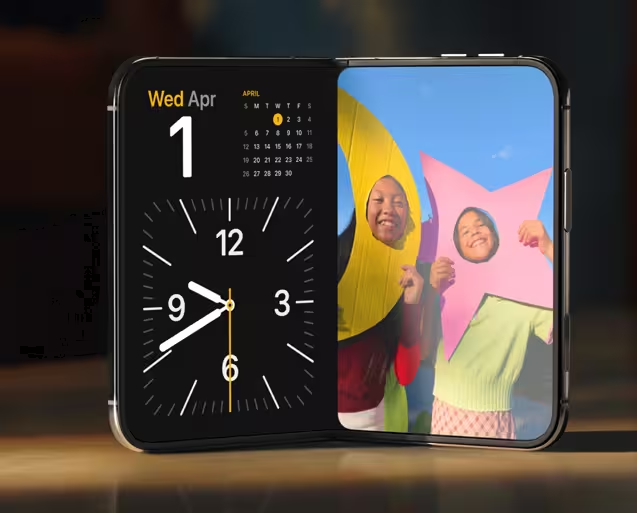
The iPhone Duo can be used in open, closed, landscape, portrait, seated and standing positions. In landscape orientation, users can run two apps side by side. In portrait mode, a video can remain visible at the top while another app runs underneath it.
It would therefore be unfair to describe the device’s software features as little more than a bedside clock. Apple has developed capabilities including Split View, side-by-side multitasking, Duo Preview, dual-display FaceTime and a StandBy mode that works even when the phone is not charging.
More details are available on the official iPhone Duo page.
Under-Display Camera and Apple Pencil Support
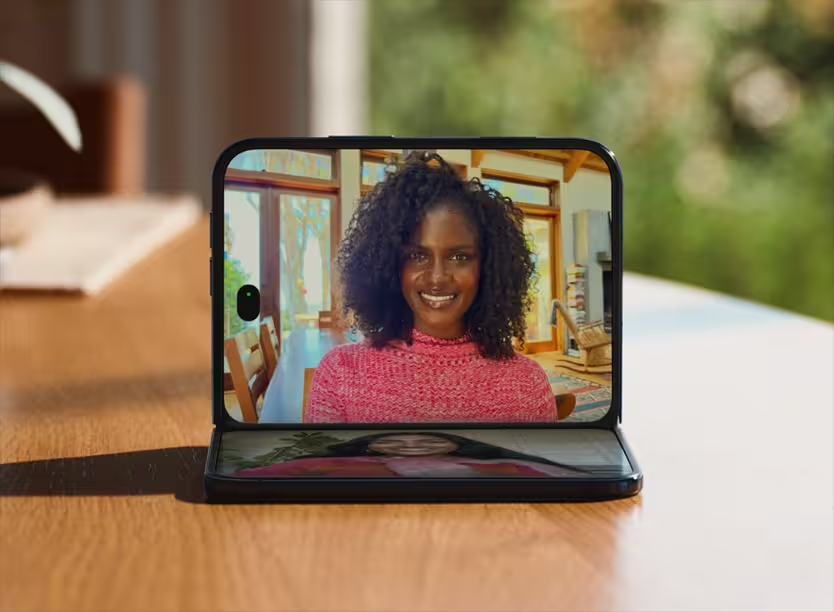
The inner display includes an under-display FaceTime camera that remains hidden when it is not in use. The outer display has a separate 12MP Center Stage selfie camera.
On the back, the iPhone Duo carries two 48MP cameras: a Fusion Main camera and a Fusion Ultra Wide camera.
There is no dedicated telephoto lens. The device instead offers 2x optical-quality zoom by cropping into the main sensor. The absence of a telephoto camera is arguably one of the phone’s biggest shortcomings, particularly on a device starting at nearly $2,000.
The iPhone Duo will also support the USB-C Apple Pencil, although stylus functionality is expected to arrive through a later update.
Touch ID Returns, but Face ID Is Gone
The iPhone Duo does not support Face ID. Instead, Apple has integrated Touch ID into the side button.
According to the company, this provides a consistent authentication method whether the device is open or closed. Several competing foldable phones also use side-mounted fingerprint sensors, so the decision is not necessarily evidence of an engineering failure.
Nevertheless, removing Face ID from the most expensive iPhone ever made will feel like a step backwards for some buyers.
The iPhone Duo uses the same A20 Pro chip as the Pro models, along with a vapour-chamber cooling system and a dual-battery design. Apple claims up to 31 hours of video playback when using the inner display and up to 44 hours with the outer screen.
The device is eSIM-only worldwide, with no physical SIM slot in any market. This could make it considerably more difficult to use in countries where eSIM support remains limited. Iranian buyers in particular should verify domestic operator support and registration requirements before importing the device.
The iPhone Duo is available in four storage configurations:
| Storage | Price |
|---|---|
| 256GB | $1,999 |
| 512GB | $2,199 |
| 1TB | $2,599 |
| 2TB | $3,199 |
Preorders begin on October 16, with retail availability scheduled for October 23. The two available colours are Star White and Night Sky.
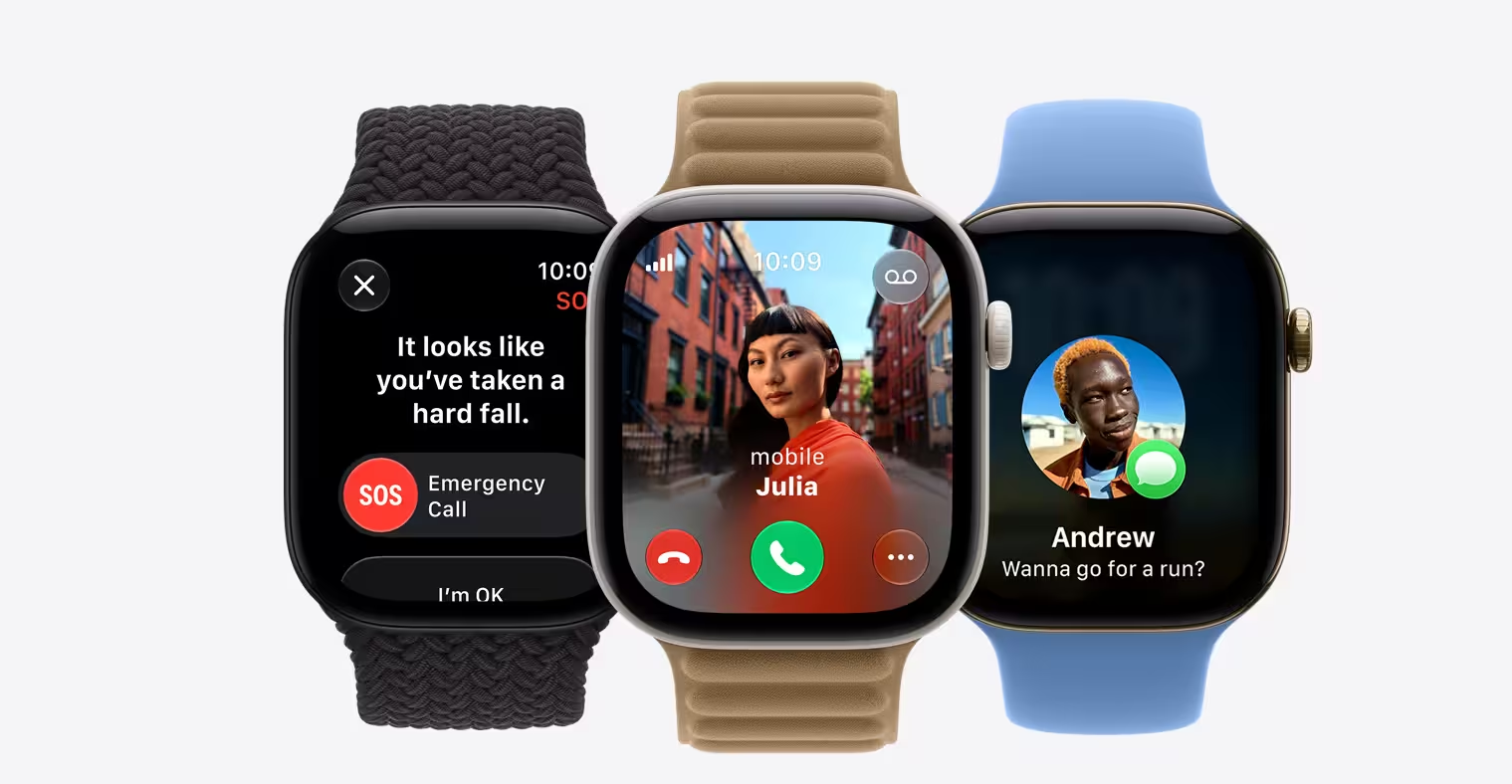
Apple Watch Series 12: New Health Sensors and the Return of Ceramic
Apple Watch Series 12 introduces a new Health Sensing System built around redesigned optical and electrical sensors.
The new optical sensor can measure heart rate every five seconds throughout the day. More frequent heart-rate variability readings are also used to assess stress, recovery and the new Readiness score.
The Health Age feature combines information such as VO2 max, sleep quality and heart-rate variability to estimate the user’s biological health age. Apple says this feature will become available later in 2026.
Audio Intelligence uses the watch’s microphone and the S11 chip to analyse certain sounds in the user’s surroundings. According to Apple, raw audio is not stored, while Live Rewind transcripts and Siri Recaps are protected with end-to-end encryption when synced through iCloud.
Apple Watch Series 12 offers up to 24 hours of normal use and up to 38 hours in Low Power Mode. A 15-minute charge can provide enough power for approximately 12 additional hours of use.
The aluminium model starts at $399. Ceramic versions in Pearl White and Night Blue begin at $899. Full specifications are available on Apple’s website.
Apple Watch Ultra 4: Satellite Connectivity on Your Wrist
Apple Watch Ultra 4 brings the same S11 chip and updated health capabilities to a more rugged titanium body. It is available in Natural Titanium and Black Titanium, while the display is protected by sapphire crystal.
Its most important new feature is built-in satellite connectivity.
When cellular and Wi-Fi networks are unavailable, users can send messages, share their location through Find My or contact emergency services using Emergency SOS via satellite.
The Ultra 4 offers up to 50 hours of normal use and as much as 84 hours in Low Power Mode. Its Max Extended Workout setting can record up to 45 hours of activity, making it suitable for ultramarathons and multi-day outdoor events.
Pricing starts at $799.
AirPods 5: Stronger Noise Cancellation at a Lower Price
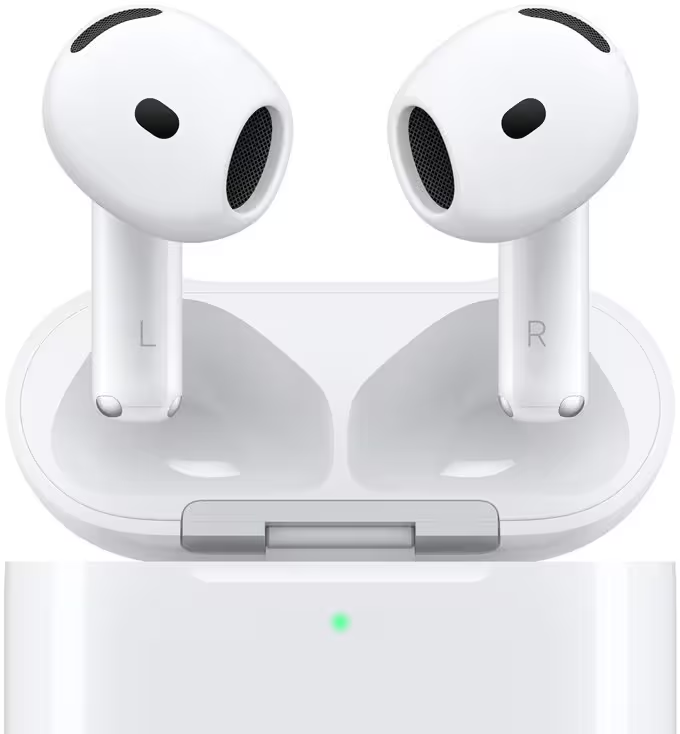
AirPods 5 retain an open-ear design without silicone tips, but Apple has completely redesigned their internal acoustic architecture.
The company claims Active Noise Cancellation is up to 1.5 times stronger than on AirPods 4 with ANC. Both versions include the H2 chip, Active Noise Cancellation, Transparency mode, Adaptive Audio, Conversation Awareness, Personalised Spatial Audio, Siri AI and Live Translation.
The base model comes with a USB-C charging case, provides up to four hours of listening with ANC enabled and costs $129.
The $149 version adds a wireless charging case, volume controls through a swipe gesture on the stem, five hours of listening with ANC and a built-in case speaker for Find My. Total battery life with the wireless charging case reaches up to 22 hours.
Both versions will be available from September 18. Additional information can be found on the AirPods 5 product page.
What Does the Absence of the Standard iPhone 18 Mean?
For the first time, Apple appears to be splitting its main iPhone launch across two separate periods. The September event featured only the Pro models and the iPhone Duo, while the standard iPhone 18 was absent.
Reports indicate that the regular iPhone 18 may launch in early 2027, although Apple has not confirmed an official date.
The strategy allows Apple to focus the autumn sales season entirely on more expensive devices. It could also increase the average selling price of the iPhone during one of the company’s most important financial quarters.
The $100 price increase on the Pro models reinforces this strategy. The iPhone 18 Pro now starts at $1,199, while entry into Apple’s new foldable category costs almost $2,000.
Final Verdict: One Truly New Product in an Otherwise Evolutionary Event
The iPhone 18 Pro and Pro Max are more capable smartphones, but most of their improvements are evolutionary rather than revolutionary.
Variable aperture, longer battery life, faster charging and the A20 Pro chip will matter to photographers, filmmakers and demanding professional users. For most iPhone 17 Pro owners, however, these upgrades may not provide a compelling reason to replace their current device.
The iPhone Duo is a different story.
It represents the biggest change to the iPhone’s physical form since the original model. Apple Pencil support, side-by-side apps, an under-display camera and multiple viewing positions make it something between an iPhone and an iPad mini.
At the same time, the $1,999 starting price, lack of a telephoto camera, removal of Face ID and complete reliance on eSIM are significant compromises. The iPhone Duo is less of a mainstream smartphone and more of a technology showcase aimed at buyers willing to pay heavily for early access to a new category.
It would be inaccurate to describe Apple’s latest event as a complete repetition of previous years, because the iPhone Duo introduces a genuinely new form factor to the company’s ecosystem.
However, Apple’s late entry into the foldable market and the device’s exceptionally high price demonstrate that the company still prefers to balance the risks of innovation with substantial profit margins.
Independent reviews will now determine whether the iPhone Duo marks the beginning of a new chapter for Apple or remains an expensive experiment designed to measure the market’s appetite for foldable iPhones.

“I cover emerging technologies, digital innovation, and the intersection of tech and everyday life. My goal is to make complex trends accessible and inspiring.”

Discussion
Leave a Comment
Comments (6)
Feels overhyped but ok. No Face ID on a $2k phone? come on, and eSIM only is a travel nightmare. Waiting for reviews.
Pretty balanced take. One real new product, rest evolutionary. Apple chasing profit margins, not surprise.
I used a foldable last year, hinge got flaky after 6 months. If Apple fixed that, the Duo could be great, but $2k is steep, imho
Is the under-display camera actually usable or just a marketing stunt? also, no telephoto on the Duo??
Makes sense tbh. Pro models look solid, but $100 hike and no base iPhone now? smh
Wow, Apple finally shipped a foldable iPhone... but $1,999? wild. Loving the tech, price tho hurts, will people buy?