
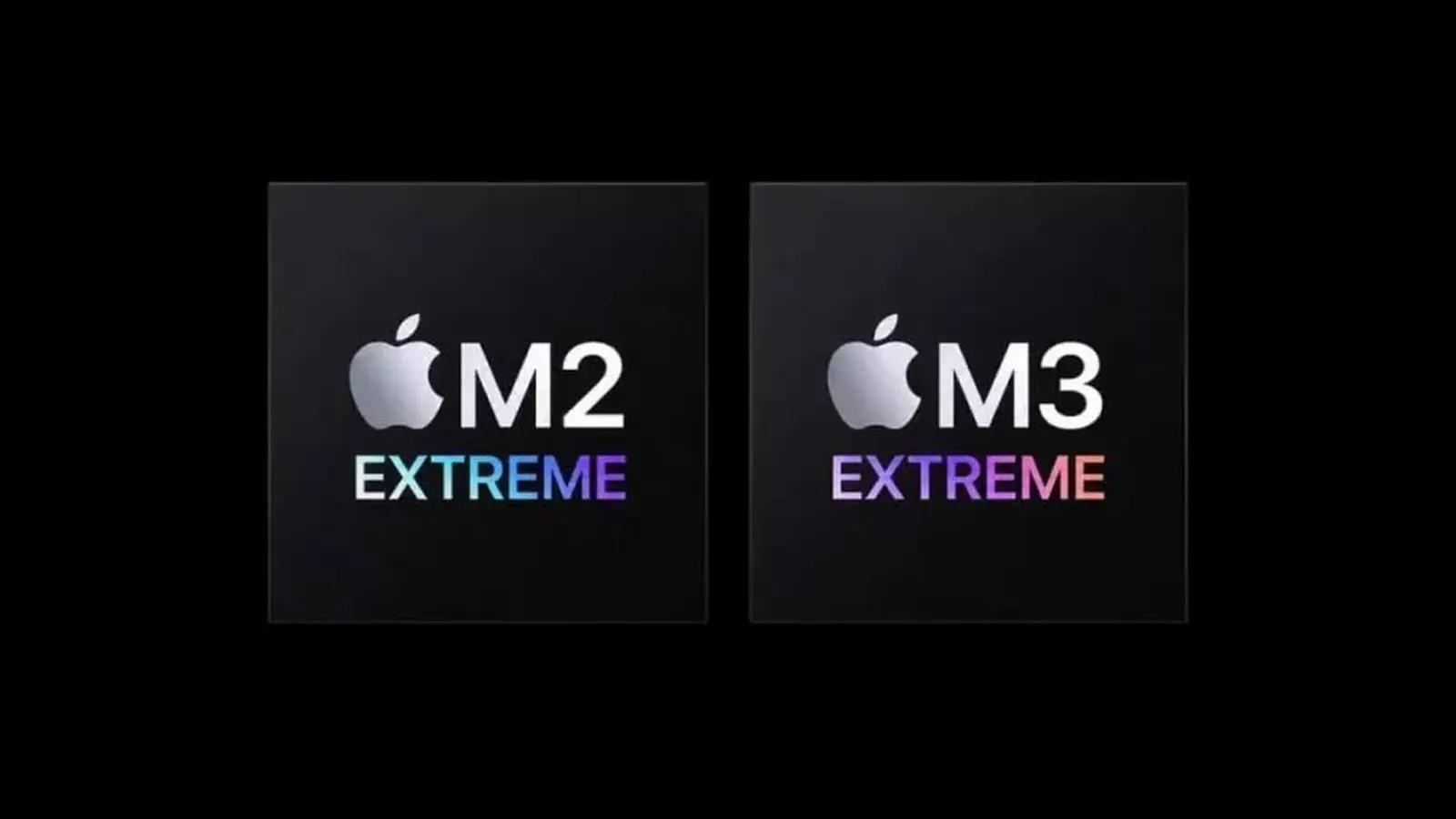
The most powerful chips Apple never released were more than a rumor. They were a promise of raw computational muscle—M2 Extreme and M3 Extreme—that aimed to outstrip the company’s Ultra-class silicon by doubling CPU and GPU cores. Then the plans were shelved.
Inside Apple’s shelved Mac Pro gambit
Bloomberg’s Mark Gurman laid out the internal thinking: Apple briefly pushed to build an Extreme family for future Mac Pro systems, but production costs and a bleak demand forecast put an end to the idea. It wasn’t a technical showstopper. The Extreme parts would have been logical next steps, designed to deliver performance far beyond Ultra. The business case simply didn’t hold up.
There’s more to the story than chips. In March, Apple paused Mac Pro production after roughly 20 years of continuous sales and quietly removed the machine from its online store. Internal testing, however, shows Cupertino explored backups before making that decision. Two unreleased prototypes—codenamed J170 and J190—were part of Apple’s contingency playbook.
J170 is an eyebrow-raiser: an Intel-based Mac Pro experiment conducted while Apple was still migrating its lineup to Apple silicon. Why test Intel at all? Because some professional customers remain tied to legacy workflows and specialized hardware that still run best on x86. J190, on the other hand, was aligned with Apple’s silicon roadmap; it was slated to ship with an M3 Ultra variant alongside a refreshed Mac Studio in early 2025.

So why pull the plug? High wafer and packaging expenses. Narrow market appetite for ultra-high-end tower machines. Apple’s calculus favored consolidating engineering effort into fewer, more profitable platforms. The Mac Studio is now the company’s focus for workstation-class buyers, and internal signals point to a Mac Studio refresh powered by M5 Ultra, expected later this year.
Will Mac Pro return? Not likely in its old form. Apple appears to be betting that modular tower workstations are a shrinking segment and that concentrated power in smaller, integrated systems makes more sense commercially and operationally. For pros who want maximum compute, Apple plans to scale up the Studio line rather than revive the classic Pro tower.
It’s a reminder that even the most ambitious hardware ideas can be trimmed not by engineering limits but by market reality. Ambition met accounting—and accounting won.


“I love exploring gadgets, apps, and trends that redefine how we connect, work, and play in a digital world.”

Discussion
Leave a Comment
Comments
No comments yet. Be the first.