
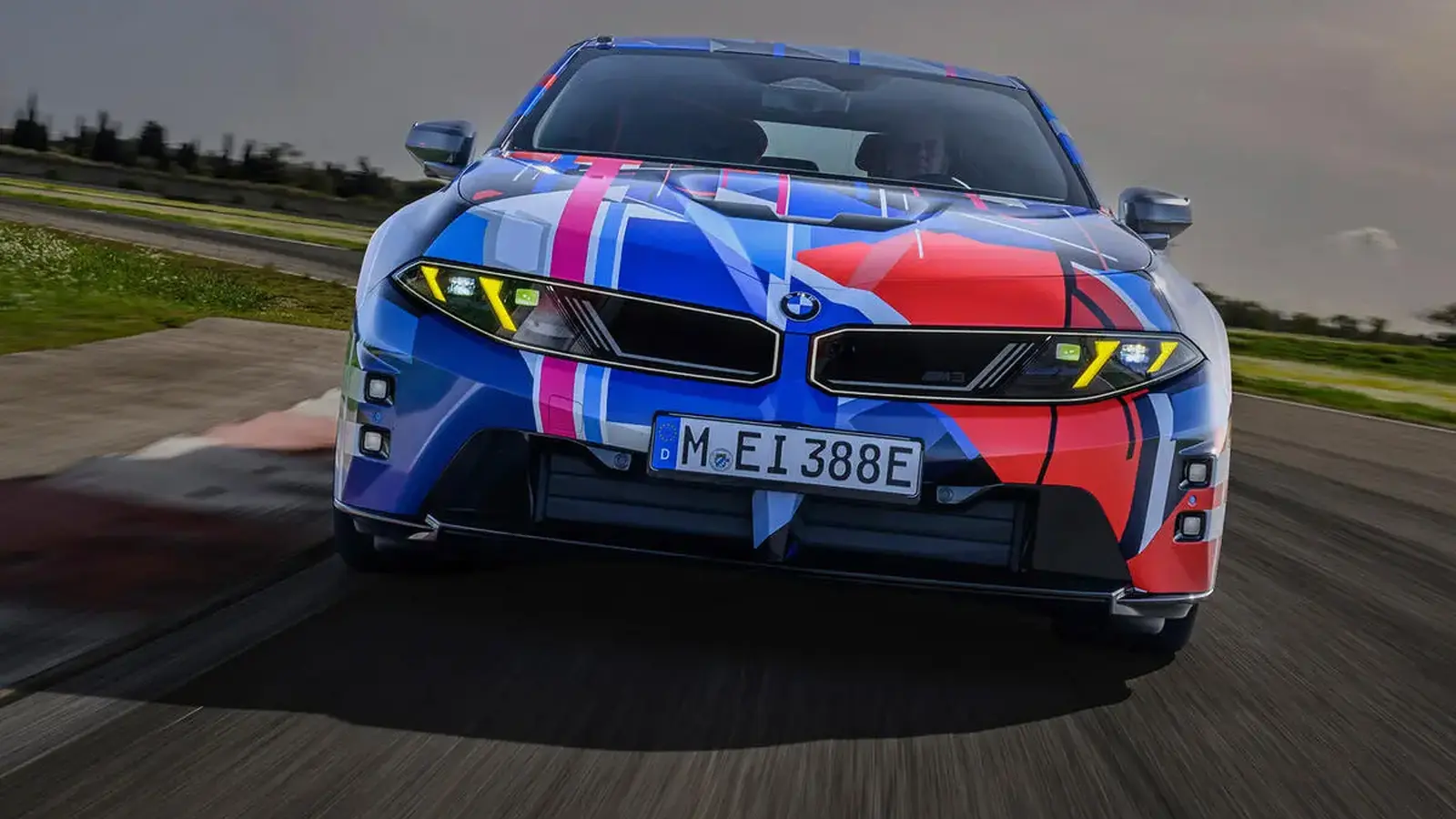
BMW is preparing its first all-electric M3, a bespoke BMW M model based on the new-generation i3, and Autocar has sampled a pre-production example at the Miramas test circuit in France. The prototype uses four independent electric motors and is rated at about 838 horsepower, with BMW engineers describing very rapid, wheel-by-wheel torque control and an estimated 0 to 100 km/h time under three seconds.
Powertrain, charging and regenerative braking
The headline technical feature is a four-motor layout, each motor driving a single wheel. BMW engineers give the front-axle motor group an output of roughly 644 hp and the rear-axle group roughly 751 hp, but they caution those figures do not imply the two axle totals can simply be summed for continuous simultaneous output. Peak torque is cited at about 1,200 Nm. The car uses a single-speed reduction gearbox with six simulated "steps" intended to reproduce the shift feel of a multi-gear transmission; the driver can feel different throttle and brake responses depending on the selected step.
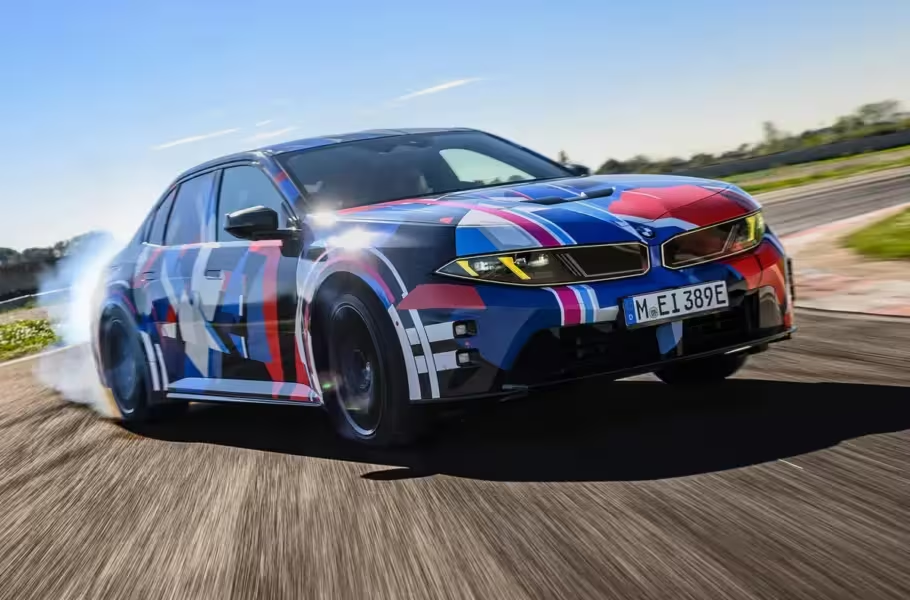
Battery capacity is described as more than 100 kWh. Maximum DC charging power is listed at up to 450 kW. A significant technical detail is a regenerative braking system capable of recovering up to 540 kW; using the four motors for energy recuperation also gives very fine control of braking force at each wheel. During Autocar's hot-lap run the front friction-disc temperatures were measured at under 100 degrees Celsius after five fast laps, compared with the several-hundred-degree peaks possible with conventional track use of friction brakes.
Chassis, suspension and packaging
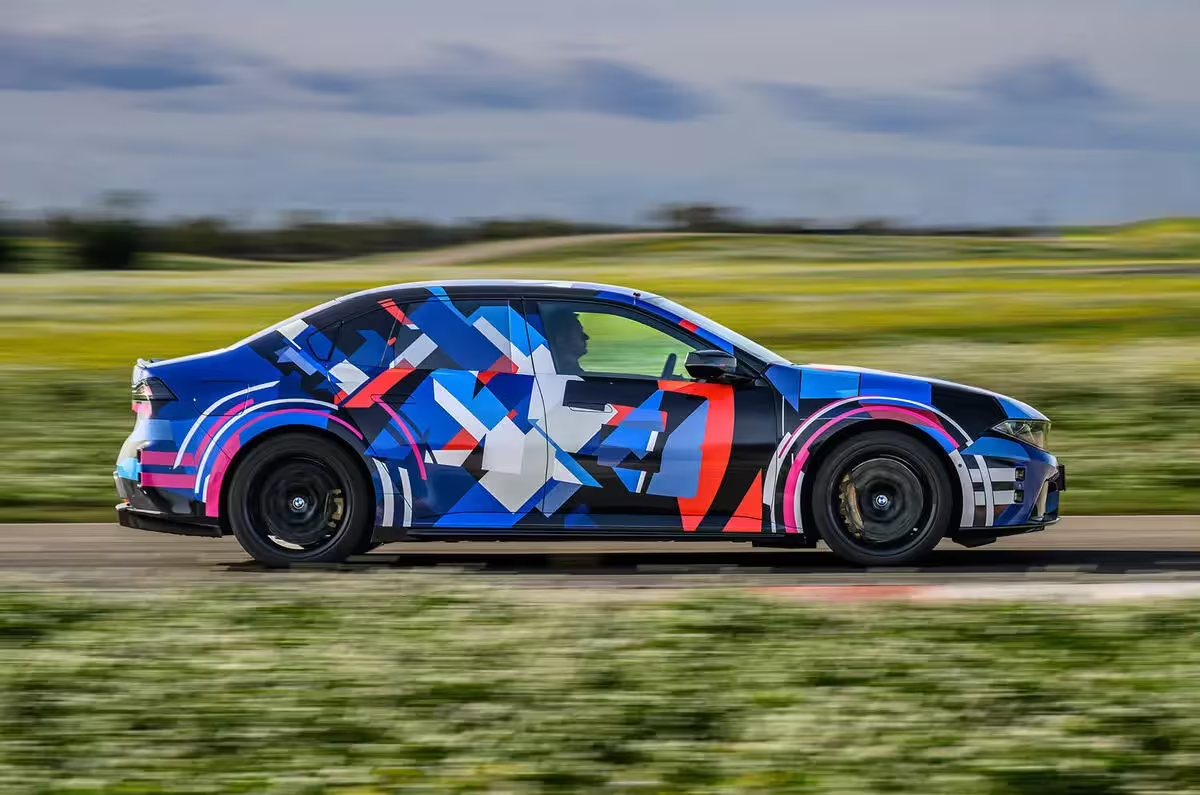
BMW M says the M3 Electric receives extensive structural and suspension changes to offset the mass of the battery pack and four motors. The M3 gains roughly 10 mm wider fenders on each side compared with a regular i3, reinforced underbody plates, stiffer battery-to-chassis attachments and new front and rear bulkhead reinforcements. The suspension is largely redesigned: MacPherson struts up front, a five-link arrangement at the rear and adaptive dampers to control body motions. Autocar tested the car on Michelin Pilot Sport 6 tyres with 20-inch wheels; 21-inch rear wheels will be an option.
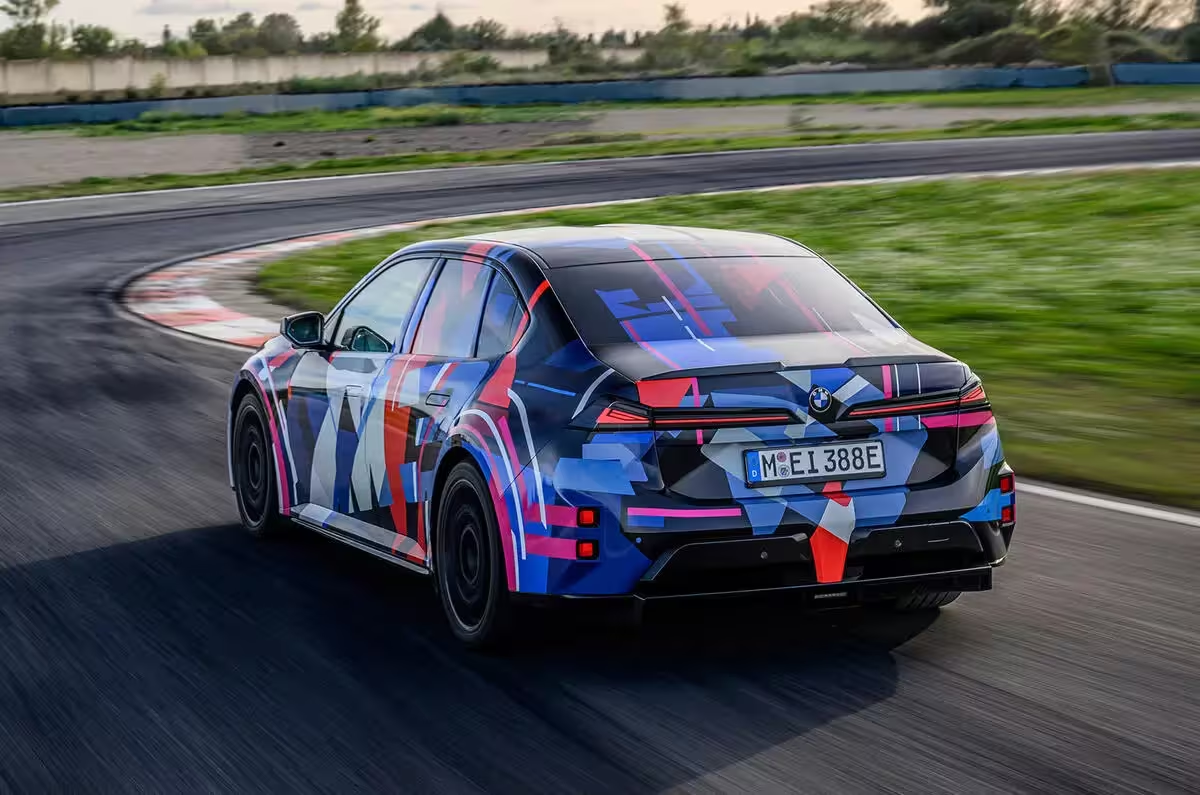
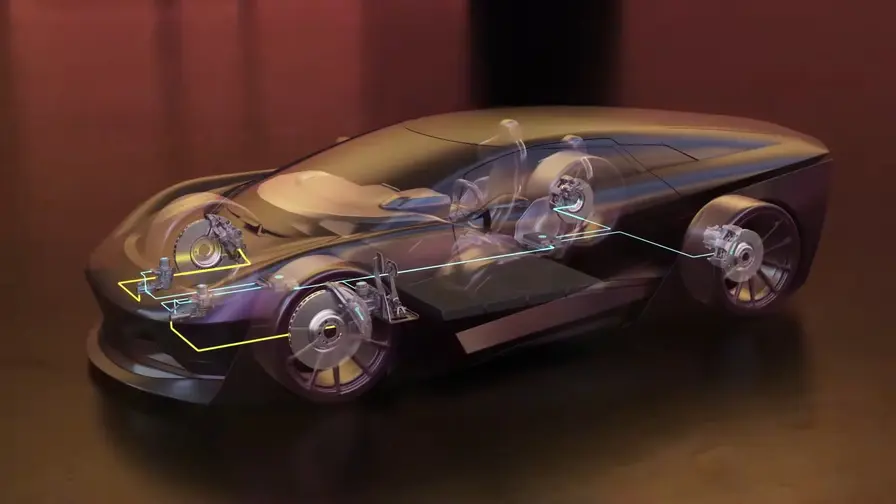
BMW also provides a rear-drive mode that lets drivers experience handling closer to the brand's conventional M cars by biasing drive and steering characteristics toward the rear axle. The four-motor layout enables very quick torque vectoring that, according to Autocar's Mat Prior, makes the car feel unusually responsive entering and exiting corners while largely eliminating perceptible delay between driver inputs and drivetrain reaction.
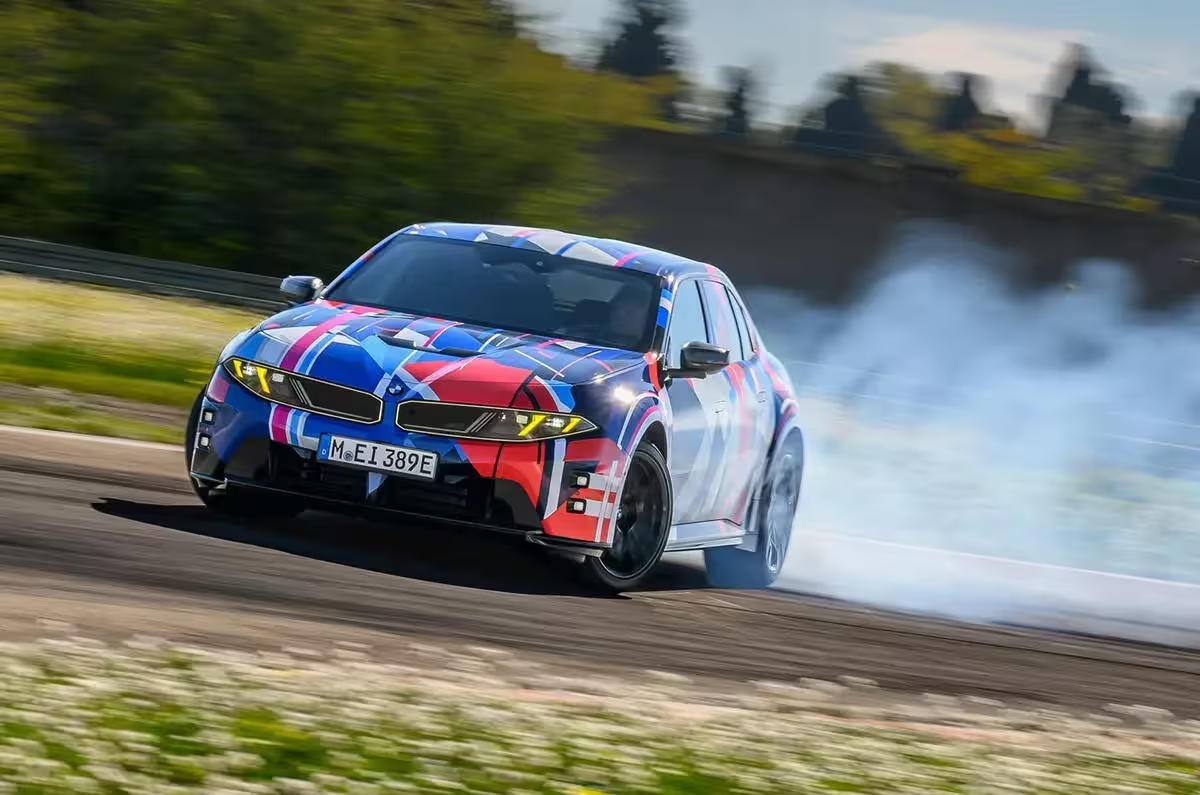
Estimated curb weight is around 2,400 kg. Range is given at about 644 km, although Autocar's report does not specify the test cycle used for that estimate. Top speed is indicated as above 250 km/h and 0–100 km/h is stated as under three seconds, both listed as provisional estimates for the pre-production car.
To heighten driver engagement, BMW has implemented six virtual gearing steps and an artificial engine sound that rises from a lower bass tone at low simulated steps to a louder sound at higher steps; both features can be switched off.
BMW intends first customer deliveries in June 2027, with a tentative price around £100,000, while final production specifications and official pricing have not yet been confirmed.
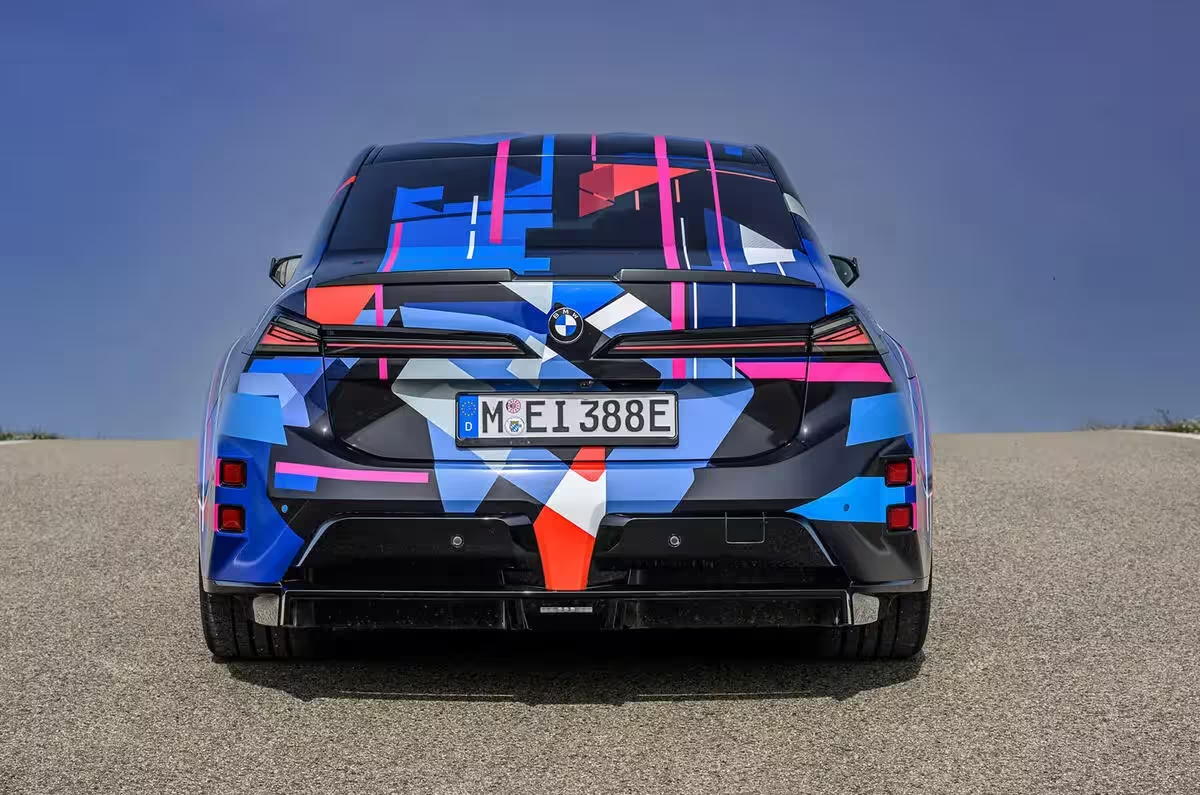
Autocar's first drive notes that beyond raw acceleration the prototype's defining characteristics are steering precision and rapid, accurate responses from the torque-control system. The writer compares the car's dynamic temperament to a mix of a Porsche 911 Turbo, an Audi R8 and a third-generation Ford Focus RS, while also observing that the vehicle's mass remains noticeable.
BMW has not published final production weights, full homologated performance figures or a complete equipment and pricing sheet for the production M3 Electric. Autocar's pre-production evaluation suggests BMW has worked to retain M-badged driving character in an electric architecture, but definitive judgment will depend on testing of the production car and release of confirmed specifications.

“I cover automotive innovation, electric vehicles, and the future of mobility — where technology meets sustainability.”

Discussion
Leave a Comment
Comments (1)
if that's real then holy... 4 motors with wheel-by-wheel torque control sounds insane, 838hp but 2400kg? hope handling isnt dead. virtual gears meh but neat.