
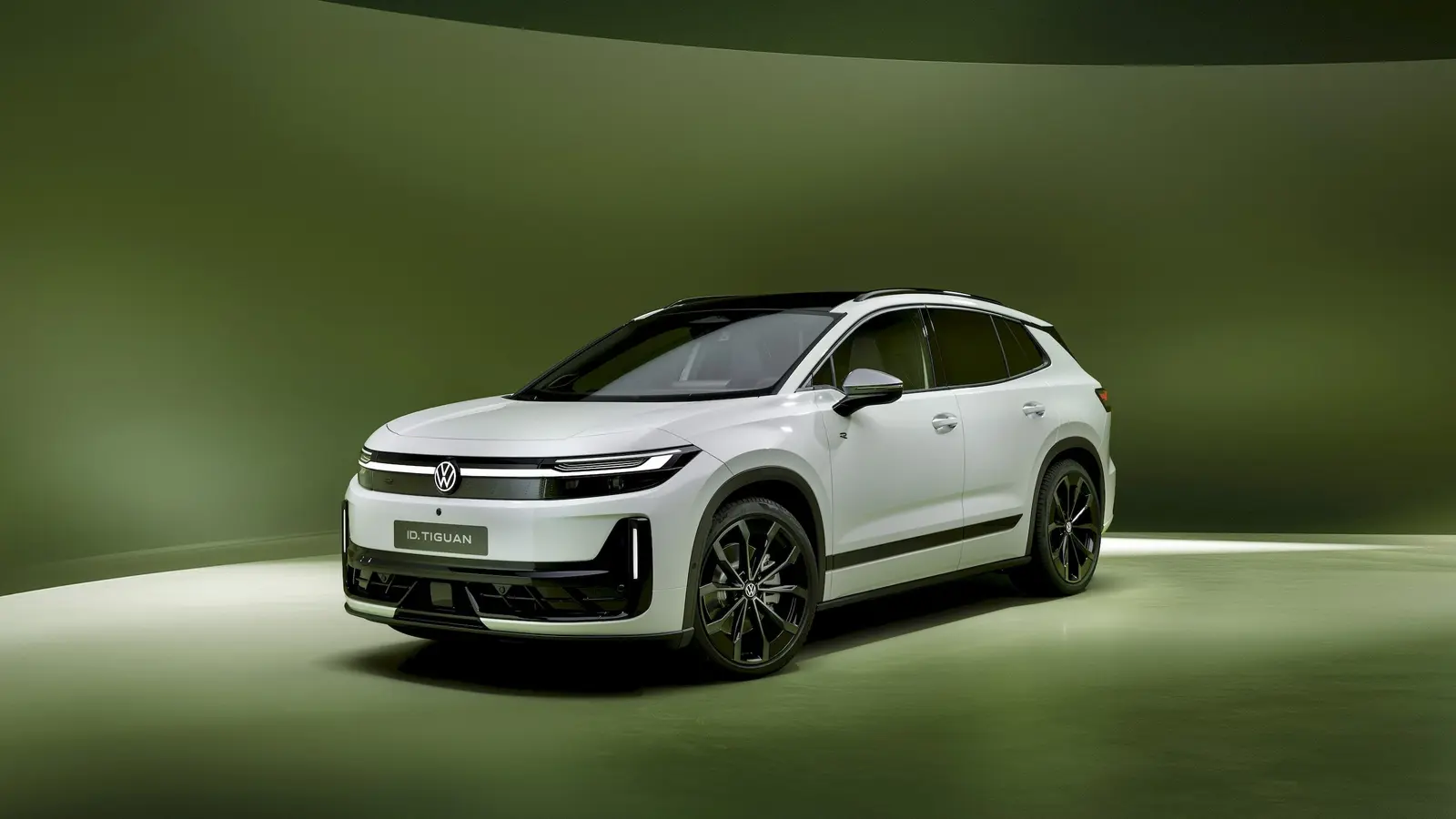
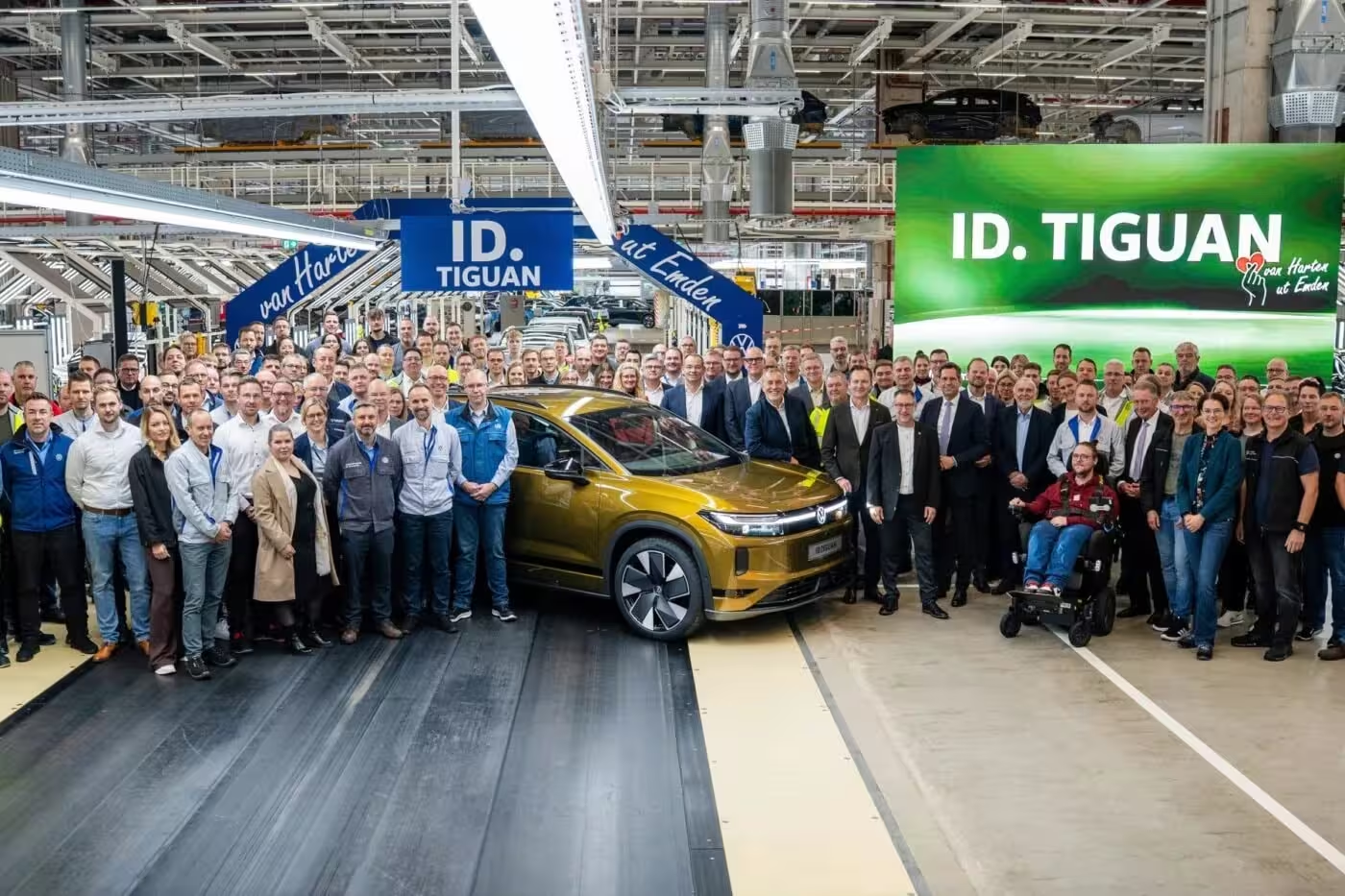
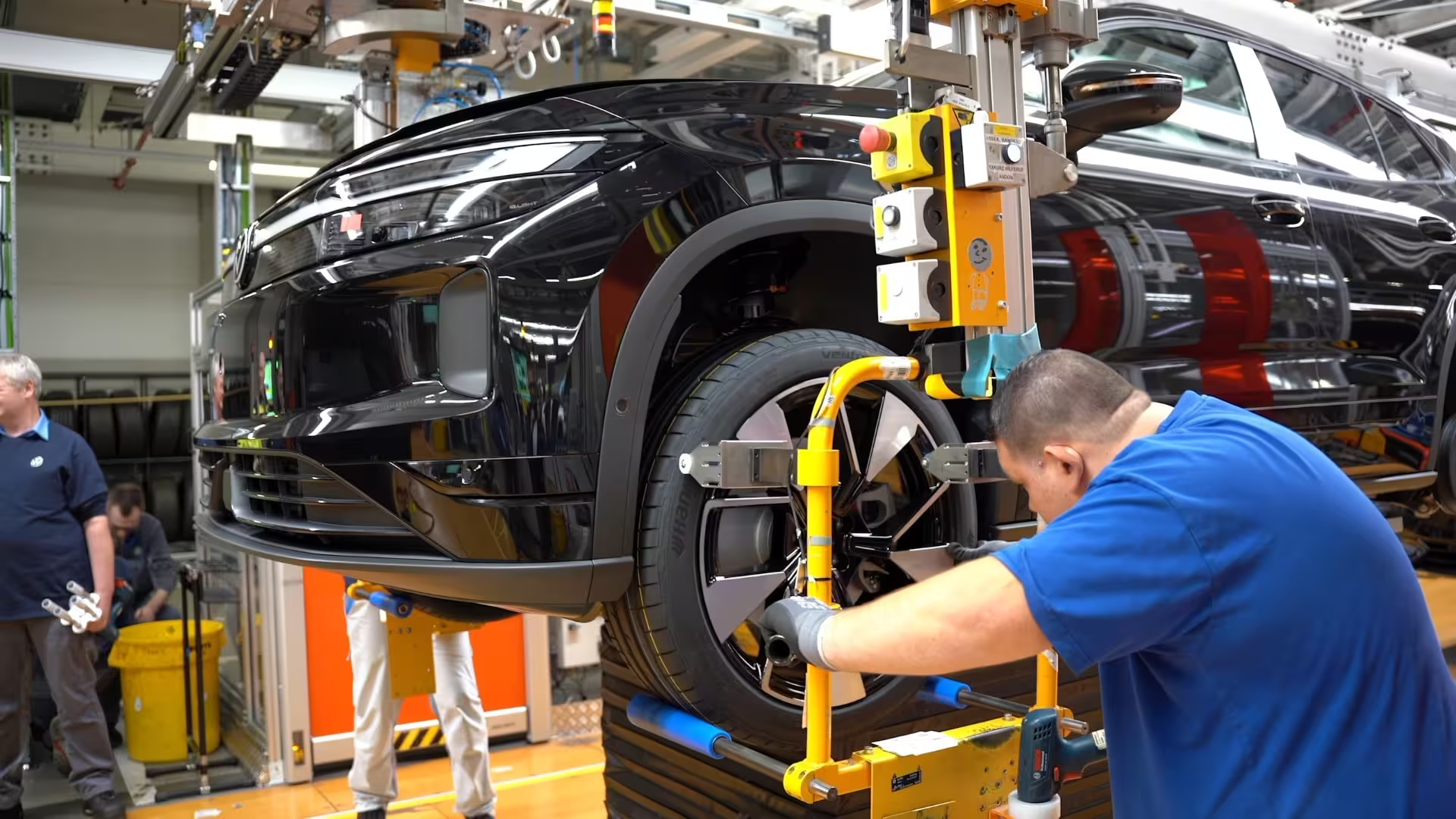
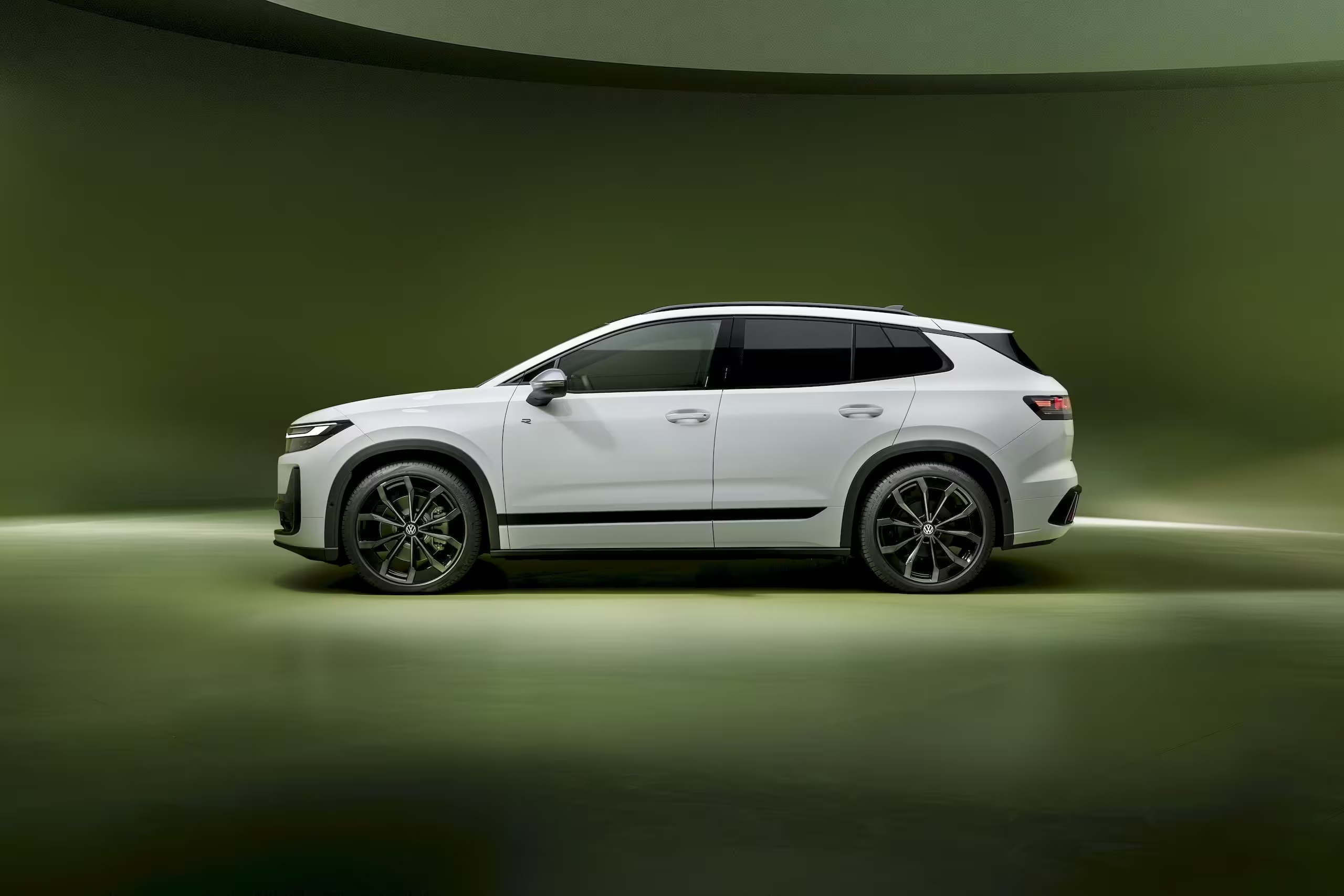
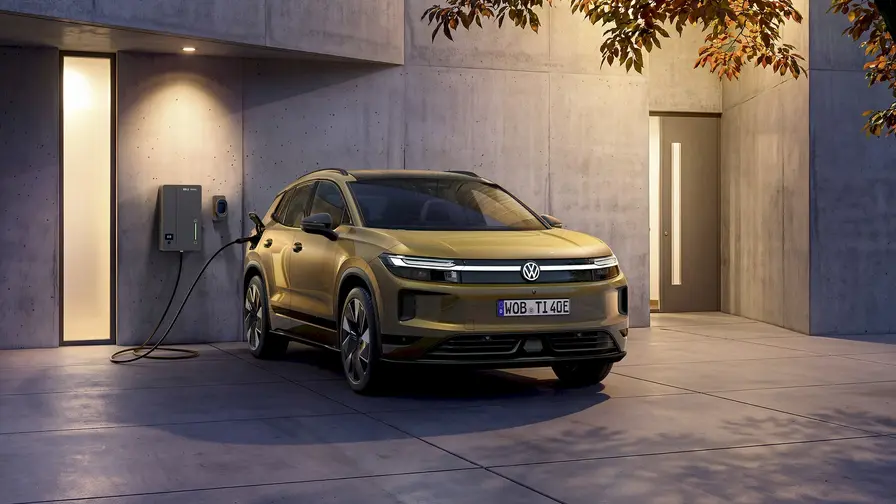
Volkswagen has begun assembly of the ID. Tiguan at its Emden factory in northern Germany. The new compact electric crossover replaces the ID.4 in the company's lineup and, Volkswagen says, the ID.5 will not return for model year 2027 because of sluggish demand in European markets. Deliveries of the ID. Tiguan are scheduled to begin in the earliest part of 2027, even as the Emden complex faces an uncertain production future under Volkswagen's latest restructuring plan.
Powertrains, range, charging and equipment
The ID. Tiguan will be offered in three powertrain configurations split between rear-wheel drive and 4MOTION dual-motor all-wheel drive. The base rear-drive specification pairs a 58-kWh lithium iron phosphate battery with a single drive unit rated at 187 horsepower. Volkswagen quotes a WLTP range of up to 450 kilometers (280 miles) for that version and a 0 to 100 km/h time of 8.5 seconds. The larger 77-kWh nickel-manganese-cobalt battery is available with either rear- or all-wheel drive. Rear-wheel drive with the 77-kWh pack is rated at 282 horsepower and up to 600 kilometers WLTP (373 miles), with a 0 to 100 km/h time of about 6.7 seconds. The 4MOTION dual-motor variant produces 295 horsepower, is quoted at 560 kilometers WLTP (348 miles) and 0 to 100 km/h in around 6.1 seconds for the European-spec model.
Volkswagen specifies peak DC charging power of up to 105 kilowatts for the LFP pack and up to 165 kilowatts for the NMC pack, and it quotes 10 to 80 percent direct-current charging times of 26 or 29 minutes. Both battery options support 11 kilowatt AC charging. Tow ratings are 1,800 kilograms (3,968 pounds) with the smaller battery and 2,000 kilograms (4,409 pounds) with the larger battery. Volkswagen lists pricing starting at 42,695 euros in Germany.
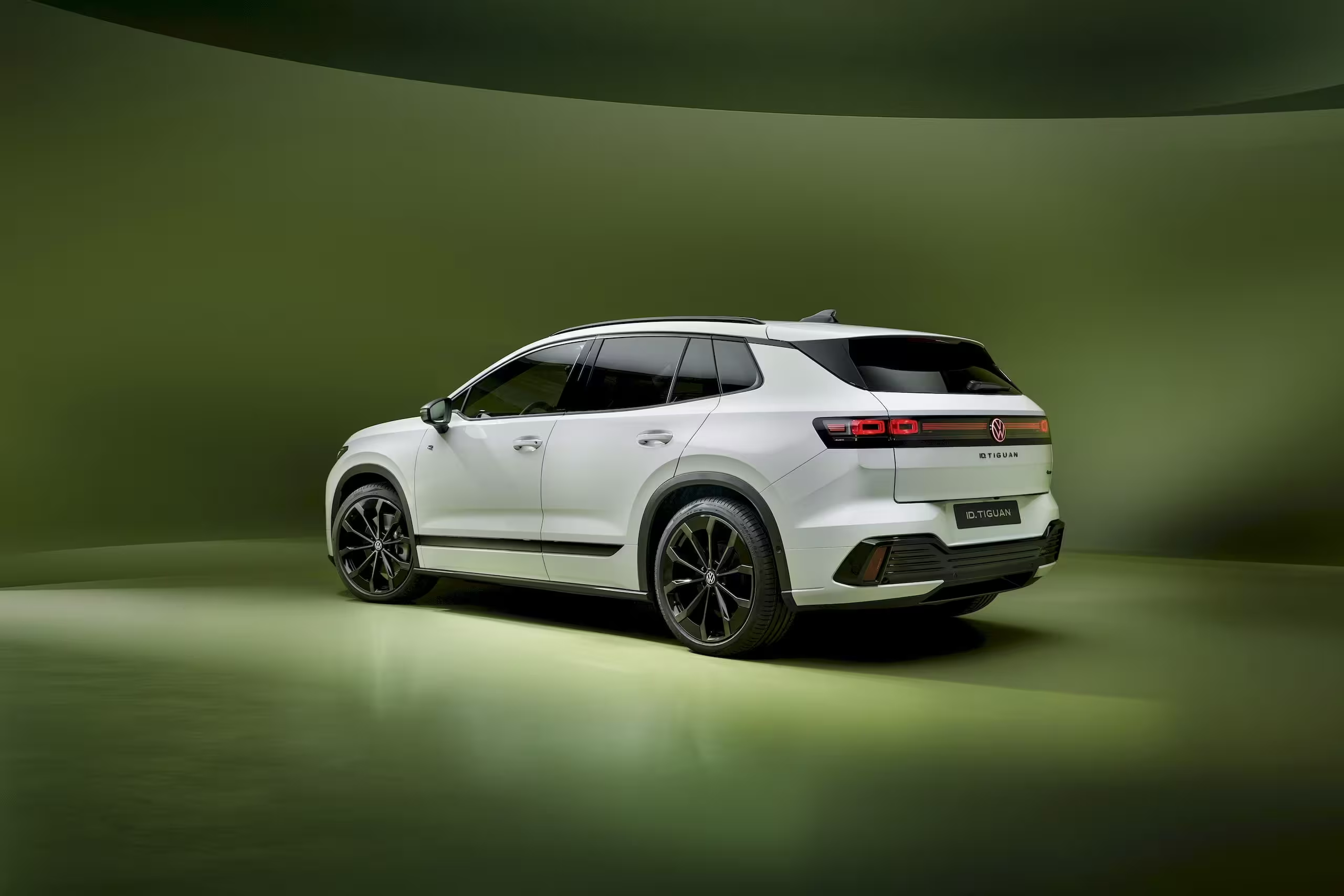
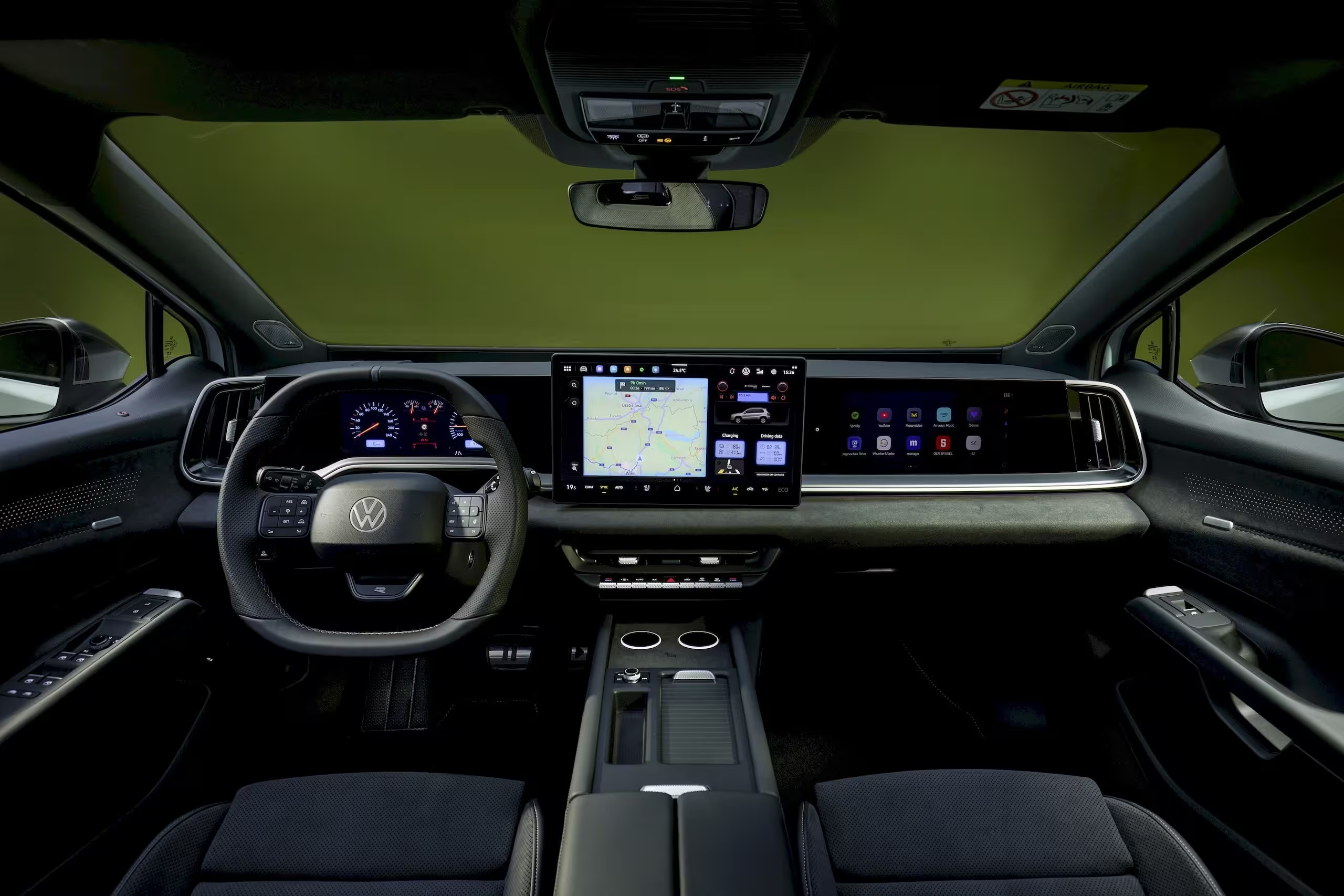
The ID. Tiguan adopts a more conventional exterior and interior layout compared with the ID.4: a more upright front end, more pronounced body surfaces and pull-type door handles instead of flush-mounted handles. Volkswagen has reintroduced some physical controls in place of earlier touch-sensitive surfaces. The instrumentation combines a 10-inch digital cluster with a 15-inch central touchscreen and an optional 12-inch passenger display. Interior practicality includes a small front storage compartment and 534 liters (18.8 cubic feet) of cargo space behind the rear seats; folding the rear seats flat expands capacity to 1,577 liters (55.7 cubic feet).
Emden plant history and production outlook
The Emden facility has produced Volkswagen models for decades, building the Beetle in the 1960s and later becoming associated with the Passat. The plant began its transition to electric vehicle production in 2020 as part of an investment totaling more than 1 billion euros in preparation for the ID.4. Volkswagen says Emden has produced more than 500,000 electric vehicles since 2022 and that the last internal-combustion vehicle left the plant in 2024.
Under Volkswagen's Future Plan 2030 strategy, the company has said it cannot guarantee production allocations for Emden and three other plants for the period 2031 to 2034. Volkswagen has signaled it must reduce excess manufacturing capacity in Europe by 500,000 vehicles, and it expects to provide more details about Emden's future by the end of June 2027. For now, Volkswagen and plant management will be watching whether the ID. Tiguan generates the production volume needed to support Emden as allocations for the 2030s are decided.

“Cars are evolving faster than ever. I cover electric vehicles, smart mobility, and the future of transportation worldwide.”

Discussion
Leave a Comment
Comments (1)
Replacing the ID.4 with a Tiguan? Sounds odd. Emden's future shaky, will that really save jobs or just reshuffle plants? curious…