
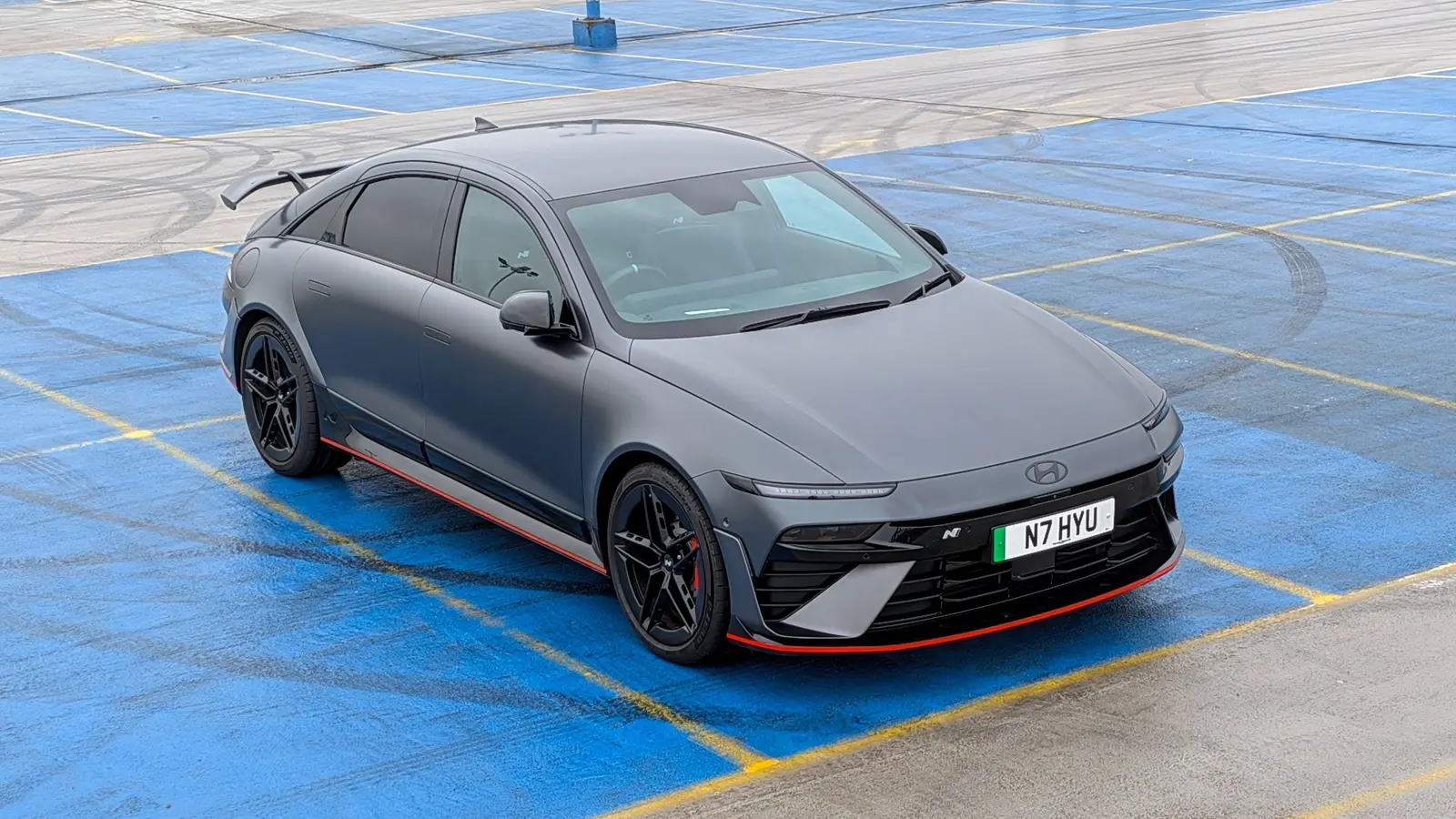
Hyundai’s N division has revised the Ioniq 6 N with chassis, cooling and software changes intended to make it faster, more engaging and more comfortable than the Ioniq 5 N.
The Ioniq 6 N keeps the same 84kWh battery and twin-motor layout but is 50kg lighter and is claimed to reach 62mph in 3.2 seconds.
The powertrain remains an 84kWh battery feeding dual motors that produce 601bhp and 770Nm with a rear bias. A red NGB button on the steering wheel unlocks an additional 40bhp for ten seconds.
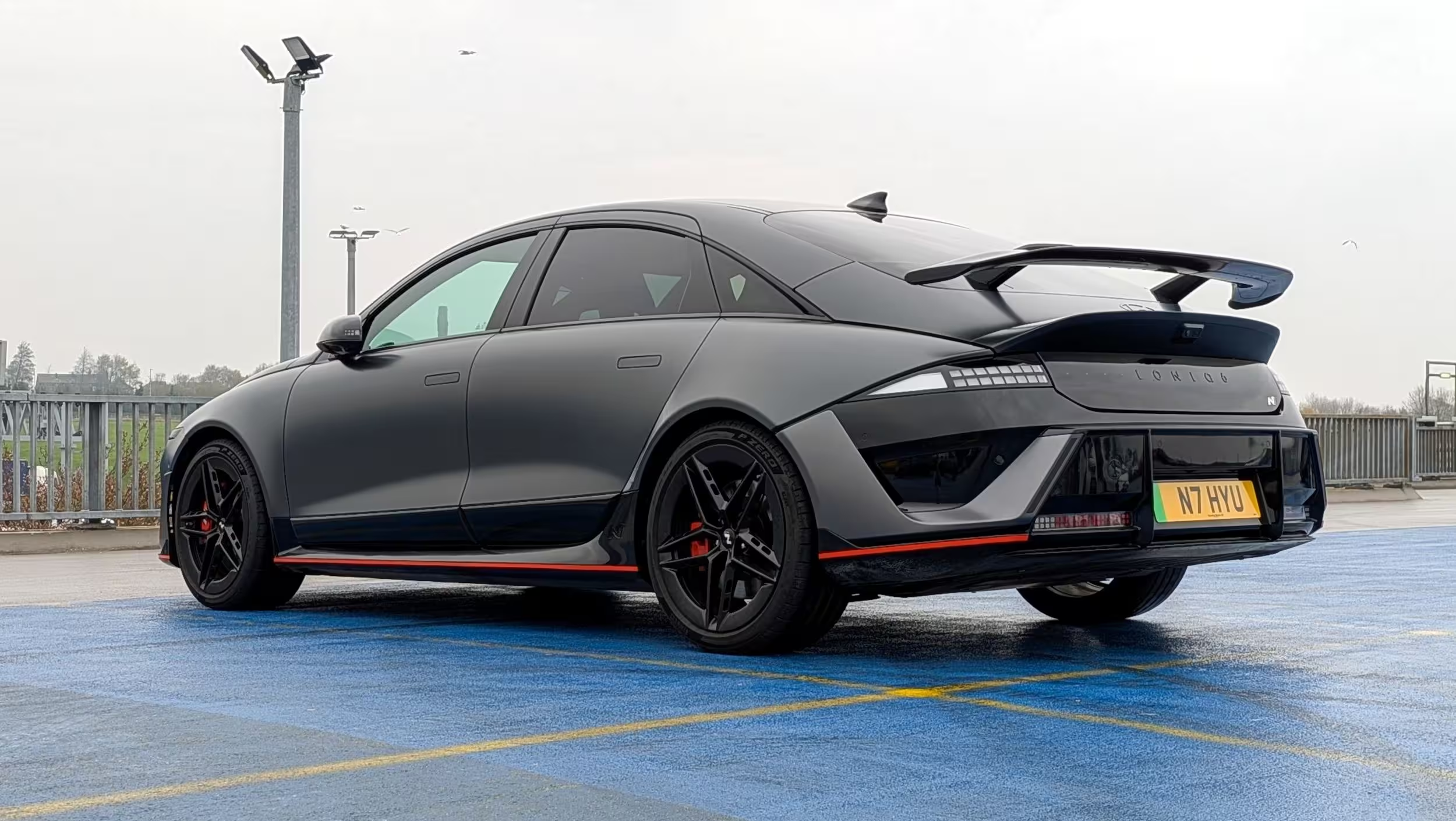
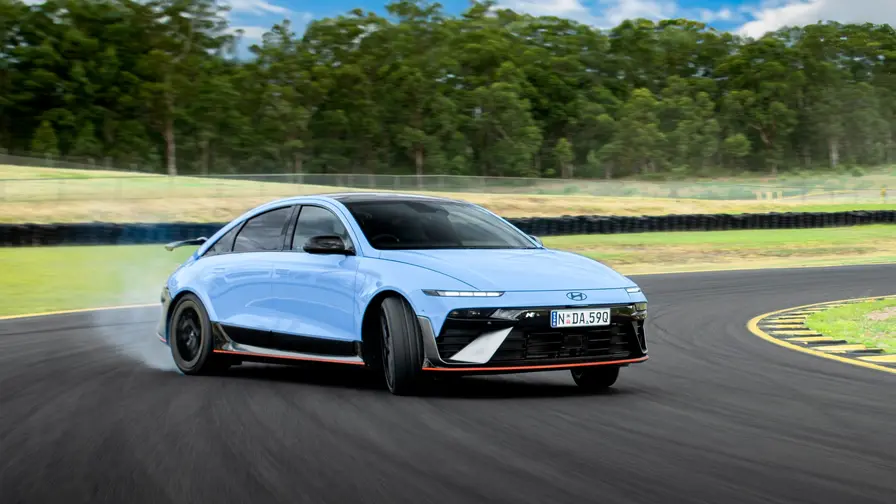
Hyundai quotes 0–62mph in 3.2 seconds for the 6 N, two tenths faster than the Ioniq 5 N. The fastback body, lower roofline and sloping rear are used to reduce drag.
Chassis changes include a lower roll centre, stiffer spring rates and revised suspension geometry. The car is 50kg lighter than the 5 N and rides on a wheelbase 15mm longer, which Hyundai says improves ride over bumps.
Cooling hardware is upgraded and battery thermal-management software has been revised. The N Drift Optimiser gains multi-stage adjustment to tune wheelspin and drift behaviour.
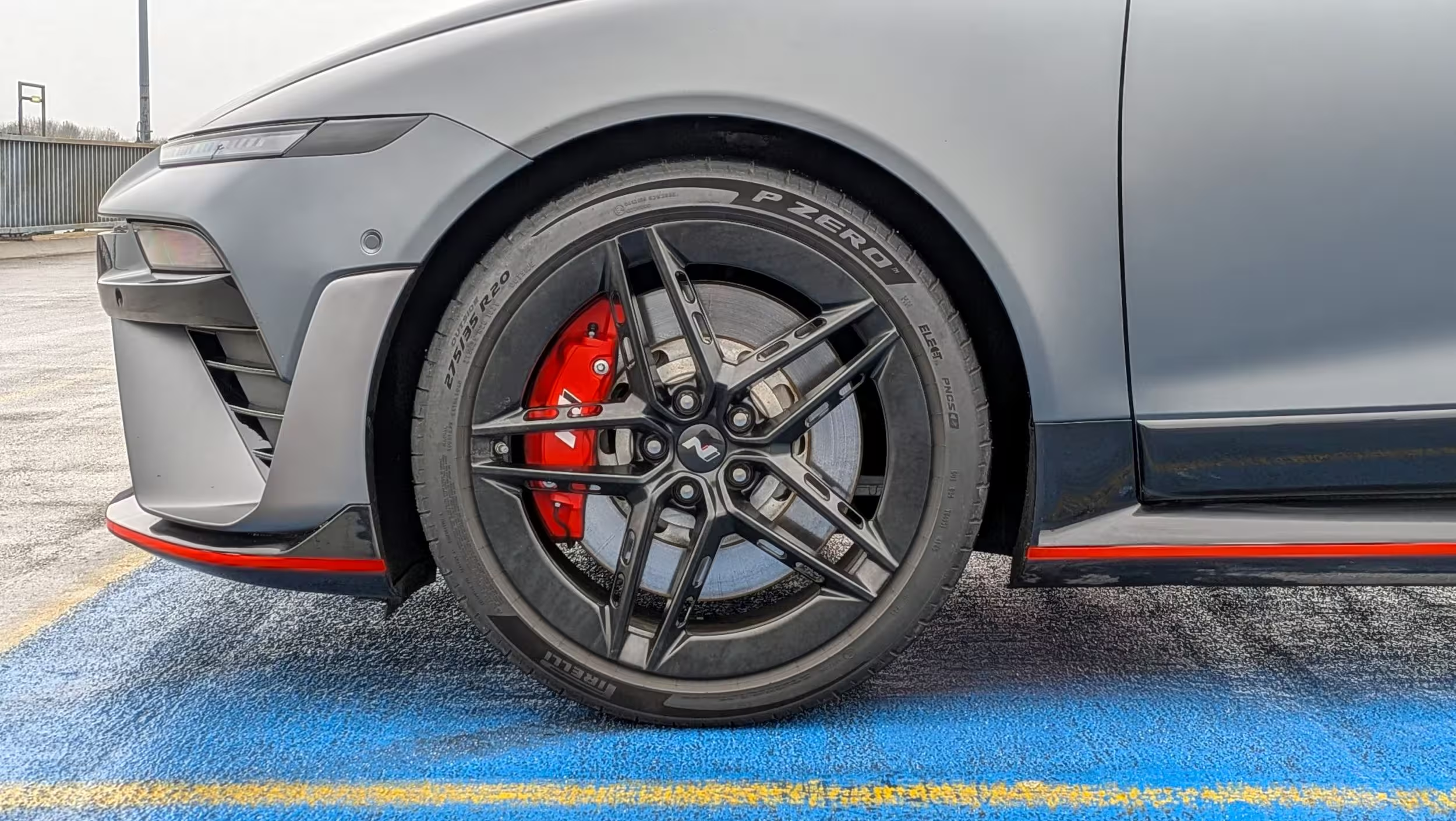
The 6 N runs on 20‑inch wheels, smaller than the 5 N’s, and a swan‑neck rear spoiler adds 96kg of downforce. Claimed WLTP range is just over 300 miles, but range falls in cold weather and under heavy use.
Charging uses an 800V architecture. Hyundai quotes 10–80% on a 350kW DC charger in 18 minutes, or 25 minutes on a 150kW DC charger.
On the road the car delivers a strong initial torque hit and faster motor response; firm seats hold occupants during acceleration. Braking uses four‑piston, by‑wire calipers that blend with regen, which can make pedal feel unpredictable.
Handling is adjustable through multiple N modes. In the default high‑grip setting the driven front wheels remain steady at turn‑in while rear torque aids corner exit. The 6 N exhibits less body roll than the taller 5 N; steering is weighty but offers limited feedback.
N e‑Shift remains and simulates eight speeds with shorter ratios, paired to flappy paddles and an artificial exhaust sound tuned to resemble a growling V6 with crackles.
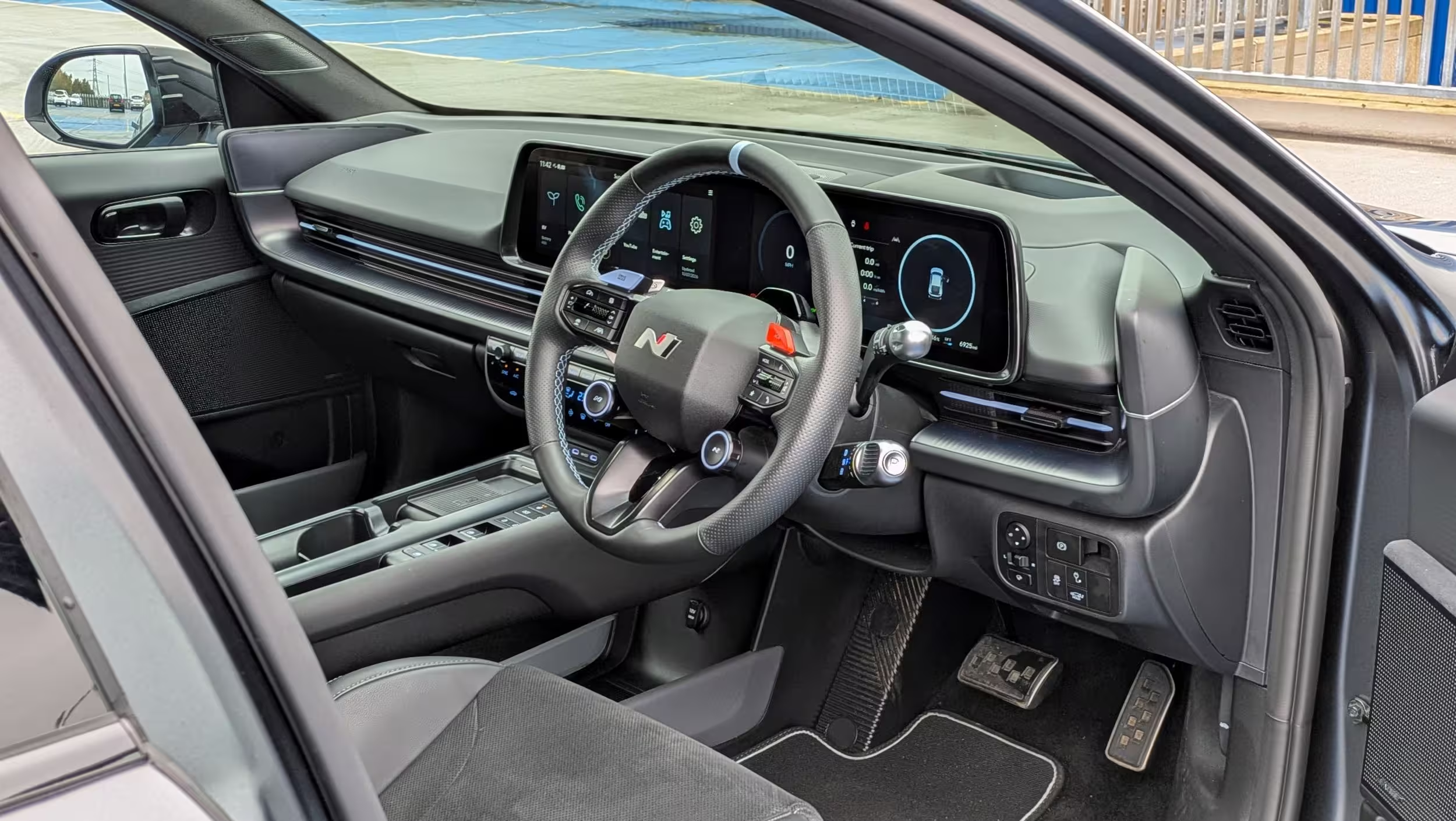
The cabin is visually busy but retains physical buttons for infotainment; climate control uses touch controls in a dedicated bank. The steering wheel includes multiple buttons and two programmable N buttons for custom driving profiles.
Efficiency varies widely: energy use commonly swings between 2 and 3 kWh and can approach almost 4 kWh with frugal driving. The Ioniq 6 N can be configured between calm motorway cruising and aggressive track or drift settings.
Hyundai says the package aims to expand the Ioniq N range’s capabilities, delivering both daily usability and heightened performance across a broader spectrum of driving conditions.

“Cars are evolving faster than ever. I cover electric vehicles, smart mobility, and the future of transportation worldwide.”

Discussion
Leave a Comment
Comments (1)
3.2s and ~300 miles? ok cool, but that 10s +40bhp red NGB button feels like a gimmick. Brakes regen pedal weird, skeptica l but curious