
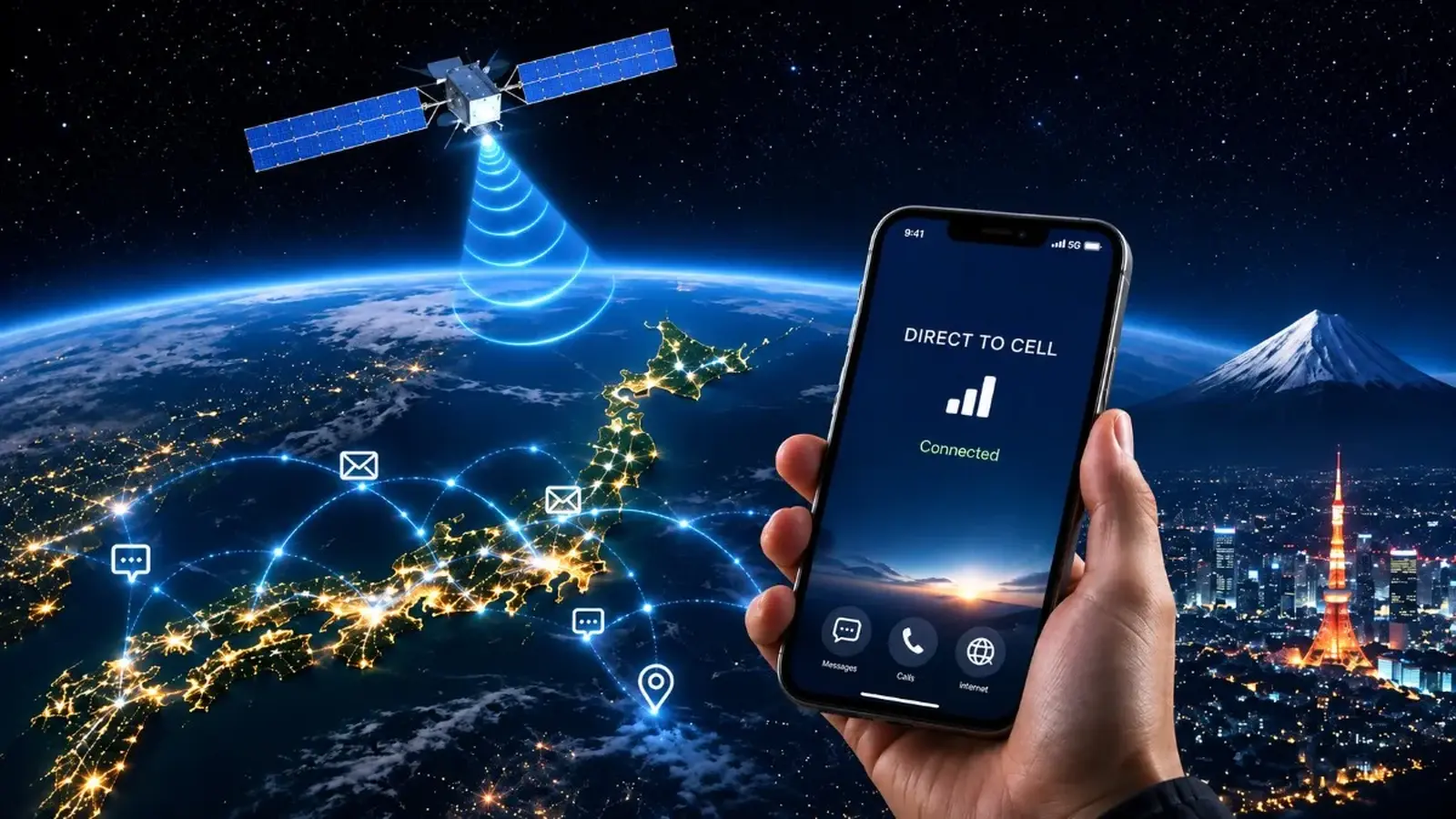
Imagine coverage that follows you into a mountain valley, a ship at sea, or a subway tunnel. That promise is nudging Europe’s biggest carriers into talks you might not have expected: building a shared route to deliver satellite connectivity straight to ordinary mobile phones.
Who’s talking and what’s at stake
Deutsche Telekom, Orange, Vodafone and Telefónica are quietly exploring a joint consortium to bid for a slice of the European Union’s 2 GHz satellite spectrum. If they go ahead and win that allocation, the plan would be to offer direct-to-mobile satellite services — no special terminals, no bulky antennas, just service that reaches compatible handsets.
There’s a clear motive. The EU has signaled it wants strategic control of premium satellite frequencies and to boost homegrown capabilities in space-based communications. Brussels earmarked two thirds of the IRIS² multi-orbit network spectrum for commercial use, and intends to reserve a significant portion for European operators rather than leaving it to foreign firms.
That creates an opening. Four of Europe’s largest carriers are weighing a co-bid for the EU-designated share of the 2 GHz band, which would strengthen their collective bargaining power and accelerate rollouts across multiple markets. For consumers, the outcome could mean broader coverage and redundancy during terrestrial outages. For the carriers, it’s a bet on relevance in an era where connectivity expectations keep rising.
None of the operators have signed anything yet. Vodafone, Orange and Telefónica declined to comment on the Bloomberg report, and no final decision has been announced. Still, the mere prospect of a consortium signals a shift: mobile operators are no longer content to be passive buyers of satellite services; they want to own the pipes and the customer experience.
What this could change
Direct-to-mobile satellite links change the rules. Today, satellite services often require specialized devices, integration partners, or expensive hardware. Bringing that capability directly to mainstream smartphones would expand reach dramatically and open new revenue streams: emergency services, rural broadband, industrial IoT, maritime and aviation connectivity, and resilient networks for governments and enterprises.

There are technical and regulatory hurdles. Phones need compatible radios and standards must be settled. Spectrum assignments must be approved and coordinated across borders. Yet the EU’s recent push to allocate spectrum for European entities reduces some geopolitical friction and makes a unified bid more appealing.
Put simply: this is about control. Who owns the spectrum, who defines the standards, who charges for the connectivity. European carriers teaming up would keep that power in the region rather than ceding it to outside tech giants and non-European satellite providers.
Expect noise in the coming months as filings, partnerships, and pilot projects emerge. If the consortium forms and the bid succeeds, the next few years could see mainstream phones gaining satellite fallback as a standard feature, turning occasional novelty into everyday utility.
For now, the story is still unfolding. The signal is clear, though: Europe’s telecom titans are positioning themselves for a world where terrestrial towers and orbital networks share the same stage.

“I cover emerging technologies, digital innovation, and the intersection of tech and everyday life. My goal is to make complex trends accessible and inspiring.”

Discussion
Leave a Comment
Comments (2)
Wow that would be huge for hikers and sailors! finally some backup when towers fail, hope they don't lock it behind pricy plans
Sounds cool but is this even real? Phones need new radios, standards, roaming issues... who pays for the upgrades? kinda skeptical tbh