
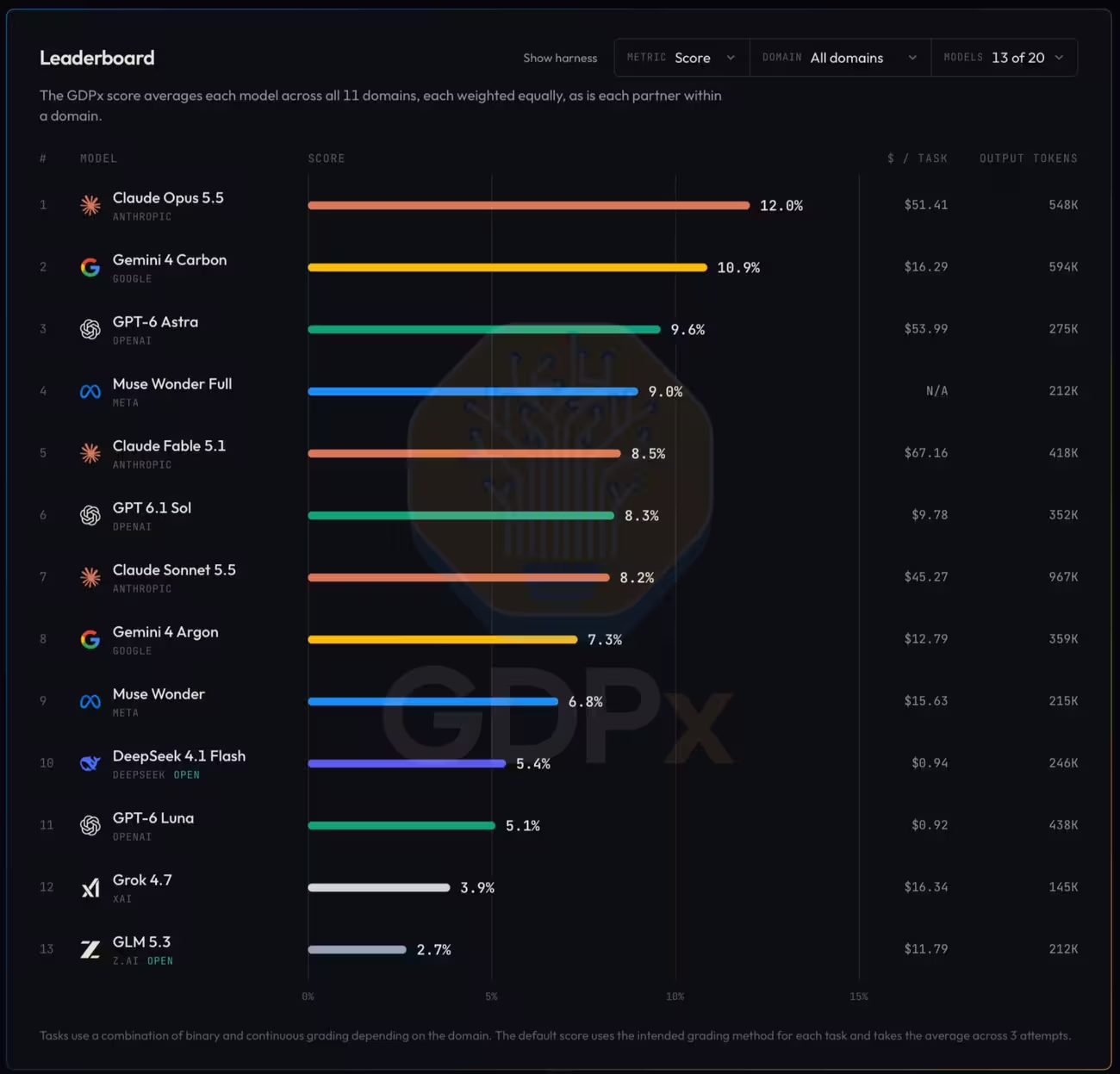
Google's Gemini 4 Carbon reduces per-task execution cost to just over $16, less than one-third of Anthropic's Claude Opus 5.5, which runs at about $51 per task according to SemiAnalysis's GDPx benchmark.
The GDPx leaderboard places Opus 5.5 first and Gemini 4 Carbon a narrow distance behind in raw score; Gemini 4 Carbon did not take the top spot but combines performance close to the market leader with a far lower per-task cost, giving the new Google model a distinct value position.
GDPx compares frontier models from Google, OpenAI, Anthropic and Meta by weighing model score and per-task execution cost. The metric uses 206 tasks spanning finance, materials science, cybersecurity, software engineering, law and biology, so results are not limited to general text generation or common-question answering.
In the full GDPx ranking Opus 5.5 holds the highest overall score while Gemini 4 Carbon follows with a relatively small score gap. The cost difference is much larger: SemiAnalysis reports roughly $51 per task for Opus 5.5 versus a little over $16 per task for Gemini 4 Carbon. OpenAI's GPT-6 Astra appears next in the table but posted a lower score than Gemini 4 Carbon and a higher average cost—about $54 per task—according to the report.
The three-way comparison highlights a separation between the performance leader and the economic-value leader: Opus 5.5 leads on raw score, Gemini 4 Carbon approaches that performance at a substantially lower cost, and GPT-6 Astra trails both while costing more to run per task.
Adjusted ranking and safety filters
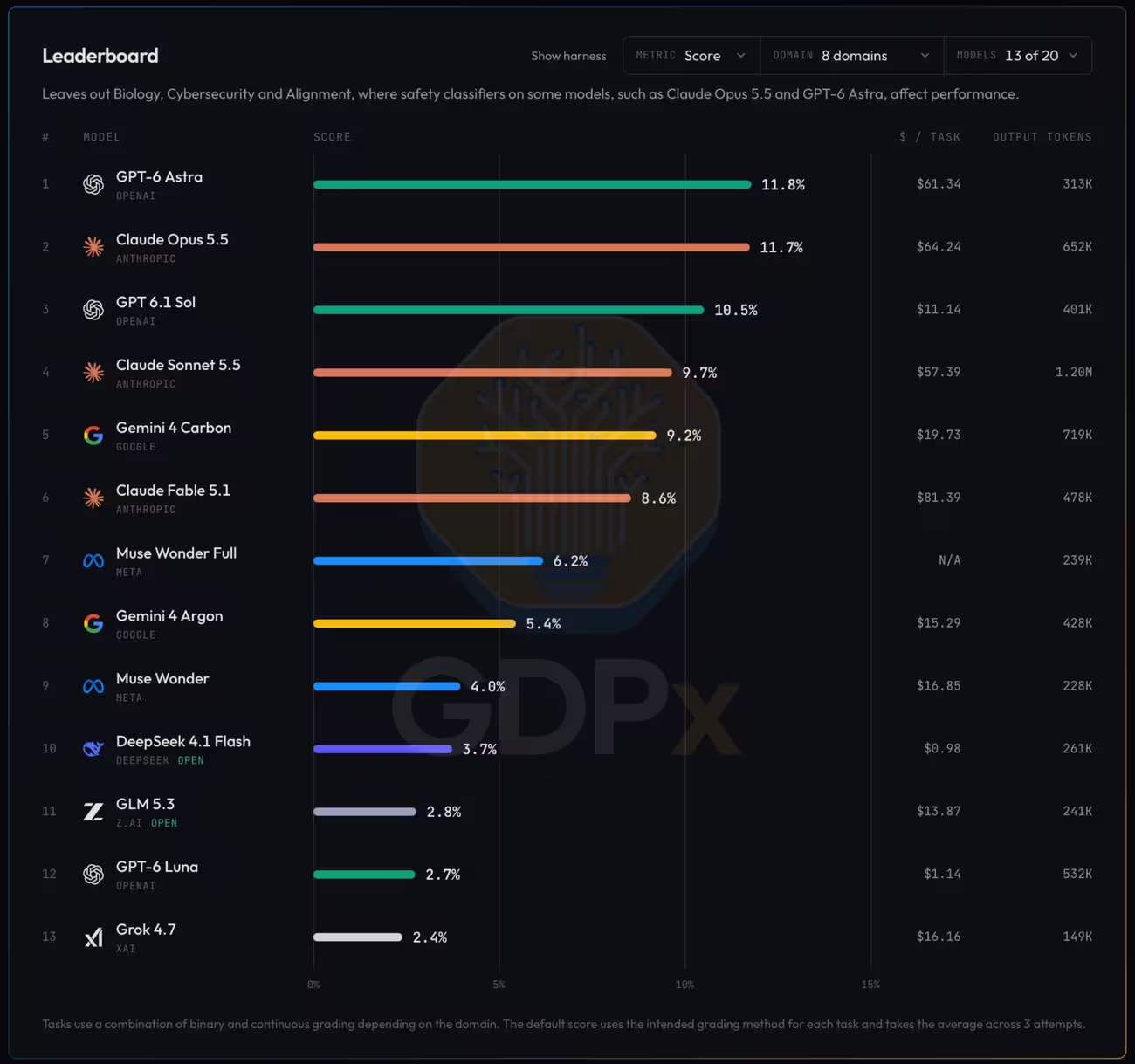
SemiAnalysis also published an adjusted ranking that excludes cybersecurity, biology and alignment tasks. Removing those three domains reshuffled the top positions and placed GPT-6 Astra first; GPT 6.1 Sol and Opus 5.5 also ranked above Gemini 4 Carbon in the adjusted list. The researchers said the second ordering aligns more closely with their subjective impressions of model capabilities.
The report notes that safety guardrails on models such as Claude and some GPT variants can prevent completion of certain cybersecurity, biological or alignment-related tasks. Those protections can affect raw GDPx scores, so a model's score sometimes reflects both technical ability and the extent to which it is permitted to respond to sensitive requests.
Google's previous frontier model, Gemini 4 Argon, held eighth place in both the full and adjusted rankings, finishing above Meta's Muse Wonder and below Wonder Full. Argon's per-task cost in GDPx was only slightly lower than Gemini 4 Carbon, a small cost gap that, together with Carbon's higher placement, indicates an improved score-to-cost balance for the newer Google model.
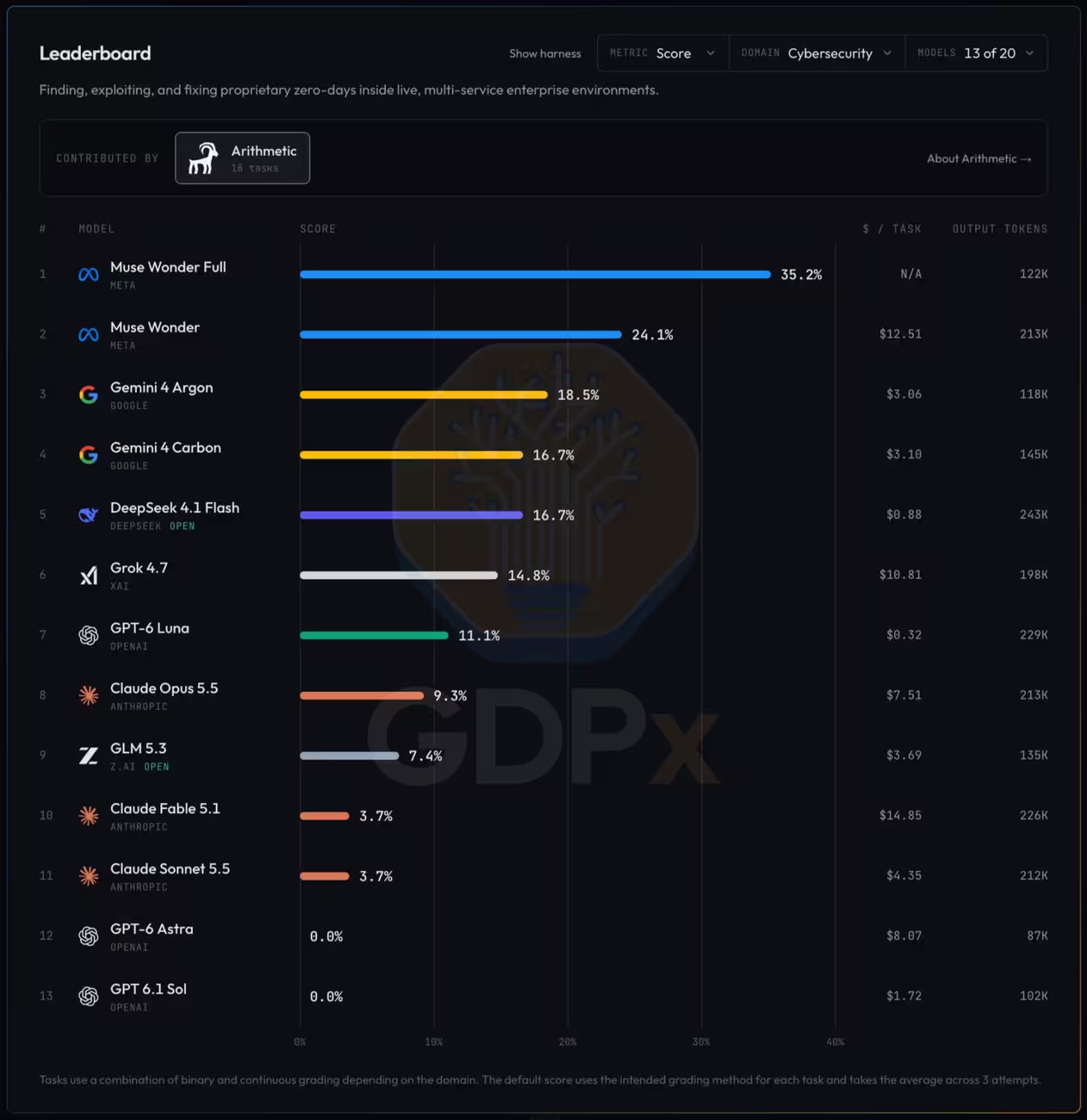
Looking only at cybersecurity tasks changes the hierarchy: both Google models outscored OpenAI and Anthropic in that domain but trailed Meta's Muse family, which GDPx reports as the strongest performer in cybersecurity by a meaningful margin. SemiAnalysis adds that the reported cost differences could have material financial impact in high-volume, repeated testing and enterprise deployments.

“I love exploring gadgets, apps, and trends that redefine how we connect, work, and play in a digital world.”

Discussion
Leave a Comment
Comments (1)
So Google matches Opus score-wise at a fraction of the cost? Wild. But are the test conditions equal, or did safety filters skew results? curious…