
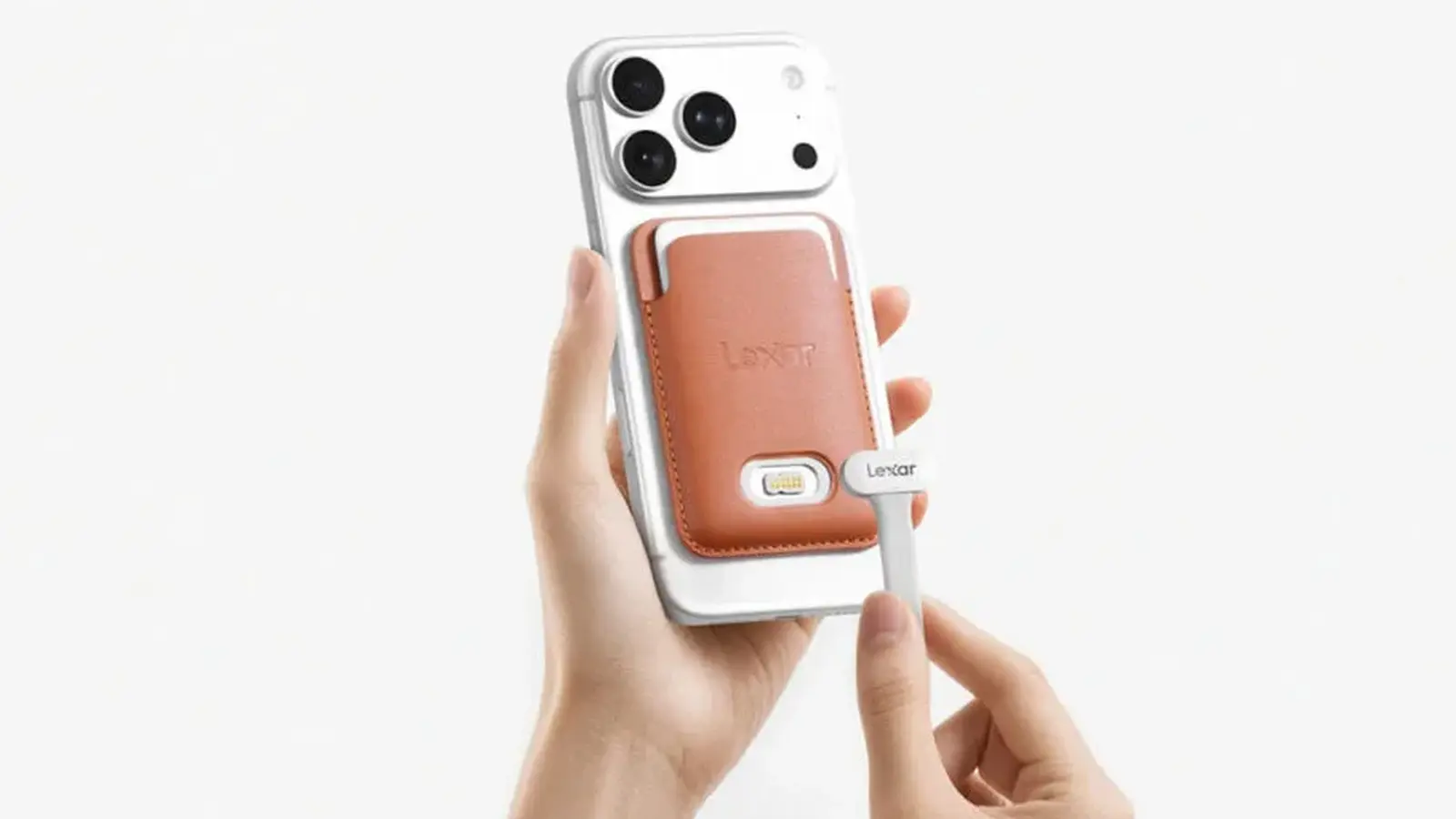
Hold a credit card between two fingers. That sliver of plastic is roughly the same thickness as the skinniest part of Lexar's new Muse external SSD. It refuses to be bulky. It insists on disappearing into a pocket.
A wafer-thin feat that reads like engineering poetry
At its narrowest, Muse measures just 1 millimeter, comparable to a standard bank card. Even its thickest point clocks in at 3.8 millimeters, making it thinner than many smartphones when you ignore the camera bump. Overall dimensions are 80 by 48 by 3.8 millimeters. Those numbers are neat, but the reality is a study in restraint: a seamless metal unibody, a bespoke ultra-thin PCB, tightly packed components and sloped edges that all conspire to keep the silhouette whisper-light.
There are no visible seams, nearly no screws, and the usual body gaps that announce engineering compromises have been quietly erased. Minimalism here isn’t just aesthetic. It is the result of thermal and structural trade-offs, of engineers squeezing every millimeter without surrendering reliability.

But thinness forced a rethink. There was no room for a conventional USB-C port. So Lexar adopted a magnetic PogoPin interface and introduced a SnapLink cable that latches to the drive and converts to a standard USB-C plug on the other end. It’s an elegant workaround. Clean as a designer’s render, practical enough for daily use.
Speeds are reassuringly real-world. SnapLink supports up to about 1050 megabytes per second read and roughly 1000 megabytes per second write. Not the fastest on the block, but fast enough to do serious work. Want to capture ProRes 4K video at 120 frames per second from an iPhone Pro model? Muse ticks that box. That ability, paired with the optional magnetic cradle that lets the drive attach to the back of an iPhone or laptop, turns it into a pocketable capture station.

Capacity options are pragmatic: 512 gigabytes and 1 terabyte models are planned, with availability slated for the fourth quarter of 2026. Lexar hasn’t given a final price. Given the recent run-up in flash memory costs, expect a premium tag.
So who is Muse for? Creators who shoot high-bitrate mobile video. Travelers who prize weight and pocket space. Anyone who wants external storage without the bulk. It’s not a speed crown chaser. It’s a design statement that doubles as a functional tool.
There is still plenty to wonder about. How rugged will such a thin body be over years of knocks? How will thermal throttling behave under sustained transfers? Lexar has shown that thin can be done without surrendering usefulness. Now the market will decide whether that thinness is worth the price of admission.

“I cover emerging technologies, digital innovation, and the intersection of tech and everyday life. My goal is to make complex trends accessible and inspiring.”

Discussion
Leave a Comment
Comments
No comments yet. Be the first.